- Company Articles
- Products and Technology
- Product knowledge
- M10*56 Rubber Leveling Feet for Material Handling Carts: Stability Solutions

M10*56 Rubber Leveling Feet for Material Handling Carts: Stability Solutions
Related Product
M10*56 Rubber Leveling Feet
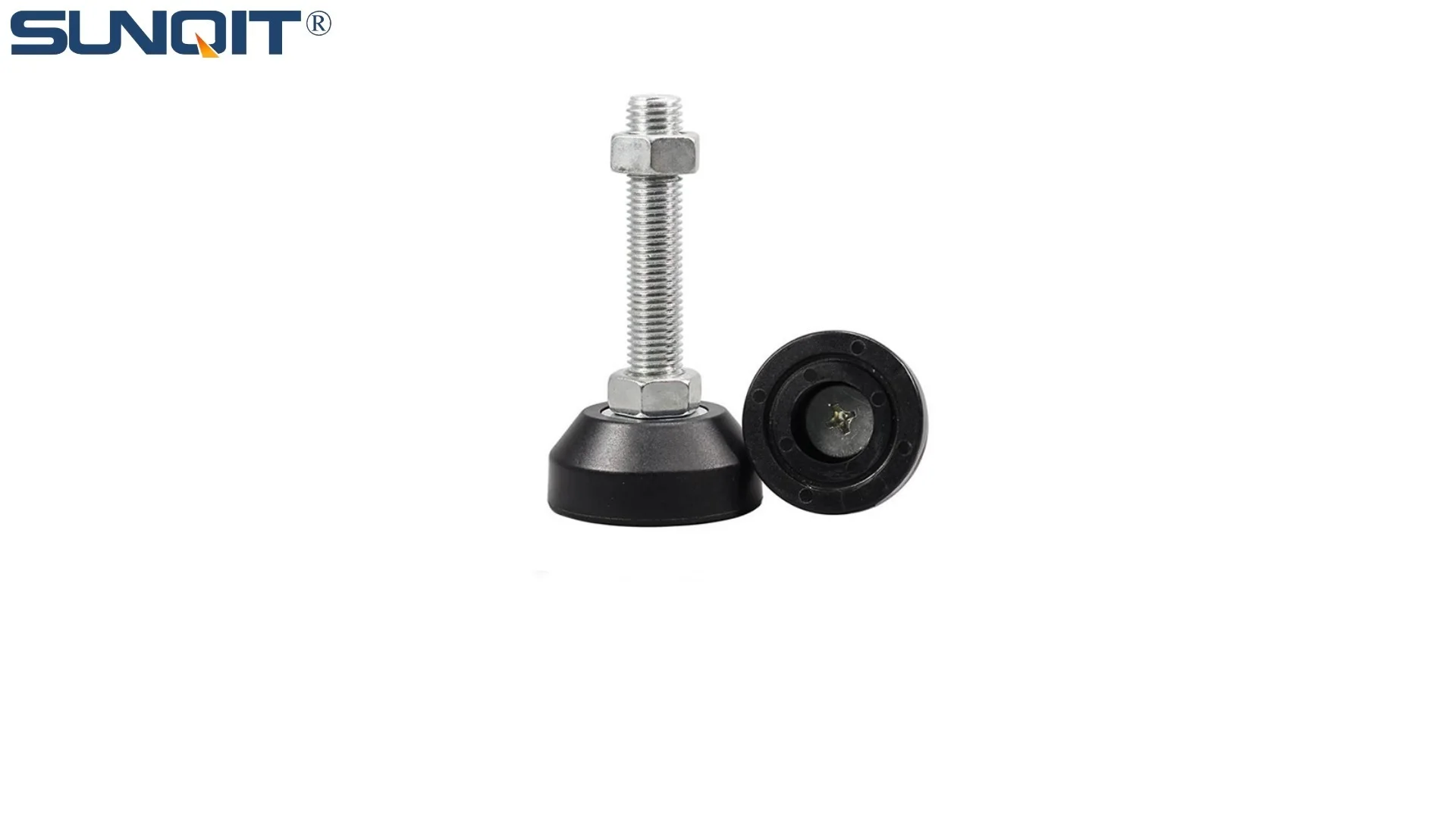
Adjustable leveling feet are designed to keep machines level when placed on uneven or sloped ground. Otherwise known as adjustable equipment feet, they are available to order in a wide variety of size and load capacity combinations.
The Unseen Hero of Smooth Material Handling
Walk into any busy warehouse, manufacturing floor, or distribution center, and you'll see them: material handling carts gliding between stations, loaded with components, tools, or finished goods. They're the workhorses of efficiency, keeping operations moving like clockwork. But have you ever stopped to think about what keeps those carts steady—especially when they're parked, loaded to the brim, or sitting on uneven floors? More often than not, the answer is a small but mighty component: the leveling foot. And today, we're shining a spotlight on one of the most reliable options out there: the M10*56 Rubber Leveling Foot.
In the world of material handling, stability isn't just a nice-to-have—it's a make-or-break factor. A wobbly cart can mean damaged products, delayed workflows, or even workplace injuries. That's where the M10*56 Rubber Leveling Foot steps in. It's not flashy, but it's essential. Let's dive into why this unassuming component deserves a spot in your material handling toolkit, how it works, and why it's a game-changer for anyone relying on stable, efficient operations—whether you're managing a lean system on the factory floor or stocking shelves in a retail backroom.
Why Stability Matters More Than You Think
Before we get into the specifics of the M10*56 Rubber Leveling Foot, let's talk about why stability is non-negotiable in material handling. Picture this: A warehouse associate is pushing a cart stacked with delicate electronic components. The floor, worn from years of traffic, has a slight dip near the loading dock. As the cart hits that dip, it wobbles. A component slides off, hits the ground, and cracks. Now, you're looking at a damaged part, a halted workflow, and a potential safety hazard if someone trips over the debris. That's the cost of instability—and it adds up fast.
Injuries are another major risk. According to the Occupational Safety and Health Administration (OSHA), over 20% of workplace injuries involve material handling equipment, and unstable carts are a common culprit. A cart that tips or shifts unexpectedly can cause strains, falls, or crushed toes. Beyond safety, instability kills efficiency. When a cart wobbles, workers move slower, double-checking loads to prevent spills. In a lean system—where every second counts and waste is minimized—those delays can throw off entire production schedules.
Stability also impacts the longevity of your equipment. A cart that's always teetering puts extra stress on its frame, wheels, and joints. Over time, that stress leads to premature wear, meaning more frequent repairs or replacements. For businesses aiming to keep costs low and uptime high, investing in stability isn't just smart—it's essential.

Meet the M10*56 Rubber Leveling Foot: Small Size, Big Impact
So, what exactly is the M10*56 Rubber Leveling Foot? Let's break it down. At its core, it's a height-adjustable support component designed to stabilize equipment like material handling carts, workbenches, and racks. The "M10*56" refers to its specifications: "M10" is the metric thread size (10mm diameter), and "56" is the length of the threaded rod (56mm). The "rubber" part is the base—a durable, non-slip pad that grips surfaces and absorbs vibrations.
But don't let its simple design fool you. This little foot is engineered for versatility and reliability. It's typically made with a metal (often steel or zinc-plated) threaded rod for strength, topped with a rubber base that's soft enough to conform to uneven floors but tough enough to withstand heavy loads. The result? A component that can be adjusted to compensate for floor irregularities, lock carts in place when parked, and protect both your equipment and your workspace.
One of the key advantages of the M10*56 size is its balance of adjustability and stability. The 56mm rod length gives you enough range to level carts on floors with up to 2-3cm of unevenness—common in older facilities or areas with frequent traffic. Meanwhile, the M10 thread is thick enough to support heavy loads without bending or stripping, making it ideal for everything from lightweight tool carts to heavy-duty workbenches stacked with machinery.

Key Features That Make the M10*56 Rubber Leveling Foot Stand Out
1. Rubber Base: Grip, Protection, and Quiet Operation
The rubber base is where the M10*56 Leveling Foot really shines. Unlike hard plastic or metal bases, rubber offers three critical benefits: grip, floor protection, and noise reduction. The high-friction surface of the rubber ensures the cart stays put, even when loaded with heavy items. That's a lifesaver on smooth concrete or tile floors, where metal feet might slide. Rubber also acts as a buffer, preventing scratches or dents on delicate flooring—important in labs, cleanrooms, or retail spaces where aesthetics matter.
And let's not forget noise. Metal-on-concrete contact is loud, especially in busy environments. Rubber dampens that sound, making for a quieter workspace. If you've ever winced at the screech of a metal cart leg hitting the floor, you'll appreciate this small but significant detail.
2. M10*56 Dimensions: Versatility for Most Carts and Workbenches
The M10 thread size is a sweet spot for material handling equipment. It's strong enough to support loads up to 500kg per foot (depending on the specific model), which means a standard four-legged cart can handle 2000kg—plenty for most industrial applications. The 56mm rod length is also practical: it's long enough to adjust for minor floor unevenness but not so long that it becomes flimsy. Whether you're using a simple turnover trolley or a custom workbench with adjustable height, the M10*56 thread fits most standard mounting holes, making it easy to retrofit onto existing equipment.
3. Easy Adjustability: No Tools Required (Usually)
Most M10*56 Rubber Leveling Feet are designed for tool-free adjustment. The base or the top of the rod has a knurled (ridged) surface, so you can twist it by hand to raise or lower the foot. That means no fumbling with wrenches when you need to level a cart on the fly. Just park, twist, and you're good to go. For heavier loads or tighter tolerances, some models have a hex socket in the top, allowing you to use a wrench for precise adjustments. Either way, it's a hassle-free process that saves time during setup and maintenance.
4. Corrosion Resistance: Built to Last in Tough Environments
Material handling environments can be harsh. Warehouses are dusty, factories have oils and chemicals, and outdoor loading areas get wet. The M10*56 Rubber Leveling Foot is built to withstand these conditions. The threaded rod is often zinc-plated or made from stainless steel, preventing rust and corrosion. The rubber base is resistant to oils, greases, and most industrial chemicals, so it won't degrade or crack over time. This durability means fewer replacements and lower long-term costs—music to any operations manager's ears.

Working in Harmony: Leveling Feet and Caster Wheels
You might be wondering: If my cart already has caster wheels, why do I need leveling feet? Great question. Caster wheels are for mobility—they let you move carts easily—but they're not designed to keep a cart stationary and stable. When you park a cart with casters, even lockable ones, it can still shift slightly under load. That's where leveling feet come in: they're the "parking brake" for stability. Many material handling carts are designed with both casters and leveling feet: use the casters to move, then lower the leveling feet to lock the cart in place. It's the best of both worlds.
Take a typical workbench e (single deck—without caster), for example. While some workbenches are stationary, others are mobile, using casters for flexibility. But when you're using the workbench to assemble products, you don't want it moving an inch. That's where the M10*56 Rubber Leveling Foot becomes essential. By installing leveling feet alongside casters, you can lower the feet to lift the casters off the ground when the bench is in use, ensuring it stays rock-solid. When you need to move it, simply raise the feet, and the casters take over. It's a simple system, but it transforms how you use your equipment.
Caster wheels and leveling feet also complement each other in uneven spaces. If a cart has four casters and hits a bump, it might teeter on three wheels. Adding leveling feet lets you adjust individual corners to keep all wheels (or feet) on the ground, distributing weight evenly and preventing tipping. In short, they're a team—casters for movement, leveling feet for stability.
A Closer Look: How M10*56 Stacks Up Against Other Leveling Feet
Not all leveling feet are created equal. Let's compare the M10*56 Rubber Leveling Foot to other common options to see why it's a top choice for material handling. The table below breaks down key features like size, load capacity, and best uses:
| Leveling Foot Type | Thread Size | Rod Length | Max Load Capacity (per foot) | Best For | Limitations |
|---|---|---|---|---|---|
| M8*40 Plastic Leveling Foot | M8 (8mm) | 40mm | 200kg | Lightweight carts, small shelves | Low load capacity; plastic base can crack under heavy use |
| M10*56 Rubber Leveling Foot | M10 (10mm) | 56mm | 500kg | Medium-to-heavy material carts, workbenches, material racks | Slightly bulkier than smaller sizes; may not fit very tight spaces |
| M12*75 Metal Base Leveling Foot | M12 (12mm) | 75mm | 800kg | Heavy machinery, industrial ovens | Heavy; metal base can damage floors; noisy |
As you can see, the M10*56 Rubber Leveling Foot hits the sweet spot for most material handling needs. It's stronger than smaller plastic feet but more practical than oversized metal ones. The rubber base solves the floor damage and noise issues of metal feet, while the M10 thread and 56mm length offer enough adjustability for typical warehouse or factory floors. Unless you're moving industrial-scale machinery, the M10*56 is likely the right balance of strength, flexibility, and cost-effectiveness.
Applications: Where the M10*56 Rubber Leveling Foot Shines
The M10*56 Rubber Leveling Foot isn't limited to just material handling carts. Its versatility makes it useful across industries and applications. Let's explore a few key use cases:
1. Manufacturing and Assembly Lines
In manufacturing, precision is everything. A workbench that wobbles while assembling circuit boards or engine parts can lead to errors, rework, and wasted materials. The M10*56 Leveling Foot ensures workbenches stay steady, even when operators are applying pressure to tools or components. It's also ideal for material racks—like material rack b (3 row and 3 floor)—which often hold heavy parts. By leveling the rack, you prevent items from sliding off and keep shelves aligned for easy access.
2. Warehouses and Distribution Centers
Warehouses are all about moving goods quickly, but when it's time to pack, sort, or stage items, stability is key. Turnover trolleys, used to transport goods between picking and packing stations, often rely on leveling feet to stay steady during loading and unloading. The M10*56's high load capacity means it can handle trolleys stacked with boxes, while the rubber base prevents slipping on smooth concrete floors.
3. Laboratories and Cleanrooms
In labs, even tiny vibrations can ruin experiments. The M10*56 Rubber Leveling Foot's shock-absorbing rubber base dampens vibrations, keeping sensitive equipment like microscopes or centrifuges steady. Its chemical resistance is also a plus—labs often use harsh cleaners, and the rubber won't degrade or leach contaminants into the environment.
4. Retail and Grocery Stores
Backroom storage in retail often involves mobile shelving units and carts. The M10*56 Leveling Foot keeps these units steady, preventing products from falling off during restocking. Its quiet operation is another bonus—no loud clanging when adjusting feet in customer-visible areas.
Installation and Maintenance: Keeping Your Leveling Feet in Top Shape
Installing M10*56 Rubber Leveling Feet is straightforward, even if you're not a DIY expert. Here's a quick step-by-step guide:
- Check the mounting holes: Ensure your cart or workbench has M10 threaded holes (or drill/tap them if needed). Most standard material handling equipment comes with pre-drilled holes for leveling feet.
- Hand-tighten the foot: Screw the leveling foot into the hole until it's snug. Don't overtighten—you'll need to adjust it later.
- Level the cart/bench: Place a spirit level on the surface. Twist the leveling foot clockwise to lower it or counterclockwise to raise it until the surface is level.
- Lock it in place (if needed): Some models have a lock nut—tighten it against the cart frame to prevent the foot from loosening over time.
Maintenance is just as simple. Every few months, inspect the feet for wear: check if the rubber base is cracked, the thread is stripped, or the rod is rusted. If the rubber starts to harden or lose grip, it's time to replace the foot. For routine care, wipe the rubber base with a damp cloth to remove dirt and debris—this keeps the grip strong and prevents scratches on floors.
Case Study: How One Factory Cut Downtime with M10*56 Leveling Feet
Names and details have been changed for privacy, but the scenario is based on real-world experiences.
Acme Manufacturing, a mid-sized automotive parts supplier, was struggling with a recurring problem: their assembly line carts kept wobbling, causing parts to fall off and delaying production. The carts, which transported engine components between workstations, had caster wheels with brake locks, but the factory floor—damaged from years of heavy equipment traffic—had uneven spots. Even with brakes engaged, the carts shifted under load, leading to an average of 5 damaged parts per week and 2 hours of downtime for cleanup and rework.
The plant manager, Maria, decided to try leveling feet. After researching options, she chose the M10*56 Rubber Leveling Foot for its load capacity and adjustability. The maintenance team installed the feet on 12 assembly line carts, positioning them alongside the existing casters. Now, when a cart reaches a workstation, operators lower the leveling feet to lift the casters off the ground, locking the cart in place. The rubber base grips the floor, and the adjustable rod compensates for uneven spots.
The results were immediate: damaged parts dropped to zero, and downtime for cleanup vanished. Workers reported feeling more confident loading the carts, as they no longer had to worry about wobbling. "It's like night and day," Maria said. "We spent less than $500 on leveling feet, and we're saving thousands in damaged parts and lost productivity. I wish we'd done this sooner."
Final Thoughts: Stability as a Foundation for Success
The M10*56 Rubber Leveling Foot might not be the most glamorous component in your material handling setup, but it's one of the most important. It's the quiet guardian of stability, ensuring your carts, workbenches, and racks stay steady, safe, and efficient. Whether you're running a lean system where waste reduction is key, managing a busy warehouse, or simply want to protect your products and people, this small but powerful tool delivers big results.
So, the next time you're evaluating your material handling equipment, don't overlook the details. A wobbly cart isn't just a nuisance—it's a hidden cost. Invest in stability with the M10*56 Rubber Leveling Foot, and watch how smoothly your operations run when the foundation beneath them is solid.