- Company Articles
- Products and Technology
- Product knowledge
- M10*56 Rubber Leveling Feet for Material Transport Trolleys: Stability Guide

M10*56 Rubber Leveling Feet for Material Transport Trolleys: Stability Guide
Related Product
M10*56 Rubber Leveling Feet
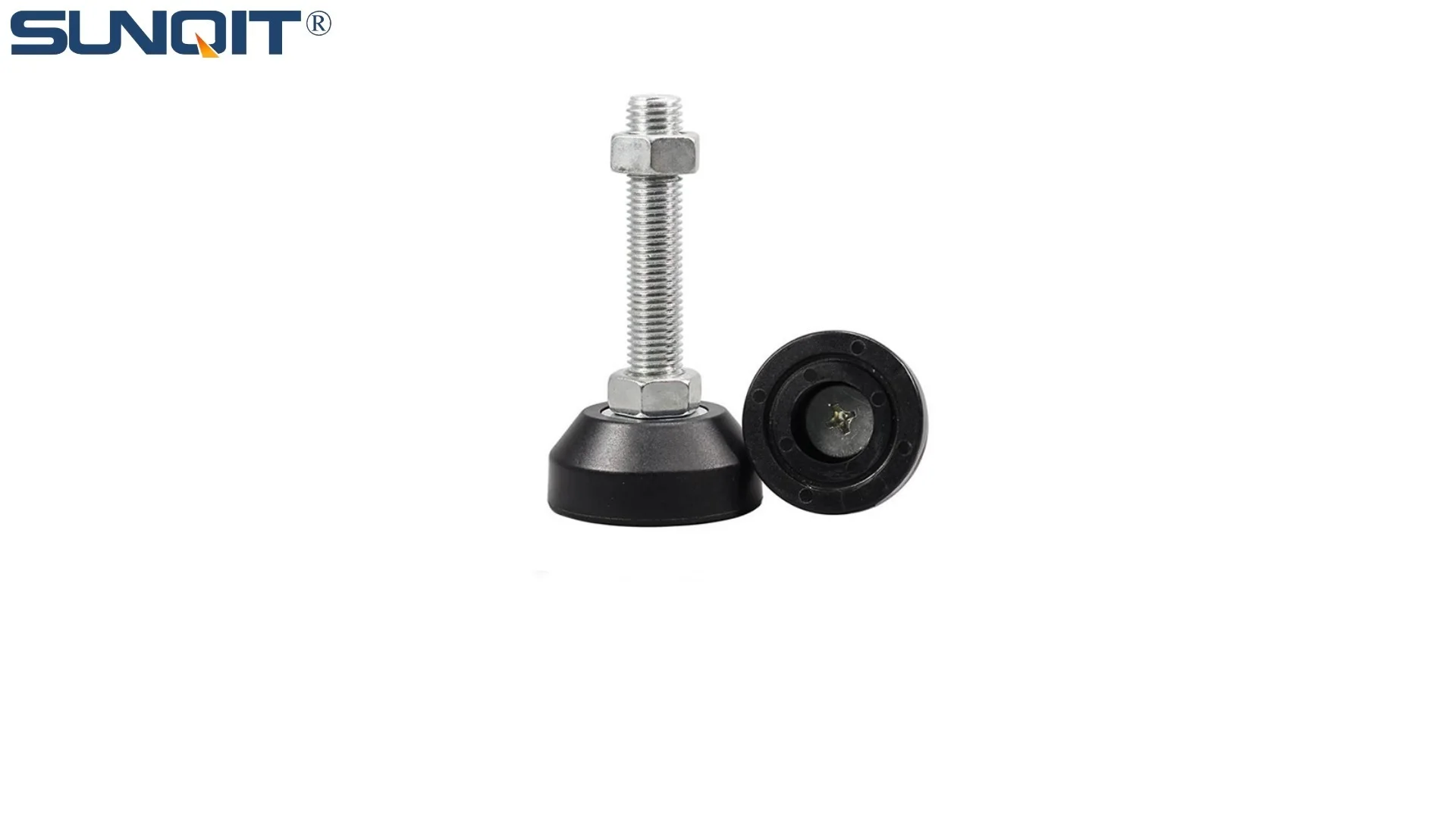
Adjustable leveling feet are designed to keep machines level when placed on uneven or sloped ground. Otherwise known as adjustable equipment feet, they are available to order in a wide variety of size and load capacity combinations.
Walk into any busy manufacturing plant or warehouse, and you'll likely hear the hum of machinery, the chatter of workers, and the steady roll of material transport trolleys. These unassuming workhorses are the backbone of daily operations, shuttling parts from assembly lines to storage, raw materials to workstations, and finished products to shipping. But what happens when one of these trolleys starts to wobble? A slight tilt might seem harmless at first, but in a world where every second counts and precision matters, that instability can snowball into missed deadlines, damaged goods, or even workplace accidents. That's where the unsung heroes of material handling come in: leveling feet. And today, we're shining a spotlight on a specific star in this category: the M10*56 rubber leveling foot. Whether you're managing turnover trolleys, lean pipe workbenches, or any equipment with caster wheels, understanding how these small but mighty components keep things stable could be the key to smoother, safer, and more efficient operations.
The Hidden Cost of Wobbly Trolleys: Why Stability Matters
To appreciate the value of a good leveling foot, let's first talk about what happens when stability goes out the window. Imagine (oops, scratch that—let's recall ) a typical scenario: A worker loads a turnover trolley with fragile electronic components, pushes it toward the testing area, and halfway there, feels the trolley start to rock. They slow down, grip the handle tighter, and hold their breath, hoping the contents don't shift. But despite their caution, a small bump in the floor sends a jolt through the trolley, and a component slides off the edge, cracking on the concrete. Now, that worker has to stop, clean up the mess, fill out an incident report, and track down a replacement part—all while the production line waits. Multiply that by a handful of wobbly trolleys across a shift, and suddenly you're looking at hours of lost productivity, not to mention the cost of damaged inventory.
But the problems don't stop there. Unstable trolleys can also take a toll on worker safety. A trolley that pulls to one side or rocks excessively forces the person pushing it to overcompensate, leading to strained muscles or even trips and falls. In extreme cases, an overloaded, wobbly trolley might tip over entirely, putting workers at risk of injury. And let's not forget about the equipment itself: constant rocking can loosen bolts, wear down caster wheels unevenly, or damage the trolley's frame over time, leading to costly repairs or replacements.
Maria, a warehouse supervisor at a mid-sized electronics manufacturer, was all too familiar with these issues. "Last year, we were using these old metal trolleys with fixed feet, and the warehouse floor? Let's just say it's seen better days—cracks, dips, the works," she explains. "Our turnover trolleys would wobble so much that we had to limit how much we loaded onto them, which meant more trips back and forth. And don't even get me started on the circuit boards—we had a 15% damage rate just from transport. My team was frustrated, and I was stressed trying to hit our daily quotas." It wasn't until a routine safety audit that someone pointed out the obvious: the trolleys needed better feet. "I'd never really thought about leveling feet before," Maria admits. "They seemed like such a small part, but once we upgraded, everything changed."
Leveling Feet 101: The Basics of Keeping Things Steady
So, what exactly is a leveling foot, and how does it work? At its core, a leveling foot is a component attached to the bottom of equipment (like trolleys, workbenches, or racks) that can be adjusted to compensate for uneven surfaces. Think of it as a "height-adjustable leg" for your equipment. Most leveling feet consist of three main parts: a threaded rod (which screws into the equipment), a base (which contacts the floor), and a mechanism to adjust the height (usually by twisting the base or rod). When the floor is uneven, you twist the leveling foot to extend or retract the rod, raising or lowering that corner of the equipment until it sits flat and stable.
But not all leveling feet are created equal. They come in different sizes, materials, and designs, each suited to specific needs. For example, metal feet might be better for heavy loads, while rubber feet offer better grip on smooth floors. Some are fixed, others swivel; some have small bases, others wide ones for extra stability. The key is to choose the right foot for your equipment, your environment, and the challenges you're facing.
For Maria's team, the challenge was twofold: uneven floors and fragile cargo. "We needed something that could handle the weight—our trolleys often carry up to 300 pounds—but also protect the floors and absorb vibrations," she says. "Metal feet were too slippery on our epoxy floors, and the small plastic feet we tried before just wore out too quickly." That's when her maintenance team recommended M10*56 rubber leveling feet. "They said the rubber would grip better, the size would handle the load, and the adjustability would fix the wobble. I was skeptical at first—how could a $5 part make that much difference? But I agreed to test them on a few trolleys. Let's just say I ordered enough for the whole fleet by the end of the week."

M10*56 Rubber Leveling Feet: What Makes This Size and Material Stand Out?
Let's break down the M10*56 rubber leveling foot to understand why it's a go-to for many material handling professionals. First, the "M10*56" designation. The "M" stands for "metric," and the number following it (10) refers to the diameter of the threaded rod in millimeters. So, an M10 rod is 10mm thick—sturdy enough for medium to heavy-duty applications, like loaded turnover trolleys or lean pipe workbenches, but not so thick that it adds unnecessary bulk. The "56" is the length of the threaded rod, also in millimeters. This length is crucial because it determines how much adjustability you have: a longer rod means you can compensate for bigger dips or unevenness in the floor. For most warehouses and factories, 56mm is more than enough—think of it as having 56mm of "wiggle room" to level things out.
Then there's the "rubber" part. The base of the leveling foot is typically made from a durable, high-friction rubber compound, and this material choice is deliberate. Rubber offers several advantages over metal or hard plastic: better grip (so the trolley is less likely to slide on smooth floors), vibration absorption (which protects fragile cargo like Maria's circuit boards), and floor protection (no more scratches or dents from metal scraping on concrete or epoxy). Plus, rubber is naturally resistant to oils, chemicals, and temperature changes—important in industrial environments where spills or extreme conditions are common.
But what really sets the M10*56 rubber leveling foot apart is how these features work together. Let's say you're pushing a loaded turnover trolley over a floor with a 10mm dip. With a fixed foot, the trolley would tilt, the load would shift, and you'd be fighting to keep it steady. With an M10*56 rubber leveling foot, you simply twist the base to extend the rod by 10mm, so the foot reaches the bottom of the dip, and the trolley stays level. The rubber base grips the floor, preventing slips, and absorbs any bumps along the way. It's a simple solution, but it's engineered to solve exactly the kind of problems Maria was facing.
Key Features of M10*56 Rubber Leveling Feet
Now that we know the basics, let's dive into the specific features that make these leveling feet so effective:
- Adjustable Height Range: Most M10*56 models offer between 0-50mm of adjustability (since the rod is 56mm long, you'll typically use up to 50mm of that for adjustment, leaving a small portion screwed into the trolley for stability). This is more than enough for most industrial floors, which rarely have unevenness beyond 20-30mm.
- Non-Marking Rubber Base: The rubber pad at the bottom is often "non-marking," meaning it won't leave scuff marks on polished floors or epoxy coatings—a big plus if your facility has client tours or strict cleanliness standards.
- Corrosion-Resistant Threads: The threaded rod is usually made from zinc-plated steel or stainless steel, which resists rust and corrosion. This is important in humid warehouses or environments where chemicals are present, as it ensures the foot will keep adjusting smoothly for years.
- Easy Installation: You don't need special tools to install these feet—just a wrench to screw them into the trolley's existing mounting holes. Most models have a hexagonal nut near the top of the rubber base, making it easy to grip and twist for adjustment.
- Load Capacity: A typical M10*56 rubber leveling foot can handle loads of 200-300kg per foot. Since most trolleys have four feet, that's a total capacity of 800-1200kg—more than enough for even heavily loaded turnover trolleys.

From Frustration to Efficiency: Real-World Results with M10*56 Feet
Maria's experience with M10*56 rubber leveling feet is a perfect example of how these small components can transform operations. "We started by replacing the feet on five of our most-used turnover trolleys," she says. "Within the first week, I noticed three things: fewer damaged components, happier workers, and faster transport times. The team wasn't stopping to adjust loads or about every bump anymore—they could push the trolleys with confidence."
After a month, Maria tracked the results: component damage dropped from 15% to 3%, transport time per trip decreased by 20% (since they could load trolleys to full capacity without worrying about wobbling), and workers reported fewer muscle strains. "The ROI was immediate," she laughs. "We spent maybe $200 on leveling feet for 20 trolleys, and saved thousands in damaged parts and lost productivity. It was a no-brainer to roll them out to all our turnover trolleys and even some of our lean pipe workbenches."
But Maria isn't alone. Many facilities that switch to M10*56 rubber leveling feet report similar improvements. A automotive parts warehouse in Michigan, for example, was struggling with caster wheel wear on their trolleys—uneven loading caused by wobbling led to some wheels bearing more weight than others, wearing them out in weeks instead of months. After installing M10*56 feet, the weight distribution evened out, and caster wheel lifespan increased by 300%. "We used to replace wheels every month; now it's every three months," says the warehouse manager. "That's a huge cost savings, not to mention less downtime for repairs."

How to Install and Adjust M10*56 Rubber Leveling Feet
One of the best things about M10*56 rubber leveling feet is how easy they are to install and adjust. You don't need to be a mechanic or have special training—just a few basic tools and a little know-how. Here's a step-by-step guide, based on how Maria's team did it:
Installation Steps
- Remove Old Feet (If Necessary): If your trolley already has fixed feet or damaged leveling feet, use a wrench to unscrew and remove them. Clean the mounting holes with a brush or cloth to remove dirt or rust—this ensures the new threads will grip properly.
- Screw in the New Leveling Feet: Take the M10*56 rubber leveling foot and screw it into the mounting hole by hand. Turn it clockwise until it's snug—you want to leave enough thread exposed for adjustment later, so don't screw it all the way in yet.
- Snug with a Wrench: Once hand-tight, use a wrench to give it a quarter-turn more. This locks it in place temporarily but still allows for adjustment.
- Repeat for All Feet: Install leveling feet on all four corners of the trolley (or as many as it has). Make sure they're all screwed in to roughly the same depth to start.
Adjustment Steps
- Position the Trolley on the Work Surface: Roll the trolley to the area where it's most commonly used—this ensures you're adjusting for the specific floor conditions it will face.
- Check for Wobble: Stand behind the trolley and gently rock it from side to side. Notice which corners lift off the ground or feel unstable—those are the ones that need adjustment.
- Adjust the Feet: For the wobbly corners, use a wrench to turn the rubber base counterclockwise. This extends the threaded rod, lowering the foot until it touches the floor. Keep adjusting until the trolley no longer rocks—you should feel it sit firmly on all four feet.
- Test the Stability: Push the trolley back and forth a short distance to ensure it rolls smoothly and doesn't wobble. If it still feels off, tweak the feet a little more until it's steady.
- Lock the Adjustment (Optional): Some leveling feet have a lock nut near the top of the threaded rod. If yours does, tighten this nut against the trolley frame once you've adjusted the foot—this prevents it from loosening over time due to vibration.
Pro tip from Maria: "Mark the feet with a permanent marker once they're adjusted. That way, if someone accidentally bumps them, you can quickly them back to the right position without starting over."
Maintaining Your Leveling Feet: Keep Them Working Like New
Like any piece of equipment, M10*56 rubber leveling feet need a little maintenance to stay in top shape. Fortunately, it's minimal—just a few quick checks every month or so:
- Inspect the Rubber Base: Look for cracks, tears, or excessive wear. If the rubber is worn down to the point where the metal underneath is showing, replace the foot—it won't grip as well, and the metal could damage floors.
- Clean the Threads: Wipe down the threaded rod with a dry cloth to remove dirt or debris. If you notice rust, apply a small amount of lubricating oil (like WD-40) and work the foot up and down a few times to loosen it.
- Check for Loose Feet: Give each foot a gentle twist to make sure it hasn't loosened. If it has, tighten it with a wrench and recheck the stability.
- Adjust as Needed: Floors can shift over time (especially in older buildings), so what was level last month might not be this month. A quick once-over with a wobble test will tell you if any feet need readjusting.
Maria's team does this during their weekly trolley inspections, and it takes less than five minutes per trolley. "It's such a small part of our routine, but it keeps the feet working perfectly," she says. "We've had some feet in use for over a year now, and they still adjust as smoothly as the day we installed them."
M10*56 Rubber Leveling Feet vs. Other Options: A Quick Comparison
You might be wondering: Are M10*56 rubber leveling feet the right choice for my equipment? Let's compare them to two common alternatives to help you decide:
| Feature | M10*56 Rubber Leveling Feet | Metal Leveling Feet (M10*56) | Smaller Rubber Feet (M8*40) |
|---|---|---|---|
| Grip on Smooth Floors | Excellent—rubber provides high friction | Poor—metal can slide easily | Good, but smaller base means less contact area |
| Vibration Absorption | High—rubber dampens shocks | Low—metal transfers vibrations to cargo | High, but less than M10*56 (smaller pad) |
| Adjustment Range | Up to 50mm (plenty for most floors) | Same as M10*56 rubber | Up to 30mm (may not handle larger dips) |
| Floor Protection | Excellent—non-marking rubber | Poor—metal can scratch or dent floors | Good, but smaller pad may still leave marks under heavy loads |
| Load Capacity | 200-300kg per foot (suitable for heavy trolleys) | 300-400kg per foot (higher, but less safe for fragile cargo) | 100-150kg per foot (only for light loads) |
As you can see, M10*56 rubber leveling feet strike a balance between grip, adjustability, and load capacity that makes them ideal for most material transport trolleys, especially those carrying fragile or heavy loads. Metal feet might handle more weight, but they lack the grip and vibration absorption, while smaller rubber feet are better for light equipment but can't handle the same loads or adjustability.
Beyond Trolleys: Other Uses for M10*56 Rubber Leveling Feet
While we've focused on material transport trolleys, M10*56 rubber leveling feet are versatile enough to stabilize all kinds of equipment. Here are a few other places you might find them:
- Lean Pipe Workbenches: These workbenches are popular in lean manufacturing setups for their flexibility, but they can wobble if not properly stabilized—especially if they have caster wheels for mobility. Adding M10*56 feet allows you to lock the workbench in place when needed, ensuring precise work (like assembly or testing) isn't thrown off by a wobbly surface.
- Shelving Units and Racks: Heavy shelving loaded with inventory can become unstable on uneven floors, risking collapse. Leveling feet distribute the weight evenly, keeping the shelves upright and secure.
- Assembly Line Stations: Workstations where workers stand for hours need to be stable to prevent fatigue. Leveling feet ensure the station doesn't rock, making the job more comfortable and reducing the risk of repetitive strain injuries.
- Packaging Equipment: Machines like labelers or sealers rely on precision—even a small wobble can lead to misaligned labels or faulty seals. Leveling feet keep the equipment steady, improving accuracy and reducing waste.
Maria's team even added them to their shipping scales. "Our old scale would give inconsistent readings because it wobbled on the floor," she says. "Now, with leveling feet, it's rock-solid, and our inventory counts are spot-on. Who knew a $5 foot could fix a $2,000 scale?"
Final Thoughts: Small Part, Big Impact
At the end of the day, M10*56 rubber leveling feet are a reminder that sometimes the smallest components make the biggest difference in industrial operations. They don't have the flash of a new conveyor system or the power of a robotic arm, but they solve a critical, everyday problem: keeping things stable. For Maria and her team, that translated to less stress, fewer damaged parts, and a more efficient workflow. For other facilities, it might mean longer-lasting caster wheels, safer workers, or more accurate production.
So, the next time you're dealing with wobbly trolleys, unstable workbenches, or equipment that just won't stay put, don't overlook the humble leveling foot. And if you're in the market for one, give the M10*56 rubber leveling foot a closer look. It might just be the unsung hero your operation has been missing.
As Maria puts it: "I used to think of leveling feet as 'just feet.' Now? I think of them as the foundation of our material handling system. Stable foundation, stable operations. It's that simple."