
- Company Articles
- Products and Technology
- Product knowledge
- M10*56 Rubber Leveling Feet for Mechanical Manufacturing Workstations
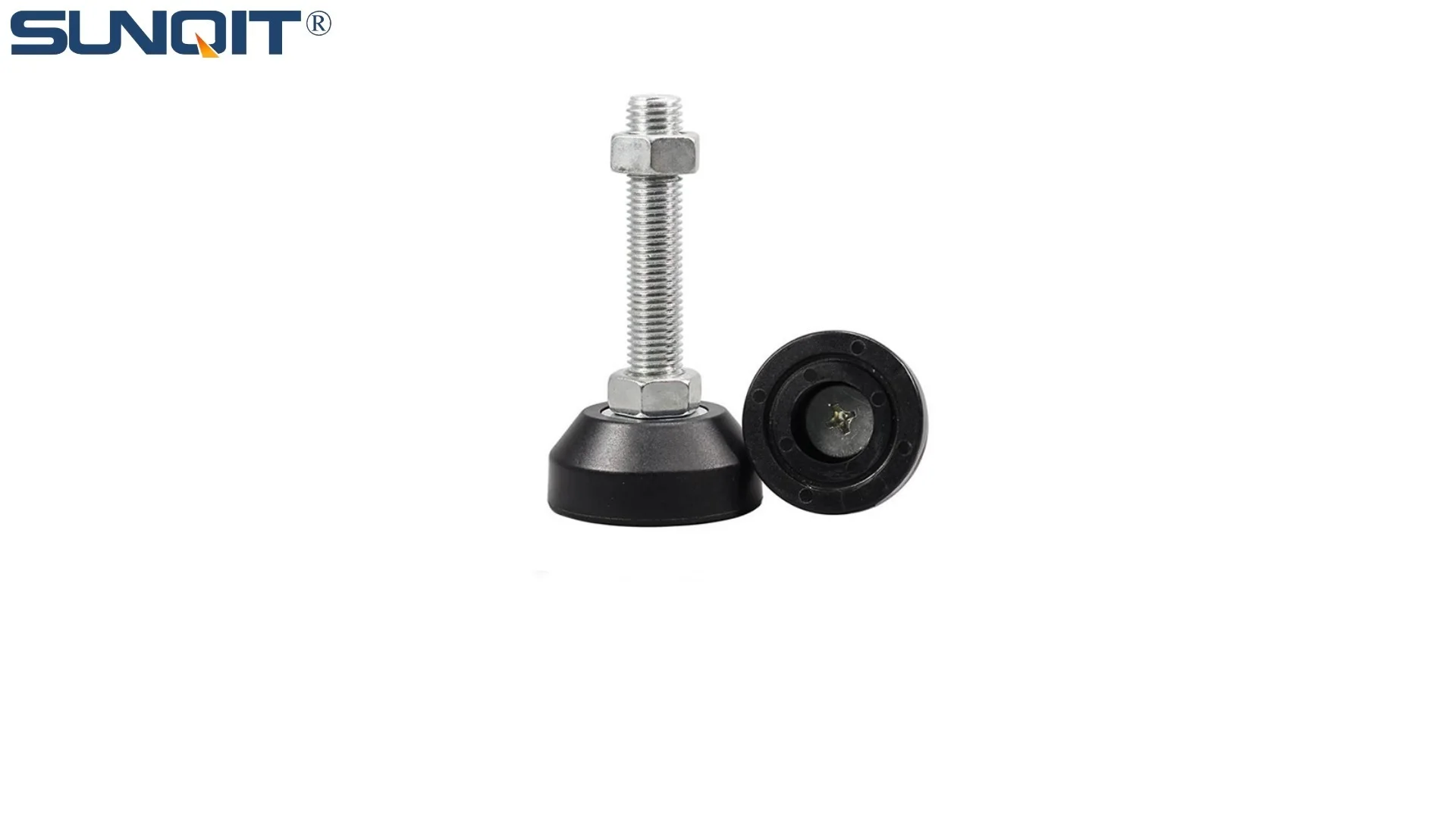
Walk through any mechanical manufacturing facility, and your eyes will likely be drawn to the big-ticket items: the roaring machinery, the sleek assembly lines, the workers in crisp uniforms piecing together everything from automotive parts to electronics. But if you look closer—down at the base of those workbenches, the legs of material racks, or the feet of inspection stations—you'll find a humble hero keeping everything steady: rubber leveling feet. Specifically, the M10*56 rubber leveling feet. These small, unassuming components are the unsung champions of precision, stability, and safety in manufacturing environments.
At first glance, a leveling foot might seem like little more than a metal rod with a rubber cap. But in reality, it's a carefully engineered solution to a host of everyday challenges in manufacturing. Uneven concrete floors? They compensate. Vibrations from nearby machinery? They dampen. Heavy tools slamming down on work surfaces? They absorb the shock. For anyone who's ever struggled with a wobbly table while trying to write—or, worse, assemble a delicate part—you know how critical stability is. In manufacturing, where a fraction of an inch can mean the difference between a functional product and a costly error, that stability becomes even more vital.
In this article, we'll dive into the world of M10*56 rubber leveling feet: what they are, how they work, and why they're a staple in mechanical manufacturing workstations. We'll explore their role in supporting everything from basic aluminum tube workbenches to complex lean pipe workbench setups, and even touch on how they pair with other components like caster wheels for maximum flexibility. By the end, you'll understand why these small parts deserve just as much attention as the high-tech machinery they support.


