- Company Articles
- Products and Technology
- Product knowledge
- M10*56 Rubber Leveling Feet for Telecommunication Equipment Workbenches

M10*56 Rubber Leveling Feet for Telecommunication Equipment Workbenches
Related Product
M10*56 Rubber Leveling Feet
Adjustable leveling feet are designed to keep machines level when placed on uneven or sloped ground. Otherwise known as adjustable equipment feet, they are available to order in a wide variety of size and load capacity combinations.
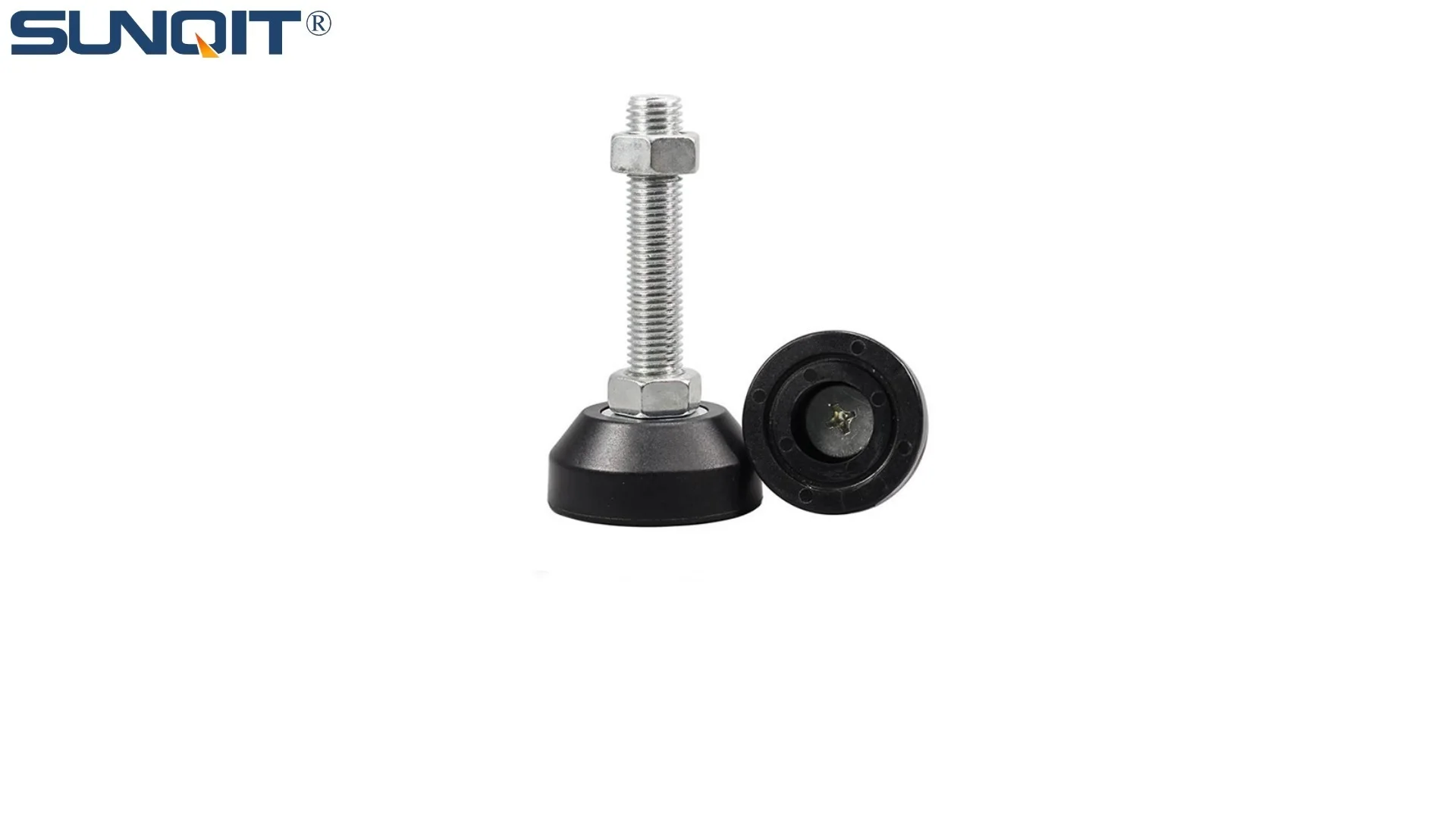
Let's set the scene: It's a busy Tuesday morning in a telecom repair facility. Maria, a lead technician, is knee-deep in configuring a new router for a client. The workbench in front of her holds a stack of sensitive equipment—fiber optic modems, circuit boards, and a precision multimeter. As she reaches for a screwdriver, the bench wobbles slightly. Not a huge movement, but enough to make her pause. She adjusts the router, but the wobble returns when she leans on the bench to plug in a cable. "Great," she mutters, "now I've got to recheck all these connections because the bench won't stay steady." Sound familiar? If you've ever worked with delicate equipment, you know how a tiny instability can snowball into wasted time, frustration, and even costly mistakes. That's where the unsung hero of workbench stability comes in: the M10*56 rubber leveling feet. These small but mighty components might not grab headlines, but they're the foundation of a reliable, efficient workspace—especially for telecommunication setups where precision is non-negotiable.
What Are M10*56 Rubber Leveling Feet, Anyway?
Before we dive into why they're game-changers for telecom workbenches, let's break down the basics. M10*56 rubber leveling feet are adjustable support components designed to stabilize workbenches, racks, and machinery on uneven surfaces. Let's decode the name first: "M10" refers to the metric thread size (10mm in diameter), and "56" indicates the length of the threaded rod (56mm). The "rubber" part? That's the material of the base, which sits between the thread and the floor. Simple enough, right? But don't let their simplicity fool you. These feet are engineered to solve a critical problem: uneven floors. Whether your facility has slightly sloped concrete, worn tiles, or just the natural settling that happens in older buildings, M10*56 rubber leveling feet adapt to those inconsistencies, keeping your workbench—and everything on it—perfectly level.
At first glance, they might look like just another hardware part, but their design is surprisingly thoughtful. The threaded rod allows for precise height adjustment: twist the foot clockwise to raise the bench, counterclockwise to lower it. The rubber base, often textured or ribbed, does two key things: it grips the floor to prevent sliding, and it absorbs vibrations—essential for telecom gear that's sensitive to movement. And because they're made with durable rubber (typically a blend of natural and synthetic rubber for flexibility and resistance to wear), they stand up to the daily grind of a busy workshop, from oil spills to heavy equipment loads.
Why Stability Matters More Than You Think in Telecom Workbenches
Telecommunication equipment isn't like your average desk lamp. These are devices with tiny, intricate components: microchips smaller than a fingernail, fiber optic cables that fray at the slightest bend, and sensors that measure signals in milliseconds. A wobbly workbench doesn't just make tasks harder—it introduces real risks. Let's break it down:
1. Precision Work Demands a Steady Surface When Maria was configuring that router, she was working with ports that require exact alignment. A 1mm misalignment when plugging in a fiber cable can lead to signal loss or even damage the connector. On an unstable bench, even a small nudge can throw off that alignment. Multiply that by dozens of connections a day, and suddenly you're looking at hours of rework.
2. Vibration Kills Sensitive Electronics Telecom equipment, especially testing tools like oscilloscopes or spectrum analyzers, relies on stable readings. Vibrations from a wobbly bench (or even foot traffic nearby) can (interfere with) these readings, leading to inaccurate data. Imagine diagnosing a network issue based on a faulty reading—you might spend days chasing a problem that doesn't exist, all because the bench couldn't stay still.
3. Safety First A workbench that rocks back and forth isn't just annoying—it's a safety hazard. Heavy equipment like servers or battery backups can slide off, risking injury to technicians or damage to the gear. Even lighter tools, like soldering irons or wire cutters, become dangerous if they topple over. OSHA estimates that over 20% of workplace accidents involve unstable equipment—numbers that could easily be reduced with proper leveling.
4. Compliance and Quality Control Many telecom facilities operate under strict industry standards (think ISO certifications or telecom regulatory requirements). These standards often mandate stable work environments to ensure consistent, repeatable results. A wobbly bench isn't just a hassle; it could put your facility out of compliance, leading to audits, fines, or lost contracts.
So, stability isn't just about comfort—it's about efficiency, safety, and professionalism. And that's where adjustable leveling feet, specifically the M10*56 rubber variant, step in to save the day.

Key Features of M10*56 Rubber Leveling Feet: Built for Telecom Workbenches
Not all leveling feet are created equal. The M10*56 rubber leveling feet stand out for a few key reasons, each tailored to the unique demands of telecom workbenches. Let's unpack their standout features:
1. The Rubber Base: Grip, Vibration Dampening, and Floor Protection
The rubber base is where the magic happens. Unlike plastic feet (which can slip on smooth floors) or metal feet (which scratch surfaces and conduct vibrations), rubber strikes the perfect balance. Its natural friction creates a non-slip grip, even on polished concrete or tile—critical when you're moving equipment around on the bench. But it's the vibration dampening that's a game-changer for telecom gear. Rubber absorbs small shocks, whether from a technician leaning on the bench or a nearby machine running. This means less interference with sensitive tools and fewer errors in readings. Plus, the rubber is gentle on floors, preventing scuffs and dents—important if your facility has strict maintenance standards or polished surfaces.
2. Adjustable Thread: Fine-Tuning for Any Surface
The M10*56's 56mm threaded rod isn't arbitrary. It's long enough to accommodate most common floor unevenness (up to about 20mm of adjustment, depending on the bench design) but not so long that it becomes wobbly itself. The threading is precise, with a pitch that allows for small, incremental height changes—down to 1mm adjustments. That level of control means you can dial in the perfect height for your workbench, whether you need to align it with a conveyor belt, match the height of a neighboring station, or just compensate for a particularly bumpy spot in the floor. Maria, in our earlier example, could have twisted the feet a few times and eliminated that wobble in under a minute—no shims, no makeshift fixes, just a quick adjustment.
3. Durable Construction: Built to Last in Busy Environments
Telecom facilities aren't exactly gentle on equipment. Spills (oil, cleaning solutions), heavy loads (those servers can weigh 50+ pounds), and constant foot traffic are par for the course. M10*56 rubber leveling feet are built to handle that abuse. The rubber is often reinforced with a metal core (usually steel) to prevent bending under heavy loads, and the threaded rod is coated to resist rust and corrosion. Even the nut that secures the foot to the bench is designed to stay tight, with some models featuring lock washers to prevent loosening over time. In short, these feet won't need replacing every few months—they're in it for the long haul.
4. Compatibility with Workbench Designs: From Lean Pipe to Aluminum Profile
Telecom workbenches come in all shapes and sizes, but two designs are particularly common: lean pipe workbenches and aluminum profile workbenches. The beauty of M10*56 rubber leveling feet is that they play well with both. Lean pipe workbenches, made from modular steel pipes and joints, often have pre-drilled holes in the frame—perfect for screwing in the M10 thread. Aluminum profile workbenches, with their T-slot grooves, can use specialized brackets to attach the feet securely. This versatility means you don't have to overhaul your entire workspace to upgrade to stable feet; they'll fit right into your existing setup.

How M10*56 Rubber Leveling Feet Integrate with Workbenches: A Closer Look
Let's get practical: How do these feet actually attach to a workbench, and why does that matter for telecom setups? Let's take two common workbench types—lean pipe workbenches and aluminum profile workbenches—and see how M10*56 feet fit in.
Lean Pipe Workbenches: Modular Stability
Lean pipe workbenches are beloved in telecom facilities for their flexibility. Made from lightweight steel pipes (often called "lean tubes") and connectors, they can be customized to fit any workspace—add a shelf here, a tool rack there, or adjust the height on the fly. But that modularity can sometimes lead to stability issues if not properly supported. Enter M10*56 rubber leveling feet. Most lean pipe bench frames have square or rectangular tubing at the base, with pre-drilled holes for attaching feet. The M10 thread screws directly into these holes, and the rubber base sits flush against the floor. Because lean pipe benches are often moved or reconfigured, the adjustable nature of these feet is key—if you relocate the bench to a new spot with uneven flooring, a quick twist of the feet gets it level again. No need for shims or re-drilling; just adjust and go.
Aluminum Profile Workbenches: Precision Meets Strength
Aluminum profile workbenches are another staple in telecom shops, prized for their rigidity and clean, modern design. These benches use extruded aluminum profiles (think T-slots and grooves) that allow for easy attachment of accessories—shelves, lights, even tool holders. Attaching M10*56 rubber leveling feet to aluminum profiles is a breeze, thanks to T-slot nuts. You slide a nut into the profile's groove, align the foot's mounting plate over the nut, and tighten a bolt. This creates a secure, wobble-free connection. What's great about aluminum profiles is their precision—since the profiles are extruded to exact specifications, the feet can be positioned with millimeter accuracy, ensuring the bench is level from corner to corner. For telecom techs working with microscopes or laser alignment tools, that level of precision is irreplaceable.
Whether your bench is lean pipe, aluminum, or a custom build, the M10*56 rubber leveling feet adapt. They're not just a "one-size-fits-all" solution—they're a "one-size-fits-smartly" solution, designed to work with the setups you already have.

M10*56 vs. Other Leveling Feet: Why Rubber Beats the Rest
You might be thinking, "Can't I just use any leveling feet? What makes M10*56 rubber ones so special?" Let's compare them to other common options to see why they're the top choice for telecom workbenches.
| Feature | M10*56 Rubber Leveling Feet | Plastic Leveling Feet | Metal-Only Leveling Feet | Wooden Shims (DIY "Leveling") |
|---|---|---|---|---|
| Non-Slip Grip | Excellent—rubber's natural friction prevents sliding | Poor—plastic can slip on smooth floors, especially when wet | Fair—metal can scratch floors and slide under heavy loads | Terrible—shims shift easily, especially with movement |
| Vibration Absorption | High—rubber dampens shocks and vibrations | Low—hard plastic transfers vibrations to the bench | Very Low—metal conducts vibrations, amplifying instability | Low—wood absorbs some vibration but compresses over time |
| Adjustability | High—precise thread allows 1mm increments | Limited—some plastic feet have coarse threads or fixed height | High—metal threads are durable, but no vibration dampening | None—shims are fixed; you need to add/remove to adjust |
| Floor Protection | Excellent—rubber won't scratch or dent floors | Good—plastic is gentle, but can wear down quickly | Poor—metal scrapes concrete/tile; risks rust stains | Fair—wood is gentle, but can splinter and leave debris |
| Durability | High—rubber resists wear, metal core prevents bending | Low—plastic cracks under heavy loads or temperature changes | High—metal is strong, but prone to rust without coating | Very Low—wood warps, rots, or breaks with minimal use |
The table says it all: M10*56 rubber leveling feet strike the perfect balance of grip, adjustability, and durability—all while protecting your floors and dampening vibrations. Plastic feet are cheap but wear out fast; metal feet are strong but noisy and slippery. And let's not even get started on wooden shims—they're a temporary fix at best, a liability at worst. For telecom workbenches, where stability and precision are non-negotiable, rubber is the clear winner.
Installation 101: How to Set Up M10*56 Rubber Leveling Feet (It's Easier Than You Think)
You've decided to upgrade to M10*56 rubber leveling feet—great choice! Now, how do you install them? Don't worry; you don't need to be a master mechanic. Here's a step-by-step guide to get your workbench stable in no time:
Tools You'll Need
• Adjustable wrench or socket set (to tighten the feet)
• Spirit level (the longer, the better—24" or more for accuracy)
• Marker (to note high/low spots)
• Optional: Thread locker (like Loctite) to prevent feet from loosening over time
Step 1: Prepare the Workbench
Clear everything off the bench—tools, equipment, even that half-empty coffee mug. You need a clean surface to work with. If the bench is currently on wheels or old feet, remove those first. Most feet are attached with bolts or screws; use your wrench to loosen and remove them.
Step 2: Identify Uneven Spots
Place the spirit level on the bench, both lengthwise and widthwise. Note where the bubble leans—this tells you which corners are higher or lower. For example, if the bubble drifts to the right when the level is lengthwise, the right side is higher than the left. Mark these spots with your marker so you remember which feet need adjusting.
Step 3: Attach the M10*56 Feet
Screw the M10*56 rubber feet into the mounting holes on the bench legs. Start by hand—this prevents cross-threading. Once they're hand-tight, use the wrench to give them a final snug (but don't over-tighten—you'll need to adjust them soon). If your bench uses T-slot aluminum profiles, attach the feet using T-slot nuts as mentioned earlier.
Step 4: Adjust for Level
Place the spirit level back on the bench. Start with the lowest corner (the one where the bubble was leaning away from). Twist the foot clockwise to raise that corner; check the level. Keep adjusting until the bubble is centered. Move to the next uneven corner and repeat. Go back and forth between corners—adjusting one foot can affect others, so you might need to fine-tune a few times. Pro tip: For extra precision, check the level in both directions (length and width) after each adjustment.
Step 5: Lock Them In
Once the bench is perfectly level, tighten the lock nut (if your feet have one) against the bench leg to prevent the foot from twisting. If you're using thread locker, apply a small drop to the threads before final tightening. Wipe away any excess—you don't want it dripping on the floor.
Step 6: Test It Out
Give the bench a gentle shake. It should feel solid, no wobbling. Place a heavy object (like a toolbox) on different corners to test stability. If it still moves, double-check your level readings—you might have missed a spot. Once it's steady, reload your equipment and get back to work. Maria would approve.
Maintaining Your M10*56 Rubber Leveling Feet: Keep Them Stable for Years
Like any piece of equipment, M10*56 rubber leveling feet need a little TLC to stay in top shape. Luckily, maintenance is minimal—just a few quick checks every month or so will keep them performing like new:
• Clean the Rubber Base
Dirt, dust, and oil can build up on the rubber base, reducing its grip. Wipe the base with a damp cloth (mild soap and water for greasy spots) to remove debris. Avoid harsh chemicals like bleach or solvents—they can degrade the rubber over time.
• Check for Wear
Inspect the rubber base for cracks, tears, or flattening. If the base is worn down (you'll notice less grip or more wobble), it's time to replace the foot. Most manufacturers recommend replacing feet every 2-3 years under heavy use, but with proper care, they can last longer.
• Tighten Loose Threads
Over time, vibrations can loosen the feet. Give each foot a gentle twist with a wrench every month to ensure they're tight. If you notice a foot keeps loosening, apply a small amount of thread locker to the threads—it'll keep them secure without making future adjustments impossible.
• Adjust for Seasonal Changes
Floors can expand or contract with temperature and humidity changes (especially concrete). A level bench in summer might wobble in winter. Do a quick level check with your spirit level every few months, and adjust the feet as needed.
Real-World Impact: How M10*56 Feet Transform Telecom Workspaces
Still not convinced these feet are worth the investment? Let's hear from a few telecom professionals who made the switch:
Case 1: A Small Repair Shop in Chicago "We used to use wooden shims under our workbenches—total nightmare," says Raj, owner of Windy City Telecom Repairs. "Every time we moved a bench, we'd have to hunt for new shims, and they'd always slip. We switched to M10*56 rubber feet last year, and it's been a game-changer. Our techs aren't wasting time adjusting equipment anymore, and we've had zero accidents from sliding gear. Best $50 we ever spent per bench."
Case 2: A Large Telecom Provider's Data Center "In our data center, we have rows of testing benches for server configurations," explains Jamie, facilities manager at a major telecom company. "We were seeing inconsistent test results, and we couldn't figure out why. Then we realized the benches were all slightly wobbly from foot traffic. We installed M10*56 feet on every bench, and within a week, our test accuracy improved by 15%. That translates to fewer failed deployments and happier clients."
Case 3: A University Telecom Lab "Our students work with delicate fiber optic equipment, and we were constantly replacing broken connectors," says Dr. Lee, a professor of telecommunications. "We thought it was user error until we noticed the lab benches wobbled when students leaned on them. We added M10*56 rubber feet, and now connector breakage is down 80%. The students are more confident, and our lab budget is finally under control."
These stories aren't outliers. They're proof that small upgrades—like quality leveling feet—can have a big impact on productivity, safety, and bottom-line results.
Final Thoughts: Stability as the Foundation of Great Work
At the end of the day, M10*56 rubber leveling feet are more than just hardware—they're an investment in your team's ability to do great work. Think about it: Every minute saved from rechecking connections, every tool that stays in place, every piece of equipment that avoids damage—those add up. In telecom, where deadlines are tight and precision is everything, stability isn't a luxury; it's a necessity.
So, the next time you're in a telecom facility, take a look under the workbenches. Chances are, the ones with M10*56 rubber leveling feet are the ones where the techs are focused, efficient, and confident. And isn't that what we all want? A workspace that supports us, so we can focus on what really matters: solving problems, serving clients, and keeping the world connected.
Maria, by the way? After her facility upgraded to M10*56 feet, she finished configuring that router 45 minutes early. She even had time to help a new tech set up their bench. "Who knew feet could make such a difference?" she (said with a smile). We did, Maria. We did.