
In the world of lean manufacturing, where every second counts and waste is the enemy, there's a silent player that can make or break your production line's efficiency: stability. Picture this: a busy assembly floor, workers hunched over workbenches, carefully fitting tiny components into a product. Now, imagine that workbench wobbling slightly with every movement—tools slide, parts misalign, and suddenly, what should take 5 minutes takes 10. That's where the unsung heroes of lean systems come in: leveling feet. Specifically, the M10*56 Rubber Leveling Feet, a small but mighty component that transforms wobbly workbenches into rock-solid foundations for precision and productivity. Today, we're diving deep into how these unassuming feet elevate Workbench E (single deck-without caster) and why they're a non-negotiable for any lean system aiming to thrive.
What Are M10*56 Rubber Leveling Feet, Anyway?
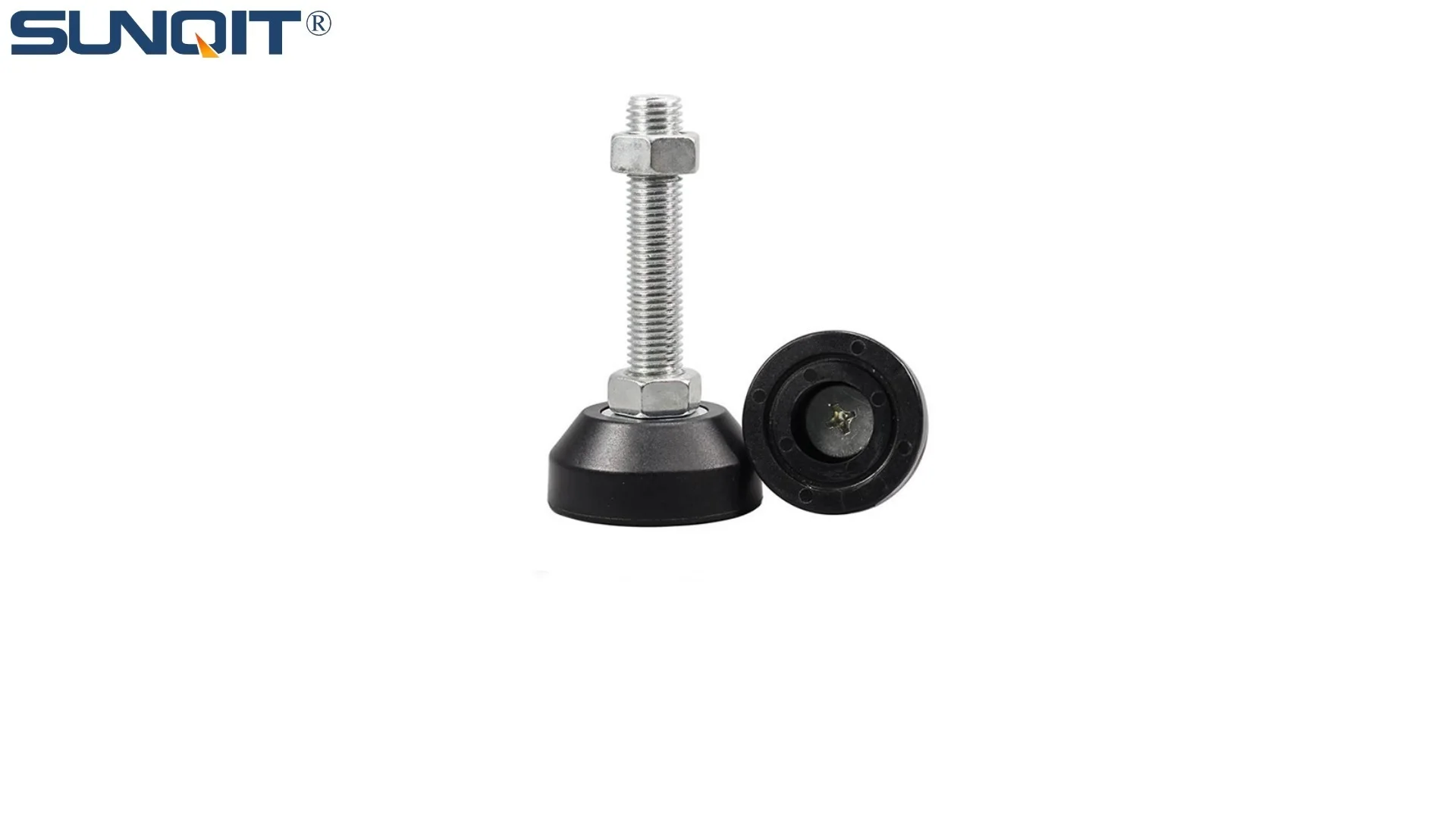
Let's start with the basics. M10*56 Rubber Leveling Feet might sound like technical jargon, but break it down, and it's surprisingly straightforward. The "M10" refers to the metric thread size—10mm in diameter—meaning they screw into compatible threaded holes on workbenches or machinery. The "56" is the length of the threaded rod, 56mm, which gives you enough adjustability to compensate for uneven floors (and trust us, even the "level" floors in workshops are rarely perfectly flat). The "Rubber" part? That's the star of the show: a durable rubber base that grips the floor, dampens vibrations, and prevents slipping. Think of them as the workbench's shoes—sturdy, supportive, and designed to keep it steady no matter what.
These feet aren't just random hardware store finds, either. They're engineered for industrial environments, where heavy tools, constant movement, and harsh conditions are the norm. The metal thread (usually steel or zinc-plated for corrosion resistance) ensures they can handle the weight of a fully loaded Workbench E—think power tools, bins of parts, and even a worker leaning on the edge. The rubber base, often made from a high-density, oil-resistant compound, won't degrade when exposed to lubricants or cleaning chemicals, which is a must in manufacturing settings. In short, they're built to last, so you won't be replacing them every few months.
Why Stability Matters in Lean Systems (Spoiler: It's Everything)
Lean systems are all about eliminating waste—whether that's time, materials, or effort. But here's the thing: instability is a silent waste generator. Let's say you're assembling circuit boards on Workbench E. If the bench wobbles, your hand trembles slightly as you place a resistor, and suddenly you've soldered it to the wrong pad. Now you're spending time desoldering, cleaning the pad, and redoing the work—waste. Or imagine a worker having to constantly readjust their posture to compensate for a tilted bench, leading to fatigue and, over time, ergonomic injuries. That's not just waste; it's a hit to morale and productivity.
Stability also ties directly to precision. In lean manufacturing, especially in industries like electronics or automotive, even a millimeter of misalignment can ruin a product. A stable workbench ensures that measurements are accurate, tools stay where you put them, and parts line up as they should. It's the foundation (literally) for consistent quality, which reduces rework and scrap. And let's not forget safety: a wobbly workbench is a hazard. Tools can slide off, causing damage or injury, and stacked materials might topple. M10*56 Rubber Leveling Feet don't just improve efficiency—they make the workplace safer, which is priceless in any lean system.

Workbench E: The Backbone of Assembly Lines
Now, let's talk about the star of our story: Workbench E (single deck-without caster). If you've walked through a manufacturing plant, you've probably seen one—or a dozen. It's the workhorse of assembly lines: a single, sturdy deck (no wheels, hence "without caster") designed for tasks that require a fixed, reliable surface. From kitting parts to final assembly, Workbench E is where the magic happens. But here's the catch: without proper leveling feet, even the best Workbench E is just a heavy table waiting to cause problems.
Workbench E is often made with aluminum profile frames—lightweight, strong, and easy to customize with accessories like shelves or tool holders. Aluminum profile is a favorite in lean systems because it's modular; you can reconfigure the bench as your needs change. But aluminum, while rigid, isn't self-leveling. Place it on a floor with a slight slope (common in older factories or areas near loading docks), and suddenly one corner is higher than the others. That's where M10*56 Rubber Leveling Feet step in. They screw into the bottom of the aluminum profile legs, allowing you to adjust each foot individually until the bench is perfectly level. No more shimming with washers or wood blocks (a temporary fix that always slips eventually)—just precise, tool-free adjustment (most feet can be turned by hand, though a wrench helps for extra tightness).

Features of M10*56 Rubber Leveling Feet: Why They Stand Out
Not all leveling feet are created equal. So what makes M10*56 Rubber Leveling Feet the go-to choice for Workbench E and lean systems? Let's break down their key features:
Adjustable Height: Conquering Uneven Floors
The 56mm length of the threaded rod isn't arbitrary. It gives you up to about 40mm of adjustment range (since part of the rod screws into the bench leg), which is more than enough to handle most floor irregularities. Whether your workshop has a slight dip near the door or a raised concrete seam, you can twist the foot up or down to level the bench. This adjustability is crucial because "good enough" leveling just isn't—even a 1° tilt can throw off precision tasks.
Rubber Base: Grip, Vibration, and Noise Reduction
The rubber base does triple duty. First, it grips the floor, so the workbench doesn't slide when you push a heavy bin onto it or yank a tool from a drawer. Second, it dampens vibrations—important if you're using power tools on the bench, as vibrations can travel through the frame and shake delicate parts. Third, it reduces noise. Ever heard a metal workbench leg scrape across concrete? It's (ear-piercing). Rubber muffles that sound, making the workshop a quieter, less stressful place to work.
Corrosion Resistance: Built for the Long Haul
Workshops are messy places. Oil drips, coolant splashes, and cleaning agents can take a toll on metal parts. That's why the threaded rod of M10*56 Rubber Leveling Feet is often zinc-plated or coated with a rust-resistant finish. This means they won't start to corrode after a few months of exposure to moisture or chemicals, ensuring they maintain their strength and adjustability over time.
Easy Installation: No Fuss, No Tools (Mostly)
Installing these feet is a breeze. If Workbench E has pre-drilled M10 threaded holes in its legs (which most industrial workbenches do), you just screw the feet in by hand. Tighten them with a wrench if you want extra security, but even hand-tight is usually enough for stability. No need for special tools or complicated instructions—perfect for busy maintenance teams or even workers setting up their own stations.

Installing M10*56 Rubber Leveling Feet on Workbench E: A Step-by-Step Guide
Curious how to actually put these feet on your Workbench E? It's simpler than you might think. Here's a quick walkthrough:
- Unpack the Feet: Check that you have all four feet (most workbenches have four legs, so you'll need four feet). Inspect the threads for any damage—they should be smooth and free of burrs.
- Turn the Workbench Upside Down (If Needed): If your Workbench E is light enough (aluminum profile makes this easier), flip it upside down so the legs are accessible. If it's too heavy, prop each leg up one at a time with a block of wood.
- Screw in the Feet: Align the threaded rod with the hole in the leg and start twisting by hand. Turn clockwise to tighten. You should feel resistance, but it shouldn't require excessive force. If it does, check that the threads are aligned—cross-threading can damage the leg or the foot.
- Level the Bench: Once all feet are installed, place the bench back in its final position. Use a spirit level on the deck—both side-to-side and front-to-back. If it's not level, twist the appropriate foot: clockwise to raise that corner, counterclockwise to lower it. Repeat until the bubble is centered.
- Test for Stability: Give the bench a gentle shake. It should feel solid, with no wobbling. Place a heavy object (like a toolbox) on different corners to ensure it doesn't tip. If it moves, double-check your leveling.
Pro tip: If you're installing multiple Workbench E units in a line, level them relative to each other too. A slight height difference between adjacent benches can throw off workflow—imagine sliding parts from one bench to the next only to have them get stuck on a ledge.
Benefits in Production Assembly: Beyond Just "Not Wobbling"
Okay, so M10*56 Rubber Leveling Feet keep Workbench E stable. But how does that translate to real-world benefits in production assembly? Let's count the ways:
Faster Assembly Times
When the bench is stable, workers don't waste time readjusting parts or correcting mistakes. A study by the Lean Manufacturing Institute found that unstable work surfaces can slow down tasks by up to 15%—that adds up over a shift, a week, a year. With leveling feet, tasks that used to take 10 minutes now take 8.5, and over 200 workdays, that's an extra 50 hours of productivity per worker. Multiply that by your team size, and the ROI becomes clear.
Reduced Rework and Scrap
Precision tasks (like soldering, labeling, or aligning components) demand stability. A wobbly bench increases the chance of errors, which means more rework (wasted time) and more scrap (wasted materials). In electronics manufacturing, for example, a single misaligned chip can render a circuit board useless. By keeping Workbench E steady, M10*56 Rubber Leveling Feet cut down on these costly mistakes, boosting your first-pass yield.
Better Ergonomics for Workers
Ergonomics isn't just about chair height or monitor position—it's about the work surface too. A tilted bench forces workers to lean or twist to compensate, leading to back, neck, and shoulder strain. Over time, this can cause chronic pain and increased absenteeism. Leveling feet ensure the deck is flat and at the right height, so workers can maintain neutral postures, reducing fatigue and injury risk. Happier, healthier workers are more engaged and productive—another win for lean systems.
Longer Lifespan for Workbench E
Wobbling doesn't just affect the work—it affects the bench itself. Constant movement stresses the aluminum profile joints, loosens screws, and can even bend the frame over time. By distributing weight evenly across all four legs (thanks to leveling feet), you reduce wear and tear, extending the life of Workbench E. Instead of replacing the bench every 3 years, you might get 5 or more—saving on replacement costs.
M10*56 Rubber Leveling Feet vs. Other Leveling Solutions: Why Rubber Wins
You might be thinking, "Can't I just use plastic leveling feet? Or metal ones without rubber?" Let's compare:
| Solution | Grip | Vibration Dampening | Noise Reduction | Durability in Industrial Settings |
|---|---|---|---|---|
| M10*56 Rubber Leveling Feet | Excellent (rubber base grips floor) | High (rubber absorbs vibrations) | High (rubber muffles contact noise) | Excellent (corrosion-resistant thread, oil-resistant rubber) |
| Plastic Leveling Feet | Poor (smooth plastic slides easily) | Low (hard plastic transmits vibrations) | Medium (quieter than metal, but less than rubber) | Low (plastic degrades in heat/oil, cracks under heavy weight) |
| Metal-Only Leveling Feet | Medium (metal on concrete can slip when wet) | Low (metal conducts vibrations) | Poor (metal scraping on concrete is loud) | Good (but prone to rust without coating; no vibration dampening) |
| Wooden Shims (Temporary Fix) | Variable (depends on shim quality; slips over time) | Low (wood compresses, losing effectiveness) | Medium (but shims shift, causing noise) | Poor (rots, cracks, or compresses within months) |
As you can see, rubber leveling feet outperform the alternatives across the board, especially in industrial settings. Plastic is cheap but flimsy, metal-only lacks grip and vibration control, and shims are a band-aid, not a solution. M10*56 Rubber Leveling Feet strike the perfect balance of performance and durability, making them worth the small upfront investment.
Case Study: How a Electronics Manufacturer Boosted Efficiency with Leveling Feet
Let's put this all into context with a real-world example (names changed for privacy). Acme Electronics, a mid-sized manufacturer of printed circuit boards (PCBs), was struggling with high rework rates on their assembly line. Workers reported that the Workbench E units they used for component placement were "wobbly," especially near the back wall where the floor sloped slightly. Rework rates hovered around 8%, meaning 8 out of every 100 PCBs had to be repaired or scrapped. Production managers tried wooden shims, but they kept slipping, and the problem persisted.
In consultation with their lean system supplier, they decided to upgrade to M10*56 Rubber Leveling Feet on all 12 Workbench E units. The installation took a morning—each bench was leveled with a spirit level, and the feet were tightened. Within a week, workers noticed a difference: "The bench doesn't move when I use the soldering iron," one technician said. "I can place components exactly where they need to go without my hand shaking."
After three months, Acme tracked their metrics: rework rates dropped to 3%, a 62.5% improvement. Assembly time per PCB decreased by 12%, and worker absenteeism due to ergonomic issues fell by 20%. The plant manager, Maria Gonzalez, summed it up: "We thought stability was a small thing, but it was holding us back. The leveling feet paid for themselves in two months, just from reduced scrap and faster assembly."
Conclusion: The Small Part That Makes a Big Difference
Lean systems thrive on attention to detail—the little things that add up to big results. M10*56 Rubber Leveling Feet might not be as flashy as a new conveyor system or a high-tech robot, but they're a foundational piece of the puzzle. For Workbench E (single deck-without caster), they turn an ordinary workbench into a precision tool, eliminating waste, boosting productivity, and keeping workers safe and comfortable.
So, if you're building or upgrading a lean system, don't overlook the feet. Invest in quality M10*56 Rubber Leveling Feet. Your workers will thank you (they'll notice the difference), your bottom line will thank you (fewer errors, faster production), and your lean system will run smoother than ever. After all, in lean manufacturing, stability isn't just a nice-to-have—it's the first step toward excellence.