- Company Articles
- Products and Technology
- Product knowledge
- M10*56 Rubber Leveling Feet: Heat Resistance in High-Temp Environments

M10*56 Rubber Leveling Feet: Heat Resistance in High-Temp Environments
Related Product
M10*56 Rubber Leveling Feet
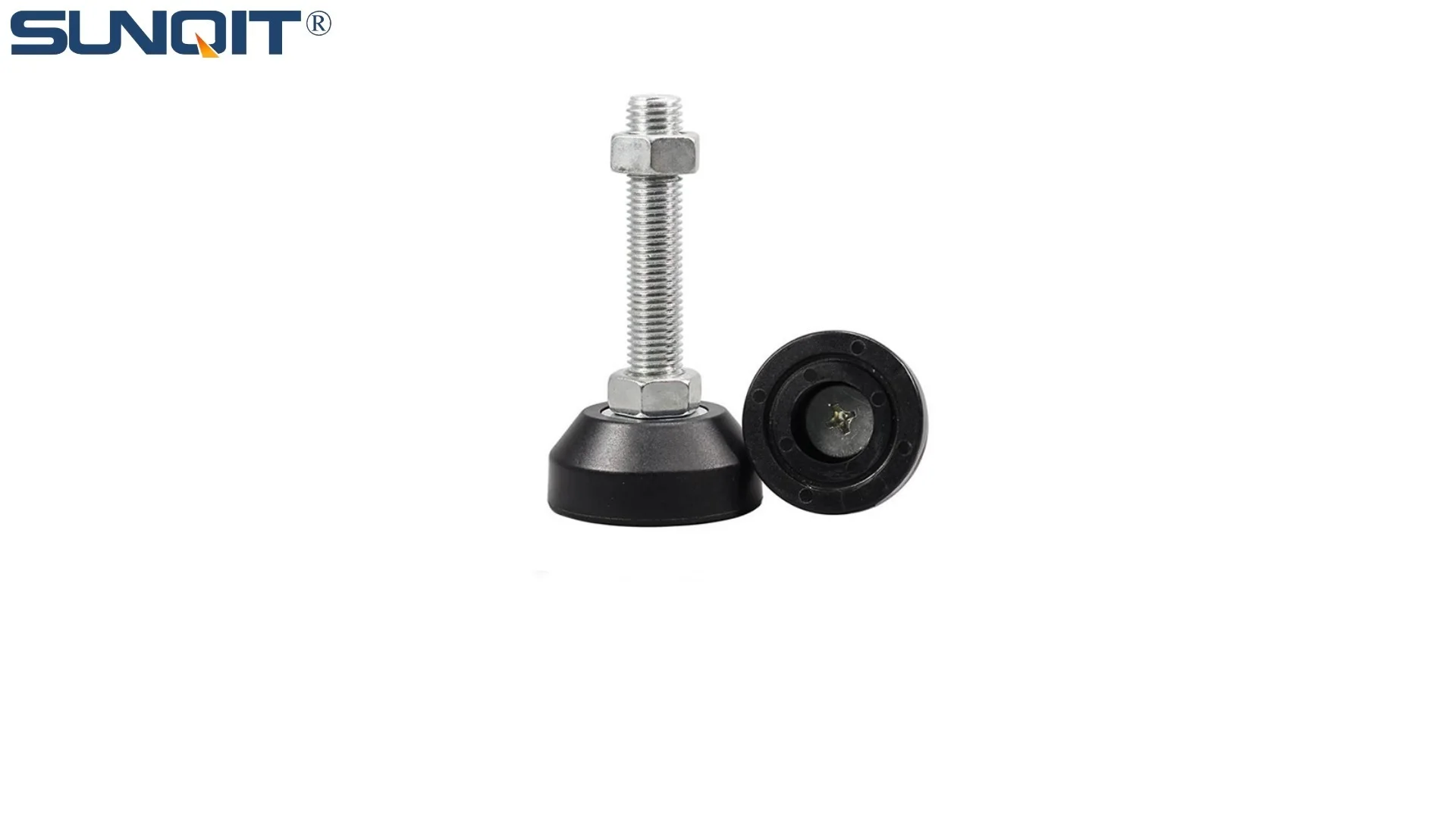
Adjustable leveling feet are designed to keep machines level when placed on uneven or sloped ground. Otherwise known as adjustable equipment feet, they are available to order in a wide variety of size and load capacity combinations.
Let's start by painting a picture we've all seen (or maybe even experienced): a busy manufacturing floor, the air thick with the hum of machinery and the faint smell of hot metal. Workers hustle to keep up with production, eyes focused on assembling delicate components. But here's the problem—by mid-morning, the temperature in the workshop has climbed to 105°F (40°C), and that once-sturdy workbench in the corner? It's started to wobble. Just a little at first, but enough to make the circuit boards on top shift. A few hours later, a solder joint is misaligned, a part is scrapped, and the team is left scratching their heads. "Why is this happening?" they wonder. The answer, more often than not, lies in the small but mighty components holding that workbench up: the leveling feet.
When temperatures rise, materials expand, floors warp slightly, and standard rubber feet can soften or lose their grip. That's where the M10*56 rubber leveling feet come in. These unassuming little tools are quietly solving big problems in high-heat environments, keeping workbenches stable, products intact, and workflows on track. In this article, we'll dive into what makes these feet special, why heat resistance matters, and how they're becoming a go-to solution for lean pipe workbenches, aluminum profile workstations, and beyond.
First Things First: What Are M10*56 Rubber Leveling Feet?
You might be thinking, "Leveling feet? Aren't those just the knobs under a table to stop it from rocking?" Well, yes—and no. While the basic idea is the same, the M10*56 rubber leveling feet are engineered for heavy-duty, high-temperature scenarios. Let's break down the name: "M10" refers to the metric thread size (10mm diameter), "56" is the length of the threaded stem (56mm), and "rubber" is the material of the base that touches the floor. Simple enough, right? But it's the details that make these feet stand out.
Unlike the plastic or soft rubber feet you might find on a home desk, these are built to take a beating. The stem is typically made of galvanized steel or stainless steel, ensuring it won't rust or bend under heavy loads. The rubber base, though—that's the star of the show. It's formulated to resist heat, so even when the workshop hits 140°F (60°C) or more, it stays firm, grippy, and supportive.
Why Heat Resistance Matters (Spoiler: It's Not Just About Melting)
Here's the thing about high temperatures in industrial settings: they don't just make workers sweat—they mess with materials. Rubber, for example, is a polymer, and when it gets too hot, its molecular structure can break down. Soft rubber might start to "flow" or lose its shape, turning a stable support into a squishy, unreliable mess. Metal feet, on the other hand, conduct heat like a charm—great if you want to transfer heat from the floor to your workbench, but terrible if that workbench holds heat-sensitive components (looking at you, circuit boards and plastic parts).
Heat resistance in leveling feet isn't just about avoiding melting. It's about maintaining consistency . A foot that softens at 100°F might work fine in a climate-controlled office, but in a factory where soldering irons, ovens, or friction-heated machinery are running, that same foot becomes a liability. You need a foot that stays rigid enough to support the load, grippy enough to prevent sliding, and stable enough to keep your workbench level—even when the mercury spikes.

The Science Behind the Rubber: What Makes It Heat-Resistant?
Not all rubber is created equal. The M10*56 feet use a special blend, often EPDM (ethylene propylene diene monomer) rubber or silicone, both known for their temperature tolerance. Let's break down why these materials are so effective:
- EPDM Rubber: This stuff is a workhorse. It can handle continuous temperatures up to 212°F (100°C) and short bursts of 248°F (120°C) without breaking a sweat. It's also resistant to ozone, UV rays, and many chemicals—perfect for workshops where coolants, oils, or cleaning agents might spill.
- Silicone Rubber: For even hotter environments (think 300°F/150°C and above), silicone is the way to go. It's more expensive than EPDM but offers superior heat stability. You'll often find silicone-based M10*56 feet in industries like automotive manufacturing, where welding or paint curing ovens raise the ambient temperature.
But the rubber alone isn't enough. The design of the foot matters too. Most M10*56 feet have a large, flat rubber base (often 50-60mm in diameter) to spread the weight of the workbench evenly. This prevents "sinking" into soft floors or leaving indentations when temperatures rise. The threaded stem, usually made of steel, is precision-machined to allow (fine adjustment)—so even if the floor warps slightly, you can twist the foot to level the bench back out.

Beyond Heat: The Unsung Benefits of M10*56 Feet
Heat resistance is their claim to fame, but these feet bring more to the table. Let's talk about the other perks that make them a favorite among facility managers and lean system enthusiasts:
1. Adjustable Height for Uneven Floors
Factory floors are rarely perfect. Cracks, dips, and uneven concrete are par for the course. The M10*56 feet solve this with their adjustable stem. Twist the foot clockwise, and it extends; twist counterclockwise, and it retracts. This means you can fine-tune the height by up to 20mm (depending on the model), ensuring your lean pipe workbench stays level even on the wonkiest floors. No more shimming with pieces of wood or metal—just a quick twist, and you're good to go.
2. Vibration Dampening (Because Machinery Loves to Shake)
High temps aren't the only enemy of stability—vibration is, too. CNC machines, conveyor belts, and power tools all send tiny shakes through the floor, which can rattle delicate components on a workbench. The rubber base of these feet acts like a shock absorber, soaking up those vibrations before they reach your products. Imagine trying to stack Jenga blocks on a wobbly table versus a stable one—the difference is night and day. That's what these feet do for circuit boards, medical devices, or any precision part.
3. Floor Protection (Your Maintenance Team Will Thank You)
Metal leveling feet might be tough, but they're also hard on floors. Drag a metal-footed workbench across concrete, and you'll leave scratches; leave it in place, and it might even rust and stain. The rubber base of the M10*56 feet is soft enough to avoid damage but grippy enough to prevent sliding. This is a big win for facilities where floor upkeep matters—think food processing plants, cleanrooms, or workshops that pride themselves on a tidy appearance.
4. Load Capacity (They're Stronger Than They Look)
Don't let their size fool you—these feet can handle serious weight. A single M10*56 rubber leveling foot can typically support 500-800kg (1100-1760 lbs), depending on the material and design. That means a standard 4-legged workbench could hold 2000-3200kg (4400-7000 lbs) without breaking a sweat. For context, that's enough to support a small car (okay, maybe not a full car, but you get the idea). This makes them ideal for heavy-duty lean pipe workbenches loaded with tools, machinery, or bulk materials.

Where Do These Feet Shine? Real-World Applications
Now that we know what they do, let's talk about where they're actually used. M10*56 rubber leveling feet aren't one-trick ponies—they're popping up in all kinds of high-temperature workspaces. Here are a few examples:
Lean Pipe Workbenches in Automotive Manufacturing
Automotive plants are hotbeds of high temperatures. Welding stations, paint booths, and engine testing areas can push 120°F (49°C) or more. Lean pipe workbenches, built with lightweight but sturdy pipes and joints, are everywhere here—used for assembling parts, inspecting components, and staging materials. But without heat-resistant feet, these benches can become unstable. A friend of mine who manages a production line in Detroit once told me, "We used to go through standard rubber feet every 3 months. They'd soften in the summer heat, the benches would wobble, and we'd have to stop the line to readjust. Since switching to M10*56s, we haven't touched them in a year. Total game-changer."
Aluminum Profile Workstations in Electronics Assembly
Electronics manufacturing is all about precision. Soldering irons, heat guns, and reflow ovens generate localized heat, and even a tiny misalignment can ruin a circuit board. Aluminum profile workstations, with their modular, customizable designs, are perfect for these setups—but they need stable feet. The M10*56s here not only resist the heat from soldering but also dampen vibrations from nearby pick-and-place machines. One electronics factory in California reported a 25% drop in defective PCBs after upgrading their leveling feet—proof that small changes add up.
Conveyor Systems in Packaging Plants
Ever wonder how your morning cereal gets from the mixing bowl to the box? Conveyor systems. These lines run 24/7, with motors generating heat and sealing machines cranking up the temperature. If a conveyor is unlevel, packages tip, labels peel, and efficiency plummets. M10*56 feet are often used to stabilize the conveyor frames, especially in sections near heat tunnels. The rubber base keeps the system steady, even when the metal frame expands in the heat, ensuring boxes glide smoothly from start to finish.
Turnover Trolleys in Food Processing
Food processing facilities might not seem like high-heat environments at first glance, but think about bakeries (ovens), canneries (sterilization units), or dairy plants (pasteurization). Turnover trolleys—used to move ingredients, dough, or finished products—need to stay stable, even when floors are warm and slightly sticky. Caster wheels are great for mobility, but when you stop to load or unload, you need leveling feet to lock that trolley in place. M10*56s are often paired with casters on these trolleys: flip down the feet to stabilize, flip them up to roll. It's the best of both worlds.
How Do They Compare to Other Leveling Feet? Let's Break It Down
Not all leveling feet are created equal. To help you see why M10*56 rubber feet stand out, let's compare them to two common alternatives: standard rubber feet and metal-only leveling feet.
| Feature | M10*56 Rubber Leveling Feet | Standard Rubber Feet | Metal-Only Leveling Feet |
|---|---|---|---|
| Max Heat Resistance | Up to 248°F (120°C) (EPDM); 300°F+ (silicone) | Up to 140°F (60°C) (soft rubber) | Unlimited (but conducts heat to workbench) |
| Load Capacity (per foot) | 500-800kg | 200-300kg | 800-1000kg |
| Vibration Absorption | Excellent (rubber dampens shocks) | Good (but degrades in heat) | Poor (metal transfers vibrations) |
| Floor Protection | Excellent (soft rubber avoids scratches) | Good (but may leave marks when soft) | Poor (metal can scratch or rust onto floors) |
| Cost (Relative) | Moderate ($8-$15 per foot) | Low ($2-$5 per foot) | High ($15-$25 per foot) |
As you can see, M10*56 rubber feet strike a balance: they offer better heat resistance and vibration absorption than standard rubber, without the high cost and floor damage of metal-only feet. For most industrial settings, that's a sweet spot.
Choosing the Right Feet: What to Look For
So, you're convinced these feet are worth a try—now how do you pick the right ones? Here are a few key questions to ask:
1. What's the Maximum Temperature in Your Workspace?
Start by measuring the ambient temperature (the air around the workbench) and any localized heat sources (like a nearby oven). If temps stay below 140°F (60°C), standard EPDM M10*56 feet should work. If they creep up to 200°F (93°C) or more, opt for silicone. When in doubt, go higher—you don't want to replace feet prematurely.
2. How Much Weight Will They Support?
Calculate the total weight of your workbench, tools, and materials, then divide by the number of feet (usually 4-6 per bench). For example, a 2000kg workbench with 4 feet needs feet that can handle at least 500kg each. Always round up—overestimating is better than underestimating.
3. Are Your Floors Uneven?
If your workshop has dips or cracks, look for M10*56 feet with a longer adjustable range (some offer up to 30mm of adjustment). This gives you more flexibility to level the bench.
4. Will They Be Exposed to Chemicals?
Oils, coolants, and cleaning agents can break down some rubbers. EPDM is resistant to most industrial chemicals, but if you're using harsh solvents, check the manufacturer's specs to ensure compatibility.
Installation 101: Getting Your M10*56 Feet Set Up
Installing these feet is surprisingly straightforward—no engineering degree required. Here's a quick step-by-step guide:
- Gather Your Tools: You'll need a wrench (adjustable or socket, depending on the foot's head), a bubble level, and a tape measure.
- Prepare the Workbench: If your workbench already has old feet, remove them. Clean the threaded holes to remove dirt or rust—this ensures a smooth fit.
- Screw in the Feet: Hand-tighten each M10*56 foot into the threaded holes. Don't over-tighten yet—you'll need to adjust them.
- Level the Bench: Place the bubble level on the workbench surface. Start with one corner: if the bubble is off-center, twist the foot clockwise to raise that side or counterclockwise to lower it. Repeat for all corners until the bubble is centered.
- Tighten Securely: Once level, use the wrench to snug up each foot (be careful not to strip the threads!). Give the bench a gentle shake to test stability—if it wobbles, readjust.
- Check After Heat Cycling: If your workspace heats up and cools down daily, check the level again after the first full cycle. Materials expand and contract, so you might need a tiny tweak.
Pro tip: If you're installing feet on a new lean pipe workbench, mount them before adding heavy tools. It's easier to adjust an empty bench than a loaded one!
From Frustration to Peace of Mind: A Real Factory Success Story
Let's wrap up with a story that brings it all together. A mid-sized aerospace parts manufacturer in Texas was struggling with a recurring issue: their inspection workbenches, used to check turbine blades for defects, kept shifting in the summer heat. The blades are precision-engineered, so even a 1mm misalignment meant the part was rejected. The team tried standard rubber feet, then metal feet, but nothing worked—until they found M10*56 rubber leveling feet.
"The difference was night and day," says Maria, the facility manager. "Our inspection area gets up to 115°F (46°C) in August, and the old feet would soften and sink. We were rejecting 8-10 blades a week due to alignment issues. After installing the M10*56s, we've had zero rejections in three months. The feet stay firm, the bench stays level, and my team can focus on their jobs instead of adjusting equipment. It's one of those small changes that makes a huge impact on morale and the bottom line."
Maintenance: Keeping Your Feet in Top Shape
Like any tool, M10*56 rubber leveling feet need a little TLC to last. Here's how to keep them performing their best:
- Inspect Regularly: Every month or so, check for cracks in the rubber, rust on the stem, or debris buildup around the threads. Cracks mean the rubber is deteriorating—replace the foot before it fails.
- Clean Gently: Wipe the rubber base with a damp cloth to remove dirt, oil, or grease. Avoid harsh chemicals like acetone, which can break down the rubber.
- Lubricate Threads: If the feet start to stick when adjusting, apply a small amount of silicone-based lubricant to the threads (avoid oil-based lubes, which can attract dirt).
- replace When Needed: Even the best feet wear out eventually. If you notice the rubber is hardening, the stem is bent, or the foot won't hold its adjustment, it's time for a new one. Most manufacturers recommend replacing them every 2-3 years in high-heat environments—sooner if they're under heavy loads.
Wrapping Up: Small Feet, Big Impact
At the end of the day, M10*56 rubber leveling feet are a reminder that great things come in small packages. They might not be as flashy as a new CNC machine or as exciting as a conveyor upgrade, but they play a critical role in keeping high-temperature workspaces running smoothly. By resisting heat, dampening vibrations, and stabilizing workbenches, they're saving time, reducing waste, and making life easier for workers everywhere.
So the next time you walk through a factory, a workshop, or even a busy kitchen, take a second look at what's holding those workbenches up. Chances are, you'll spot a set of M10*56 rubber leveling feet quietly doing their job—proof that sometimes, the most important innovations are the ones you don't see.
Whether you're building a lean pipe workbench, upgrading an aluminum profile workstation, or just trying to stop that wobbly table in the break room, remember: when temperatures rise, don't overlook the feet. They might just be the solution you've been searching for.