- Company Articles
- Products and Technology
- Product knowledge
- M10*56 Rubber Leveling Feet in Consumer Electronics Manufacturing

M10*56 Rubber Leveling Feet in Consumer Electronics Manufacturing
Related Product
M10*56 Rubber Leveling Feet
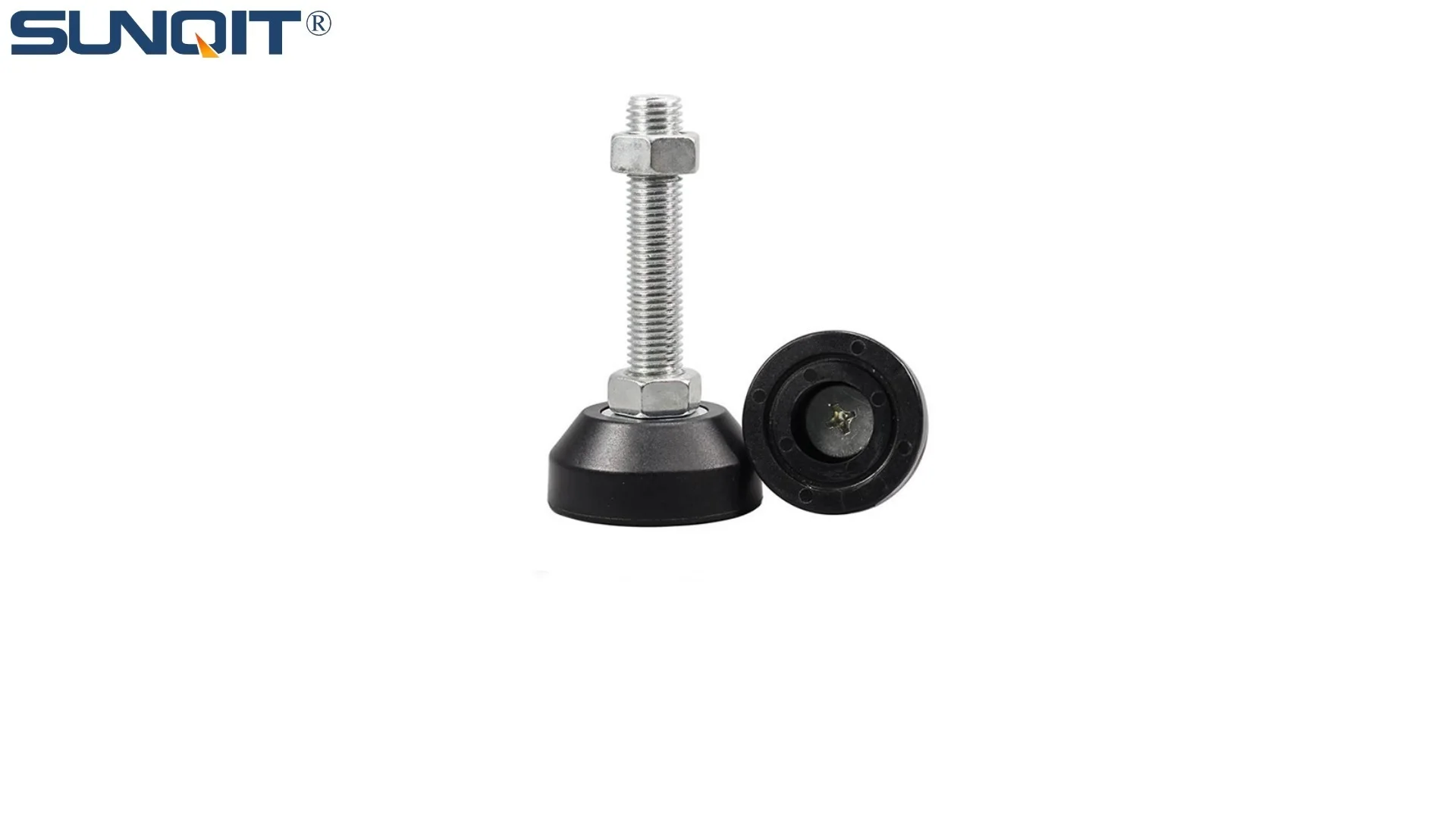
Adjustable leveling feet are designed to keep machines level when placed on uneven or sloped ground. Otherwise known as adjustable equipment feet, they are available to order in a wide variety of size and load capacity combinations.
Picture this: It's 9 a.m. on a Tuesday at a bustling consumer electronics plant. Maria, a lead technician, is assembling the latest smartwatch model. She's using a precision screwdriver to fasten a 0.8mm screw into a circuit board—one that will later house a battery, sensors, and a tiny OLED screen. The workbench beneath her hands hums with the quiet buzz of nearby machinery, but her station itself feels rock-solid. She doesn't think twice about it—until last week, when the same workbench wobbled slightly during a shift, causing her to misalign a screw and scrap an entire board. That's when her team installed M10*56 rubber leveling feet. Today, as she tightens the final screw with confidence, she's unknowingly benefiting from one of the most critical, yet underappreciated, components in modern manufacturing: the humble leveling foot.
In an industry where products shrink in size while growing in complexity—think of the 5,000+ components in a typical smartphone—stability is non-negotiable. Consumer electronics demand precision at every step: from placing microchips with 0.01mm accuracy to testing touchscreens for dead pixels. Any instability in the workspace can cascade into costly errors, delays, and wasted materials. This is where M10*56 rubber leveling feet step in. Designed to anchor workbenches, assembly lines, and testing stations, these small but mighty components ensure that even the most delicate operations unfold on a steady, reliable surface.
What Are M10*56 Rubber Leveling Feet?
At first glance, M10*56 rubber leveling feet might seem like little more than rubber pads with a bolt. But their design is a masterclass in functional simplicity. Let's break down the name: "M10" refers to the metric thread size (10mm in diameter), a standard in industrial hardware that ensures compatibility with most workbench frames and aluminum profiles. The "56" denotes the length of the threaded rod (56mm), providing enough adjustability to compensate for uneven floors or warped surfaces—common issues in large factories with concrete slabs that settle over time. The rubber base, typically made from durable nitrile or EPDM rubber, offers two key benefits: it grips the floor to prevent sliding, and it absorbs vibrations that could jostle sensitive components during assembly.
Unlike generic leveling feet, those designed for consumer electronics manufacturing often include specialized features. Many are ESD (Electrostatic Discharge) safe, meaning the rubber is formulated to dissipate static electricity—a must when handling circuit boards that can be fried by a static charge as small as 500 volts (for reference, walking across a carpet can generate up to 35,000 volts). Others are oil and chemical resistant, standing up to the cleaning agents and lubricants that are part of daily life on the factory floor. For facilities using lean pipe workbenches—a staple of modular manufacturing—the M10 thread size ensures easy integration with the aluminum or steel pipes that form the bench's frame, allowing for quick installation and adjustments as production lines reconfigure.
Why Consumer Electronics Manufacturing Can't Afford Instability
To understand the importance of M10*56 rubber leveling feet, let's consider the consequences of instability in consumer electronics manufacturing. Imagine a lean pipe workbench used for assembling laptop motherboards. If the bench wobbles by just 0.5mm, a technician soldering a 0.3mm pitch connector (where pins are spaced 0.3mm apart) could bridge two pins with solder, rendering the motherboard useless. Multiply that by hundreds of motherboards per day, and the cost of instability becomes clear: wasted materials, rework time, and missed deadlines.
Vibration is another silent enemy. Even minor tremors—from nearby conveyor belts, HVAC systems, or foot traffic—can disrupt precision tasks. For example, when calibrating a camera module for a smartphone, the lens must align with the image sensor to within micrometers. A vibrating workbench could throw off this alignment, leading to blurry photos or failed quality checks. M10*56 rubber leveling feet address this by acting as mini shock absorbers: the rubber compresses slightly under the weight of the workbench, dampening vibrations before they reach the equipment or components on top.
Then there's the human factor. A wobbly workbench isn't just a production risk—it's a fatigue risk. Technicians leaning into unstable surfaces to steady their hands may develop muscle strain over time, leading to increased absenteeism and decreased productivity. In contrast, a level, stable workstation lets employees focus on the task at hand, not on compensating for the environment around them. As one plant manager put it during a recent facility audit: "We used to have technicians complaining about neck and shoulder pain. After upgrading to adjustable leveling feet, those complaints dropped by 40%. It's not just about the products—it's about the people building them."

Integration with Lean Pipe Workbenches and ESD Workstations
In modern manufacturing, flexibility is key. Consumer electronics companies frequently retool lines to produce new models—think of how quickly smartphone designs evolve—and lean pipe workbenches have become the backbone of this adaptability. Made from lightweight yet sturdy aluminum or steel pipes (often called "lean tubes") and modular joints, these workbenches can be disassembled, reconfigured, and reassembled in hours, not days. But this flexibility would be useless without stable foundations—and that's where M10*56 rubber leveling feet shine.
Lean pipe workbenches are typically built on a frame of aluminum profiles or steel pipes, with adjustable feet screwed into the bottom of the frame's legs. The M10 thread size is ideal here: it's strong enough to support the weight of tools, components, and workers (a typical lean pipe workbench can hold 200–500kg), while the 56mm length allows for up to 30mm of height adjustment—plenty to level the bench even on floors with minor unevenness. During reconfiguration, technicians can simply unscrew the feet, move the bench, and readjust them to the new location's floor conditions, ensuring stability is never compromised.
For ESD workstations—critical for handling electrostatic-sensitive devices like microchips, memory modules, and display panels—M10*56 rubber leveling feet take on an added role: static control. Many models feature conductive rubber bases that ground the workstation, channeling static charges away from components and into the floor. This is especially important in dry environments, where static buildup is common. Without grounded leveling feet, a technician could unknowingly carry a static charge that discharges when they touch a circuit board, frying sensitive semiconductors in an instant. By integrating ESD-safe leveling feet into the workstation's design, manufacturers create a "static-safe zone" from the floor up.
Real-World Example: A major smartphone manufacturer in Southeast Asia recently expanded its production line to include a new foldable phone model. The line required 24 custom lean pipe workbenches, each equipped with ESD workstations for assembling the device's flexible display. The facility's concrete floor, however, had a 12mm slope across the production area—a challenge for precision work. By installing M10*56 rubber leveling feet with 30mm adjustment range, the team was able to level each bench to within 0.2mm of horizontal. During the first month of production, display assembly errors dropped by 28% compared to the old line, which had used fixed-height feet. The plant's operations director noted: "We expected better stability, but the impact on error rates was even bigger than we predicted. Those little feet paid for themselves in a week."

The Technical Edge: What Makes M10*56 Rubber Leveling Feet Stand Out
Not all leveling feet are created equal. In consumer electronics manufacturing, where reliability is paramount, the M10*56 rubber variant offers several advantages over alternatives like plastic feet, fixed-height pads, or metal-only designs. Let's break down their key features:
Adjustability
The 56mm threaded rod allows for precise height tuning. Most models feature a hexagonal nut near the top of the rod, letting technicians use a wrench to raise or lower the foot in 0.5mm increments. This level of precision is critical when aligning workbenches with conveyor systems or testing equipment—even a 1mm height difference between a bench and a roller track can cause jams as components move between stations.
Rubber Composition
The rubber base isn't just any rubber. Manufacturers of industrial leveling feet often use nitrile rubber for its excellent abrasion resistance and oil tolerance—important in factories where hydraulic fluids or cleaning solvents might spill. For ESD-sensitive areas, conductive rubber (infused with carbon black or metal particles) ensures static charges dissipate at a controlled rate (typically 10^6 to 10^9 ohms, per ANSI/ESD S20.20 standards). This prevents sudden electrostatic discharges that could damage components.
Load Capacity
M10*56 rubber leveling feet are built to handle industrial loads. A single foot can support 200–500kg, depending on the material of the threaded rod (steel vs. stainless steel) and the rubber's durometer (hardness). For context, a standard lean pipe workbench with tools, components, and a technician might weigh 300kg—easily supported by four M10*56 feet, with room to spare for additional equipment.
Corrosion Resistance
Factories are harsh environments: humidity, chemicals, and frequent cleaning can take a toll on metal components. Many M10*56 leveling feet feature zinc-plated or stainless steel threaded rods to resist rust and corrosion. This their lifespan, reducing the need for frequent replacements and minimizing downtime.
| Feature | M10*56 Rubber Leveling Feet | Generic Plastic Feet | Fixed-Height Metal Pads |
|---|---|---|---|
| Adjustment Range | Up to 30mm (via 56mm rod) | 0mm (fixed height) | 0–5mm (minimal, via shims) |
| Load Capacity (per foot) | 200–500kg | 50–150kg | 300–600kg |
| Vibration Dampening | Excellent (rubber absorbs shock) | Poor (hard plastic transmits vibration) | Fair (metal transmits, but heavy base reduces movement) |
| ESD Compatibility | Yes (with conductive rubber) | Rarely (insulative plastic builds static) | Yes (metal conducts, but no shock absorption) |
| Floor Grip | High (rubber friction prevents sliding) | Low (plastic can slide on smooth floors) | Medium (metal may scratch floors) |

Beyond the Bench: Applications Across the Production Line
While M10*56 rubber leveling feet are most commonly associated with workbenches, their utility extends far beyond technician stations. Let's explore how they support other critical areas of consumer electronics manufacturing:
Testing and Calibration Stations
After assembly, electronics undergo rigorous testing: smartphones are checked for water resistance, laptops for battery life, and smartwatches for heart rate sensor accuracy. These tests require equipment like pressure chambers, oscilloscopes, and thermal cameras—all of which need stable platforms to deliver reliable results. A leveling foot under a testing rig ensures that sensors align correctly with the device under test, preventing false readings that could lead to good products being rejected or defective ones passing inspection.
Conveyor Systems and Roller Tracks
Conveyor belts and roller tracks move components between assembly stages, but they rely on precise alignment to avoid jams. Even a slight dip or tilt in a roller track can cause circuit boards to catch, damaging delicate edges or dislodging components. M10*56 leveling feet anchor the track supports, allowing technicians to the height and angle until the track is perfectly level. This ensures smooth, consistent movement—critical for high-speed production lines where a single jam can halt output for 15+ minutes.
Material Storage Racks
Raw materials and finished products are stored on racks that must withstand heavy loads without swaying. A rack holding 50kg boxes of lithium-ion batteries, for example, needs a stable base to prevent tipping. M10*56 leveling feet distribute the rack's weight evenly across the floor, reducing stress on individual legs and minimizing the risk of collapse—especially important in earthquake-prone regions or facilities with heavy forklift traffic.
Choosing the Right M10*56 Rubber Leveling Feet: Key Considerations
Not all M10*56 rubber leveling feet are suited for every application. When selecting feet for a consumer electronics facility, there are several factors to keep in mind:
ESD Requirements
If the workstation handles static-sensitive components (e.g., IC chips, LED displays), opt for ESD-safe feet with conductive rubber. Look for certifications like ANSI/ESD S20.20 to ensure compliance with industry standards.
Floor Type
Concrete floors may benefit from softer rubber (60–70 durometer) for better grip, while smooth epoxy floors might require firmer rubber (70–80 durometer) to prevent indentation. For uneven floors, prioritize feet with a larger adjustment range (closer to 30mm) to compensate for dips and slopes.
Load Requirements
Calculate the total weight of the workstation (including tools, components, and operators) and divide by the number of feet to determine the required load capacity per foot. Err on the side of caution—overloading feet can lead to thread stripping or rubber deformation.
Environmental Conditions
In humid or corrosive environments (e.g., near cleaning stations), choose feet with stainless steel rods and nitrile rubber (resistant to water and chemicals). For dry, clean rooms, standard zinc-plated rods and EPDM rubber may suffice.
The Future of Stability: Innovations in Leveling Foot Design
As consumer electronics manufacturing evolves, so too do the tools that support it. While M10*56 rubber leveling feet are already workhorses, emerging trends promise to make them even more valuable:
Smart Leveling Feet: Some manufacturers are experimenting with feet embedded with pressure sensors and Bluetooth connectivity. These "smart" feet can alert maintenance teams to uneven weight distribution (a sign of a failing foot or warped workbench) or excessive vibration (indicating a problem with nearby machinery). Early trials in automotive electronics plants have reduced unplanned downtime by 25% by catching issues before they cause failures.
Sustainability: With the industry pushing for greener practices, we're seeing more leveling feet made from recycled rubber and biodegradable lubricants for the threaded rod. Some suppliers now offer take-back programs, where old feet are recycled into new ones, reducing waste.
Modular Compatibility: As lean manufacturing grows, leveling feet are being designed to integrate seamlessly with aluminum profile systems (like 4040 or 2020 profiles). Quick-connect joints and tool-free adjustment knobs allow for faster reconfiguration, aligning with the "lean" ethos of minimizing waste and maximizing efficiency.
Conclusion: Small Components, Big Impact
In the grand scheme of consumer electronics manufacturing—with its robots, AI-driven quality checks, and cutting-edge materials—M10*56 rubber leveling feet may seem. But as we've explored, their impact is anything but small. They stabilize workbenches, dampen vibrations, protect sensitive components, and support the technicians who bring our devices to life. They're a reminder that in an industry obsessed with innovation, sometimes the most critical solutions are the ones that keep things steady.
So the next time you unbox a new smartphone, tablet, or smartwatch, take a moment to appreciate the invisible infrastructure that made it possible. Behind that sleek design, powerful processor, and vibrant screen lies a network of stability—much of it anchored by the humble M10*56 rubber leveling foot. In consumer electronics manufacturing, where precision reigns supreme, stability isn't just a foundation—it's everything.