- Company Articles
- Products and Technology
- Product knowledge
- M10*56 Rubber Leveling Feet Load Capacity: How Much Weight Can They Support?

M10*56 Rubber Leveling Feet Load Capacity: How Much Weight Can They Support?
Related Product
M10*56 Rubber Leveling Feet
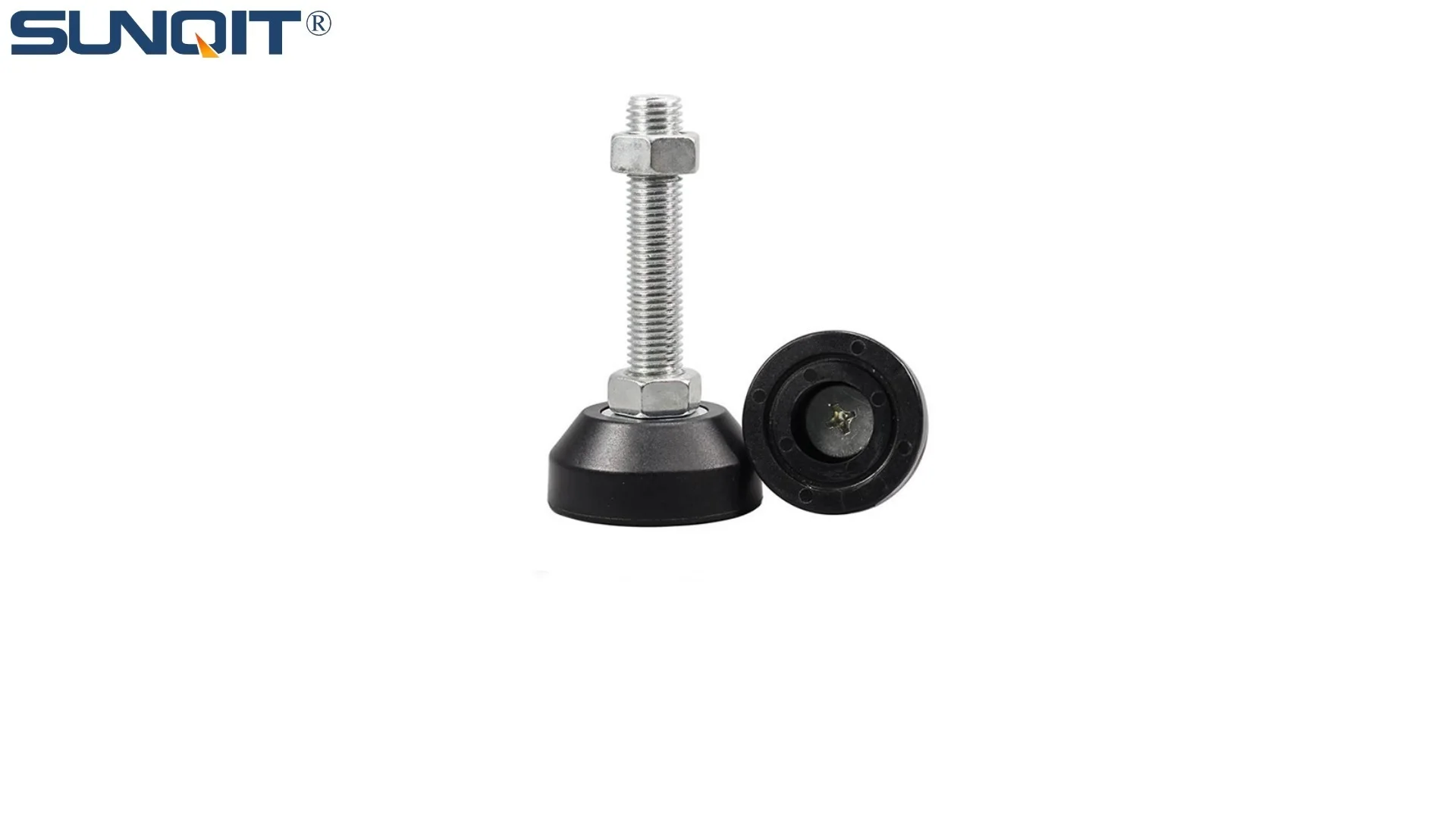
Adjustable leveling feet are designed to keep machines level when placed on uneven or sloped ground. Otherwise known as adjustable equipment feet, they are available to order in a wide variety of size and load capacity combinations.
When setting up a workshop, factory floor, or even a home garage, the smallest components often play the biggest roles in safety and functionality. Take adjustable leveling feet, for instance—those unassuming pieces of hardware that keep your workbench stable, your shelves level, and your equipment from wobbling. Among the most widely used types are M10*56 rubber leveling feet, a staple in industries ranging from manufacturing to DIY projects. But here's the question that matters: how much weight can these little workhorses actually support? Whether you're building a lean pipe workbench, assembling an aluminum profile structure, or mounting heavy machinery, getting this right isn't just about efficiency—it's about preventing accidents, equipment damage, and costly downtime.
What Are M10*56 Rubber Leveling Feet, Anyway?
Let's start with the basics. M10*56 rubber leveling feet are a type of adjustable hardware designed to stabilize and level equipment, furniture, or structures. The "M10" refers to the metric thread size—10mm in diameter—while "56" indicates the length of the threaded rod (56mm). At the bottom of this threaded rod sits a rubber pad, which does two key jobs: grip the surface to prevent slipping and absorb vibrations. The top end typically has a hex nut or a flat base that attaches to the equipment, allowing you to twist the rod up or down to adjust height and levelness.
You'll find these feet in all sorts of places: under workbenches in assembly lines, at the base of aluminum profile racks in warehouses, on the legs of 3D printers in tech labs, and even under heavy-duty shelving in garages. Their popularity comes down to versatility: they work on uneven floors, dampen noise, and protect surfaces from scratches. But their real superpower? Supporting weight—sometimes far more than you might expect.
Why Load Capacity Isn't Just a "Nice-to-Know" Number
Imagine this: You've spent weeks building a custom lean pipe workbench for your auto repair shop. You've sourced high-quality aluminum pipes, sturdy joints, and a solid wooden top. You bolt on M10*56 leveling feet, assuming they'll handle the weight of your tools, parts, and maybe even you leaning on the bench while working. But one day, you load a 500-pound engine block onto the bench, and suddenly—*creak*—the feet start to compress. The bench tilts, tools slide off, and you're left with a damaged work surface and a near-miss. That's what happens when you ignore load capacity.
Load capacity is the maximum weight a leveling foot can support without failing—whether that means the rubber pad tearing, the thread stripping, or the base bending. Go over that limit, and you risk instability, equipment collapse, or even injury. On the flip side, overestimating load capacity (and buying a heavier, more expensive foot than you need) wastes money and adds unnecessary bulk. So, getting the balance right starts with understanding what influences how much weight an M10*56 rubber leveling foot can hold.

Factors That Determine How Much Weight M10*56 Rubber Leveling Feet Can Support
Load capacity isn't a one-size-fits-all number. It depends on a mix of design choices, materials, and real-world conditions. Let's break down the key factors:
1. The Rubber Pad: More Than Just a "Grippy Bottom"
The rubber pad is the first line of defense against weight and wear. Not all rubber is created equal, though. Most M10*56 feet use synthetic rubber (like nitrile or EPDM) or natural rubber, each with different hardness levels (measured in Shore A durometer). Softer rubber (60-70 Shore A) is more flexible, which helps it conform to uneven floors and grip better, but it compresses more under heavy loads. Harder rubber (80-90 Shore A) resists compression, making it better for high weight, but it's less forgiving on rough surfaces.
Thickness matters too. A thicker pad (say, 10mm vs. 5mm) distributes weight over a larger area, reducing pressure on the floor and the pad itself. For example, a 10mm nitrile pad with 85 Shore A hardness might support more weight than a 5mm natural rubber pad with 65 Shore A—even if the threaded rod is identical.
2. Thread Strength: The "Backbone" of the Foot
The threaded rod (the M10*56 part) is the backbone of the leveling foot. It's usually made of steel—often carbon steel or stainless steel for corrosion resistance. The strength here is measured in tensile strength (how much force it takes to pull the rod apart) and shear strength (how much force causes it to bend or snap sideways).
A standard M10 carbon steel thread (class 8.8, a common industrial grade) has a tensile strength of about 800 MPa (megapascals), which translates to a breaking load of roughly 5000 Newtons (N) for a 56mm rod. But here's the catch: that's the absolute breaking point . In real use, you'd never want to get close to that. Most manufacturers recommend a "safety factor" of 2-3x, meaning if the rod can theoretically hold 5000N, you should only load it up to 1600-2500N (about 160-250 kg) to account for vibrations, uneven loading, or material defects.
3. Base Design: Spreading the Weight Around
Look closely at an M10*56 leveling foot, and you'll notice the top part—the part that attaches to your equipment—varies. Some have a small, circular base; others have a larger, square plate. Why does this matter? Because a larger base spreads the weight over more of the equipment's frame, reducing stress on the attachment point. For example, a foot with a 60mm square base will put less pressure on a workbench leg than one with a 30mm round base, even if both have the same threaded rod and rubber pad.
Some feet also have reinforced bases (think: thicker steel or gussets) to prevent bending under heavy loads. If you're mounting the foot to a thin aluminum profile, a reinforced base can make all the difference between a stable setup and a wobbly one.
4. The Surface They're On: Concrete vs. Wood vs. Carpet
Even the strongest leveling foot can fail if the surface it's standing on gives way. Concrete floors? Great—hard, stable, and able to handle high pressure. Wood floors? Okay, but softwood (like pine) might dent under heavy loads, reducing effective support. Carpet? Risky. The rubber pad can sink into the fibers, increasing compression and reducing stability. For example, a foot rated for 300 kg on concrete might only safely support 200 kg on carpet because the surface can't push back with equal force.
5. Dynamic vs. Static Load: Moving Weight vs. Stationary Weight
Load capacity also depends on whether the weight is moving (dynamic) or sitting still (static). A static load is something like a stack of boxes on a shelf—constant, unchanging weight. A dynamic load is more variable: tools being dropped on a workbench, a machine vibrating during operation, or a cart rolling over a floor with leveling feet. Dynamic loads are harder on feet because they add sudden, repeated stress. A foot that handles 400 kg static might only manage 250 kg dynamic, as the vibrations and impacts weaken the rubber and thread over time.

Testing Load Capacity: How Manufacturers Figure It Out
You might be wondering: How do you actually measure how much weight an M10*56 rubber leveling foot can support? Manufacturers use standardized tests to determine both "ultimate load" (the weight that causes failure) and "safe working load" (the maximum weight for daily use, usually 1/3 to 1/2 of ultimate load).
One common test is the compression test : The foot is mounted to a steel plate, and a hydraulic press gradually applies weight until the rubber pad deforms permanently, the thread strips, or the base bends. Another is the shear test , which pulls the foot sideways to check if the rubber pad separates from the rod or the base cracks. For dynamic loads, they use vibration tables to simulate real-world conditions, testing how the foot holds up over thousands of cycles of stress.
Reputable suppliers will list these specs clearly—look for terms like "safe working load" (SWL) or "rated load" on the product page. If a supplier only mentions "maximum load" without specifying static vs. dynamic or safety factors, proceed with caution. That number might be the ultimate load, not what you should actually use.

Real-World Load Capacity: What to Expect from M10*56 Rubber Leveling Feet
Okay, let's get practical. What's the typical load capacity of an M10*56 rubber leveling foot in everyday use? It varies by brand and design, but here's a general range based on common industrial models:
- Light-duty models (thinner thread, soft rubber pad): Safe working load of 100-200 kg (static). Good for small workbenches, printers, or shelving with light items.
- Medium-duty models (class 8.8 steel thread, 80 Shore A rubber pad): Safe working load of 200-350 kg (static). Ideal for lean pipe workbenches, aluminum profile racks, or 3D printers with heavy frames.
- Heavy-duty models (class 10.9 steel thread, thick reinforced base, 90 Shore A rubber): Safe working load of 350-500 kg (static). Used for industrial machinery, heavy tool chests, or warehouse shelving with dense materials like metal parts.
Remember, these are static loads on concrete floors. If you're using them on wood, carpet, or with dynamic loads, knock that number down by 30-50%. For example, a heavy-duty foot rated for 500 kg static on concrete might only handle 250-350 kg dynamic on a wooden workshop floor.
| Model Type | Thread Strength (Class) | Rubber Pad Hardness (Shore A) | Static Load (Concrete Floor, kg) | Dynamic Load (Concrete Floor, kg) | Best For |
|---|---|---|---|---|---|
| Light-Duty | 4.8 | 60-70 | 100-200 | 50-100 | Small workbenches, office furniture |
| Medium-Duty | 8.8 | 75-85 | 200-350 | 120-200 | Lean pipe workbenches, aluminum profile racks |
| Heavy-Duty | 10.9 | 85-95 | 350-500 | 200-300 | Industrial machinery, heavy shelving |
Using M10*56 Rubber Leveling Feet on Lean Pipe Workbenches: A Case Study
Let's zoom in on a common application: lean pipe workbenches. These workbenches, made from aluminum or steel pipes and joints, are popular in manufacturing for their flexibility and low cost. They're used for assembly, packaging, and even as testing stations—so they need to support tools, parts bins, and sometimes workers leaning or sitting on them.
A typical lean pipe workbench is about 1.2m wide and 0.6m deep, with four leveling feet (one at each corner). Let's say you're using medium-duty M10*56 feet, each rated for 300 kg static. With four feet, that's a total safe load of 1200 kg (4 x 300 kg). But wait—you can't just divide the total weight by the number of feet and call it a day. Weight distribution matters. If you pile all the tools on one corner, that foot will take more than its share of the load, even if the total is under 1200 kg. That's why it's critical to spread weight evenly and never exceed the per-foot rating.
Another tip: If your workbench has a wooden top, add a steel plate under each leveling foot to distribute the weight across the wood. Without it, the foot might sink into the wood over time, reducing stability and load capacity. It's a small extra step that makes a big difference in longevity.
Aluminum Profile Structures: Do M10*56 Feet Work Here?
Aluminum profiles are another area where M10*56 rubber leveling feet shine. These lightweight, modular frames are used for everything from machine guards to conveyor supports. But aluminum is softer than steel, so you need to be careful with how much weight you put on the feet attached to it.
Most aluminum profiles have T-slots where you can mount feet, but the slot walls are thin (often 1-3mm). If you overtighten the leveling foot's hex nut, you might strip the slot or bend the profile. To avoid this, use a torque wrench to tighten the nut to the manufacturer's specs (usually 15-20 Nm for M10 threads in aluminum). Also, opt for feet with larger base plates—they spread the clamping force over more of the profile, reducing the risk of damage.
In terms of load, a medium-duty M10*56 foot on an aluminum profile can handle 200-250 kg per foot (static), assuming the profile itself is sturdy enough. If you're building a tall rack, add diagonal braces for stability—even if the feet can support the weight, a tall, top-heavy structure might tip over before the feet fail.
Common Myths About M10*56 Rubber Leveling Feet Load Capacity
There's a lot of misinformation out there about leveling feet. Let's debunk a few myths:
Myth 1: "If the rubber pad doesn't tear, it's fine."
False. Failure can happen in other ways: the thread might strip, the base might bend, or the foot might loosen over time, even if the rubber looks intact. Always check the entire foot for signs of wear, not just the pad.
Myth 2: "All M10*56 feet are the same—just buy the cheapest."
Big mistake. Cheap feet often use low-grade steel for the thread (class 4.8 instead of 8.8) and recycled rubber for the pad, which degrades faster and has lower load capacity. You might save $5 now, but replacing failed feet after a collapse will cost far more.
Myth 3: "I can stack feet to increase load capacity."
Stacking two feet (one on top of the other) doesn't double the load capacity. In fact, it makes the setup less stable, as the feet can twist or shift independently. If you need more height, use a longer threaded rod (like M10*70) instead of stacking.
Maintenance: Keeping Your M10*56 Feet Supporting Weight for Years
Even the best leveling feet won't last forever without care. Here's how to keep them in top shape:
- Clean the rubber pads : Dirt, oil, and debris reduce grip and cause uneven wear. Wipe them down with a damp cloth every few months.
- Check for thread corrosion : If you're in a humid or wet environment, coat the threads with anti-corrosion spray (like WD-40) to prevent rust, which weakens the thread.
- Tighten loose feet : Vibration can loosen the hex nut over time. Give each foot a gentle twist with a wrench every month to keep them secure.
- replace worn pads : If the rubber is cracked, flattened, or losing chunks, replace the foot. A degraded pad can't grip or support weight properly.
Table: Load Capacity of M10*56 Rubber Leveling Feet in Different Scenarios
| Scenario | Foot Type | Surface | Load Type | Safe Working Load (per foot, kg) |
|---|---|---|---|---|
| Small workbench with tools | Light-Duty | Concrete | Static | 150 |
| Lean pipe assembly station | Medium-Duty | Wood (with steel plate) | Static | 250 |
| Aluminum profile rack with boxes | Medium-Duty | Concrete | Static | 300 |
| Industrial machine with vibration | Heavy-Duty | Concrete | Dynamic | 250 |
| Garage shelving on carpet | Medium-Duty | Carpet | Static | 180 |
Choosing the Right M10*56 Rubber Leveling Feet for Your Project
So, how do you pick the right foot for your needs? Start by asking: What's the maximum weight per foot? Calculate the total weight of your equipment, then divide by the number of feet (round up to account for uneven distribution). Then, factor in surface type, load type (static vs. dynamic), and environment (wet, dry, corrosive). Finally, check the supplier's specs for safe working load—never assume.
For example, if you're building a heavy-duty aluminum profile workbench that will hold 800 kg (tools, parts, and occasional worker leaning), you'll need four feet. 800 kg / 4 feet = 200 kg per foot. But since it's a workbench (dynamic load from tools being moved), you'll need feet rated for at least 300 kg static (to account for the 30-50% dynamic reduction). So medium-duty or heavy-duty feet are the way to go.
Final Thoughts: Don't Overlook the Little Feet That Hold It All Together
M10*56 rubber leveling feet might not be the most glamorous part of your workshop or factory, but they're the unsung heroes keeping everything stable and safe. Understanding their load capacity—what influences it, how to test it, and how to apply it in real life—can save you from headaches, accidents, and unnecessary expenses.
Remember: When in doubt, ask the supplier for load test reports or certifications. Reputable brands will be happy to share this info. And always err on the side of caution—if a project is critical, upgrade to a heavier-duty foot than you think you need. After all, the cost of a few extra dollars on leveling feet is nothing compared to the cost of a collapsed workbench or damaged equipment.
So the next time you're setting up that lean pipe workbench or aluminum profile rack, take a second to look down at those little rubber feet. They might be small, but they're carrying the weight of your productivity—and that's a responsibility worth respecting.