- Company Articles
- Products and Technology
- Product knowledge
- M10*56 Rubber Leveling Feet Material Composition: Quality Explained

M10*56 Rubber Leveling Feet Material Composition: Quality Explained
Related Product
M10*56 Rubber Leveling Feet
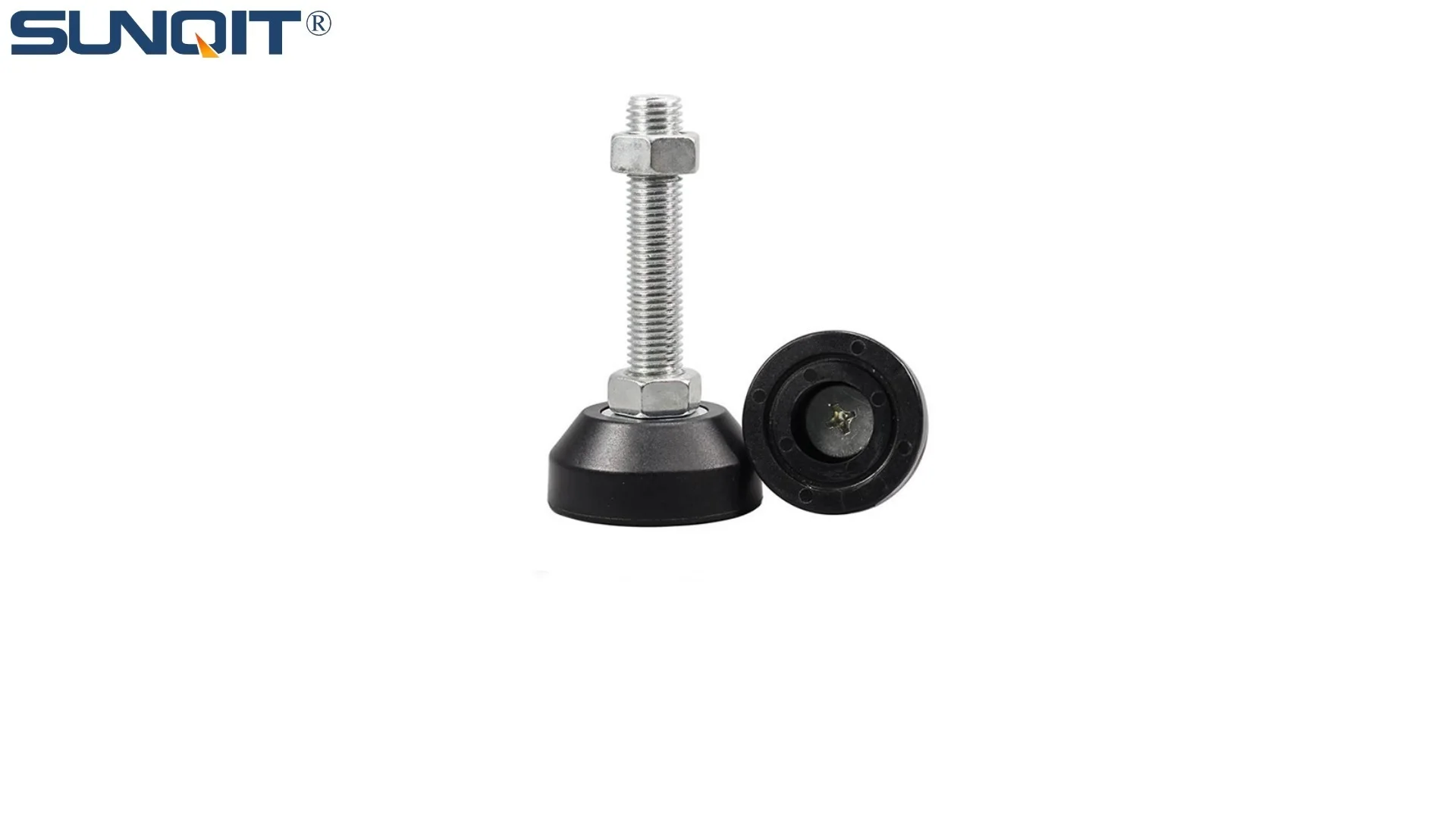
Adjustable leveling feet are designed to keep machines level when placed on uneven or sloped ground. Otherwise known as adjustable equipment feet, they are available to order in a wide variety of size and load capacity combinations.
Introduction: The Unsung Heroes of Stable Workspaces
In the bustling world of manufacturing, warehousing, and workshop operations, stability is the silent foundation upon which productivity, safety, and precision rest. Every tool, every machine, and every surface—from the largest assembly line to the smallest workbench—relies on a level, secure base to function at its best. Yet, among the array of industrial components that make this possible, one small but critical part often goes unnoticed: the leveling foot. Specifically, the M10*56 rubber leveling foot, a component so integral to workspace stability that its absence or poor quality can ripple through operations, causing delays, errors, and even accidents.
If you've ever adjusted a wobbly table at a café, you understand the basic idea behind leveling feet. But in industrial settings, the stakes are infinitely higher. A workbench used for assembling delicate electronics, a material rack holding heavy inventory, or a conveyor system moving products across a factory floor—all demand precision in alignment. Even a fraction of an inch of imbalance can lead to uneven wear on machinery, misaligned parts during production, or, worst-case, a collapse that endangers workers. This is where the M10*56 rubber leveling foot steps in: designed to bridge the gap between uneven floors and industrial equipment, it's a small component with a huge responsibility.
In this article, we'll peel back the layers of this unassuming yet vital part, focusing on its material composition and the quality factors that set exceptional leveling feet apart from the rest. We'll explore why the materials used matter, how they contribute to durability and performance, and why industries that prioritize lean pipe systems, modular workbenches, and efficient material handling can't afford to overlook the details of their adjustable leveling feet. By the end, you'll not only understand what makes the M10*56 rubber leveling foot tick but also why investing in high-quality versions is a smart move for any operation that values stability, safety, and long-term efficiency.
Understanding the Role of M10*56 Rubber Leveling Feet in Industrial Setups
Before diving into materials, let's clarify exactly what M10*56 rubber leveling feet are and where they fit in the industrial ecosystem. The "M10*56" designation refers to the thread specification: "M" denotes metric threading, "10" is the diameter of the thread in millimeters, and "56" is the length of the threaded shaft (also in millimeters). This standardized sizing ensures compatibility with a wide range of industrial equipment—from workbenches and material racks to conveyor stands and assembly line stations. The "rubber" component, as we'll explore later, is the critical interface between the metal shaft and the floor, providing grip, shock absorption, and protection against scratches.
In modern manufacturing, where lean principles dominate, adaptability is key. Lean pipe systems, for example, are built on the idea of modularity—easily reconfigurable workstations, racks, and trolleys that can be adjusted to meet changing production needs. A workbench in a lean setup might need to be moved, repositioned, or repurposed multiple times. Each move risks encountering a new floor imperfection: a crack, a bump, or a slope that throws the bench off-kilter. Adjustable leveling feet like the M10*56 model allow workers to fine-tune the height of each leg independently, ensuring the bench remains stable and level, no matter the surface. This adaptability isn't just about convenience; it's about maintaining the efficiency that lean systems are designed to deliver.
But the role of M10*56 rubber leveling feet extends beyond lean environments. Consider a medical device manufacturing facility, where precision is non-negotiable. A workbench used to assemble pacemakers or surgical tools must be perfectly level to ensure that tiny components align correctly. Any instability could result in a misplaced screw or a misaligned circuit, compromising the safety of the final product. Similarly, in automotive plants, where heavy machinery stamps, welds, and paints parts, leveling feet help distribute weight evenly, reducing vibration and extending the lifespan of expensive equipment.
Even in less high-stakes settings, like warehouses using turnover trolleys and racks, leveling feet play a role in preventing accidents. A material rack with uneven feet is more likely to tip when loaded, endangering workers and inventory. By providing a secure, non-slip base, rubber leveling feet mitigate this risk, turning a potential hazard into a stable storage solution. In short, wherever there's industrial equipment that needs to stand firm, the M10*56 rubber leveling foot is hard at work—quietly ensuring that the show goes on.

Material Composition: The Building Blocks of Reliability
At first glance, a leveling foot might seem simple: a metal rod with a rubber pad at the bottom. But beneath that simplicity lies a carefully engineered combination of materials, each chosen for specific properties that contribute to the foot's overall performance. The M10*56 rubber leveling foot, in particular, is a study in material science, blending metal strength with rubber flexibility to create a component that can withstand heavy loads, resist wear, and adapt to uneven surfaces. Let's break down its key components: the threaded metal shaft, the rubber base, and the bond that holds them together.
The Threaded Shaft: Strength and Precision in Metal
The backbone of any leveling foot is its threaded shaft—the part that screws into the equipment and allows for height adjustment. For the M10*56 model, this shaft is typically made from carbon steel or stainless steel, each material offering distinct advantages depending on the application. Carbon steel is favored for its high tensile strength and affordability, making it ideal for general industrial use where cost-effectiveness and durability are priorities. It's strong enough to support heavy loads (we're talking hundreds of kilograms) without bending or warping, even under constant pressure.
But carbon steel has a Achilles' heel: rust. In humid environments, like food processing plants or outdoor warehouses, uncoated carbon steel will corrode over time, weakening the shaft and compromising the leveling foot's integrity. This is where stainless steel comes in. Stainless steel contains chromium, which forms a protective oxide layer on the surface, resisting corrosion and rust. For industries like pharmaceuticals, where cleanliness is critical, or marine applications with saltwater exposure, stainless steel shafts are non-negotiable. Some manufacturers even take it a step further, coating carbon steel shafts with zinc (galvanization) or nickel to add a layer of corrosion resistance while keeping costs lower than stainless steel.
The thread itself—M10*56—is another critical detail. The "M10" refers to a 10mm diameter thread, while "56" indicates the shaft length. But what's often overlooked is the thread pitch (the distance between adjacent threads). A coarse pitch (e.g., 1.5mm) allows for quicker adjustments, which is useful in setups that are repositioned frequently. A fine pitch (e.g., 1.0mm) offers more precise height tuning, essential for applications like optical instrument tables or microelectronics assembly. High-quality leveling feet will have threads that are cut or rolled with precision, ensuring smooth adjustment without stripping—even after repeated use.
The Rubber Base: Grip, Shock Absorption, and Floor Protection
If the metal shaft is the leveling foot's backbone, the rubber base is its "footprint"—the part that makes contact with the floor. This is where the "rubber" in "rubber leveling foot" earns its keep, and the type of rubber used can make or break the component's performance. Not all rubber is created equal, and manufacturers carefully select formulations based on the demands of the application.
The most common rubber types used in leveling feet are nitrile rubber (NBR), ethylene propylene diene monomer (EPDM), and polyurethane (PU). Each has unique properties:
| Rubber Type | Key Properties | Best For | Limitations |
|---|---|---|---|
| Nitrile Rubber (NBR) | Excellent oil and chemical resistance, good abrasion resistance, high tensile strength | Automotive workshops, factories with oil exposure, machinery with hydraulic fluid | Poor resistance to ozone and UV light; not ideal for outdoor use |
| EPDM | Superior weather and ozone resistance, good heat resistance (-40°C to 150°C), flexible in cold temperatures | Outdoor warehouses, food processing (FDA-compliant grades), facilities with temperature fluctuations | Less resistant to oils and solvents compared to NBR |
| Polyurethane (PU) | High load-bearing capacity, exceptional abrasion resistance, good elasticity, noise-dampening | Heavy machinery, high-traffic areas, applications needing shock absorption | Can degrade in extreme heat; less flexible than rubber at low temperatures |
For the M10*56 rubber leveling foot, nitrile rubber is a popular choice for general industrial use, striking a balance between oil resistance, durability, and cost. However, some manufacturers offer options in EPDM or PU for specialized environments. The rubber base is also designed with a specific durometer (hardness rating)—typically between 60 and 80 Shore A. A lower durometer (softer rubber) provides better grip and shock absorption but may wear faster under heavy loads. A higher durometer (harder rubber) offers more abrasion resistance but less flexibility. The ideal durometer depends on the application: a workbench with light to moderate loads might use 60 Shore A for grip, while a heavy-duty material rack might opt for 80 Shore A for longevity.
The Bond Between Metal and Rubber: More Than Just Glue
Even the strongest metal shaft and most durable rubber base are useless if they separate under stress. The bond between the two components is therefore a make-or-break factor in leveling foot quality. Low-quality leveling feet often rely on simple adhesives that can fail over time, especially when exposed to heat, moisture, or mechanical stress. In contrast, premium manufacturers use a combination of mechanical bonding and chemical adhesives to ensure a permanent connection.
Mechanical bonding involves designing the metal shaft with grooves, knurls, or undercuts where the rubber can flow during the molding process, creating a physical lock. Think of it like a dovetail joint in woodworking—interlocking shapes that resist separation. Chemical bonding, on the other hand, uses specialized primers and adhesives that form a molecular bond between the metal and rubber. Some manufacturers even pre-treat the metal surface with acid etching or sandblasting to roughen it, giving the adhesive more surface area to grip.
The result? A bond that can withstand not just static loads but also dynamic forces like vibration from machinery or impacts from moving equipment. In testing, high-quality bonds should resist separation even when pulled with hundreds of kilograms of force—a critical safety feature in applications where failure could lead to equipment collapse.

Quality Metrics: What Makes a Leveling Foot "Exceptional"?
Material composition is the starting point, but true quality in M10*56 rubber leveling feet is measured by how those materials perform in real-world conditions. Industrial environments are unforgiving: heavy loads, constant use, exposure to chemicals, temperature extremes, and rough floors all test a leveling foot's mettle. To separate the best from the rest, we need to look at specific quality metrics—standards that ensure the leveling foot doesn't just work, but works reliably, safely, and for years on end.
Load Capacity: How Much Weight Can It Really Handle?
At its core, a leveling foot's job is to support weight—and not just the weight of the equipment it's attached to, but also any dynamic loads (like workers leaning on a workbench or materials being placed on a rack). Manufacturers will often list a "maximum load capacity" for their leveling feet, but this number isn't arbitrary. It's determined through rigorous testing, where the foot is subjected to increasing weights until it deforms or fails. For M10*56 models, typical load capacities range from 500kg to 1500kg per foot, depending on the shaft material (stainless steel vs. carbon steel) and rubber durometer.
But here's the catch: real-world use rarely involves perfectly static loads. A conveyor system, for example, experiences vibrations as products move along it, which can create "shock loads" that exceed the static weight. High-quality leveling feet are designed to handle these dynamic forces, often with a safety margin of 2-3 times the listed capacity. This means a foot rated for 1000kg static load can actually withstand 2000-3000kg in short bursts—critical for preventing failure during unexpected events, like a sudden impact from a dropped tool or a surge in production volume.
Anti-Slip Performance: Keeping Equipment Grounded
A leveling foot that can support heavy loads is useless if it slides across the floor. Anti-slip performance is determined by the rubber base's coefficient of friction (CoF)—a measure of how much resistance it offers against the floor surface. A higher CoF means better grip, reducing the risk of equipment shifting or tipping, even on smooth concrete or tiled floors.
Testing CoF involves placing the leveling foot on a surface and gradually tilting it until it slides; the angle at which sliding occurs is used to calculate the CoF. For industrial rubber leveling feet, a CoF of 0.6 or higher on dry concrete is considered excellent. Some manufacturers enhance grip by adding textures to the rubber base—ridges, dimples, or patterns that increase surface area contact with the floor. In wet or oily environments, this becomes even more critical: nitrile rubber, with its natural oil resistance, maintains a higher CoF than other rubbers when exposed to lubricants, making it a top choice for automotive or machining shops.
Corrosion and Chemical Resistance: Standing Up to the Elements
Industrial floors are rarely clean or dry. Spills, humidity, cleaning chemicals, and even salt (in coastal areas) can all attack a leveling foot's metal shaft and rubber base. Corrosion-resistant materials are therefore non-negotiable. For metal shafts, stainless steel (especially 304 or 316 grades) is the gold standard, as it resists rust and chemical damage. Carbon steel shafts, while cheaper, must be coated—galvanization (zinc coating) is common, but for harsh environments, a nickel or chrome plating offers better protection.
The rubber base, too, must resist chemical degradation. EPDM rubber, for example, holds up well against acids and alkalis, making it suitable for chemical processing plants. Nitrile rubber excels in oil and grease, while polyurethane is resistant to most solvents. Manufacturers often test rubber resistance by immersing samples in common industrial chemicals (like motor oil, bleach, or hydraulic fluid) for extended periods, then measuring changes in hardness, elasticity, and strength. A quality leveling foot's rubber base should show minimal degradation after such tests—ensuring it won't crack, swell, or become brittle over time.
Temperature Stability: Performing in the Heat and Cold
From freezing cold warehouses to high-temperature manufacturing lines, leveling feet must maintain performance across a wide temperature range. Rubber, in particular, is sensitive to temperature: too cold, and it becomes stiff and brittle; too hot, and it softens and loses strength. EPDM rubber is known for its broad temperature tolerance, performing reliably from -40°C to 150°C—ideal for outdoor use or facilities with extreme temperature swings.
Metal shafts also expand and contract with temperature changes, which can affect the leveling foot's adjustment. High-quality threads are designed to accommodate this expansion without seizing up, ensuring the foot can still be adjusted smoothly even after exposure to heat or cold. In applications like bakery ovens or frozen food storage, where temperatures can reach extremes, these small details make a big difference in long-term functionality.

Compatibility with Industrial Systems: Fitting into the Big Picture
A leveling foot doesn't exist in isolation—it's part of a larger ecosystem of industrial components, from workbenches and material racks to lean pipe systems and caster and accessories. Its design must therefore align with these systems, ensuring easy installation, compatibility with standard equipment, and the flexibility to adapt to modular setups. For manufacturers and facility managers, this compatibility is key to reducing downtime, simplifying maintenance, and maximizing the return on investment in industrial equipment.
Workbench Integration: The Foundation of Lean Manufacturing
Modular workbenches are the backbone of lean manufacturing—flexible, reconfigurable stations that adapt to changing production needs. These workbenches often use aluminum profiles or lean pipe frames, with leveling feet screwed into the legs to ensure stability. The M10*56 rubber leveling foot is a popular choice here, as its M10 thread fits standard tapped holes in most workbench legs. This compatibility means workers can quickly swap out feet if one wears out, or adjust height to match ergonomic requirements (e.g., raising a bench for standing work or lowering it for seated tasks).
In lean pipe systems, where pipes and joints are used to build custom workstations, the leveling foot's adjustability is even more critical. Lean systems thrive on adaptability—adding a new shelf, repositioning a conveyor, or expanding a workbench can all change the load distribution, requiring quick leveling adjustments. A high-quality M10*56 foot, with its smooth-threaded shaft and durable rubber base, allows for these changes without compromising stability, keeping the lean workflow efficient and uninterrupted.
Pairing with Casters: The Best of Both Worlds
Many industrial setups require equipment to be both mobile and stationary. A turnover trolley, for example, might need to roll to a loading dock, then lock into place for unloading. This is where caster and accessories come into play—and where leveling feet often work hand-in-hand with casters. Some designs combine both: a caster for mobility, paired with a leveling foot that can be lowered to lift the caster off the ground when stability is needed.
The M10*56 leveling foot's compact size makes it ideal for such hybrid systems. When paired with casters, it provides a stable base that prevents the trolley from rolling, even on inclined floors. This combination is common in hospitals (for mobile medical carts), warehouses (for order-picking trolleys), and manufacturing (for portable assembly stations). The key is compatibility: the leveling foot must fit within the caster's mounting plate or workbench leg, without adding excessive height or interfering with the caster's movement.
Choosing the Right M10*56 Rubber Leveling Foot: Key Considerations
With so many options on the market, selecting the right M10*56 rubber leveling foot can feel overwhelming. But by focusing on your specific needs—environment, load, compatibility, and quality—you can narrow down the choices and find a foot that will perform reliably for years. Here are the critical factors to keep in mind:
1. Assess Your Environment: Start by evaluating where the leveling foot will be used. Is it indoors or outdoors? Will it be exposed to oil, chemicals, or moisture? For humid or corrosive environments, prioritize stainless steel shafts and EPDM rubber. For oily workshops, nitrile rubber is a better bet. If temperature extremes are a factor, check the rubber's operating range to ensure it won't become brittle or soft.
2. Calculate Load Requirements: Don't just guess the weight—calculate the maximum load the leveling foot will bear. Divide the total equipment weight by the number of feet (e.g., a 2000kg workbench with 4 feet needs 500kg per foot), then add a 50% safety margin to account for dynamic loads. This ensures you choose a foot with a capacity that won't be pushed to its limit.
3. Check Compatibility: Verify that the M10 thread fits your equipment's existing tapped holes. Most modular workbenches and lean pipe systems use standard M10 threads, but it's always wise to measure the hole diameter and depth to avoid mismatches. If pairing with casters, ensure the leveling foot's height and mounting style align with the caster's design.
4. Prioritize Quality Testing: Reputable manufacturers will provide test data on load capacity, corrosion resistance, and rubber durability. Look for certifications like ISO 9001 (quality management) or RoHS (environmental safety), which indicate strict manufacturing standards. Avoid cheap, unbranded leveling feet—they may save money upfront but will likely fail quickly, costing more in replacements and downtime.
Conclusion: Small Component, Big Impact
The M10*56 rubber leveling foot may be small in size, but its role in industrial stability is immeasurable. By blending high-strength metal shafts with durable rubber bases, it bridges the gap between uneven floors and precision equipment, ensuring workbenches stay level, material racks remain stable, and lean pipe systems operate efficiently. Its material composition—from the corrosion-resistant metal to the grip-enhancing rubber—directly impacts performance, safety, and longevity, making it a component that no industrial operation can afford to overlook.
As manufacturing and warehousing continue to evolve toward leaner, more modular systems, the demand for reliable adjustable leveling feet will only grow. Workers need equipment they can trust, and managers need components that reduce downtime and costs. The M10*56 rubber leveling foot, when chosen with care, delivers on both counts—proving that sometimes, the smallest parts are the ones that hold everything together.
So the next time you walk through a factory or workshop, take a moment to look down. Chances are, beneath the workbenches, racks, and conveyors, there's a set of M10*56 rubber leveling feet hard at work—quietly ensuring that stability, precision, and safety are never taken for granted. In the end, it's these unsung heroes that turn a chaotic industrial space into a well-oiled machine.