- Company Articles
- Products and Technology
- Product knowledge
- M10*56 Rubber Leveling Feet Material: Why High-Quality Rubber Matters

M10*56 Rubber Leveling Feet Material: Why High-Quality Rubber Matters
Related Product
M10*56 Rubber Leveling Feet
Adjustable leveling feet are designed to keep machines level when placed on uneven or sloped ground. Otherwise known as adjustable equipment feet, they are available to order in a wide variety of size and load capacity combinations.
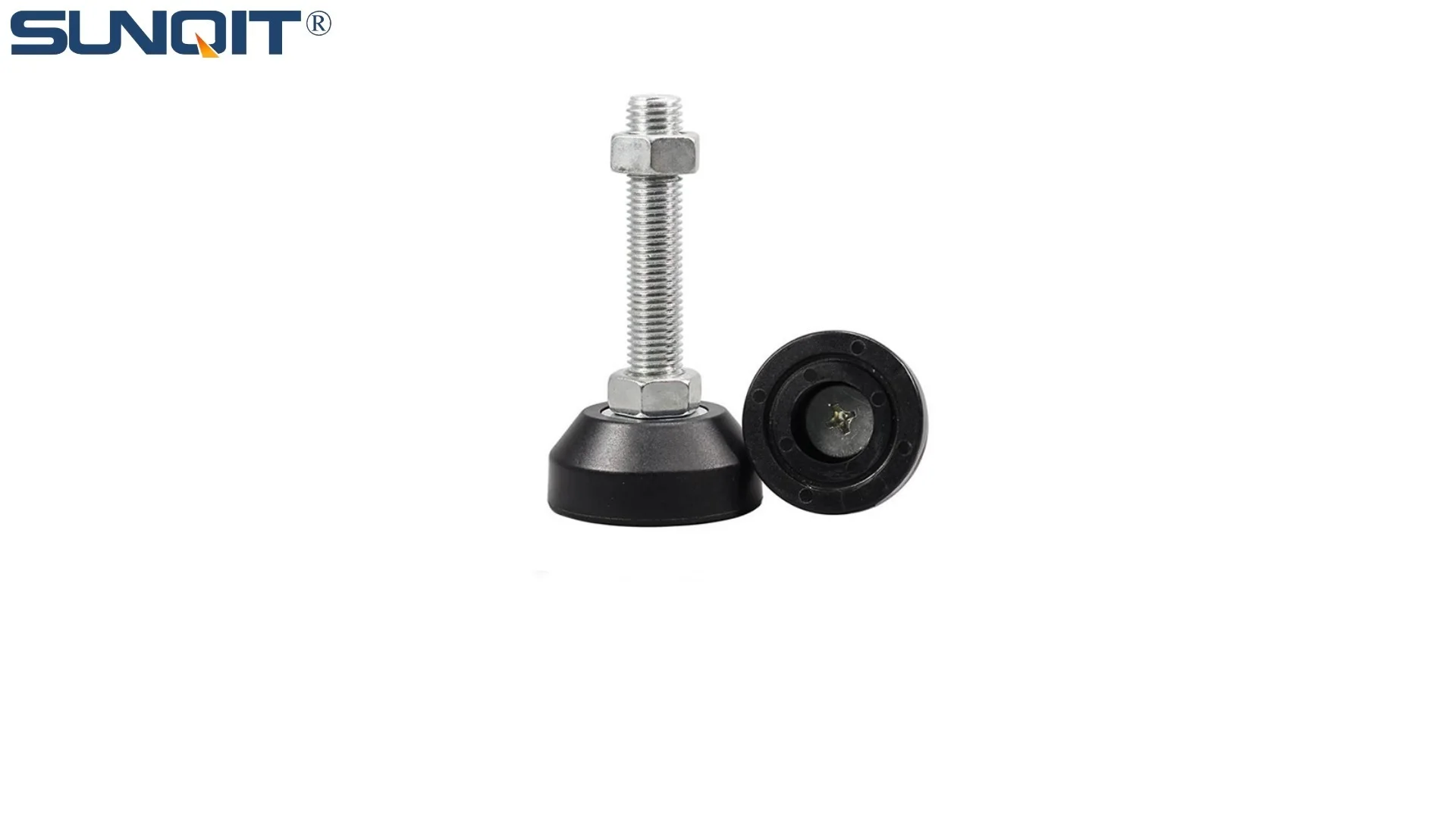
Walk into any busy workshop, factory floor, or even a home garage, and you'll spot a silent hero holding everything together: the adjustable leveling feet under workbenches, tool cabinets, and machinery. These small components might not grab attention, but they're the unsung guardians of stability, precision, and safety. Today, we're zeroing in on one specific type that's a staple in industrial settings: the M10*56 rubber leveling feet. While their size and thread (M10 x 56mm) make them versatile for heavy-duty use, it's the rubber at their base that truly makes or breaks their performance. In this article, we'll unpack why high-quality rubber isn't just a "nice-to-have" here—it's a critical investment in efficiency, durability, and peace of mind. Whether you're setting up a lean pipe workbench for production assembly or outfitting a home workshop, understanding the role of rubber in these feet will save you headaches (and money) down the line.
First Things First: What Even Are M10*56 Rubber Leveling Feet?
Let's start with the basics. Leveling feet, in general, are adjustable components attached to the bottom of equipment to—you guessed it—level it. They typically have a threaded stem (the metal part that screws into the equipment) and a base (the part that touches the floor). The "M10*56" refers to the stem's specifications: M10 is the metric thread size (10mm diameter), and 56mm is the length of the threaded portion. This size is popular in industrial settings because it strikes a balance between strength (to support heavy loads) and adjustability (to fine-tune height by screwing the stem in or out).
Now, the "rubber" part: the base of these feet is usually a rubber pad bonded to a metal plate (often steel or aluminum). This pad is what makes contact with the floor, and its job is threefold: grip the surface to prevent sliding, absorb vibrations from machinery, and protect the floor from scratches or indentations. Without a reliable rubber pad, even the sturdiest stem is just a metal rod digging into the ground—useless for stability.
Why Rubber? The Unique Advantages for Leveling Feet
You might wonder: Why rubber, and not metal, plastic, or wood? Let's break down why rubber is the go-to material for leveling feet, especially in industrial environments where reliability is non-negotiable.
1. Vibration Dampening: Keeping Tools (and Workers) Steady
Imagine a lean pipe workbench in a production line where workers assemble delicate electronics. Every time a nearby machine rumbles, that vibration travels through the floor and into the workbench. If the leveling feet have a hard, unforgiving base (like metal), that vibration transfers straight to the bench, making it harder to align tiny components or solder connections. Rubber, though? It acts like a shock absorber. Its elastic properties absorb and disperse vibrations, keeping the workbench steady. For anyone who's ever tried to use a precision tool on a wobbly surface, you know how game-changing that stability is.
2. Grip: No More Slipping and Sliding
Workshops are busy places—forklifts zoom by, workers rush to meet deadlines, and floors can get slick with oil, water, or debris. A metal or plastic base might slide easily on these surfaces, turning a stable workbench into a hazard. Rubber, with its natural friction, creates a strong grip. Think of it like the tread on a good work boot: it the floor, even when things get messy. This is especially critical for heavy equipment; the last thing you want is a 500-pound assembly station inching across the floor because its leveling feet couldn't hold on.
3. Floor Protection: Saving Surfaces (and Budgets)
Scratched, dented, or cracked floors aren't just eyesores—they're safety risks (trip hazards) and costly to repair. Metal leveling feet can gouge concrete, while hard plastic might leave marks on tile or epoxy. Rubber, being soft yet durable, acts as a buffer. It distributes the weight of the equipment over a larger area (reducing indentation) and slides gently if the bench is moved, leaving floors unscathed. For facilities with polished concrete or expensive flooring, this alone makes rubber leveling feet a smart choice.

Not All Rubber Is Created Equal: What Makes "High-Quality" Rubber?
Here's the catch: not every rubber pad on a leveling foot is built the same. Walk into a hardware store, and you'll find cheap options that look similar but fall apart in months. On the flip side, high-quality rubber feet can last years, even in tough conditions. So, what separates the two? Let's break down the key factors that define "high-quality" rubber in M10*56 leveling feet.
Material Composition: It's All in the Mix
Rubber can be natural (from rubber trees) or synthetic (made from petroleum-based chemicals like styrene-butadiene rubber, or SBR). High-quality leveling feet often use a blend of both. Natural rubber offers excellent elasticity and grip, while synthetic rubber adds resistance to oils, heat, and wear. Cheaper feet, though, might skimp on the blend—using low-grade synthetic rubber with fillers like clay or talc to cut costs. These fillers make the rubber stiff, less elastic, and prone to cracking over time. When you press a low-quality rubber pad, it might feel hard and unyielding; a high-quality one will spring back slowly, like a well-made eraser.
Durometer: The "Hardness" Sweet Spot
Rubber's hardness is measured on the Shore A scale (durometer). For leveling feet, the ideal durometer is usually between 60-80 Shore A. Why this range? Too soft (below 60), and the rubber will compress too much under heavy loads, losing stability. Too hard (above 80), and it becomes brittle, losing grip and vibration-dampening abilities. High-quality manufacturers test their rubber to hit this sweet spot consistently. Low-quality options? They often skip testing, leading to feet that are either squishy and unstable or rock-hard and slippery.
Resistance: Standing Up to Workshop Realities
Workshops are harsh environments. Floors get splashed with motor oil, cleaning solvents, or coolants. Temperatures can swing from sweltering in summer to freezing in unheated warehouses. High-quality rubber is formulated to resist these elements. It won't swell or degrade when exposed to oils, won't crack in extreme cold, and won't melt or become sticky in high heat. Cheap rubber? It might harden and crack after a few months of oil exposure or turn gooey in a hot garage. Imagine replacing leveling feet every quarter because the rubber fell apart—that's a hidden cost no business needs.
Adhesion: Rubber That Stays Put
Ever tightened a leveling foot and had the rubber pad spin independently of the metal stem? That's a sign of poor adhesion. High-quality feet bond the rubber pad to the metal base using heat, pressure, or chemical adhesives, creating a bond stronger than the rubber itself. This ensures the pad moves with the stem when you adjust it, so you can fine-tune height without wrestling with a loose pad. Cheap feet often use weak adhesives or skip proper bonding, leading to pads that peel off or spin—rendering the foot useless.

The Cost of Cutting Corners: What Happens When Rubber Quality Slips
It's tempting to save a few dollars by buying budget M10*56 leveling feet. After all, they look the same, right? But in industrial settings, "cheap" often translates to "costly" in the long run. Let's walk through real-world consequences of skimping on rubber quality.
Case Study: The Wobbly Lean Pipe Workbench
A small electronics manufacturer recently set up a new production line with lean pipe workbenches—lightweight, modular stations perfect for assembling circuit boards. To save money, they opted for generic M10*56 leveling feet with "standard" rubber pads. Within six months, workers started complaining: the benches wobbled, especially when using power tools. Tools slid off the surface, and delicate components were getting damaged. Upon inspection, the rubber pads had compressed unevenly (too soft durometer) and lost grip, causing the benches to shift. The manufacturer had to replace all 20 workbenches' feet—costing more in time and replacement parts than if they'd invested in quality feet upfront.
1. Lost Productivity and Wasted Time
When a workbench or machine isn't stable, every task takes longer. Workers spend extra time readjusting tools, realigning materials, or fixing mistakes caused by vibrations. In a factory cranking out hundreds of products daily, those minutes add up to hours of lost productivity. And if the rubber pads wear out quickly, maintenance teams are stuck replacing feet instead of focusing on more critical tasks.
2. Safety Risks: From Minor Annoyances to Major Hazards
A wobbly workbench isn't just frustrating—it's dangerous. Tools can fall off, causing injuries. Heavy equipment might tip if leveling feet fail, putting workers at risk. Even something as simple as a slippery pad can lead to a bench sliding into a worker's foot. OSHA reports highlight unstable machinery as a common cause of workplace accidents, and often, the root cause traces back to inadequate leveling components.
3. Damaged Floors and Equipment
Cheap rubber that cracks or wears down exposes the metal base of the leveling foot. That metal scrapes and dents floors, leading to costly repairs. Worse, if the foot becomes unstable, the equipment itself can get damaged—imagine a precision laser cutter vibrating itself out of alignment because its leveling feet failed. The repair bill for that equipment could dwarf the cost of quality feet.

High-Quality Rubber in Action: Perfect for Lean Pipe Workbenches and Aluminum Profile Setups
Now that we've covered why high-quality rubber matters, let's zoom in on two common setups where M10*56 rubber leveling feet shine: lean pipe workbenches and aluminum profile workstations.
Lean Pipe Workbenches: Flexibility Meets Stability
Lean pipe workbenches (often called "pipe and joint" workbenches) are beloved for their modularity—you can reconfigure them with pipes and joints to fit changing needs. But their light, open design makes stability critical. M10*56 leveling feet are a popular choice here because their 56mm stem length allows for plenty of height adjustment, even when the bench is loaded with tools and materials. The rubber pad ensures the bench stays put, even when workers lean on it or use power tools. High-quality rubber here means the bench remains stable through countless reconfigurations and heavy use—no need to replace feet every time you rearrange the workshop.
Aluminum Profile Workstations: Precision Demands Reliability
Aluminum profile workstations (built with T-slot aluminum extrusion profiles) are the workhorses of precision industries, from aerospace to medical device manufacturing. These stations often hold sensitive equipment like microscopes, 3D printers, or testing tools that need absolute stability. M10*56 rubber leveling feet are ideal here because aluminum profiles are lightweight but can support heavy loads—so the feet need to balance strength and finesse. High-quality rubber ensures minimal vibration transfer, keeping sensitive tools accurate. It also protects the often polished aluminum frames from scratches when adjusting height—a small detail that keeps the workstation looking professional for years.
How to Spot High-Quality M10*56 Rubber Leveling Feet
Now that you're convinced quality rubber matters, how do you choose the right M10*56 feet? Here's what to look for:
1. Check the Manufacturer's Specs
Reputable suppliers will list rubber specifications: durometer (aim for 60-80 Shore A), material type (natural/synthetic blend), and resistance ratings (oil, temperature). If a supplier can't tell you these details, walk away—they're probably cutting corners.
2. Inspect the Bond
Gently twist the rubber pad. If it moves independently of the metal stem, adhesion is poor. High-quality feet will have a pad that stays firmly attached, even with pressure.
3. Ask About Testing
Good manufacturers test their feet for load capacity, wear resistance, and environmental durability. Don't be afraid to ask: "Do you test your rubber for oil resistance?" or "What's the maximum temperature these feet can handle?" A confident "yes" and specific numbers are good signs.
4. Read Reviews (and Ask Peers)
Other workshop owners and manufacturers are your best resource. Check online reviews for mentions of durability, grip, or longevity. Ask colleagues: "What leveling feet have you used that lasted?" Word-of-mouth often leads to the most reliable products.
Final Thoughts: Invest in Quality, Reap the Rewards
M10*56 rubber leveling feet might seem like small, simple components, but their impact on your workshop's efficiency, safety, and bottom line is huge. High-quality rubber isn't a luxury—it's a foundational investment. It keeps your lean pipe workbench steady during assembly, protects your aluminum profile workstation from wear, and saves you from constant replacements and repairs. The next time you're shopping for leveling feet, remember: the rubber at the base tells the real story. Choose wisely, and those feet will quietly support your work for years to come.
So, whether you're a small business owner setting up your first production line or a DIY enthusiast building a home workshop, don't overlook the power of good rubber. Your tools, your floors, and your sanity will thank you.