- Company Articles
- Products and Technology
- Product knowledge
- M10*56 Rubber Leveling Feet: Preventing Floor Damage in Warehouses

M10*56 Rubber Leveling Feet: Preventing Floor Damage in Warehouses
Related Product
M10*56 Rubber Leveling Feet
Adjustable leveling feet are designed to keep machines level when placed on uneven or sloped ground. Otherwise known as adjustable equipment feet, they are available to order in a wide variety of size and load capacity combinations.
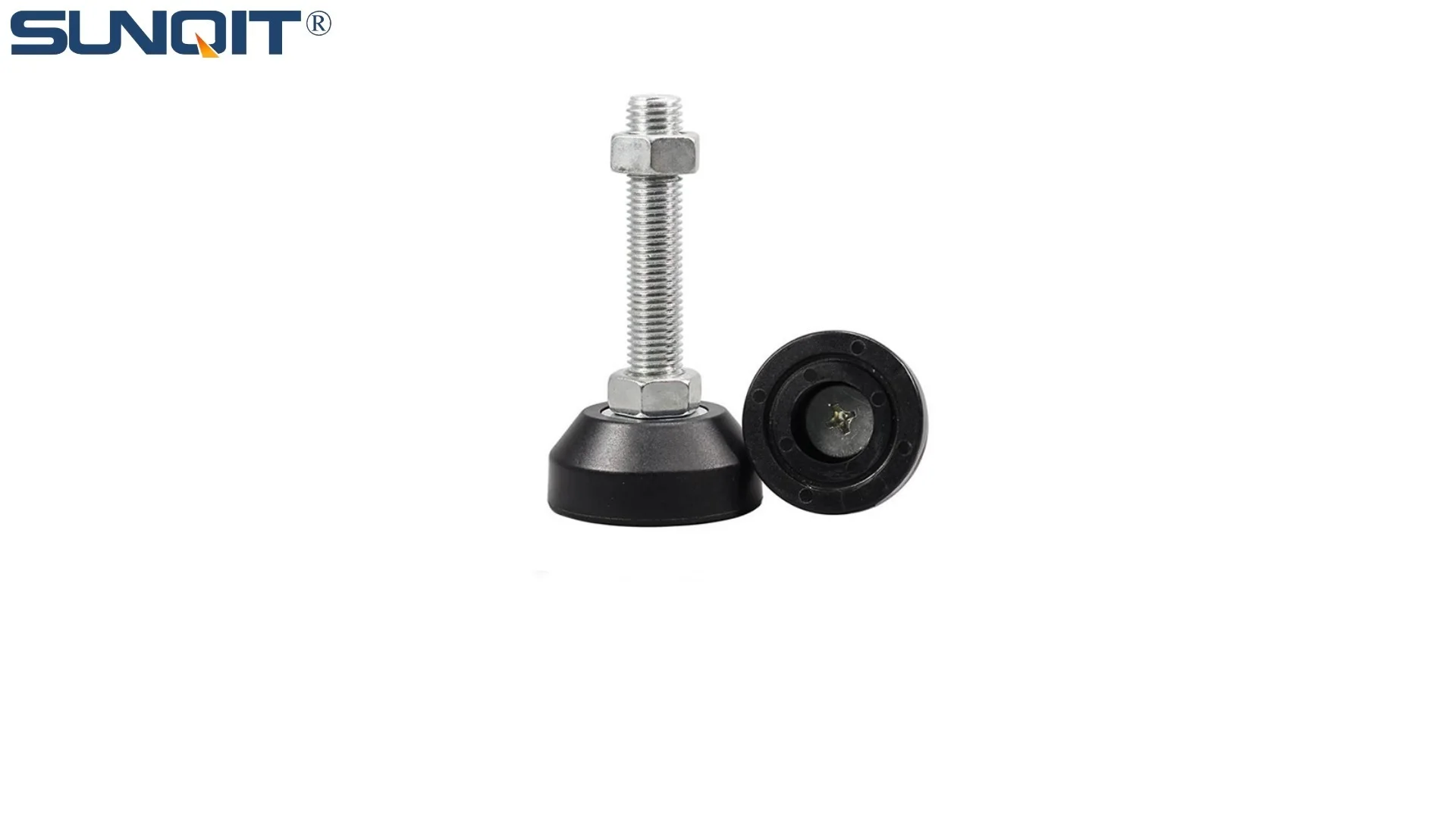
M10*56 Rubber Leveling Feet: Preventing Floor Damage in Warehouses
Let's start with a scenario we've all heard (or lived) before: A warehouse manager is flipping through the monthly budget report when a line item makes them wince—"Floor Repairs: $12,000." They sigh, thinking, Again? Cracks, chips, and uneven surfaces seem to pop up like weeds, no matter how many times they patch them. But here's the kicker: Most of that damage isn't from forklifts crashing into walls or pallets being dropped (though those don't help). A lot of it comes from something far quieter, far more insidious: the very equipment keeping the warehouse running.
Workbenches that wobble, turnover trolleys that scrape, and racks that sit unevenly—these aren't just nuisances for your team. They're tiny, relentless battering rams for your floors. Over time, the pressure, friction, and vibration add up, turning small dents into big repair bills. But what if there was a simple, affordable fix that could stop this damage before it starts? Enter M10*56 rubber leveling feet—the unsung heroes of warehouse floor preservation.
What's Eating Away at Your Warehouse Floors? Common Causes of Damage
Before we dive into how leveling feet solve the problem, let's get clear on what's causing it. Warehouse floors take a beating, but not all damage is created equal. Here are the usual suspects:
Heavy Equipment & Static Loads
Think about that industrial workbench in the corner—the one loaded with tools, parts bins, and a 50-pound inspection lamp. Even if it never moves, its weight is concentrated on four (or more) small points where its legs meet the floor. If those legs are metal or plastic with no cushioning, the pressure can compress the concrete over time, leading to spalling (flaking) or even cracks. Multiply that by every rack, shelf, and workstation in your facility, and you've got a recipe for widespread wear.
Dynamic Impact from Movement
Now, add movement to the mix. Turnover trolleys loaded with inventory get pushed across the floor dozens of times a day. If their wheels are worn or their frames are unbalanced, they don't just roll—they scrape and jolt . Every time a trolley hits a tiny bump or the operator has to yank it straight, that force transfers to the floor. Even something as small as a wobbly cart wheel can grind against concrete, leaving behind scratches that deepen over time. And let's not forget about stationary equipment that vibrates, like conveyor belts or packaging machines—those vibrations act like a jackhammer on the floor beneath them.
Poorly Designed or Maintained Equipment
Here's a big one: Equipment that isn't adjusted for your specific floor. Maybe you bought a standard workbench, but your warehouse floor has a slight slope (most do, thanks to drainage). The bench teeters, so you prop a piece of wood under one leg to stabilize it. Problem solved, right? Wrong. That wood isn't distributing the weight evenly—it's creating a new pressure point, and now the bench is even more unstable when someone leans on it. Or maybe you've got a metal rack with sharp, unprotected feet that dig into the floor every time you load it. These "quick fixes" and overlooked details are floor damage in slow motion.
Real Talk: A 2023 survey by the Material Handling Equipment Distributors Association (MHEDA) found that 68% of warehouses report floor damage from "routine equipment use," not accidents. The average facility spends $8,000–$15,000 annually on repairs—money that could go to new tools, team training, or better safety gear.

Enter the Unsung Hero: Leveling Feet as a Preventative Solution
So, we know the problem. Now, let's talk about the solution: leveling feet. If you're picturing clunky metal knobs, think again. Modern leveling feet—especially rubber ones like the M10*56—are engineered to protect floors while making your equipment more stable, safer, and longer-lasting. Let's break down why they matter.
What Are Leveling Feet, Anyway?
At their core, leveling feet are adjustable components that attach to the bottom of equipment (think workbenches, racks, or machines) to stabilize them on uneven surfaces. They typically have a threaded stem (the "screw" part) and a base (the part that touches the floor). Twist the stem, and the base moves up or down, letting you "level" the equipment—hence the name. But the magic isn't just in the adjustability; it's in the base material. And when it comes to floor protection, rubber is king.
Why Rubber? The Material Advantage
Metal bases might be strong, but they're also hard and unforgiving. They slide, scratch, and concentrate pressure on small areas. Plastic is better, but it can crack under heavy loads or degrade from oil and chemicals. Rubber? It's a multitasker:
- Grip: Rubber's natural friction keeps equipment from sliding, even on smooth concrete or when jostled.
- Shock absorption: It cushions impacts from vibrating machines or loaded trolleys, reducing the "hammering" effect on floors.
- Weight distribution: Rubber bases are often wider than metal or plastic ones, spreading the equipment's weight over a larger area to lower pressure per square inch.
- Chemical resistance: Good-quality rubber (like the kind used in M10*56 feet) stands up to oils, solvents, and cleaning agents common in warehouses.
The "M10*56" Spec: What Does It Mean, and Why Does It Matter?
Now, let's decode the name: M10*56 . The "M" stands for "metric," and "10" is the diameter of the threaded stem (10mm). The "56" is the length of the stem (56mm). Why does this matter? Because not all leveling feet fit all equipment! A stem too short won't let you adjust enough for uneven floors; a stem too narrow might snap under heavy loads. M10*56 is a sweet spot for many warehouse tools—strong enough for workbenches and racks (which can weigh 500+ lbs when loaded) but compact enough to fit on smaller equipment like turnover trolleys.
Think of it like buying shoes: You wouldn't wear size 9s if you're a size 12, right? The M10*56 spec ensures these feet fit the threaded holes on most standard industrial equipment, making them a versatile choice for warehouses using lean system principles—where adaptability and compatibility are key.

Deep Dive: M10*56 Rubber Leveling Feet – Features That Make a Difference
Not all rubber leveling feet are created equal. The M10*56 stands out for a few key features that make it a workhorse in warehouse settings. Let's break them down:
Rubber Composition:
The rubber base isn't just any rubber—it's typically a blend of natural and synthetic rubber (often nitrile or EPDM) designed for durability and grip. Nitrile rubber, for example, resists oils and greases (hello, machine shops and automotive warehouses), while EPDM handles extreme temperatures (perfect for freezers or hot manufacturing areas). The base is also usually textured or grooved to boost friction, so even if the floor is damp (from a spill or cleaning), the equipment stays put.
Threaded Design: Secure Fit and Adjustability
The M10*56's 10mm stem is coarse-threaded, which means it adjusts quickly and locks securely. No more spinning the foot 50 times to raise it 1/4 inch! The threads are also often zinc-plated to resist rust, so even in humid warehouses, they won't seize up. And because the stem is 56mm long, you've got plenty of room to adjust for uneven floors—up to 2 inches in some cases. That's a game-changer for old warehouses with sloped or cracked concrete.
Load Capacity: Handling the Weight
A single M10*56 rubber leveling foot can typically support 5–800 lbs. Let that sink in: A standard workbench with four feet? That's 2,000–3,200 lbs of total capacity—more than enough for tools, parts, and even a worker leaning on it. And because the weight is spread across the rubber base (which is usually 2–3 inches in diameter), the pressure on the floor drops dramatically. Instead of a metal leg exerting 200 psi on a tiny point, the rubber foot might exert just 20 psi over a larger area. That's the difference between a crack forming and the floor staying smooth.
Math Time (Don't Worry, It's Simple): A 200-lb workbench leg with a 1-inch metal base exerts ~255 psi (pressure = force/area). Swap that for a 3-inch rubber base, and the pressure drops to ~28 psi. That's nine times less force on your floor!

Beyond Floor Protection: Additional Benefits of M10*56 Rubber Leveling Feet
Preventing floor damage is the headline benefit, but these little feet do more than that. They make your warehouse safer, your team happier, and your operations smoother. Let's count the ways:
Stability = Safety
A wobbly workbench isn't just annoying—it's dangerous. Tools slide off, workers lose balance, and precision tasks (like assembly or inspection) get harder. M10*56 feet lock equipment in place, reducing the risk of slips, trips, and falls. OSHA reports that "unstable work surfaces" contribute to 15% of warehouse injuries; leveling feet help slash that number.
Noise Reduction
Ever noticed how a rickety cart sounds like a marching band? Vibration from uneven equipment amplifies noise, making the warehouse a louder, more stressful place. Rubber absorbs vibration, so that turnover trolley rolling past sounds more like a whisper than thunder. Your team will thank you—lower noise levels mean less fatigue and better focus.
Protecting Your Equipment
It's not just floors that suffer from uneven equipment. Vibration can loosen bolts, damage sensitive parts (like scales or electronic tools), and shorten the life of motors. By stabilizing equipment, leveling feet reduce wear and tear, saving you money on repairs and replacements. A study by the Manufacturing Technology Insights found that properly stabilized machinery lasts 30% longer than unstable counterparts.
Compatibility with Lean Systems
If your warehouse uses lean system principles—focused on efficiency, waste reduction, and adaptability—M*56 feet fit right in. They're easy to install, adjust, and swap between equipment, so you can reconfigure workstations or racks without redoing the floor. No more permanent fixes that lock you into one layout; with leveling feet, you're free to optimize as needed.
Real-World Applications: Where M10*56 Rubber Leveling Feet Shine
Still not sure if these feet are right for your warehouse? Let's look at two common pieces of equipment where they make a huge difference:
Workbenches: The Heart of the Operation
Your assembly line workbench sees more action than any other piece of equipment. Workers stand at it for hours, tools get dropped, parts get stacked—all while the bench takes the brunt. Without leveling feet, a wobbly bench leads to:
- Scratches from the metal legs sliding on the floor
- Cracks from uneven weight distribution
- Fatigue for workers straining to keep tools steady
Add M10*56 feet, though, and suddenly the bench is rock-solid. The rubber grips the floor, so no more sliding. The adjustable stem lets you tweak it if the floor shifts (which it does, over time). And the weight is spread out, so your floor stays smooth. It's a small change that makes a big difference in daily operations.
Turnover Trolleys & Racks: Mobile Storage, Minimized Damage
Turnover trolleys are lifesavers for moving inventory—but when they're not in use, they're often parked in a corner, their metal wheels or legs digging into the floor. Racks loaded with boxes? Same problem. M10* feet on the bottom of these tools mean:
- No more scrapes from metal legs when the trolley is moved
- Even weight distribution when the rack is loaded
- Stability, so the trolley doesn't roll away if the floor is sloped
One warehouse in Ohio reported a 40% drop in floor scratches after adding leveling feet to their 20 turnover trolleys. Their maintenance team now spends less time patching and more time on proactive tasks—like, you know, keeping the equipment running.
M10*56 vs. the Competition: Why Rubber Beats Metal, Plastic, and DIY Fixes
You might be thinking, Can't I just use metal feet? Or plastic? Or even old tennis balls? (Yes, we've seen the tennis ball trick.) Let's compare:
| Feature | M10*56 Rubber Leveling Feet | Metal Leveling Feet | Plastic Leveling Feet | DIY Fixes (Tennis Balls, Wood Blocks) |
|---|---|---|---|---|
| Floor Protection | Excellent – rubber absorbs shock, no scratching | Poor – metal slides and concentrates pressure | Fair – plastic can scratch; less shock absorption | Terrible – uneven weight distribution; wears quickly |
| Stability | High – rubber grips; adjustable stem | Medium – slides on smooth floors; no grip | Medium – can crack under heavy loads | Low – shifts easily; doesn't lock in place |
| Durability | High – resists oils, chemicals, and wear | High – but damages floors in return | Low – cracks in cold temps; degrades in heat | Very Low – tennis balls flatten; wood rots/warps |
| Cost (Long-Term) | Low – ~$5–$10 per foot; prevents expensive repairs | High – ~$3–$8 per foot; but adds floor repair costs | Medium – ~$2–$5 per foot; needs frequent replacement | Very High – "Free" upfront, but leads to damage and injuries |
The verdict? Rubber leveling feet—especially M10*56—offer the best balance of protection, durability, and cost. They're an investment that pays for itself in avoided repairs and safer operations.
Installation & Maintenance: Making the Most of Your Leveling Feet
Installing M10*5* rubber leveling feet is easier than you might think. Here's a quick guide:
Installation Steps:
- Remove old feet (if any): Unscrew or pry off existing legs or feet from your equipment.
- Check the thread size: Make sure the equipment's mounting holes are M* (metric, 10mm diameter). If not, you may need adapters (but most industrial equipment uses standard metric threads).
- Screw in the M10*56 feet: Hand-tighten them until snug. Don't over-tighten—you'll need to adjust them later.
- Level the equipment: Place a bubble level on top of the equipment. Twist the leveling feet up or down until the bubble is centered. For extra security*, you can lock the feet in place with a nut (called a "jam nut") threaded onto the stem just above the equipment base.
Maintenance Tips:
To keep your feet (and floors) in top shape:
- Inspect monthly: Check for cracks in the rubber, stripped threads, or debris stuck to the base (like dirt or oil). Clean the base with a damp cloth to maintain grip.
- Re-adjust as needed: Floors settle, equipment shifts—re-level feet if you notice wobbling.
- replace when worn: If the rubber is flattened, cracked, or losing grip, swap in new feet. It's a small cost to avoid big floor repairs.
Conclusion* Protect Your Floors – and Your Budget – with M10*5* Rubber Leveling Feet
Warehouse floors are the unsung foundation of your operation. They don't get the glory of new forklifts or fancy software, but without them, nothing works* Cracks and damage aren't just cosmetic—they're a drain on your budget* your team's morale* and your productivity.
M10*56 rubber leveling feet offer a simple* affordable way to fight back. By absorbing shock* distributing weight* and stabilizing equipment* they turn tiny daily stresses into non-issues. They're not just a "fix"—they're an investment in your warehouse's future.
So* the next time you're staring at that "Floor Repairs" line item* ask yourself: What if I could spend $50 on leveling feet instead of $12*000 on repairs? The answer is clear. Your floors* your team* and your budget will thank you.