- Company Articles
- Products and Technology
- Product knowledge
- M10*56 Rubber Leveling Feet: Shock Resistance for Precision Machinery

M10*56 Rubber Leveling Feet: Shock Resistance for Precision Machinery
Related Product
M10*56 Rubber Leveling Feet
Adjustable leveling feet are designed to keep machines level when placed on uneven or sloped ground. Otherwise known as adjustable equipment feet, they are available to order in a wide variety of size and load capacity combinations.
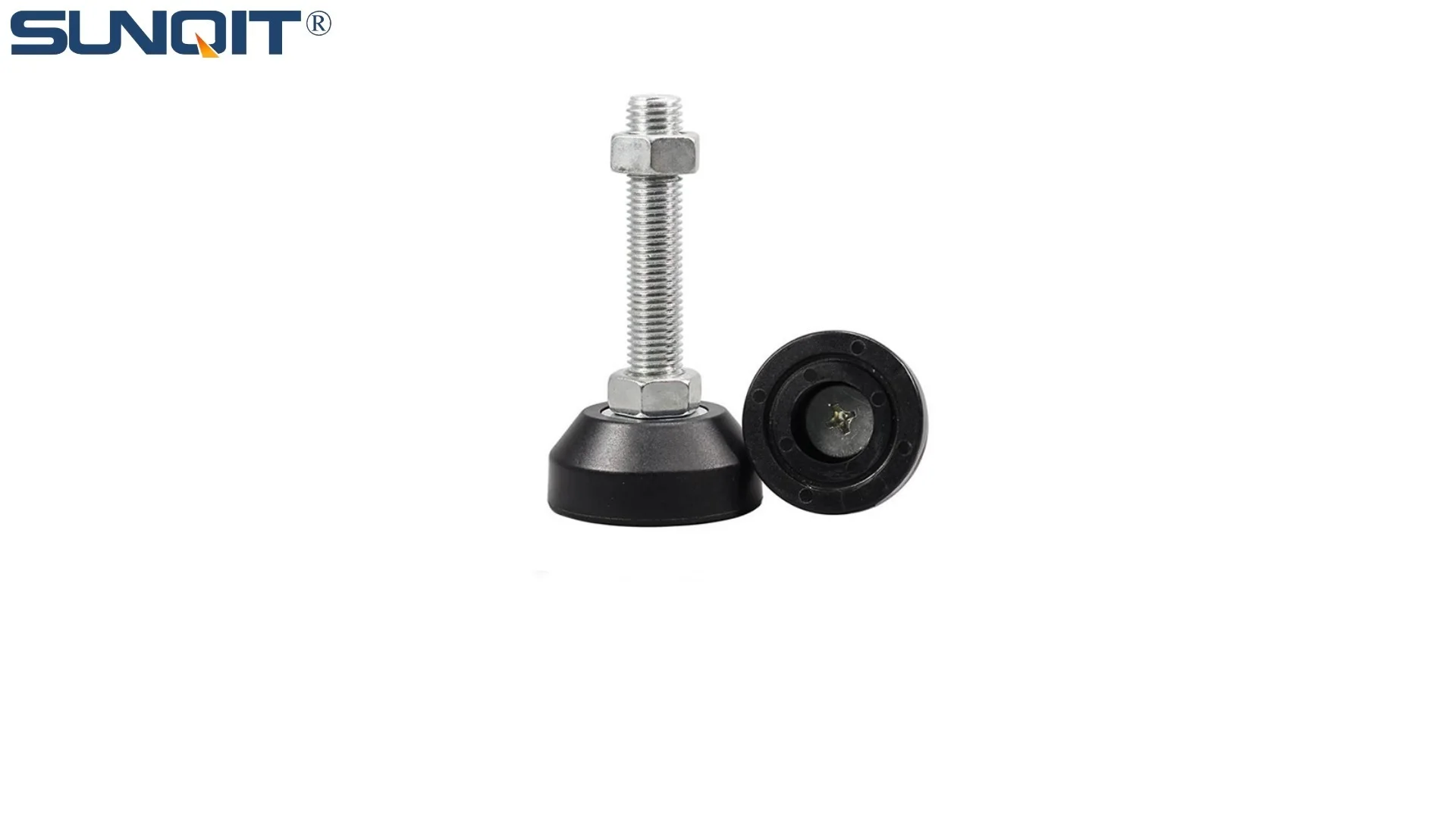
In the world of precision manufacturing, where a fraction of a millimeter can mean the difference between a flawless product and a costly error, stability isn't just a nicety—it's a necessity. Walk through any advanced factory, lab, or workshop, and you'll find machines humming away, each relying on a foundation that keeps them steady, aligned, and protected from the chaos of their environment. Yet, for all the attention lavished on high-tech sensors and cutting-edge software, one humble component often goes unnoticed: the leveling foot. Today, we're shining a light on a true unsung hero: the M10*56 rubber leveling foot. Quietly standing between your machinery and the floor, this small but mighty part plays a critical role in absorbing shocks, reducing vibrations, and ensuring precision tools perform at their best. Let's dive into why it matters, how it works, and why it's become a staple in industries where "close enough" simply doesn't cut it.
The Hidden Challenge: Why Precision Machinery Needs More Than Just a Flat Surface
Precision machinery—think CNC routers, semiconductor testers, medical imaging equipment, or even high-end 3D printers—operates in a world of tiny tolerances. These machines are designed to move, measure, and manipulate materials with pinpoint accuracy, often down to the micrometer. But here's the catch: they're also incredibly sensitive to external disruptions. A sudden jolt from a passing forklift, vibrations from a nearby conveyor, or even uneven flooring can throw their alignment off, leading to skewed measurements, scrapped parts, or worse, permanent damage to internal components.
Consider a semiconductor fabrication plant, where workers wear bunny suits to avoid introducing dust particles larger than 0.1 microns. Inside, lithography machines etch circuits onto silicon wafers with features smaller than a virus. If that machine shifts by just 5 microns—about 1/20th the width of a human hair—the entire wafer could be ruined, costing thousands of dollars. Similarly, in a medical lab, a centrifuge spinning at 15,000 RPM needs to stay perfectly balanced; even a slight wobble could generate dangerous vibrations or compromise test results.
The problem isn't just movement, either. Over time, repeated vibrations can loosen screws, wear down bearings, and degrade sensitive electronics. In lean manufacturing environments, where efficiency and waste reduction are paramount, unplanned downtime from machinery misalignment is the enemy. Every minute a production line is halted to realign a machine eats into profits and disrupts schedules. That's where leveling feet come in: they're the first line of defense against these invisible threats, turning unstable surfaces into reliable foundations.
Meet the M10*56 Rubber Leveling Foot: Design That Delivers Stability
At first glance, the M10*56 rubber leveling foot might seem simple—and in many ways, that's the point. Its design is a masterclass in functional minimalism, engineered to solve specific problems without unnecessary complexity. Let's break down its key components and why they matter.
The Stem: Threaded for Precision Adjustment The "M10*56" in its name tells you everything about the stem: it's a metric thread with a diameter of 10mm and a length of 56mm. This threaded design is intentional. Unlike fixed-height feet, which lock machinery into a single position, the M10*56's threaded stem allows for micro-adjustments. Need to compensate for a slightly uneven floor? Simply twist the foot clockwise to raise it or counterclockwise to lower it. This adjustability is crucial because even the "flat" floors in factories or labs often have subtle slopes or imperfections. With a few turns of a wrench, you can dial in the perfect height to keep your machine level, whether it's a benchtop tool or a heavy industrial press.
The Base: Rubber for Shock Absorption The real star of the show, though, is the rubber base. Made from durable, high-density rubber (often nitrile or EPDM, chosen for their resistance to oils, chemicals, and temperature fluctuations), this base acts like a tiny shock absorber. When vibrations hit—from a nearby machine, foot traffic, or even the machine's own operation—the rubber compresses slightly, dissipating energy instead of transferring it up into the machinery. It's similar to how a car's suspension smooths out bumps in the road, but on a smaller scale. The rubber also provides grip, preventing the machine from sliding during operation, and it won't scratch or mar delicate flooring, making it ideal for cleanrooms or finished concrete surfaces.
The Material Mix: Strength Meets Flexibility While the base is rubber, the stem itself is typically made from steel or stainless steel, coated in zinc or nickel to resist corrosion. This combination of rigid metal and flexible rubber is key. The steel stem provides the strength to support heavy loads—some M10*56 feet can handle up to 500kg per unit—while the rubber base adds the cushioning needed to absorb shocks. It's a partnership that ensures the foot can stand up to the weight of industrial machinery without sacrificing its vibration-dampening abilities.

How It Works: The Science of Shock Resistance
To understand why the M10*56 rubber leveling foot is so effective at shock resistance, let's get a little technical (but don't worry—we'll keep it simple). When a machine vibrates, it generates energy that travels through its frame and into the floor. If that energy isn't absorbed, it can reflect back up into the machine, causing resonance—a phenomenon where vibrations amplify themselves, like a singer shattering a glass with their voice. Resonance is a precision machine's worst nightmare: it can loosen components, distort measurements, and even shorten the machine's lifespan.
The rubber base of the M10*56 foot disrupts this cycle. Rubber is a viscoelastic material, meaning it has both elastic (spring-like) and viscous (fluid-like) properties. When a shock hits, the rubber deforms, converting kinetic energy into heat (which dissipates harmlessly) instead of letting it bounce back. Think of it like squeezing a stress ball: when you let go, the ball slowly returns to its shape, but the energy you put into squeezing it doesn't snap back with force. That slow recovery is exactly what we want for machinery—it "dampens" the vibration, preventing it from building up.
But shock absorption isn't the only trick up its sleeve. The M10*56's adjustability also plays a role in reducing vibrations. When a machine is level, its weight is distributed evenly across all four (or more) feet. If one foot is shorter than the others, the machine tilts, putting extra stress on its frame and components. Over time, this uneven loading can cause parts to wear unevenly, leading to more vibration as loose or misaligned parts rattle against each other. By letting you tweak each foot's height, the M10*56 ensures weight is spread evenly, minimizing stress and keeping vibrations in check from the start.

Beyond the Basics: Real-World Applications Where M10*56 Feet Shine
The M10*56 rubber leveling foot isn't a one-trick pony. Its versatility and reliability have made it a go-to choice in a wide range of industries. Let's take a look at some of the places where it's making a difference:
1. Lean Manufacturing Workbenches In lean manufacturing, every second counts. Workbenches are the heart of assembly lines, where workers assemble products, test components, or package goods. A wobbly workbench isn't just annoying—it's a safety hazard and a productivity killer. That's why many lean system workbenches, especially those built with aluminum profiles for lightweight strength, rely on M10*56 feet. The aluminum profile frames are easy to customize, and the M10*56's threaded stem screws directly into pre-drilled holes, making setup a breeze. Once installed, the feet keep the workbench level, even when loaded with tools, parts bins, or heavy assemblies, reducing errors and keeping the line moving.
2. Medical and Laboratory Equipment Labs are full of sensitive instruments that can't tolerate vibrations. A PCR machine, which amplifies DNA strands for disease testing, needs to maintain a constant temperature and stable platform to ensure accurate results. Similarly, electron microscopes, which magnify samples up to 10 million times, require a base so steady that even footsteps in the hallway don't disrupt their imaging. M10*56 rubber feet are a favorite here because they provide the dual benefits of vibration absorption and precise leveling. Their non-marking rubber bases also make them ideal for cleanrooms, where contamination control is critical.
3. CNC Machining Centers CNC machines are workhorses of manufacturing, cutting metal, plastic, and wood with incredible precision. But they also generate a lot of vibration themselves, thanks to spinning spindles and moving axes. Without proper damping, those vibrations can transfer to the floor and even "feed back" into the machine, causing chatter (visible wavy patterns on the workpiece). M10*56 feet help here by isolating the machine from the floor, reducing both incoming and outgoing vibrations. This not only improves the quality of the cuts but also extends the life of the machine's bearings and tools.
4. Semiconductor and Electronics Production In electronics manufacturing, where components like microchips or circuit boards are handled, static electricity and vibration are dual threats. M10*56 feet often come in ESD (electrostatic discharge) variants, where the rubber base is formulated to dissipate static, protecting sensitive electronics from damage. Additionally, their shock-absorbing properties ensure that pick-and-place machines, which position components smaller than a grain of rice, stay steady during operation.

M10*56 vs. the Competition: Why Rubber Leveling Feet Stand Out
Not all leveling feet are created equal. From metal-only designs to fixed-height plastic feet, there are dozens of options on the market. So why has the M10*56 rubber leveling foot become a favorite? Let's compare it to common alternatives to see where it excels:
| Feature | M10*56 Rubber Leveling Foot | Metal-Only Leveling Foot | Fixed-Height Plastic Foot | Soft Foam Pads |
|---|---|---|---|---|
| Shock Absorption | Excellent: Rubber dampens vibrations and absorbs shocks | Poor: Metal transfers vibrations instead of absorbing them | Fair: Some plastic flexes, but less than rubber | Good: Foam absorbs well, but compresses over time |
| Adjustability | High: Threaded stem allows precise height tweaks (±5mm typical) | High: Also threaded, but no shock absorption | None: Fixed height; can't compensate for uneven floors | None: Thickness is fixed; no adjustment possible |
| Load Capacity | High: Steel stem supports 300–500kg per foot (depending on design) | Very High: Metal stems handle up to 1000kg+ | Low: Plastic deforms under heavy loads (often <100kg) | Very Low: Foam crushes under >50kg; not for machinery |
| Durability | Good: Rubber resists oils, chemicals, and wear; 5–7 year lifespan in typical use | Excellent: Metal lasts decades, but can rust if uncoated | Poor: Plastic cracks, fades, or deforms in harsh environments | Very Poor: Foam breaks down in 1–2 years; attracts dust |
| Floor Protection | Excellent: Rubber won't scratch concrete, tile, or hardwood | Poor: Metal can leave indentations or scrape floors | Fair: Soft plastic is gentle, but can mark if loaded heavily | Good: Foam is gentle, but tends to stick to floors over time |
As the table shows, the M10*56 rubber leveling foot strikes a rare balance: it offers strong shock absorption, precise adjustability, and solid durability, all while protecting floors and supporting heavy loads. Metal feet might handle more weight, but they lack the vibration-dampening critical for precision work. Plastic and foam options are cheaper, but they're too fragile or inflexible for industrial use. For most precision machinery applications, the M10*56 rubber foot is the sweet spot.
Installation and Maintenance: Getting the Most Out of Your Leveling Feet
Even the best leveling foot won't perform well if it's installed incorrectly. Here's a step-by-step guide to setting up M10*56 rubber leveling feet, plus tips to keep them working like new:
Installation Steps:
- Prep the Surface: Start by cleaning the mounting points on your machine. Remove any rust, paint, or debris so the foot sits flush. If the machine has existing threads, chase them with a tap to remove burrs—this prevents cross-threading when installing the new foot.
- Hand-Tighten First: Screw the M10*56 foot into the mounting hole by hand until it's snug. Avoid using tools here—over-tightening can strip the threads, especially if the machine's frame is made of aluminum (a common material in lightweight workbenches and lean system setups).
- Level the Machine: Place a spirit level on the machine's table or frame. Adjust each foot by turning it clockwise (to raise) or counterclockwise (to lower) until the bubble is centered. For machines with four feet, start with the front two, then the back two—this prevents "rocking."
- Lock It Down (Optional): If the machine will be moved or subjected to heavy vibrations, apply a small amount of thread-locking compound (like Loctite Blue) to the stem before final tightening. This prevents the foot from loosening over time.
- Test for Stability: Gently push on the machine from different sides. It should not rock or shift. If it does, recheck the leveling and ensure all feet are making full contact with the floor.
Maintenance Tips:
- Inspect Regularly: Check the feet every 3–6 months for signs of wear. Look for cracks in the rubber, rust on the stem, or debris stuck to the base (which can throw off leveling).
- Clean the Base: Wipe the rubber base with a damp cloth to remove dust, oil, or grease. A clean base ensures better grip and prevents slipping.
- Retighten as Needed: Machinery can "settle" over time, especially in high-vibration environments. Recheck the level every year and tweak the feet if necessary.
- replace When Worn: If the rubber is cracked, compressed, or no longer grips the floor, replace the foot. Don't wait for a failure—unstable machinery is a safety risk and a quality control nightmare.
Choosing the Right Supplier: Why Quality Matters
Not all M10*56 rubber leveling feet are created equal. Like any component, the quality can vary wildly between brands, and cutting corners here can lead to big problems down the line. So, what should you look for in a supplier?
First, prioritize materials. The best feet use high-quality rubber (look for durometer ratings between 60–80 Shore A—this balances flexibility and durability) and zinc-plated or stainless-steel stems to resist corrosion. Avoid feet with "generic" rubber; low-grade materials can crack in cold temperatures or degrade quickly when exposed to oils or chemicals common in manufacturing settings.
Second, check for consistency. A reliable supplier will ensure every foot meets tight tolerances—no two feet should have stems that vary in length by more than 0.5mm, and the threads should be clean and uniform. Inconsistent parts make leveling a nightmare and can lead to uneven weight distribution.
Finally, look for technical support. A good supplier won't just sell you a foot—they'll help you choose the right model for your application. Need a higher load capacity? They should offer reinforced stems. Working in a cleanroom? They might have ESD-safe or sterile options. And if you're building a custom workbench or machine, they should be able to advise on how many feet you need and where to place them for optimal stability.
The Bottom Line: Small Component, Big Impact
At the end of the day, the M10*56 rubber leveling foot is a reminder that great engineering isn't just about the flashy, high-tech parts. It's about the details—the components that work behind the scenes to turn good machines into great ones. By absorbing shocks, reducing vibrations, and keeping precision tools level, this humble foot plays a vital role in ensuring quality, efficiency, and reliability in industries where every detail matters.
So, the next time you walk past a humming CNC machine or a steady lab instrument, take a moment to look down. Chances are, you'll see a set of M10*56 rubber leveling feet quietly doing their job. They may not get the headlines, but in the world of precision manufacturing, they're the unsung heroes keeping everything on track—one stable step at a time.