- Company Articles
- Products and Technology
- Product knowledge
- M10*56 Rubber Leveling Feet: The Ultimate Accessory for Lean Pipe Racks

M10*56 Rubber Leveling Feet: The Ultimate Accessory for Lean Pipe Racks
Related Product
M10*56 Rubber Leveling Feet
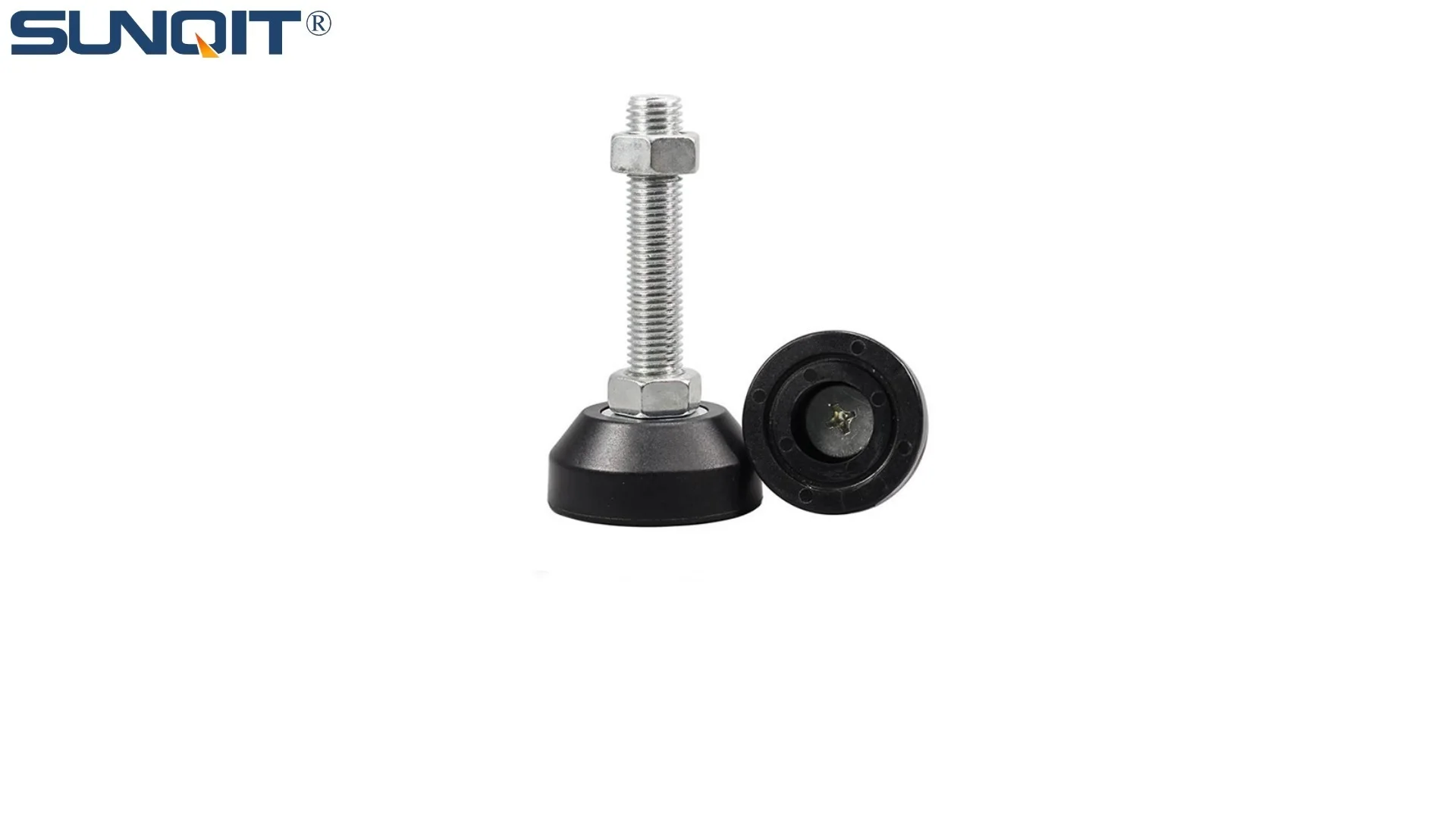
Adjustable leveling feet are designed to keep machines level when placed on uneven or sloped ground. Otherwise known as adjustable equipment feet, they are available to order in a wide variety of size and load capacity combinations.
Walk into any well-run manufacturing facility, and you'll notice a quiet rhythm—parts gliding smoothly along flow racks, workbenches organized with precision, and teams moving with purpose. This isn't just luck; it's the result of lean manufacturing principles in action. At the heart of this efficiency lies something deceptively simple: the infrastructure that holds everything together. Today, we're shining a spotlight on a small but mighty component that keeps this infrastructure stable, safe, and efficient: the M10*56 rubber leveling feet, a game-changer for anyone relying on lean pipe racks.
Lean systems thrive on eliminating waste, streamlining workflows, and maximizing productivity. But even the most thoughtfully designed lean pipe rack or workbench can falter if its foundation is shaky. Uneven floors, minor dips in concrete, or even the natural wear and tear of a busy shop can turn a reliable rack into a wobbly hazard. That's where the right leveling feet come in—and not just any feet, but the M10*56 rubber leveling feet. Let's dive into why these unassuming accessories are the unsung heroes of lean manufacturing setups.
The Backbone of Lean Systems: Lean Pipe Racks
Before we talk about leveling feet, let's take a step back and appreciate the star of the show: lean pipe racks. These versatile structures are the workhorses of production assemble lines, warehouses, and workshops worldwide. Made from durable materials like steel or aluminum lean pipe, they're designed to be modular, adjustable, and easy to reconfigure—perfect for adapting to changing workflow needs. Whether you're storing raw materials, moving components along a line, or organizing tools at a workbench, lean pipe racks keep everything within reach and in order.
But here's the thing: even the sturdiest lean pipe rack is only as good as its connection to the floor. Imagine a rack loaded with heavy parts teetering slightly because one leg sits an inch higher than the others. Over time, that instability can lead to more than just a wobbly shelf. It can cause parts to shift, tools to slide off, or worse, the entire rack to tip. That's not just a productivity killer—it's a safety risk. And in lean manufacturing, where every second and every square foot counts, waste like damaged goods or downtime due to accidents is the last thing you need.
The Hidden Problem: Unstable Foundations in Workshops
Most workshop floors aren't perfect. Concrete can settle unevenly over time, or maybe there's a small crack near the production line that you've learned to work around. Even new facilities might have minor inconsistencies in floor level. These issues might seem trivial, but when you're dealing with tall lean pipe racks or workbenches that need to stay perfectly flat for assembly tasks, they become major headaches.
Take, for example, a material rack B (3 row and 3 floor) used to store delicate electronic components. If the rack isn't level, boxes might slide off the top shelf, damaging parts and creating extra cleanup work. Or consider a workbench E (single deck-without caster) where workers assemble small gadgets. A wobbly workbench could lead to misaligned parts, requiring rework and slowing down the line. In lean terms, that's "muda"—waste—and it's exactly what lean systems aim to eliminate.
Traditional solutions to uneven floors often involve makeshift fixes: stacking washers under legs, shimming with pieces of wood, or even using random objects like old magazines to prop up a wobbly corner. But these are temporary band-aids, not solutions. They shift over time, fail under heavy loads, and look unprofessional. Worse, they don't address the root cause: the need for a reliable, adjustable way to level your lean pipe racks.

Enter M10*56 Rubber Leveling Feet: Stability Redefined
This is where M10*56 rubber leveling feet come in. These small, unassuming components are designed to solve the instability problem once and for all. Let's break down what makes them so effective.
First, the basics: the "M10*56" refers to the thread size (M10) and length (56mm) of the bolt that connects the foot to the rack leg. This standard size fits most lean pipe rack legs, making them a versatile choice for a wide range of setups. The "rubber" part is equally important. Unlike metal feet, which can scratch floors or slip on smooth surfaces, rubber provides a soft, grippy base that protects both the floor and the rack.
But the real magic is in their adjustability. Each leveling foot has a threaded bolt that screws into the rack leg, allowing you to raise or lower the foot by twisting it. Need to compensate for a half-inch dip in the floor? Simply twist the foot clockwise to extend it, raising that corner of the rack until it's perfectly level. It's that easy. No more shims, no more washers, no more guesswork.

What Makes M10*56 Rubber Leveling Feet Stand Out?
Not all leveling feet are created equal. To understand why M10*56 rubber leveling feet are the ultimate accessory, let's compare them to other common options. Below is a table highlighting their key features:
| Feature | M10*56 Rubber Leveling Feet | Metal Leveling Feet | Plastic Leveling Feet |
|---|---|---|---|
| Material | Rubber base with steel bolt | Solid steel | Hard plastic |
| Floor Protection | Excellent—rubber prevents scratches and dents | Poor—metal can scratch concrete or tile | Good—softer than metal, but less durable |
| Anti-Slip Grip | High—rubber texture grips floors tightly | Low—smooth metal slides on wet or polished floors | Moderate—plastic can slip under heavy loads |
| Load Capacity | High—supports up to 500kg per foot (varies by model) | Very high—but at the cost of floor damage | Low—plastic deforms under heavy weight |
| Adjustability | Easy—twist to raise/lower; 56mm thread allows 20-30mm adjustment range | Similar adjustability, but harder to twist (no rubber grip) | Limited—plastic threads can strip easily |
As the table shows, M10*56 rubber leveling feet strike the perfect balance between durability, functionality, and floor protection. They're tough enough to handle the heavy loads of a fully stocked material rack B, yet gentle enough to use on polished concrete floors in electronics manufacturing facilities. And their anti-slip grip means you won't have to worry about racks shifting during production—even if someone bumps into them with a turnover trolley.

Real-World Impact: Stories from the Shop Floor
To truly understand the value of M10*56 rubber leveling feet, let's look at how they've transformed real lean manufacturing setups.
Case Study 1: The Electronics Assembly Plant
A mid-sized electronics manufacturer was struggling with a recurring issue: their workbench E stations, used for assembling circuit boards, kept wobbling. Workers complained that the instability made it hard to solder tiny components, leading to a 10% increase in rework. The plant manager initially tried shimming the workbench legs with metal washers, but the washers slipped, and the problem returned within weeks.
After consulting with their lean pipe supplier, they switched to M10*56 rubber leveling feet. The installation was simple: each workbench leg had a threaded hole that the feet screwed right into. Within an hour, all 12 workbenches were perfectly level. The result? Rework dropped by 8%, and workers reported feeling more confident in their assembly tasks. "It's like night and day," one technician said. "I don't have to fight the bench anymore—I can just focus on building the boards."
Case Study 2: The Automotive Parts Warehouse
A warehouse storing automotive parts used several material rack B (3 row and 3 floor) units to organize heavy metal components. The concrete floor had settled slightly over time, causing the racks to lean to one side. This made it hard to slide boxes onto the top shelves and increased the risk of the racks tipping. The warehouse team was using wooden blocks to prop up the low corners, but the blocks would compress under the weight, leading to frequent readjustments.
They replaced the wooden blocks with M10*56 rubber leveling feet. The rubber base prevented the feet from sinking into the concrete, and the adjustable threads let them fine-tune each leg to get the racks perfectly vertical. Now, the racks stay level for months, and workers can safely load and unload shelves without worrying about instability. "We used to spend 30 minutes every week readjusting those blocks," the warehouse supervisor noted. "Now, we set it and forget it. That's time we can spend on more important tasks."
Beyond Leveling: Additional Benefits of M10*56 Rubber Feet
While leveling is their primary job, M10*56 rubber leveling feet offer other perks that make them a must-have for any lean pipe system:
Noise Reduction
In busy workshops, the constant clatter of equipment and moving parts can be distracting. Metal feet on lean pipe racks often amplify noise—every time someone bumps the rack or places a heavy item on a shelf, it echoes through the facility. Rubber feet absorb vibrations and dampen sound, creating a quieter work environment. This might seem like a small detail, but a quieter shop is a more focused shop, leading to better productivity and less employee fatigue.
Corrosion Resistance
Many manufacturing environments are humid, dusty, or exposed to chemicals—all of which can corrode metal components. The steel bolts in M10*56 rubber leveling feet are often coated with zinc or another anti-corrosion treatment, while the rubber base is naturally resistant to moisture and most chemicals. This means the feet last longer, even in tough conditions, reducing the need for frequent replacements.
Easy Installation and Maintenance
You don't need special tools or technical expertise to install M10*56 rubber leveling feet. Most models screw directly into standard threaded holes on lean pipe rack legs—just twist them in by hand, then use a wrench to tighten if needed. Adjusting them is just as simple: twist to raise, twist to lower. And since they're made from durable materials, they require almost no maintenance. Wipe them down occasionally to remove dust, and they'll keep working for years.
Compatibility with Lean Pipe Accessories
M10*56 rubber leveling feet play well with other lean pipe accessories, making them easy to integrate into existing setups. Whether you're using aluminum lean pipe, stainless steel pipe series, or basic aluminum tube, these feet fit seamlessly. They also work with casters and accessories—if you later decide to add casters to a workbench for mobility, you can simply replace the leveling feet with caster wheels (though many workbenches use a mix: leveling feet for stability when stationary, casters for moving).
Choosing the Right Leveling Feet: Tips from a Lean Pipe Supplier
Not all leveling feet are created equal, and choosing the right ones for your needs requires a bit of thought. Here's what to keep in mind, based on advice from experienced lean pipe suppliers:
Check the Thread Size
Make sure the leveling feet match the thread size of your lean pipe rack legs. M10 is a common size, but some racks might use M8 or M12 threads. If you're unsure, ask your supplier for the specifications of your racks or workbenches.
Consider the Load Capacity
Calculate the total weight your rack will hold, then divide by the number of legs to find the load per foot. M10*56 rubber leveling feet typically support 300-500kg per foot, which is enough for most standard racks, but if you're storing extremely heavy items (like engine parts), you might need heavy-duty models.
Think About the Floor Type
Rubber feet are ideal for concrete, tile, or hardwood floors, as they prevent scratches. If your facility has carpeted floors (uncommon in manufacturing, but possible in offices), you might want to look for feet with larger bases to distribute weight and avoid sinking.
Look for Quality Materials
Not all rubber is the same. Cheap rubber feet can crack or harden over time, especially in extreme temperatures. Look for feet made from high-quality, oil-resistant rubber and steel bolts with anti-corrosion coatings. A reputable lean pipe supplier will be able to recommend durable options.
Conclusion: Small Accessory, Big Impact on Lean Systems
In the world of lean manufacturing, success lies in the details. A well-designed lean system relies on hundreds of small components working together seamlessly, and M10*56 rubber leveling feet are a prime example of how a tiny accessory can make a huge difference. By solving the problem of unstable lean pipe racks and workbenches, they eliminate waste, improve safety, and boost productivity—all core goals of lean management.
Whether you're setting up a new production line, upgrading existing material racks, or simply looking to fix that one wobbly workbench that's been bugging your team, M10*56 rubber leveling feet are the solution. They're affordable, easy to install, and built to last—making them a smart investment for any facility that takes lean principles seriously.
So the next time you walk through your workshop, take a look at your lean pipe racks. Are they level? Stable? Or are they relying on makeshift fixes that cost you time and money? If it's the latter, it might be time to talk to your lean pipe supplier about M10*56 rubber leveling feet. Your team, your products, and your bottom line will thank you.