- Company Articles
- Products and Technology
- Product knowledge
- M10*56 Rubber Leveling Feet vs. Adjustable Feet: Which Is Better?

M10*56 Rubber Leveling Feet vs. Adjustable Feet: Which Is Better?
Related Product
M10*56 Rubber Leveling Feet
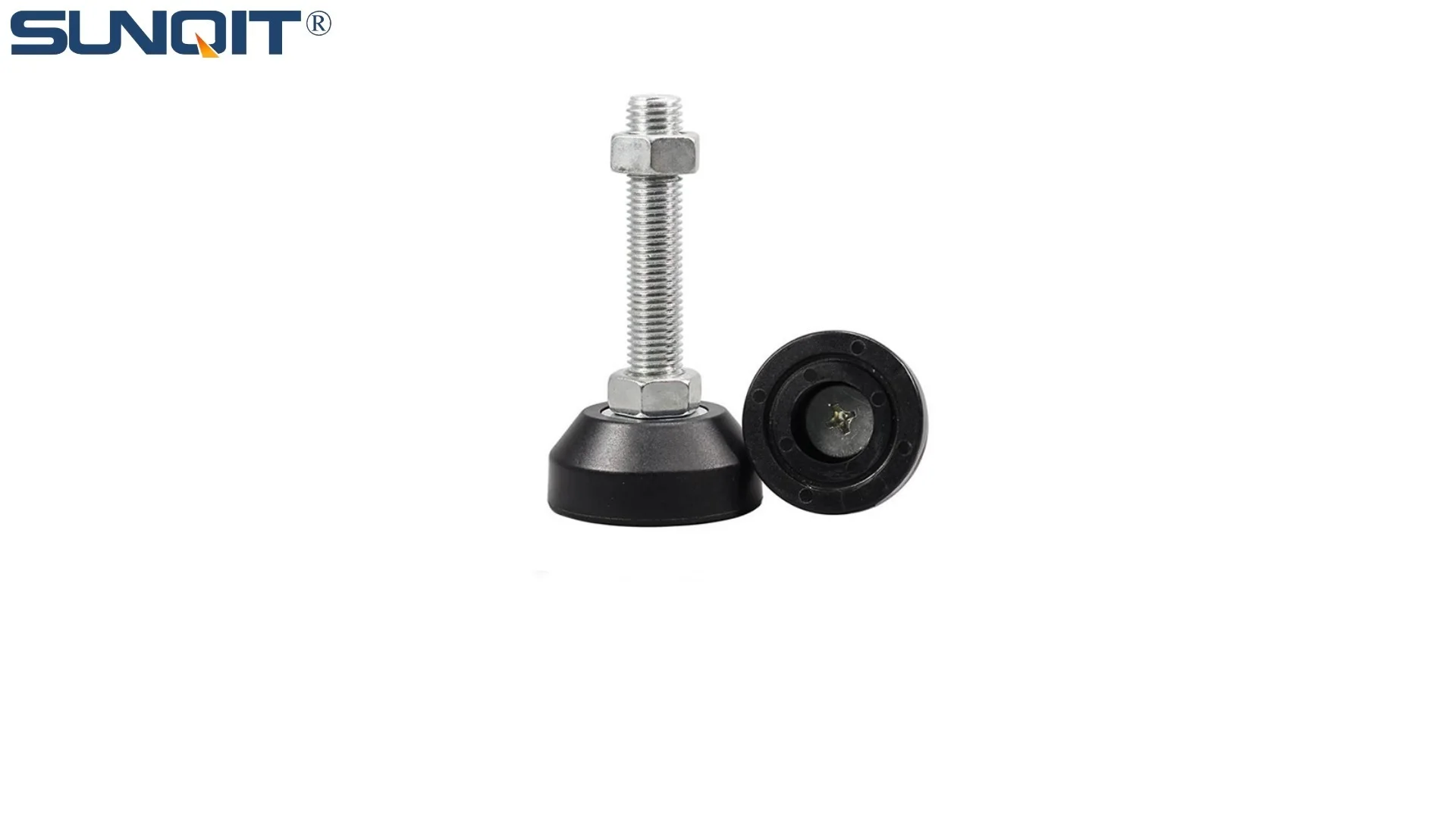
Adjustable leveling feet are designed to keep machines level when placed on uneven or sloped ground. Otherwise known as adjustable equipment feet, they are available to order in a wide variety of size and load capacity combinations.
If you've ever spent hours setting up a workbench, assembling a production line, or even just fixing a wobbly shelf, you know that the little parts often make the biggest difference. When it comes to stabilizing equipment, two names pop up frequently: M10*56 Rubber Leveling Feet and Adjustable Feet. Both promise to keep your setup steady, but they're not interchangeable. In this guide, we'll break down what makes each unique, where they shine, and how to decide which one deserves a spot in your toolkit—whether you're building a lean pipe workbench or outfitting an entire factory floor.
First Things First: What Are We Actually Comparing?
Before we dive into the nitty-gritty, let's get clear on the basics. Both M10*56 Rubber Leveling Feet and Adjustable Feet fall under the umbrella of "stabilizing components," but their designs, purposes, and limitations are distinct. Think of them like two tools in a toolbox: a hammer and a wrench—both useful, but you wouldn't use a wrench to drive a nail (unless you're in a real pinch).
M10*56 Rubber Leveling Feet: The "Set It and Forget It" Option
Let's start with the M10*56 Rubber Leveling Foot. The name itself gives away some key details: "M10" refers to the thread size (10mm diameter), "56" is the length of the threaded stem (56mm), and "Rubber Leveling Foot" tells you it has a rubber base. These are precision-engineered little components: a metal stem (usually zinc-plated steel or stainless steel) with a threaded end, topped with a rubber pad that's designed to grip surfaces and absorb vibrations.
Picture this: You're building a lean pipe workbench for your small electronics assembly shop. The frame is made of aluminum profile, lightweight but sturdy, and you need something to anchor it to the floor. Screw an M10*56 Rubber Leveling Foot into the pre-drilled holes at the bottom of the legs, give it a few twists to level the surface, and done. No fuss, no extra tools—just a quick, reliable fix.
Adjustable Feet: The "One-Size-Fits-Most" Workhorse
Adjustable Feet, on the other hand, are more like the Swiss Army knife of stabilizing components. They come in a dizzying array of sizes, materials, and designs, but the core idea is flexibility. Unlike the M10*56 (which has a fixed stem length of 56mm), Adjustable Feet let you tweak the height by twisting the stem or base, often over a wider range—some can extend from 30mm to 100mm or more. Materials vary too: stems might be steel, stainless steel, or even aluminum, and bases could be rubber, plastic, or metal.
Imagine you're setting up a heavy-duty production line on a factory floor that's seen better days—cracks, uneven concrete, maybe even a slight slope. A standard M10*56 foot might not cut it here because the height adjustment is limited. But an Adjustable Foot? You can crank it up on the low side, dial it down on the high side, and suddenly that wobbly conveyor belt is running smooth as butter.
Breaking Down the Features: What Makes Each Tick?
To really understand which is better, we need to dig into their features. Let's start with the M10*56 Rubber Leveling Foot—its design is straightforward, but that simplicity is part of its charm.
M10*56 Rubber Leveling Feet: Simplicity Meets Reliability
- Thread and Size: The "M10" in the name refers to the metric thread size—10mm in diameter—which is a common standard for industrial equipment. The "56" is the length of the threaded stem (56mm), so when you screw it into a mounting hole, you've got about 56mm of stem to play with for height adjustment. It's not a huge range, but for most flat, even surfaces, it's more than enough.
- Rubber Base: The star here is the rubber base. Made from durable, high-friction rubber (often nitrile or neoprene), it does two key things: grip the floor to prevent sliding, and absorb vibrations. If you're using a workbench for tasks like soldering, assembling small parts, or even 3D printing, those vibrations can throw off precision. The rubber dampens that shake, keeping your work steady.
- Stem Material: The stem is usually zinc-plated steel or stainless steel. Zinc plating resists rust in dry environments, while stainless steel is better for damp or corrosive spaces (like a garage with oil spills or a food processing area). Either way, it's tough enough to support heavy loads—most M10*56 feet can handle 200-500kg per foot, which is more than enough for a typical lean pipe workbench or small machine.
- Installation: This is where the M10*56 really shines. No fancy tools needed—just a wrench or even your hands (if it's not too tight). Most workbenches, especially those built with aluminum profile, come with pre-tapped holes that fit M10 threads perfectly. Screw it in, twist until the workbench is level, and you're done. It's the kind of part that feels almost "invisible" once installed—you forget it's there, but you'd notice immediately if it wasn't.
Adjustable Feet: Flexibility for Tricky Spaces
Adjustable Feet are all about adaptability. Let's break down their key features:
- Adjustment Range: Unlike the M10*56's fixed 56mm stem, Adjustable Feet often have a telescoping design. For example, a common model might have a stem that extends from 40mm to 80mm, giving you 40mm of adjustability. Some heavy-duty versions go even further—up to 150mm—making them ideal for extremely uneven surfaces.
- Base Options: While many Adjustable Feet have rubber bases (similar to the M10*56), they also come with plastic, metal, or even swivel bases. A metal base might be better for outdoor use (resistant to weather), while a swivel base lets the foot pivot slightly, which helps on floors with small bumps or dips.
- Locking Mechanisms: Here's a big one: many Adjustable Feet have locking nuts or collars. Once you've dialed in the perfect height, you can tighten the lock to prevent it from loosening over time—critical if your equipment vibrates a lot (think a washing machine or a power tool station). The M10*56, by contrast, relies on friction alone to stay in place, which can loosen if there's constant shaking.
- Material Variety: Adjustable Feet aren't limited to steel stems. You can find aluminum stems for lightweight setups (like a mobile cart), stainless steel for marine or medical environments (where corrosion resistance is key), or even composite materials for electrical insulation. This versatility makes them usable in almost any industry.

Where Do They Actually Get Used? Real-World Scenarios
Features are great, but what matters is how they perform in real life. Let's look at common scenarios where you'd reach for one over the other.
M10*56 Rubber Leveling Feet: Best for Stable, Light-to-Medium Setups
The M10*56 is a workhorse in settings where the floor is flat, the load is moderate, and simplicity is key. Here are a few places you'll see it:
1. Lean Pipe Workbenches
If you've ever stepped into a manufacturing or assembly shop, you've probably seen a lean pipe workbench. These workbenches are built with lightweight, modular pipes (often aluminum or steel) and are designed for efficiency—think quick setup, easy reconfiguration, and minimal wasted space. For a lean pipe workbench, stability is non-negotiable. Workers are standing at them for hours, using tools, assembling parts, or packing products. A wobbly bench leads to mistakes, fatigue, and even accidents.
M10*56 feet are perfect here. The lean pipe frame is usually lightweight enough that the 200-500kg load capacity is more than sufficient. The rubber base grips the concrete floor, preventing the bench from sliding when someone leans on it. And since most shop floors are relatively even (they're cleaned and maintained regularly), the 56mm stem length provides enough adjustment to level the bench without overcomplicating things. Plus, they're cheap—you can buy a set of four for under $20—which fits the "lean" philosophy of minimizing waste.
2. Small Machinery and Tool Stands
Think of a table saw, a drill press, or a 3D printer. These tools don't need massive adjustability—they just need to stay put. A 3D printer, for example, vibrates slightly during operation, but too much movement can ruin a print. The rubber base of the M10*56 dampens those vibrations, while the steel stem keeps the printer steady. And since these tools are often placed on workshop floors (which are usually flat), you don't need a huge adjustment range. Screw in the feet, level the machine, and you're ready to go.
Adjustable Feet: Saving the Day in Tricky Environments
Adjustable Feet, on the other hand, shine when the going gets tough. Here are their top use cases:
1. Uneven Factory Floors
Factories are busy places, and over time, floors take a beating. Cracks form, concrete settles, and before you know it, you've got a 10mm height difference across a 10-foot span. That might not sound like much, but for a conveyor belt or a production line, it's a disaster. A conveyor that's tilted even slightly will cause products to jam or slide off. Enter Adjustable Feet. With their extended adjustment range, you can compensate for those dips and bumps. For example, if one corner of the conveyor is 15mm lower than the others, you can crank the Adjustable Foot up by 15mm to level it out—something an M10*56 (with only 56mm of stem) might not handle if the initial mounting hole is too high.
2. Heavy-Duty Equipment
Some machines are just plain heavy—think industrial ovens, metal presses, or large CNC routers. These can weigh thousands of kilograms, and you need feet that can not only support that weight but also stay stable under pressure. Many Adjustable Feet are designed for heavy loads, with thicker stems (12mm or 16mm threads) and reinforced bases. They also often have locking nuts to prevent loosening under the constant stress of a heavy machine vibrating. An M10*56 might work for lighter setups, but for a 2-ton press? You'd want the peace of mind that comes with an Adjustable Foot built for the job.
3. Mobile or Temporary Setups
If you're constantly moving equipment—like a mobile workbench in a warehouse or a pop-up production line for a trade show—Adjustable Feet are a game-changer. Imagine you set up your workbench in one corner of the warehouse, level it with M10*56 feet, then need to move it to another corner with a slightly uneven floor. Now it's wobbly again, and you have to unscrew and re-adjust the feet. With Adjustable Feet, you can tweak the height on the spot, no tools required (on some models). Some even come with built-in casters (yes, caster accessories can pair with Adjustable Feet!), so you can roll the bench into place and then lock the feet down—talk about convenience.

Head-to-Head: How They Stack Up
To make this easier, let's put them side by side. Here's a breakdown of their key strengths and weaknesses:
| Feature | M10*56 Rubber Leveling Feet | Adjustable Feet |
|---|---|---|
| Adjustment Range | Limited (56mm stem, ~10-30mm practical adjustment) | Wide (often 30-150mm, depending on model) |
| Vibration Dampening | Excellent (rubber base absorbs shocks) | Good to fair (depends on base material; rubber is best, metal/plastic less so) |
| Installation | Super easy (screw into M10 tapped holes, no extra tools needed) | Easy to moderate (may require tools for locking nuts; some need assembly) |
| Cost | Budget-friendly ($2-$5 per foot) | Mid to high range ($5-$20+ per foot, depending on materials/features) |
| Best For | Flat floors, light-to-medium loads, simple setups (lean pipe workbenches, small tools) | Uneven floors, heavy loads, mobile setups, or where adjustability is critical (conveyors, industrial machines) |
The table tells a clear story: M10*56 Rubber Leveling Feet are the budget, no-fuss option for stable, simple setups, while Adjustable Feet are the flexible, heavy-duty choice for trickier environments. But there's more to the decision than just features—let's talk about when to pick one over the other.

So, Which Should You Choose? The Ultimate Decision Guide
At the end of the day, the "better" option depends on your specific needs. Let's walk through some key questions to ask yourself before buying:
1. What's Your Floor Like?
Start here—floor condition is the biggest factor. If your floor is flat, smooth, and level (like a newly finished workshop or a commercial kitchen), M10*56 feet will work great. They're cheap, easy to install, and the rubber base will keep things steady. But if your floor is uneven, cracked, or sloped (think an old warehouse or a garage with settled concrete), Adjustable Feet are worth the investment. Their extra adjustability will save you hours of frustration.
2. How Heavy Is Your Equipment?
Most M10*56 feet can handle 200-500kg per foot, which is plenty for a lean pipe workbench, a small tool stand, or a 3D printer. But if you're dealing with something heavier—say, a 1-ton metal press or a large industrial oven—go with Adjustable Feet. Look for models with thicker stems (M12 or M16 threads) and reinforced bases; they're built to take the weight without bending or breaking.
3. Do You Need to Move the Equipment?
If your setup is permanent (like a fixed workbench in a workshop), M10*56 feet are fine—you'll level them once and forget about them. But if you need to move the equipment regularly (a mobile cart, a temporary production line), Adjustable Feet are more practical. Their quick-adjust design means you can level on the go, and some even pair with caster accessories for easy rolling.
4. What's Your Budget?
Let's talk money. M10*56 feet are dirt cheap—you can buy a pack of four for under $20. Adjustable Feet, on the other hand, start around $5 per foot and go up from there (heavy-duty models can hit $20+). If you're on a tight budget and have a simple setup, M10*56 is the way to go. But if you need the extra features (adjustability, locking nuts, heavy load capacity), the upgrade is worth it—wobbly equipment can cost you more in damaged products or lost time than the price difference in feet.
5. What's the Environment Like?
Finally, consider where the feet will live. If it's a dry, indoor space (like an office or workshop), zinc-plated M10*56 feet are fine. But if it's damp (a garage with rain leaks), corrosive (a chemical lab), or outdoor (a patio setup), look for Adjustable Feet with stainless steel stems and rubber or plastic bases—they'll resist rust and degradation better than standard M10*56 feet.
Maintenance Matters: Keeping Your Feet in Top Shape
Whichever you choose, a little maintenance goes a long way. Let's cover how to keep both types working their best.
M10*56 Rubber Leveling Feet Maintenance
- Clean the Rubber Base: Over time, dust, dirt, and oil can build up on the rubber base, reducing grip. Wipe it down with a damp cloth every few months to keep it sticky.
- Check for Wear: Rubber can degrade over time, especially if exposed to oils or chemicals. If the base starts to crack or lose its texture, replace the foot—better safe than sorry.
- Tighten Periodically: Even with friction, vibrations can loosen the feet slightly. Give them a quick twist with a wrench every few months to make sure they're snug.
Adjustable Feet Maintenance
- Lubricate the Threads: If your Adjustable Feet have metal-on-metal threads, a little lubricant (like WD-40) can prevent rust and make adjustment smoother. Avoid over-lubricating, though—you don't want it to attract dirt.
- Inspect Locking Nuts: If your feet have locking nuts, check them regularly to make sure they're tight. Loose locks can cause the foot to adjust on its own, leading to wobbling.
- replace Worn Bases: Like the M10*56, the base (rubber, plastic, etc.) can wear out. Many Adjustable Feet let you replace just the base, which is cheaper than buying a whole new foot.
Final Verdict: It's All About Your Needs
So, are M10*56 Rubber Leveling Feet better than Adjustable Feet? The answer is: it depends. If you have a flat floor, light-to-medium equipment, and a tight budget, M10*56 feet are the clear winner. They're simple, affordable, and reliable—perfect for lean pipe workbenches, small tool stands, or any setup that doesn't need constant tweaking.
But if your floor is uneven, your equipment is heavy, or you need to move things around, Adjustable Feet are worth the extra cost. Their flexibility, heavy-duty design, and locking features make them indispensable for factories, mobile setups, or anyone who can't afford a wobbly workspace.
At the end of the day, both are tools—choose the one that fits the job. And if you're still unsure? Buy a few of each and test them out. You'll quickly figure out which keeps your setup steady, your workflow smooth, and your sanity intact.