- Company Articles
- Products and Technology
- Product knowledge
- M10*56 Rubber Leveling Feet: Weather Resistance & Durability Features

M10*56 Rubber Leveling Feet: Weather Resistance & Durability Features
Related Product
M10*56 Rubber Leveling Feet
Adjustable leveling feet are designed to keep machines level when placed on uneven or sloped ground. Otherwise known as adjustable equipment feet, they are available to order in a wide variety of size and load capacity combinations.
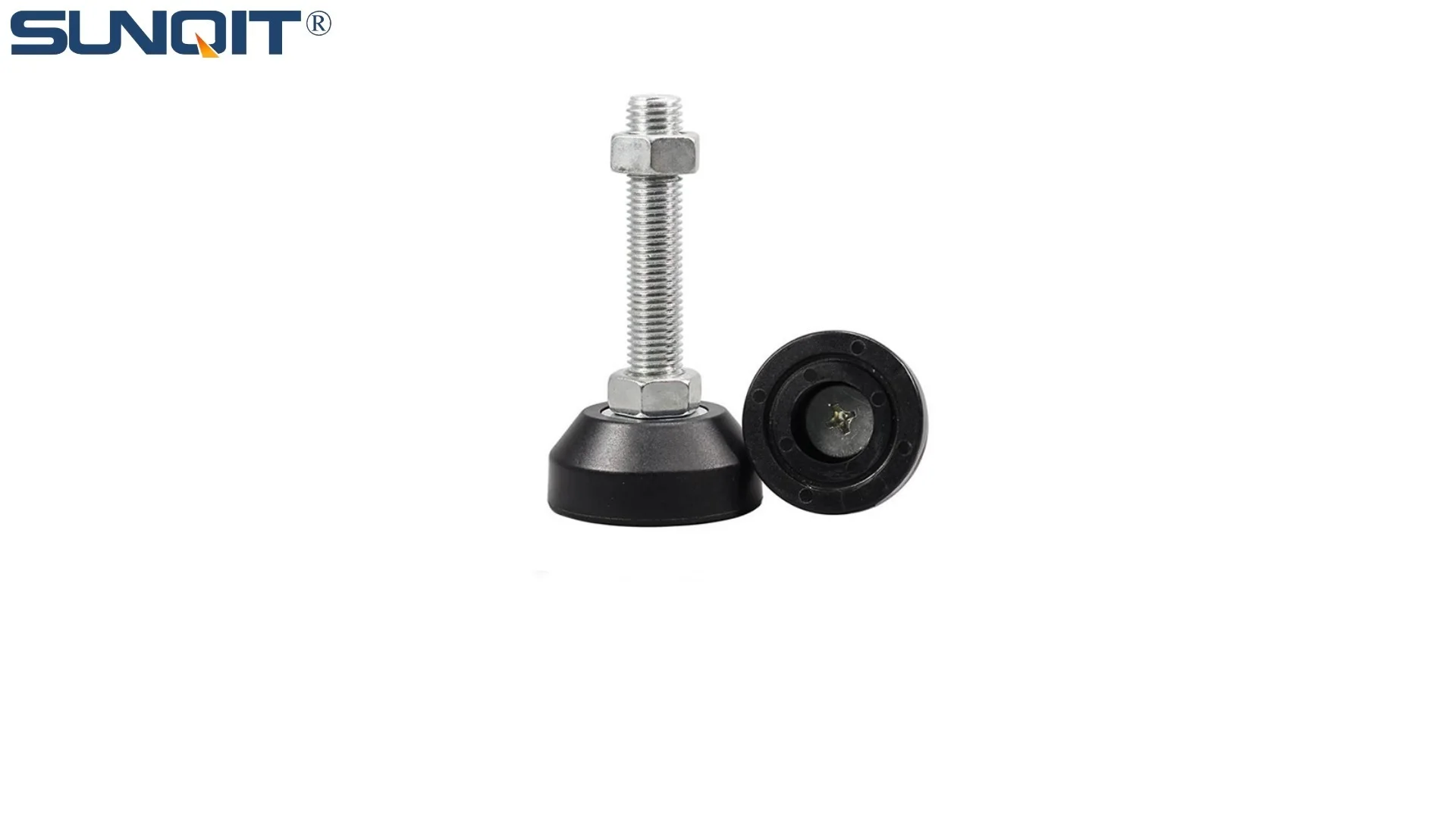
In the world of industrial workspaces, where precision and reliability can make or break daily operations, even the smallest components play a starring role. Take, for example, the humble leveling foot—a yet critical part that keeps workbenches steady, conveyor systems aligned, and production lines running smoothly. Today, we're shining a spotlight on a specific hero in this category: the M10*56 rubber leveling foot. While it might not grab headlines, its ability to stand up to harsh weather and relentless wear makes it a unsung champion in factories, warehouses, and workshops worldwide. Let's dive into what makes this component so essential, focusing on its standout features: weather resistance and durability.
What Are M10*56 Rubber Leveling Feet, Anyway?
Before we get into the nitty-gritty of their performance, let's start with the basics. Leveling feet, in general, are adjustable components attached to the bottom of equipment—think workbenches, racks, or machinery—to stabilize them on uneven surfaces. They typically consist of a threaded stem (the part that screws into the equipment) and a base (the part that touches the floor). The "M10*56" in the name tells us two key details: the stem has an M10 metric thread (meaning it's 10mm in diameter, a common size for medium-duty applications), and it's 56mm long (the length of the threaded portion, which determines how much height adjustment you can get). The "rubber" part refers to the base material, which is where much of its magic lies.
But why rubber? Why not metal or plastic? Well, rubber brings a unique set of benefits to the table—literally. It's non-slip, which is crucial for keeping heavy equipment from shifting during use. It dampens vibrations, protecting sensitive tools or parts on a workbench. And, as we'll explore in depth, it offers impressive resistance to the elements. When you combine that with the adjustability of the M10*56 thread length, you get a component that's not just functional but versatile. Whether you're setting up a lean pipe workbench in a humid factory or an aluminum profile workstation in a warehouse with uneven concrete, these feet work hard to keep things level and secure.
The Science of Weather Resistance: How Rubber Stands Up to the Elements
Weather resistance might not be the first thing you think about when shopping for leveling feet, but it's a game-changer in many work environments. Imagine a workshop in a coastal town, where saltwater air hangs thick in the air, or a manufacturing plant in a tropical region with daily rain and high humidity. In these cases, a metal leveling foot might rust within months, while a plastic one could degrade under UV exposure. Rubber? It's built to tough it out—and the M10*56 rubber leveling foot is no exception.
1. Temperature Extremes: From Freezing Garages to Sweltering Factories
One of the biggest tests for any material is temperature fluctuation, and rubber handles this with surprising resilience. The rubber used in M10*56 leveling feet is typically a synthetic blend—often EPDM (ethylene propylene diene monomer) or nitrile—chosen for its ability to withstand both extreme cold and heat. Let's break it down: in freezing conditions (think a warehouse in winter that's not heated overnight), some materials become brittle and crack. Rubber, though, stays flexible even at temperatures as low as -40°C (-40°F), so you don't have to worry about the base snapping when you adjust the foot on a frosty morning. On the flip side, in hot environments—like a factory floor near a furnace or a workshop in the desert—rubber resists melting or deforming. Most M10*56 rubber feet can handle temperatures up to 80°C (176°F) without losing their shape or grip. That's a huge range, making them suitable for indoor and outdoor use alike.
2. Moisture and Humidity: Keeping Rust at Bay
If you've ever left a metal object outside in the rain, you know the drill: rust forms, and before long, the part is corroded and useless. But rubber is inherently water-resistant. The M10*56's rubber base acts as a barrier between the metal stem (which could rust if exposed) and the damp floor. Even in high-humidity environments—like a food processing plant where floors are constantly hosed down, or a coastal workshop with salt spray in the air—the rubber doesn't absorb water. This not only protects the leveling foot itself but also the equipment it's attached to. No more worrying about water seeping up through the stem and damaging the internal components of your lean pipe workbench or aluminum profile rack.
3. UV Exposure: Fighting the Sun's Aging Effects
What if your equipment lives outdoors? Maybe you have a material rack on a loading dock, or a workbench in an open-air workshop. The sun's UV rays are notorious for breaking down materials over time—think of how a plastic chair fades and becomes brittle after a summer in the sun. But the rubber used in M10*56 leveling feet is often treated with UV stabilizers, which slow down this aging process. While no material is completely immune to the sun, these feet can withstand years of direct sunlight without cracking, fading, or losing their grip. That's a big deal for outdoor setups where replacing components frequently isn't just a hassle—it's costly.
4. Chemical Resistance: Standing Up to Oils, Solvents, and More
Industrial environments are rarely clean and simple. Spills happen—oils from machinery, solvents from cleaning, even acids in some manufacturing processes. A lesser material might dissolve, swell, or break down when exposed to these chemicals, but rubber (especially nitrile or EPDM blends) holds its own. The M10*56 rubber base is resistant to most common industrial fluids, meaning an accidental oil spill on the factory floor won't turn your leveling feet into a sticky, useless mess. This chemical resistance adds another layer of durability, ensuring the feet keep working even in less-than-ideal conditions.

Durability: Built to Last, Even When the Going Gets Tough
Weather resistance is impressive, but what good is a component that can handle the rain if it wears out after a few months of use? That's where durability comes in. The M10*56 rubber leveling foot isn't just built to resist the elements—it's built to take a beating, day in and day out, without losing performance. Let's break down what makes it so tough.
1. Load Capacity: Supporting Heavy Weights Without Buckling
First and foremost, a leveling foot needs to support weight—and not just a little. Whether it's a fully loaded aluminum profile workbench stacked with tools or a material rack holding boxes of parts, the M10*56 is designed for medium to heavy-duty use. Most models can support anywhere from 200kg to 500kg per foot (that's 440 to 1100 pounds!), depending on the specific design and rubber hardness. The key here is the combination of the sturdy steel stem (which doesn't bend under pressure) and the rubber base, which distributes the weight evenly across the floor. Even when supporting maximum load, the rubber doesn't compress permanently—meaning it bounces back to its original shape once the weight is removed. No more "squished" feet that leave your workbench wobbly after a heavy project.
2. Wear Resistance: Handling Scuffs, Scrapes, and Daily Use
Let's be real: floors in industrial settings are rough. There are concrete cracks, loose gravel, maybe even metal shavings or debris. Every time you adjust the leveling foot—twisting it to raise or lower the workbench—the base rubs against the floor. Over time, this friction can wear down softer materials, but rubber is surprisingly tough. The rubber used in M10*56 feet is often formulated to be abrasion-resistant, meaning it stands up to scuffs and scrapes without wearing thin. Even after months of adjustments and daily contact with rough surfaces, the base remains intact, maintaining its non-slip properties and structural integrity.
3. Thread Strength: No Stripping, No Slipping
What good is adjustability if the thread strips the first time you try to turn it? The M10 thread on these feet is precision-machined, with clean, sharp ridges that grip firmly when screwed into the equipment. The steel stem is heat-treated to resist deformation, so even if you apply a lot of force (say, when tightening it down to stabilize a heavy load), the threads don't get bent or damaged. This is crucial because a stripped thread means the foot can't be adjusted anymore, rendering it useless. With the M10*56, you can count on the thread to hold up through countless adjustments over the years.
4. Impact Resistance: Surviving Accidental Bumps
In busy workshops, accidents happen. Maybe a forklift backs into a rack, or a heavy tool gets dropped near the workbench, hitting the leveling foot. Metal feet might dent; plastic feet might crack. But rubber? It's elastic, so it absorbs impact. The rubber base acts like a shock absorber, cushioning the blow and protecting both the foot and the equipment it's attached to. This is especially important for sensitive setups, like an ESD workstation where even a small jolt could damage electronics. The M10*56's rubber base ensures that minor impacts don't lead to major failures.

Real-World Applications: Where M10*56 Rubber Leveling Feet Shine
Now that we understand why these feet are so weather-resistant and durable, let's talk about where they're actually used. Spoiler: it's not just one or two places—they're versatile enough to pop up in all kinds of industrial and commercial settings. Here are a few examples where their features really make a difference:
Lean Pipe Workbenches: The Backbone of Efficient Production
Lean pipe workbenches (also known as "flexible workbenches") are a staple in manufacturing, thanks to their modular design and easy customization. They're built using metal pipes and joints, allowing workers to add shelves, tool holders, or conveyor attachments as needed. But for a lean pipe workbench to be effective, it needs to be stable—wobbly workbenches lead to errors, slower production, and even safety risks. That's where M10*56 rubber leveling feet come in. They're the perfect match for these workbenches because they can handle the weight of tools and materials, adjust to uneven factory floors, and resist the moisture or oil that's often present in production areas. Plus, their non-slip rubber base ensures the workbench stays put, even when workers are leaning on it or moving heavy parts around.
Aluminum Profile Racks and Shelving: Lightweight but Sturdy
Aluminum profiles are popular for building racks, shelving, and workstations because they're lightweight yet strong. But aluminum is also prone to scratching floors if not properly protected. M10*56 rubber leveling feet solve this problem twofold: they protect the floor from scratches (thanks to the soft rubber base) and stabilize the rack, even when loaded with heavy boxes or equipment. In warehouses with high humidity (common in food storage or coastal areas), the rubber's moisture resistance prevents the aluminum from corroding at the base, extending the life of the entire rack system.
Mobile Equipment with Caster and Accessories: Stability When You Need It
Many industrial tools and carts come with casters for mobility—think turnover trolleys or mobile workstations. But when you need to park the cart and use it, you don't want it rolling around. That's where leveling feet often work alongside casters: the casters let you move the equipment, and the leveling feet (when lowered) stabilize it. M10*56 rubber leveling feet are ideal for this setup because they're easy to adjust (just twist to lower or raise) and provide a secure, non-slip base. Even on smooth warehouse floors, the rubber grip keeps the cart steady while workers load or unload materials, preventing accidents.
Outdoor Workstations and Loading Docks: Braving the Elements
Not all work stays indoors. Loading docks, outdoor workshops, or construction site tool stations often need equipment that can handle rain, sun, and temperature swings. M10*56 rubber leveling feet are a top choice here because of their weather resistance. UV-stabilized rubber resists sun damage, while water-resistant properties prevent rust on the stem. Even in freezing temperatures, the rubber remains flexible, so you can still adjust the feet to keep the workstation level on icy or snow-melted ground.

How Do They Compare to Other Leveling Feet? A Quick Table
To really appreciate the M10*56 rubber leveling foot, it helps to see how it stacks up against other common types. Let's take a look at a comparison:
| Feature | M10*56 Rubber Leveling Feet | Standard Metal Leveling Feet | Plastic Leveling Feet |
|---|---|---|---|
| Weather Resistance | Excellent (resists moisture, UV, temperature extremes) | Poor (prone to rust; metal conducts heat/cold) | Fair (resists moisture but degrades in UV/sunlight) |
| Durability (Wear & Impact) | High (abrasion-resistant rubber; impact-absorbing) | Medium (resists wear but dents on impact) | Low (scratches easily; cracks on impact) |
| Load Capacity | 200-500kg per foot (medium-heavy duty) | 500kg+ (heavy duty, but less stable on uneven floors) | Up to 150kg (light duty only) |
| Non-Slip Grip | Excellent (rubber base prevents sliding) | Poor (metal is slippery on smooth floors) | Good (but grip fades as plastic wears) |
| Best For | Humid/outdoor environments, lean pipe workbenches, aluminum profile setups | Dry, indoor heavy machinery (no moisture exposure) | Light-duty indoor use (home workshops, light shelving) |
Tips for Getting the Most Out of Your M10*56 Rubber Leveling Feet
Even the most durable components need a little care to last their longest. Here are some simple tips to ensure your M10*56 rubber leveling feet stay in top shape:
- Keep them clean: Wipe the rubber base occasionally with a damp cloth to remove dirt, oil, or debris. This maintains their non-slip grip and prevents abrasive particles from wearing down the rubber.
- Check the threads: If the foot starts to loosen over time, tighten it gently with a wrench (avoid over-tightening, which can damage the thread). If you notice rust on the stem (unlikely, but possible in extreme conditions), wipe it off with a dry cloth and apply a light coat of anti-rust oil.
- replace when needed: Even the toughest rubber eventually wears out. If you notice cracks in the base, permanent compression (it doesn't bounce back), or the thread starts to slip, it's time for a new foot. Catching wear early prevents accidents or damage to your equipment.
- Use the right size: M10*56 is great for medium-duty use, but if you're supporting extremely heavy loads (over 500kg per foot), consider a larger size (like M12 or M16). Using the wrong size can lead to premature failure.
Final Thoughts: Why M10*56 Rubber Leveling Feet Are Worth Every Penny
At the end of the day, industrial components are investments. You want parts that do their job, last a long time, and don't require constant replacement. The M10*56 rubber leveling foot checks all these boxes—and then some. Its weather resistance means it thrives in environments where other feet would fail, from humid factories to sunny loading docks. Its durability ensures it handles heavy loads, daily wear, and even accidental impacts without breaking a sweat. And when paired with equipment like lean pipe workbenches, aluminum profile racks, or mobile setups with caster and accessories, it turns ordinary workspaces into efficient, stable, and safe environments.
So the next time you're setting up a workbench, building a rack, or upgrading your production line, don't overlook the little components. The M10*56 rubber leveling foot might not be the flashiest part of your setup, but it's the kind of reliable, hardworking component that keeps everything else running smoothly. After all, in the world of industry, stability isn't just a nice-to-have—it's everything. And with these feet, you've got stability you can count on, rain or shine.