- Company Articles
- Products and Technology
- Product knowledge
- Manufacturing Process of T-Groove Aluminum Pipe: Extrusion to Surface Treatment

Manufacturing Process of T-Groove Aluminum Pipe: Extrusion to Surface Treatment
Related Product
T-Groove Aluminum Pipe
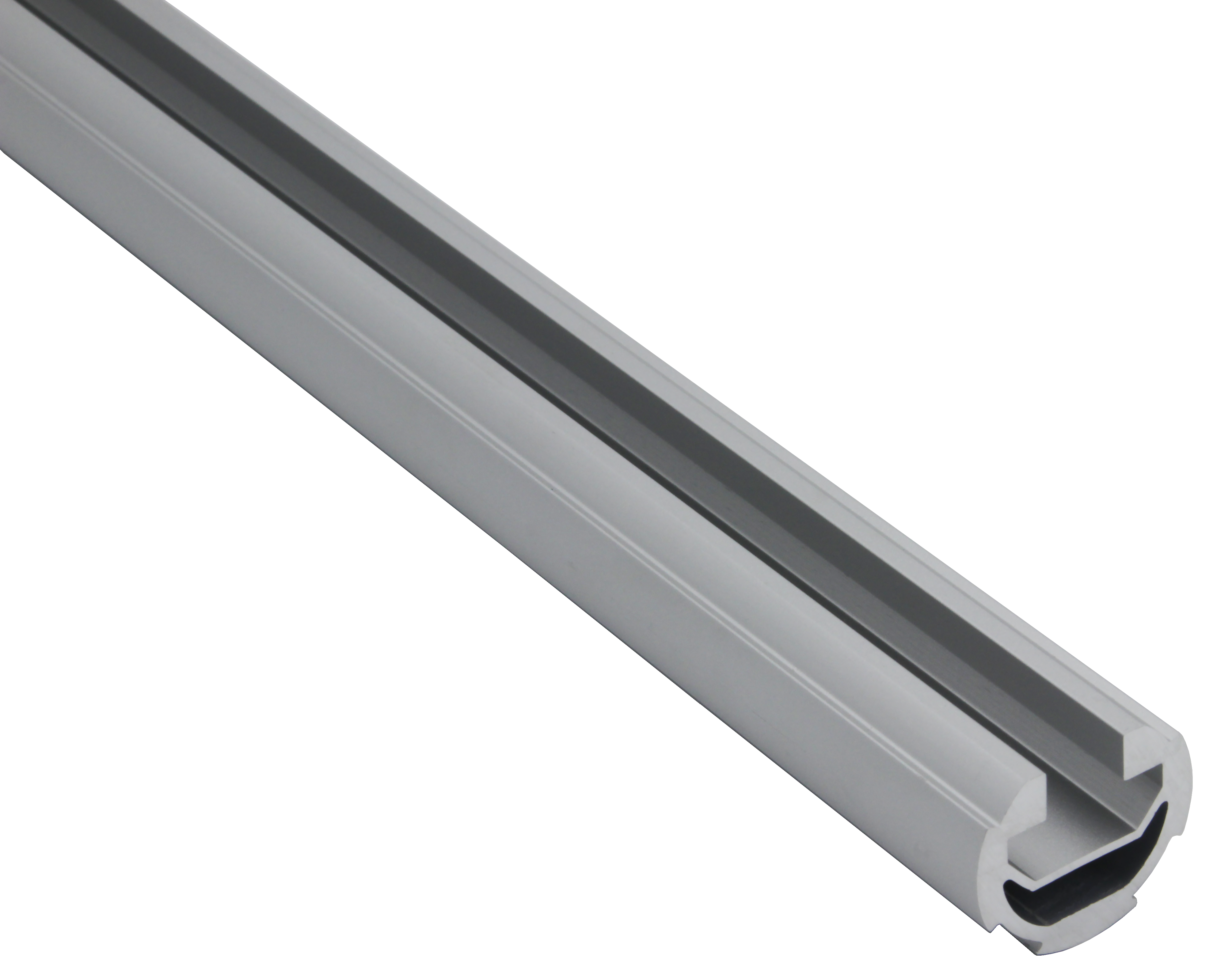
The aluminum pipe opening 10mm is installed into the T-shaped slider, which can be installed with casters or other matching functional parts. The groove can be used for positioning and is used for the track of the roller.
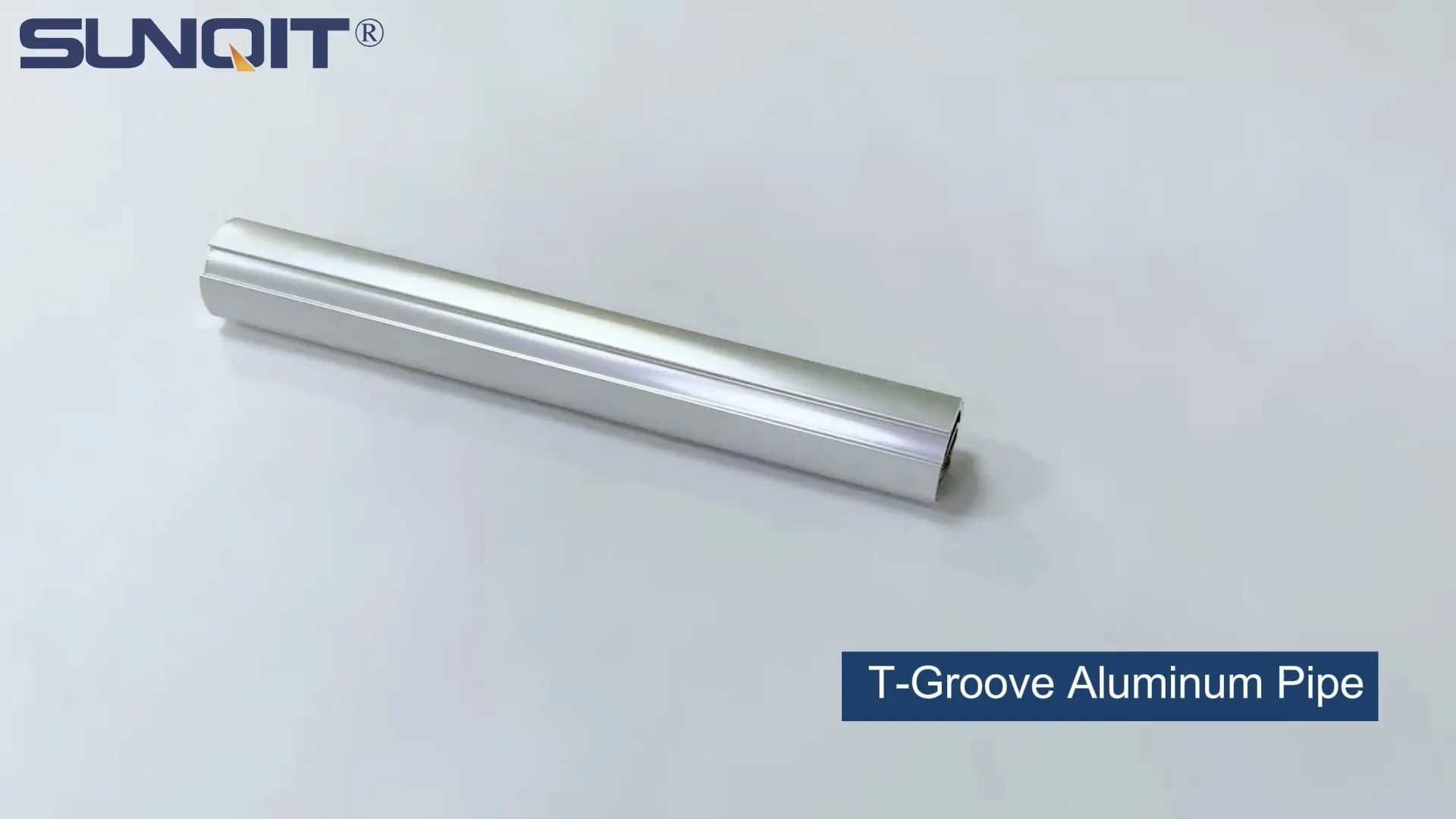
Walk into any modern manufacturing facility, and you'll likely spot it: sleek, silver structures holding up workbenches, guiding conveyor belts, or organizing tools with precision. That's T-groove aluminum pipe—an unsung hero of industrial efficiency. But have you ever wondered how this versatile material goes from raw aluminum to the finished profiles that power factories, workshops, and even DIY projects? Let's take a deep dive into its manufacturing journey, from the first melt of aluminum to the final surface treatment that makes it ready for action.
1. The Foundation: Raw Material Selection
Every great product starts with great materials, and T-groove aluminum pipe is no exception. The process begins with choosing the right aluminum alloy—a decision that shapes everything from the pipe's strength to its ability to be shaped. Most manufacturers opt for 6061 or 6063 aluminum alloys, and for good reason. These alloys are like the Goldilocks of aluminum: not too soft, not too brittle, but just right for extrusion and everyday use.
6061, often called the "workhorse alloy," blends aluminum with magnesium and silicon, giving it excellent tensile strength and corrosion resistance. It's the go-to for applications where durability matters, like heavy-duty workbenches or material racks. 6063, on the other hand, is prized for its smooth finish and ease of extrusion—perfect for creating the precise T-grooves that make these pipes so adaptable. Think of it as the "craftsman's alloy," ideal for profiles that need both form and function.
But it's not just about the alloy. The aluminum itself must be pure enough to avoid weak spots. Most manufacturers use primary aluminum (freshly mined and processed) or high-quality recycled aluminum—sustainability is a growing priority here. Recycled aluminum requires 95% less energy to produce than primary aluminum, making it a win for both the planet and the bottom line. Once the alloy is selected, it's melted down into ingots or billets—large cylindrical blocks that will soon be transformed into something far more useful.
2. Shaping the Future: The Extrusion Process
If raw material selection is the foundation, extrusion is the artistry of T-groove aluminum pipe manufacturing. Extrusion is like squeezing toothpaste from a tube—except on an industrial scale, with temperatures hot enough to make aluminum malleable and pressure strong enough to shape it into complex forms. This is where the "T-groove" in T-groove aluminum pipe is born, and it's a process that demands precision, skill, and a little bit of science.
2.1 Billet Heating: Softening the Metal
First, the aluminum billets are loaded into a furnace. Picture a giant oven, but instead of baking cookies, it heats aluminum to around 400–500°C (750–930°F)—hot enough to make the metal pliable but not quite molten. This temperature is critical: too cold, and the aluminum won't flow through the die; too hot, and it might crack or lose structural integrity. Engineers monitor the billets closely, using pyrometers to ensure the heat is just right. After about an hour, the billet is ready—soft enough to be shaped, yet still strong enough to hold its form once cooled.
2.2 Die Design: The Blueprint of Precision
While the billet heats, let's talk about the star of the extrusion show: the die. A die is a custom-made steel tool with a hole shaped exactly like the desired T-groove aluminum pipe. Think of it as a 3D stencil for metal. Creating a die is a craft in itself. Engineers use computer-aided design (CAD) to draft the T-groove profile, ensuring the groove dimensions, wall thickness, and overall shape meet customer specs. Then, CNC machines carve the design into a hard steel block, which is heat-treated to withstand the extreme pressure of extrusion.
The T-groove is the die's most important feature. That small, T-shaped channel running along the length of the pipe is what makes the profile so versatile—it lets you slide in bolts, brackets, or accessories without drilling holes. To ensure the groove is uniform, die makers pay extra attention to the corners and edges, smoothing them to prevent cracks during extrusion. A well-made die can produce thousands of profiles before needing replacement, but even a tiny imperfection can ruin an entire batch. It's why die design is often called the "heart of extrusion."
2.3 Extrusion Press: Squeezing the Metal into Shape
Now, the heated billet and precision die come together. The billet is loaded into the extrusion press—a massive machine that looks like something out of a sci-fi movie. One end of the press has a ram (a large piston) that pushes the billet into the die. The pressure here is staggering: up to 10,000 tons, enough to crush a car. As the billet is forced through the die's opening, it takes on the die's shape, emerging on the other side as a long, continuous T-groove aluminum profile. It's a bit like watching playdough being pushed through a fun-shaped cutter, but on an industrial scale.
Operators stand by, monitoring the extrusion speed (usually 1–10 meters per minute) and the profile's shape. If the speed is too fast, the profile might warp; too slow, and the aluminum could cool prematurely. As the profile exits the die, it's supported by a runout table—a series of rollers that guide it straight until it cools. For especially long profiles, the runout table can stretch dozens of meters, with sensors checking for twists or bends. Once the extrusion reaches the desired length, a flying saw cuts it to size, and the process starts again with a new billet.
3. Post-Extrusion: Cooling, Stretching, and Cutting
Extrusion gives the T-groove aluminum pipe its basic shape, but it's not ready yet. Freshly extruded profiles are still warm, soft, and prone to warping. They need a few more steps to become strong, straight, and precise.
3.1 Cooling: Locking in the Shape
Right after extrusion, the profile is still around 400°C—too hot to handle. It's quickly moved to a cooling table, where fans or water sprays lower the temperature to room temperature. This rapid cooling, called quenching, "locks" the aluminum's structure, preventing it from deforming. But cooling has to be done evenly: if one side cools faster than the other, the profile might bend. That's why cooling tables use multiple fans or spray nozzles, positioned to hit the profile from all angles. After cooling, the profile is hard but still a bit springy—like a metal slinky that needs to be straightened.
3.2 Stretching: Straightening the Profile
Even with careful cooling, most extruded profiles have a slight curve. To fix this, they're sent to a stretcher—a machine that pulls the profile (liǎng duān, both ends) with clamps, applying just enough force to straighten it. The stretching process also relieves internal stress in the aluminum, making the profile more stable over time. Operators measure the straightness with laser tools, ensuring the profile doesn't deviate more than a few millimeters over its entire length. For T-groove pipes used in precision applications (like conveyor rails), the tolerance is even tighter—sometimes less than 1mm per meter. It's painstaking work, but straightness is crucial: a bent profile won't fit with aluminum profile accessories, defeating the pipe's purpose.
3.3 Cutting and Sizing: Precision to the Millimeter
Once straightened, the profiles are cut to their final lengths. Most manufacturers use circular saws or band saws with diamond-tipped blades, which slice through aluminum like butter. The saws are computer-controlled, ensuring each cut is precise to within 0.5mm. After cutting, the ends of the profile are deburred—smoothed with a grinder or sandpaper to remove sharp edges. No one wants to get a cut from a rough aluminum edge, especially when assembling workbenches or trolleys. Deburring also ensures that aluminum profile accessories, like end caps or connectors, fit snugly onto the profile.

4. Surface Treatment: Protecting and Beautifying the Aluminum
At this point, the T-groove aluminum pipe has the right shape, size, and strength—but it's still a plain, silver piece of metal. Surface treatment is the final step, and it does two key things: protects the aluminum from corrosion and gives it a finished look. Let's explore the most common treatments and why they matter.
4.1 Anodizing: Building a Protective Shield
Anodizing is the gold standard for T-groove aluminum pipe. It's an electrochemical process that grows a layer of aluminum oxide on the surface of the profile, making it resistant to scratches, rust, and fading. Here's how it works: the aluminum profile is submerged in an acid bath (usually sulfuric acid) and connected to an electric current. The current causes oxygen to form at the aluminum's surface, reacting with the metal to create a hard, porous oxide layer. The thickness of this layer can be controlled—typically 5–20 microns for industrial use. After anodizing, the profile is dyed (if color is needed) and sealed, closing the pores in the oxide layer to lock in the color and enhance corrosion resistance.
Anodized T-groove pipes have a matte, metallic finish that's both durable and attractive. They're ideal for outdoor use or humid environments (like factories near the coast), where corrosion is a risk. Plus, the anodized layer won't chip or peel, unlike paint. It's no wonder anodizing is the top choice for most industrial applications.
4.2 Powder Coating: A Splash of Color
If you want T-groove aluminum pipe in a specific color—say, blue for a workshop or red for a retail display—powder coating is the way to go. Powder coating involves applying a dry powder (made of resin and pigment) to the aluminum surface, then baking it in an oven. The heat melts the powder, which flows into a smooth, even coating that bonds tightly to the aluminum. The result is a vibrant, glossy finish that's resistant to chipping, fading, and scratches.
Powder coating offers endless color options, from bold primaries to subtle pastels. It's also thicker than anodizing (usually 50–150 microns), making it great for hiding minor surface imperfections. However, it's not as durable as anodizing in extreme conditions—prolonged exposure to UV light can fade the color, and heavy impacts might chip the coating. Still, for indoor applications like office partitions or retail displays, powder coating adds a pop of personality to the otherwise utilitarian aluminum profile.
4.3 Mechanical Finishes: Texture and Grip
Sometimes, function trumps flash. Mechanical finishes like brushing or sandblasting give T-groove aluminum pipe a textured surface, improving grip or hiding fingerprints. Brushing uses abrasive belts to create fine, parallel lines on the surface, giving the pipe a sleek, industrial look. Sandblasting, on the other hand, bombards the surface with tiny particles (like sand or glass beads), creating a matte, non-slip texture. These finishes are often used on workbench surfaces or handrails, where a smooth, shiny surface might be slippery.
| Surface Treatment | Process | Advantages | Best For |
|---|---|---|---|
| Anodizing | Electrochemical process grows oxide layer | Corrosion-resistant, durable, matte finish | Outdoor use, humid environments, industrial workbenches |
| Powder Coating | Dry powder baked onto surface | Wide color range, hides imperfections, glossy finish | Indoor displays, retail fixtures, colored industrial parts |
| Mechanical Brushing | Abrasive belts create parallel lines | Textured grip, hides fingerprints, sleek look | Handrails, workbench tops, decorative accents |

5. Quality Control: Ensuring Perfection
No manufacturing process is complete without quality control. T-groove aluminum pipe is used in applications where safety and reliability matter—from supporting heavy machinery to guiding delicate electronics. That's why every step of the process is monitored, and every batch is tested before leaving the factory.
First, dimensional checks. Inspectors use calipers and micrometers to measure the T-groove's width, depth, and wall thickness. They also check the profile's straightness with laser levels and ensure the length is within tolerance. Even a small (piānchā, deviation) can cause problems: a T-groove that's too narrow won't accept bolts, while a wall that's too thin might bend under load.
Next, surface inspection. Inspectors look for scratches, dents, or discoloration, especially after surface treatment. Anodized profiles are checked for uniform color and sealed pores, while powder-coated profiles are examined for bubbles or thin spots. Any profile with defects is either reworked or scrapped—quality is non-negotiable.
Finally, mechanical testing. Samples from each batch are tested for tensile strength (how much force they can withstand before breaking), hardness (resistance to indentation), and corrosion resistance (often using salt spray tests). For aluminum extrusion profile used in high-stress applications (like aerospace or automotive), the tests are even more rigorous. Only when a batch passes all these checks is it deemed ready for shipment.
6. From Factory to Workshop: The Final Product
After weeks of processing—from melting aluminum to surface treatment—the T-groove aluminum pipe is finally ready. It's packed into bundles, loaded onto trucks, and shipped to manufacturers, workshops, and DIY enthusiasts around the world. There, it's assembled with aluminum profile accessories—connectors, brackets, shelves—to build everything from workbenches and conveyor systems to storage racks and machine guards. It's a testament to the power of precision manufacturing: a simple profile, born from raw metal, that enables endless possibilities.
So the next time you see a T-groove aluminum pipe in action, take a moment to appreciate its journey. It's more than just a piece of metal—it's the result of careful material selection, masterful die design, and meticulous craftsmanship. And as manufacturers continue to innovate—using recycled aluminum, developing new alloys, and improving extrusion techniques—the T-groove aluminum pipe will only become more versatile, durable, and essential to the world of making.