- Company Articles
- Products and Technology
- Product knowledge
- Mastering Lean Principles with Four Way Straight Lean Pipe Joint: A Practical Guide

Mastering Lean Principles with Four Way Straight Lean Pipe Joint: A Practical Guide
Related Product
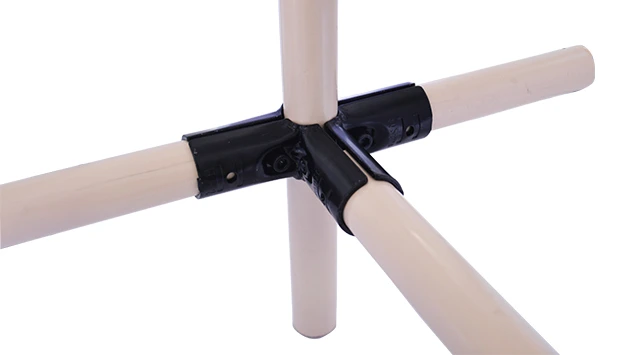
Four Way Straight Lean Pipe Joint
Four way lean pipe joint for 4 pcs 28MM lean pipe connection in straight angle, which used widely in workbench, flow rack, hand trolley frame connection.
Walk into any manufacturing facility that's truly embraced lean principles, and you'll notice something immediately: the workspace feels alive. It's not just a static arrangement of machines and shelves—it's a system that bends, adapts, and evolves with the needs of the team. Inefficiencies? They're not just talked about; they're seen and fixed, often before they become problems. At the heart of this adaptability lies a surprisingly simple tool: the four way straight lean pipe joint . It's not flashy, but it's the unsung hero that turns rigid, wasteful workspaces into flexible, value-driven hubs. In this guide, we'll explore how this unassuming component helps manufacturers master lean principles, from reducing waste to fostering continuous improvement—one joint, one workbench, one flow rack at a time.
Why Lean Matters: Beyond Buzzwords, Toward Real Results
Lean manufacturing isn't just a trend—it's a mindset. Born from the Toyota Production System, its core goal is simple: create more value with less waste . But what does "waste" really mean here? It's not just scrap metal or leftover materials. Lean identifies eight types of waste, from "motion" (unnecessary movement of workers) to "waiting" (idle time as materials sit unused) to "overprocessing" (doing more than the customer needs). For manufacturers, these wastes add up—costing time, money, and morale.
Here's the challenge: traditional manufacturing setups are built for stability, not change. Welded steel workbenches, fixed conveyor belts, and rigid flow racks might work for a single product line, but when customer demands shift (and they always do), these setups become liabilities. A workbench that's perfect for assembling small electronics is useless when the next project requires larger components. A flow rack with fixed shelves can't adapt to taller boxes or smaller parts. The result? Teams waste hours (or days) reconfiguring spaces, or worse, they stick with inefficient setups because change feels too hard. This is where lean pipe systems—powered by components like the four way straight lean pipe joint—step in. They turn "hard to change" into "easy to adapt," making lean principles actionable, not just aspirational.
The Problem with Rigid Infrastructure: Why Flexibility is Non-Negotiable
Let's say you run a mid-sized factory producing medical devices. Last quarter, you built a custom workbench for assembling glucose monitors—welded steel, fixed height, shelves spaced exactly 12 inches apart. This quarter, your client wants a new model with a larger display. Suddenly, the workbench is too short, the shelves are too narrow, and the team is contorting themselves to fit the new parts. You have two options: spend $10,000 and two weeks building a new workbench, or keep struggling with the old one (and watch errors and frustration rise). Neither is good.
This scenario plays out daily in factories worldwide. Rigid infrastructure locks teams into yesterday's needs, making it impossible to respond quickly to today's realities. And in an era where product lifecycles shrink and customization is king, that rigidity is a death sentence. What manufacturers need is infrastructure that can evolve with their work—not against it. Enter lean pipe systems: modular, lightweight, and built for change. At the center of this flexibility is the joint—the component that connects pipes, shelves, and accessories. And among all joints, the four way straight lean pipe joint is a standout. It's not just a connector; it's a Swiss Army knife for workspace design.

Four Way Straight Lean Pipe Joint: The Unsung Hero of Lean Flexibility
At first glance, the four way straight lean pipe joint looks simple: a metal or aluminum block with four equally spaced ports, designed to connect lean pipes (often aluminum or steel) at 90-degree angles. But don't let its simplicity fool you. This joint solves three critical problems that make lean possible:
1. Modularity: Build, Break, Rebuild—No Tools Required
Traditional joints (like welded or bolted connections) are permanent. Once you assemble them, taking them apart means cutting, drilling, or grinding—hardly "lean." The four way straight lean pipe joint, by contrast, uses a friction-fit design. Slide a lean pipe into one of its ports, tighten a setscrew (by hand—no power tools needed), and it's secure. Need to reconfigure? Loosen the screw, pull out the pipe, and reattach it elsewhere. This modularity turns assembly into a puzzle, not a construction project. A team can build a basic workbench in an hour, then take it apart and rebuild it as a flow rack by lunch. No welders, no contractors, no downtime.
2. Strength Without Weight: Durability That Doesn't Slow You Down
You might be thinking: "If it's that easy to assemble, it must be flimsy." Not so. Modern four way joints are engineered for strength. Made from die-cast aluminum or reinforced plastic, they can support hundreds of pounds—enough for heavy tools, stacks of materials, or even small conveyor components. And because lean pipes themselves are lightweight (aluminum pipes weigh 30-50% less than steel), the entire system is sturdy but movable. Need to shift a workbench to the other side of the factory? Two people can lift it, no forklift required. This mobility cuts down on "motion waste," letting teams rearrange workflows without waiting for equipment.
3. Precision: Consistent, Repeatable Setups Every Time
Lean thrives on consistency. If your team rebuilds a workbench slightly differently each time, you lose the benefits of standardization. The four way joint solves this with its uniform design: each port is spaced exactly 90 degrees apart, ensuring pipes align perfectly every time. Whether you're building a lean pipe workbench for the first time or the tenth, the joint guarantees that shelves are level, legs are straight, and components line up as intended. This precision reduces "defects" (another lean waste) by minimizing wobbly work surfaces or misaligned flow paths—so parts don't fall off racks, and tools stay within easy reach.

From Joint to System: Real-World Applications That Drive Lean Results
A single four way joint is useful, but when combined with lean pipes, accessories, and other components, it becomes the backbone of entire lean systems. Let's look at three common applications where this joint shines, turning theory into tangible value:
Application 1: Custom Lean Pipe Workbenches —Built for How Your Team Actually Works
Workbenches are the heart of any production line. A poorly designed workbench forces workers to stretch, bend, or reach—wasting motion and increasing fatigue. With the four way straight lean pipe joint, you can build a workbench that fits your team , not the other way around. Need a 36-inch height for tall workers? Use the joint to connect legs at the right length. Want a shelf for tools on the left and parts bins on the right? Add horizontal pipes via the joint's side ports. Need to mount a monitor arm or a power strip? The top port can hold an extra pipe for accessories.
But the real magic is in adaptability. When your team switches tasks—say, from assembling circuit boards to packaging finished products—you don't need a new workbench. Just loosen the joints, remove the tool shelf, lower the height by 6 inches, and add a flat surface for packing materials. In 30 minutes, you've gone from "circuit board station" to "packaging station." Compare that to a welded steel workbench, which would require cutting, welding, and repainting—if you can even modify it at all. The result? Less "waiting" waste (no downtime for reconfiguration) and less "motion" waste (workers stay comfortable, focused, and efficient).
Application 2: Flow Racks —Smoothing Material Flow, Cutting "Waiting" Waste
Flow racks are all about moving materials efficiently—from receiving to production to shipping. But traditional flow racks with fixed shelves and permanent dividers often create bottlenecks. A shelf that's 18 inches deep might work for boxes of screws but not for long, thin components like cables. With the four way joint, you can build a flow rack that adapts to your materials, not the other way around. Use the joint to add or remove shelves, adjust their height, or even angle them for gravity-fed flow (so materials "flow" to workers, reducing the need to reach).
For example, a furniture manufacturer might use a flow rack with three tiers for table legs, each spaced 24 inches apart. When they start producing chairs (with shorter legs), they can reconfigure the rack using the four way joint: remove one tier, lower the remaining two to 12 inches apart, and add dividers to separate different leg styles. No more wasted space, no more materials getting stuck, and no more workers hunting for parts in the wrong shelf. The joint makes it easy to test new configurations, too—if a 15-inch spacing works better, just adjust the joint and see. This kind of experimentation is key to continuous improvement, a cornerstone of lean.
Application 3: Conveyor Systems—Flexible Paths for Dynamic Production
Conveyors are critical for moving materials across the factory floor, but traditional belt or roller conveyors are fixed in place. If you need to reroute materials around a new machine or shorten the line for a smaller batch, you're out of luck. Lean pipe conveyors, built with four way joints, solve this. The joint connects roller tracks (another key component) to form straight sections, turns, or even elevation changes. Need to add a 90-degree turn? Use two four way joints to connect a horizontal and vertical pipe, then attach roller tracks. Need to shorten the line? Disconnect a section via the joint and store it for later. It's like building with modular Lego blocks—only for industrial-scale material handling.
A electronics manufacturer in Texas used this approach to great effect. They previously had a 50-foot fixed conveyor that ran from the PCB assembly area to testing. When they introduced a new, smaller product line, they only needed a 30-foot conveyor. Instead of buying a new one, they used four way joints to disconnect the extra 20 feet, reconfigure the remaining section to include a 45-degree turn (to fit around a new testing station), and were up and running in 2 hours. The old conveyor would have sat unused (waste of space) or required expensive modifications. With lean pipe and the four way joint, they saved $15,000 and avoided a week of downtime.
Traditional vs. Lean: A Side-by-Side Comparison
Still not convinced that the four way straight lean pipe joint is worth the investment? Let's put it head-to-head with traditional rigid setups. The table below compares key metrics for a lean pipe workbench (using four way joints) and a welded steel workbench, based on real-world data from manufacturers who've made the switch:
| Metric | Traditional Welded Steel Workbench | Lean Pipe Workbench (with Four Way Joints) |
|---|---|---|
| Initial Cost | $800–$1,200 (higher due to welding/labor) | $400–$600 (lower materials, no specialized labor) |
| Assembly Time | 8–12 hours (requires welding, painting) | 1–2 hours (hand assembly, no tools needed) |
| Reconfiguration Time | 3–5 days (requires cutting, rewelding, repainting) | 30–60 minutes (loosen/tighten joints by hand) |
| Weight | 200–300 lbs (hard to move, requires equipment) | 50–80 lbs (two people can carry it) |
| Scrap Value at End of Life | ~$50 (scrap steel) | ~$300 (pipes/joints reused or resold) |
| Waste Reduction Potential | Low (fixed design leads to motion/waiting waste) | High (adaptable design cuts 20–30% of workflow waste) |
The numbers speak for themselves: lean pipe systems with four way joints aren't just more flexible—they're cheaper, faster to build, and easier to repurpose. For manufacturers, this translates to lower costs, happier teams, and a workspace that grows with their business.
Case Study: How a Small Manufacturer Cut Waste by 35% with Four Way Joints
Let's look at a real example. Precision Parts Co., a small manufacturer of automotive components in Ohio, was struggling with inefficiencies. Their biggest pain point? A rigid flow rack system that couldn't keep up with their diverse product line. "We make everything from tiny bolts to large brackets," says plant manager Mike Torres. "Our old flow racks had fixed shelves, so we were always cramming parts into spaces they didn't fit. Workers were spending 20 minutes a day just hunting for the right bin, and we had parts falling off the racks because the shelves were too shallow."
In 2023, Precision Parts switched to lean pipe flow racks using four way straight lean pipe joints. They started by building a base frame with aluminum lean pipes, then used the four way joints to add adjustable shelves. "The first week, we realized we could set the shelves to exactly the height of each part bin—no more cramming," Torres says. "When we launched a new bracket that was 3 inches taller than the old one, we just loosened the joints, raised the shelf by 3 inches, and kept going. No downtime, no new racks."
The results were immediate: workers spent 5 minutes a day (instead of 20) locating parts, a 75% reduction in "motion" waste. The team also repurposed old lean pipe components to build a custom lean pipe workbench for inspecting finished parts, saving $800 on a new workbench. Within six months, Precision Parts cut overall waste by 35% and increased on-time deliveries by 20%. "The four way joint was the game-changer," Torres says. "It turned our flow racks from a problem into a solution."
Choosing the Right Four Way Joint: Key Features to Look For
Not all four way straight lean pipe joints are created equal. To get the most out of your lean system, look for these features when selecting a joint:
- Material: Aluminum is ideal for most applications—it's lightweight, corrosion-resistant, and strong enough for heavy loads. For high-moisture environments (like food processing), stainless steel joints are better.
- Locking Mechanism: Look for joints with setscrews made from hardened steel—they grip pipes tighter and last longer. Some joints have ergonomic knobs for tool-free tightening, which speeds up assembly.
- Port Size: Ensure the joint fits your lean pipes. Most lean pipes are 28mm (1.1 inches) in diameter, but some systems use 30mm or 40mm pipes. Match the joint to your pipe size for a secure fit.
- Load Capacity: Check the manufacturer's specs. A good joint should support at least 150 lbs per port (600 lbs total for four ports) without bending or slipping.
- Reusability: High-quality joints can be disassembled and reassembled hundreds of times without losing strength. Avoid cheap plastic joints that crack or strip after a few uses.
Beyond the Joint: Building a Lean Ecosystem
The four way straight lean pipe joint is powerful, but it's just one piece of the puzzle. To fully embrace lean, pair it with other components like:
- Aluminum Pipes: Lightweight, strong, and compatible with joints for easy assembly.
- Roller Tracks: Attach to lean pipe frames (via joints) to create gravity-fed flow for materials.
- Casters: Add to workbenches or flow racks for mobility—perfect for moving systems where they're needed.
- Accessories: Bins, tool hooks, monitor mounts, and power strips—all attachable via joints to customize your setup.
Together, these components create a system that grows with your needs. Need a mobile workbench? Add casters to the base. Want to turn a flow rack into a conveyor? Attach roller tracks to the shelves. The possibilities are endless—and all thanks to the flexibility of the four way joint.
Conclusion: Lean Isn't About Perfection—it's About Progress
Mastering lean principles isn't about building the "perfect" workspace overnight. It's about creating a workspace that can improve over time—adapting to new products, new teams, and new challenges. The four way straight lean pipe joint makes that progress possible. It turns rigid, wasteful setups into flexible, value-driven systems where waste is minimized, workers are empowered, and change is easy.
Whether you're building a simple workbench or a complex conveyor system, remember this: lean is about people, not just tools. When your team can rearrange their workspace in an hour instead of a week, they feel in control. When they can solve problems (like a misaligned flow rack) with a few turns of a setscrew, they take ownership of their work. And when your workspace adapts to their needs, they're free to focus on what matters: creating value for your customers.
So, the next time you walk through your factory, look at your workbenches, flow racks, and conveyors. Are they holding you back, or helping you move forward? With the four way straight lean pipe joint, the answer can be "forward"—one joint, one improvement, one lean step at a time.