- Company Articles
- Products and Technology
- Product knowledge
- Mastering Turning Angle Code 2020: Advanced Aluminum Joint Techniques

Mastering Turning Angle Code 2020: Advanced Aluminum Joint Techniques
Related Product
Urning Angle Code 2020
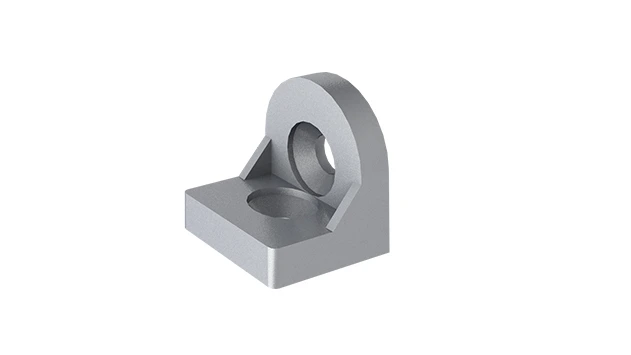
The turning angle aluminum profile connector provides a 90 degree hidden corner connection. 2020 it is means this size is used for 20 series aluminum profile.The corner code comes with set screws that allow for quick, easy connections.
Introduction: The Unsung Hero of Aluminum Frame Precision
Walk into any modern workshop, manufacturing plant, or even a DIY enthusiast's garage, and you'll likely spot a common sight: sturdy, modular structures built from aluminum profiles. These frames—whether holding up workbenches, organizing material racks, or forming the backbone of lean production lines—are the silent workhorses of efficiency. But what makes these structures so reliable, adaptable, and surprisingly easy to assemble? The answer often lies in the small, unassuming components that hold everything together: angle codes. And among these, the Turning Angle Code 2020 stands out as a critical player for anyone working with 2020 aluminum profiles.
If you've ever struggled to align two profile sections at a perfect 90-degree angle, or watched a rickety frame wobble under even a moderate load, you know the difference a quality angle code can make. The Turning Angle Code 2020 isn't just another piece of hardware; it's the bridge between raw aluminum extrusion and a structure that's built to last. In this guide, we'll dive deep into the world of this essential component, exploring its design, installation techniques, common pitfalls, and advanced strategies to help you unlock its full potential. Whether you're a seasoned engineer refining a lean system or a hobbyist building your first workbench, mastering the Turning Angle Code 2020 will elevate your projects from "good enough" to "professional grade."
What Is the Turning Angle Code 2020, Anyway?
Let's start with the basics. The Turning Angle Code 2020 is a specialized connector designed explicitly for use with 2020 aluminum profiles —those slim, versatile extrusions with a 20mm x 20mm cross-section that have become a staple in modular construction. Unlike generic corner brackets, which often rely on surface mounting and compromise the profile's T-slot integrity, this angle code is engineered to fit snugly into the T-slots of 2020 profiles, creating a connection that's both strong and discreet.
At first glance, it might look like a simple L-shaped piece of metal, but closer inspection reveals thoughtful design details. Most models are made from high-grade aluminum alloy (often 6063-T5, the same material as the profiles themselves), ensuring compatibility in thermal expansion and corrosion resistance. The "turning" in its name refers to its ability to facilitate smooth, precise 90-degree turns between profile sections—critical for building frames, shelves, or enclosures where right angles are non-negotiable.
But what really sets it apart is its integration with the T-slot system. Instead of drilling holes or using adhesives, the Turning Angle Code 2020 slides into the profile's T-slots and secures with bolts or screws, distributing stress evenly along the profile's length rather than concentrating it at a single point. This not only makes assembly faster (no pre-drilling required!) but also allows for easy disassembly and reconfiguration—perfect for anyone who needs their structures to evolve with their needs.
Pro Tip:
Not all Turning Angle Code 2020 models are created equal. Look for those with rounded edges to avoid snags on wiring or materials, and check that the bolt holes are compatible with standard T-slot fasteners (M3 or M4 screws are typical for 2020 profiles). Cheap imitations often skimp on material thickness, leading to flexing under load—always opt for trusted suppliers here.

Installation 101: Getting the Basics Right
You've got your Turning Angle Code 2020, a stack of 2020 aluminum profiles, and a project in mind. Now what? Installing this angle code might seem straightforward, but skipping a few key steps can lead to frustration (or worse, structural failure) down the line. Let's break it down into a step-by-step process that even beginners can follow.
Step 1: Prep Your Profiles
Before you even touch the angle code, take a minute to prepare your 2020 aluminum profiles. Use a deburring tool to smooth any rough edges from cutting—this prevents snags when sliding the angle code into the T-slot. If your profiles are new, wipe them down with a clean cloth to remove any dust or factory residue; this ensures the T-slot rubber seal cover (if you're using one) adheres properly later.
Step 2: Align the Angle Code
Lay your two profile sections on a flat surface, forming a right angle where they'll connect. Slide the Turning Angle Code 2020 into the T-slot of one profile, making sure its "leg" extends into the corner where the two profiles meet. Now, position the second profile so its end meets the angle code's other leg. Here's a trick: use a square tool to double-check the 90-degree angle—even a 1-degree misalignment can throw off your entire frame.
Step 3: Secure with Fasteners
Once aligned, insert T-slot bolts into the angle code's pre-drilled holes. For 2020 profiles, M3 bolts are usually the right fit—too large, and you'll strip the T-slot; too small, and the connection will loosen over time. Tighten the bolts gradually, alternating between them to avoid uneven pressure. You'll feel resistance when the angle code seats firmly against the profile walls—stop there; overtightening can warp the code or damage the profile's T-slot.
Step 4: Test for Stability
Give the connected profiles a gentle shake. They should feel solid, with no wiggle or creaking. If there's movement, check for debris in the T-slot, misaligned bolts, or a bent angle code (yes, even quality codes can get dented in shipping!). A quick once-over now saves hours of rework later.

Why 2020 Profiles? Understanding the Ecosystem
To truly appreciate the Turning Angle Code 2020, it helps to understand why 2020 aluminum profiles are so popular in the first place. These profiles, with their 20mm x 20mm cross-section, strike a sweet spot between strength and versatility. They're lightweight enough for DIY projects (a 1-meter length weighs just over 0.5kg) but robust enough to support shelving, workbenches, and even small conveyor systems. Their T-slots—those continuous grooves running along each side—allow for easy attachment of accessories like aluminum profile end caps , cable management clips, or tool holders, making customization a breeze.
The Turning Angle Code 2020 is purpose-built for this ecosystem. Unlike angle codes designed for larger profiles (like 3030 or 4040), which can be overkill and add unnecessary weight, the 2020 version is scaled to match the profile's load capacity. This means you won't end up with a frame where the connectors are stronger than the profiles themselves—a common issue when repurposing hardware from bigger systems.
Consider a small electronics workshop building a benchtop test station. They need a frame that's compact (to fit in tight spaces), lightweight (to move if needed), and sturdy enough to hold a oscilloscope, power supply, and tools. 2020 profiles, paired with Turning Angle Code 2020 connectors, are the ideal choice. The result? A structure that's easy to assemble, reconfigure as tools change, and strong enough to handle daily use—without the bulk of larger profiles.
Turning Angle Code 2020 vs. Larger Angle Codes: A Quick Comparison
| Feature | Turning Angle Code 2020 | Turning Angle Code 3030 | Turning Angle Code 4040 |
|---|---|---|---|
| Compatible Profile Size | 20mm x 20mm | 30mm x 30mm | 40mm x 40mm |
| Typical Material Thickness | 1.5mm–2.0mm | 2.0mm–2.5mm | 2.5mm–3.0mm |
| Recommended Bolt Size | M3 | M4 | M5 |
| Max Load Capacity (Per Connector) | ~50kg (vertical) | ~100kg (vertical) | ~200kg (vertical) |
| Best For | Small workbenches, shelving, lightweight frames | Medium-duty racks, conveyor supports | Heavy machinery frames, industrial workstations |
Advanced Techniques: Beyond the Basics
Once you've nailed the standard 90-degree connection, it's time to explore the Turning Angle Code 2020's more nuanced capabilities. These advanced techniques will help you tackle complex projects and ensure your frames are not just strong, but optimized for your specific needs.
1. Load Distribution: More Than Just Tightening Bolts
A common mistake is assuming that a single Turning Angle Code 2020 can handle all the load at a corner. In reality, load distribution is key. For example, if you're building a material rack B (3 row and 3 floor) using 2020 profiles, each vertical corner should use two angle codes—one near the top and one near the bottom of the vertical profile. This spreads the weight of the shelves (and the materials on them) across the entire profile length, reducing stress on any single connection. Think of it like how a chair uses four legs instead of one—stability comes from distribution, not just strength.
2. Combining with T-Slot Accessories for a Polished Look
The Turning Angle Code 2020 works seamlessly with other 2020 profile accessories, and using them together can elevate both function and aesthetics. After installing the angle code, slide a T-slot rubber seal cover into the remaining T-slot space. This not only hides the bolts (for a cleaner look) but also protects wires or fingers from sharp edges. For exposed profile ends, add 2020 aluminum profile end caps—they snap into place and prevent dust buildup in the T-slots. These small touches might seem minor, but they turn a utilitarian frame into something that looks professionally built.
3. Angled Connections (Yes, Even with a "90-Degree" Code)
Wait, the name says "Turning Angle Code"—does that mean it only does 90 degrees? Not necessarily. With a bit of creativity, you can use it for slight angle adjustments (think 85–95 degrees) by shimming one side of the code with a thin piece of aluminum or plastic. This is handy for frames that need to slope gently (like a gravity-fed roller track) or align with uneven walls. Just keep in mind: the further you deviate from 90 degrees, the more you compromise the code's load capacity. For angles beyond 10 degrees, consider specialized adjustable joints, but for small tweaks, this trick works surprisingly well.
4. Disassembly and Reuse: The Modular Advantage
One of the best things about aluminum profile systems is their reusability, and the Turning Angle Code 2020 shines here. When it's time to reconfigure your frame (say, you need to shorten a workbench or expand a shelving unit), simply loosen the bolts, slide the code out, and reuse it elsewhere. Unlike welded connections, there's no damage to the profiles or the code itself. Just be sure to clean the T-slots and bolts before reinstalling—dust and debris can prevent a tight fit the second time around.
Troubleshooting Common Issues (And How to Fix Them)
Even with careful installation, problems can pop up. Let's troubleshoot the most common issues and how to resolve them.
Problem: The Angle Code Won't Slide Into the T-Slot
This is usually due to one of two issues: either the T-slot is dirty (sawdust, metal shavings, or corrosion can block it), or the angle code is slightly bent. Start by cleaning the T-slot with a small brush or compressed air. If that doesn't work, inspect the code's edges—if they're bent, gently straighten them with pliers (be careful not to overdo it; aluminum is soft and can crack). If the code is warped beyond repair, replace it—using a damaged code is a recipe for instability.
Problem: The Frame Wobbles After Assembly
Wobbling is often a sign of uneven bolt tension or insufficient angle codes. First, check that all bolts are tightened evenly—tightening one bolt all the way before the others can pull the profiles out of alignment. If that doesn't help, add more angle codes. As mentioned earlier, spacing them along the profile (instead of clustering them at one point) drastically improves stability. For tall frames, consider diagonal bracing using 2020 profiles and additional angle codes—this adds lateral strength and eliminates sway.
Problem: Bolts Keep Loosening Over Time
Vibration (from tools, machinery, or even foot traffic) can loosen bolts over time. The fix? Use thread-locking adhesive (like Loctite Blue) on the bolt threads before installation. It's important to use a removable formula (not the permanent red version!) so you can disassemble the frame later. Alternatively, add a washer under the bolt head—this increases friction and helps keep the bolt in place.
From Workbenches to Lean Systems: Real-World Applications
To see the Turning Angle Code 2020 in action, let's look at two real-world applications where it makes a tangible difference.
Case Study 1: A Small Workshop's Custom Workbench
Maria runs a small woodworking shop and needed a workbench that could hold her tools, have built-in storage, and fit in a 6-foot corner. She chose 2020 profiles for their balance of strength and compactness. Using Turning Angle Code 2020 connectors, she built a frame with a plywood top, adding shelves below using angle codes to connect the vertical and horizontal supports. By spacing the angle codes 12 inches apart along the vertical posts, she ensured the shelves could hold her heavy power tools without sagging. The result? A custom workbench that cost a fraction of a commercial model and fits her space perfectly.
Case Study 2: Optimizing a Lean Production Line
A electronics manufacturer was struggling with a bottleneck in their assembly process: components were piling up at a workstation because the material rack was too small and hard to access. Their lean team recommended a new material rack B (3 row and 3 floor) using 2020 profiles to keep parts organized and within arm's reach. The Turning Angle Code 2020 was critical here—its low profile meant the rack could fit in the tight space between workstations, while its strength ensured the rack could hold the weight of component bins. By using angle codes at both the top and bottom of each vertical support, the team eliminated the previous rack's wobble, making it safer to load and unload parts. The result? A 20% reduction in time spent retrieving components, and a smoother, more efficient production line.
Advanced Tips: Thinking Like a Pro
Ready to take your Turning Angle Code 2020 skills to the next level? Try these pro tips:
1. Customize with 3D Printing
For unique applications—like mounting a specific tool or routing cables—consider 3D printing custom brackets that attach to the Turning Angle Code 2020. Design a bracket with a slot that slides over the angle code's bolt heads, then print it in PLA or PETG. This is a great way to add functionality without modifying the angle code itself.
2. Pre-Drill Bolt Holes for Faster Assembly
If you're building multiple identical frames (like a batch of workbenches for a workshop), pre-drill the bolt holes in the Turning Angle Code 2020 to match the exact position of the T-slot nuts in your profiles. This speeds up assembly and ensures consistency across all frames.
3. Use Anti-Corrosion Treatments for Outdoor Use
While aluminum is naturally corrosion-resistant, if your frame will be used outdoors or in humid environments (like a greenhouse), apply a thin coat of clear lacquer to the Turning Angle Code 2020. This adds an extra layer of protection against salt, moisture, or chemicals.
Conclusion: The Small Component That Makes a Big Difference
The Turning Angle Code 2020 might be small, but its impact on your aluminum frame projects is huge. From ensuring precise angles to distributing load evenly, this unassuming connector is the key to building structures that are strong, adaptable, and built to last. By mastering its installation techniques, understanding its role in the 2020 profile ecosystem, and troubleshooting common issues, you'll be able to tackle projects with confidence—whether you're optimizing a lean system, building a workbench, or creating a custom material rack.
Remember, the best results come from attention to detail: cleaning T-slots, spacing angle codes properly, and using the right accessories like end caps or T-slot rubber seal covers. And when in doubt, don't hesitate to experiment—modular systems are all about iteration. With the Turning Angle Code 2020 in your toolkit, you're not just building frames; you're building solutions that grow with your needs.
So go ahead—grab your 2020 profiles, your angle codes, and start building. The next time someone admires your sturdy, professional-looking frame, you'll know the secret: it's all in the details, and the Turning Angle Code 2020 is one detail that never fails to deliver.