- Company Articles
- Products and Technology
- Product knowledge
- Material Composition of 3030a EU Standard Aluminum Profile: Alloy Details

Material Composition of 3030a EU Standard Aluminum Profile: Alloy Details
Related Product
3030A EU Standard Aluminum Profile
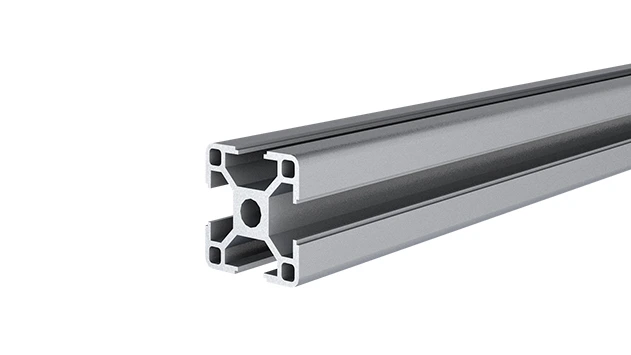
3030 is a 3.00 x 3.00CM fractional 30 series square extrusion T-slot profile with four open T-slots, each side with 3.00cm face. The profile has align-a-grooves to assist in aligning connecting profiles.
Walk into any modern factory, workshop, or industrial facility, and you'll likely spot a silent workhorse holding everything together: aluminum profiles. These sleek, modular structures form the backbone of assembly lines, workbenches, material racks, and even automated systems. But not all aluminum profiles are created equal. For businesses operating in Europe or adhering to strict quality standards, the
3030a EU standard aluminum profile
stands out as a reliable choice. What makes this profile so trusted? A big part of the answer lies in its material composition—the precise blend of aluminum and alloying elements that gives it strength, flexibility, and durability. In this article, we'll dive deep into the alloy details of the 3030a EU standard aluminum profile, exploring how each component contributes to its performance, why EU standards matter, and how it fits into real-world industrial applications.
Understanding EU Standards: Why They Matter for Aluminum Profiles
Before we unpack the material composition of the 3030a profile, let's first clarify what "EU standard" means. The European union (EU) has long been a leader in setting rigorous industrial standards to ensure safety, consistency, and environmental responsibility. For aluminum profiles, these standards are defined by organizations like the European Committee for Standardization (CEN), which publishes norms such as EN 755 (for extruded aluminum and aluminum alloys) and EN 12020 (for general requirements).
So, what does compliance with EU standards entail for a profile like the 3030a? It means the profile's dimensions, mechanical properties, chemical composition, and surface finish are all tested and certified to meet strict benchmarks. For manufacturers and end-users, this translates to predictability: you can trust that a 3030a profile from one
aluminum extrusion profile
supplier will perform the same as another, reducing the risk of product failures or compatibility issues in modular systems.
EU standards also prioritize sustainability, often limiting harmful substances (like lead or cadmium) and encouraging the use of recycled materials. For businesses aiming to reduce their carbon footprint, choosing EU-standard profiles isn't just about quality—it's about aligning with global environmental goals.
The 3030a Profile: An Overview
The "3030a" in the profile's name isn't arbitrary. The numbers typically refer to the profile's cross-sectional dimensions: 30mm by 30mm, making it a square profile ideal for medium-load applications. The "a" may indicate a specific variant—perhaps with slightly different wall thickness, slot design, or accessory compatibility compared to other 3030 models (like 3030b or 3030c).
This size strikes a balance between strength and versatility. It's not as lightweight as a 2020 profile (20x20mm), which is better for small, lightweight structures, nor as heavy-duty as a 4040 profile (40x40mm), which handles larger loads. Instead, the 3030a is a workhorse for everyday industrial needs: think assembly line workbenches, material storage racks, and light-duty conveyor systems. Its popularity stems from this flexibility—whether you're building a custom workstation or a temporary production cell, the 3030a can adapt.
But the real magic is in what you can't see: the alloy beneath the surface. Let's break that down.

Material Composition: The Alloy Breakdown
Aluminum, by itself, is a soft, malleable metal. While pure aluminum has excellent corrosion resistance and conductivity, it lacks the strength needed for structural applications. That's where alloying comes in: by adding small amounts of other elements, manufacturers can tailor aluminum's properties to suit specific needs. The 3030a EU standard profile is typically made from a 6000-series aluminum alloy—specifically, 6063, a popular choice for extruded profiles due to its excellent formability and moderate strength. Let's explore the key elements in this alloy and their roles.
| Element | Chemical Symbol | Percentage Range (3030a EU Standard) | Primary Role in the Alloy |
|---|---|---|---|
| Aluminum | Al | 97.9% – 99.2% | Base metal; provides lightweight and corrosion resistance |
| Silicon | Si | 0.2% – 0.6% | Enhances extrusion fluidity; improves formability during manufacturing |
| Magnesium | Mg | 0.45% – 0.9% | Forms Mg₂Si precipitates; increases strength through heat treatment |
| Manganese | Mn | ≤ 0.1% | Controls grain structure; boosts corrosion resistance and ductility |
| Iron | Fe | ≤ 0.35% | Impurity (minimized); can affect surface finish if excessive |
| Copper | Cu | ≤ 0.1% | Trace element; small amounts may enhance strength but can reduce corrosion resistance |
| Zinc | Zn | ≤ 0.1% | Trace element; typically kept low to avoid brittleness |
| Titanium | Ti | ≤ 0.1% | Refines grain size during casting; improves mechanical properties |
Let's take a closer look at the most influential elements in this mix: aluminum, silicon, and magnesium. Together, they form the backbone of the 3030a's performance.
Aluminum: The Foundation
At 97.9% to 99.2%, aluminum is the star of the show. Pure aluminum has a density of just 2.7 g/cm³—about a third that of steel—making it inherently lightweight. This is a huge advantage in industrial settings, where heavy structures can slow down workflows or increase energy costs for transportation. But aluminum's benefits go beyond weight: it's naturally resistant to corrosion, thanks to a thin oxide layer that forms on its surface, protecting the metal from rust and degradation.
However, pure aluminum is too soft for structural use. That's why alloying elements are added—to boost its strength without sacrificing its natural advantages. In the 3030a profile, the high aluminum content ensures the profile remains lightweight and corrosion-resistant, while the other elements step in to add the muscle needed for industrial tasks.
Silicon: The Extrusion Enabler
Silicon is the unsung hero of
aluminum extrusion profile
manufacturing. When aluminum is heated to around 500°C (932°F) to form profiles, it needs to flow smoothly through a steel die to take on the desired shape (in this case, a 30x30mm square with T-slots for accessories). Silicon lowers the alloy's melting point and improves its fluidity, allowing it to fill the die's intricate details—like the slots that make the 3030a so modular.
In the 3030a's alloy, silicon ranges from 0.2% to 0.6%. Too little silicon, and the molten aluminum might not flow evenly, leading to defects like cracks or uneven walls. Too much, and the alloy could become brittle, reducing the profile's impact resistance. The EU standard tightly controls this range to ensure consistent extrusion quality across suppliers.
Magnesium: The Strength Booster
If silicon makes extrusion possible, magnesium makes the 3030a strong enough to handle real-world loads. Magnesium reacts with silicon in the alloy to form tiny, needle-like particles called Mg₂Si (magnesium silicide). When the profile is heat-treated (a process called "aging"), these particles precipitate out of the aluminum matrix, acting as barriers to dislocation movement—the mechanism that causes metal to bend or stretch under stress. The result? Increased tensile strength and hardness.
In the 3030a, magnesium sits between 0.45% and 0.9%. This range is carefully chosen to balance strength and ductility. A higher magnesium content would make the profile stronger but less flexible; lower amounts would keep it ductile but reduce its load-bearing capacity. For medium-duty applications like workbenches or material racks, this middle ground is perfect—strong enough to support tools and components, yet flexible enough to withstand occasional impacts without breaking.
How Composition Shapes Performance: Key Properties of the 3030a Profile
Now that we understand the alloy's components, let's connect the dots: how does this composition translate to the 3030a's real-world performance? Here are the key properties that make it a favorite in industrial settings:
1. Strength-to-Weight Ratio:
Thanks to the magnesium-silicon precipitates, the 3030a offers a tensile strength of around 160-200 MPa (megapascals), with a yield strength of 110-160 MPa. For context, this means it can support significant weight—think a workbench loaded with tools or a material rack holding heavy components—without bending or deforming, all while remaining lightweight enough to be reconfigured or moved if needed.
2. Corrosion Resistance:
The high aluminum content and low levels of copper (which can accelerate corrosion) make the 3030a resistant to rust and oxidation. This is crucial in factories where exposure to moisture, oils, or chemicals is common. Unlike steel, which requires painting or coating, aluminum profiles often need minimal maintenance to stay in top shape.
3. Formability and Modularity:
The silicon content ensures the 3030a can be extruded with precise T-slots, which are the secret to its modularity. These slots allow for easy attachment of
aluminum profile accessories
—connectors, brackets, end caps, and even panels—without welding or drilling. This makes it simple to build custom workstations, adjust assembly lines, or repair damaged sections, saving time and labor costs.
4. Thermal Conductivity:
Aluminum is an excellent heat conductor, and the 3030a is no exception. In applications where heat dissipation matters—like electronic assembly lines or machinery enclosures—this property helps prevent overheating, protecting sensitive components.
5. Recyclability:
Aluminum is 100% recyclable, and recycling it requires just 5% of the energy needed to produce new aluminum. EU standards often emphasize recyclability, and the 3030a's alloy composition is designed to be compatible with recycling processes, aligning with sustainability goals for eco-conscious businesses.
Aluminum Profile Accessories: Complementing the 3030a's Design
A profile is only as good as its ability to work with accessories, and the 3030a's design—enabled by its material composition—shines here. The T-slots running along its length are engineered to accept a wide range of
aluminum profile accessories
, turning a simple 30x30mm tube into a versatile building block. Let's look at a few key accessories and how they leverage the profile's properties:
Connectors:
90° angle connectors, 45° brackets, and T-joints are essential for building frames. The 3030a's strength ensures these connectors stay secure under load, while its ductility prevents cracking at the joint points.
End Caps:
These simple plastic or metal caps fit over the profile's ends, protecting workers from sharp edges and preventing dust or debris from entering the slots. The 3030a's precise extrusion (thanks to silicon) ensures end caps fit snugly, with no gaps.
Panels and Worktops:
Plywood, aluminum, or composite panels can be attached to the 3030a using slot nuts and bolts. The profile's strength supports these panels, even when loaded with tools or materials.
Wheels and Casters:
For mobile structures like trolleys, casters can be mounted directly to the profile. The 3030a's lightweight nature makes these trolleys easy to maneuver, while its strength ensures they can carry heavy loads without flexing.
Without the 3030a's carefully balanced alloy composition, these accessories wouldn't work as well. A too-soft profile might bend under the weight of a loaded worktop; a too-brittle one might crack when a connector is tightened. The EU standard ensures that accessories from different suppliers are compatible with the profile, creating a seamless ecosystem for industrial design.
Real-World Applications: Where the 3030a Profile Shines
Now that we've explored the "why" behind the 3030a's composition, let's look at the "where." This profile is a staple in industries ranging from automotive and electronics to pharmaceuticals and logistics. Here are a few common applications:
Assembly Line Workstations:
In car manufacturing or electronics assembly, workstations need to be sturdy, customizable, and ergonomic. The 3030a's modular design allows for adjustable heights, integrated tool holders, and cable management, while its strength supports heavy equipment like soldering stations or testing devices.
Material Racks and Flow Racks:
Factories rely on efficient material storage to keep production running smoothly. The 3030a is often used to build flow racks, where components slide down roller tracks (another accessory!) to the assembly line. Its corrosion resistance ensures the racks last in busy, sometimes humid environments.
Protective Enclosures:
For machinery or robotic cells, safety enclosures made from 3030a profiles provide a lightweight yet strong barrier. The T-slots make it easy to add panels, doors, or warning signs, and the profile's thermal conductivity helps dissipate heat from enclosed equipment.
Lean Manufacturing Systems:
Lean principles emphasize minimizing waste and maximizing efficiency. The 3030a's modularity aligns perfectly with this, allowing businesses to quickly reconfigure workstations or racks as production needs change—no need to invest in entirely new structures.
Why Choose EU-Standard 3030a Over Non-Standard Profiles?
With so many aluminum profiles on the market, why opt for the 3030a EU standard? The answer lies in consistency and reliability. Non-standard profiles may cut corners on alloy composition—using too much iron (which weakens the oxide layer) or too little magnesium (sacrificing strength) to lower costs. This can lead to unpredictable performance: a rack that bends under load, a workstation that wobbles, or a profile that corrodes prematurely.
EU standards eliminate this guesswork. By mandating strict composition ranges, testing protocols, and quality checks, they ensure that every 3030a profile—whether from a supplier in Germany, Italy, or Poland—meets the same high bar. For businesses, this reduces the risk of downtime, improves safety, and simplifies supplier management (since compatibility between profiles and accessories is guaranteed).
Additionally, EU standards often align with global norms, making the 3030a a smart choice for companies with international operations. Whether you're building a facility in France or exporting equipment to Asia, using EU-standard components ensures compliance with a wide range of regulatory requirements.
Future Trends: The 3030a Profile in a Changing Industry
As manufacturing evolves—with trends like automation, Industry 4.0, and sustainability taking center stage—the 3030a profile is poised to adapt. Here's how its material composition might play a role in future innovations:
Sustainability:
Demand for recycled aluminum is growing, and EU standards are likely to push for higher recycled content in alloys. The 3030a's current composition is already compatible with recycled aluminum (as long as impurity levels are controlled), making it a candidate for greener production processes.
Enhanced Alloys:
Researchers are developing new 6000-series alloys with even better strength-to-weight ratios, potentially by tweaking magnesium and silicon levels or adding trace elements like scandium. While the 3030a's composition is well-established, future EU standards might incorporate these advances to keep pace with industry needs.
Smart Integration:
As factories become more connected, profiles may need to support sensors or wiring for IoT devices. The 3030a's T-slots and modular design make it easy to integrate these technologies, and its thermal conductivity could help cool embedded electronics.
Conclusion: The 3030a Profile—A Masterclass in Alloy Engineering
The 3030a EU standard aluminum profile is more than just a piece of metal; it's a testament to the power of precise alloy engineering. By balancing aluminum, silicon, magnesium, and other elements within strict EU standards, manufacturers have created a profile that's lightweight yet strong, flexible yet durable, and modular yet reliable. Whether you're building a workbench, a material rack, or an entire assembly line, the 3030a's material composition ensures it can handle the demands of modern industry.
For businesses, choosing the 3030a isn't just about buying a profile—it's about investing in consistency, safety, and efficiency. And as industries evolve, this workhorse profile is ready to adapt, thanks to the timeless principles of alloy design that make it so dependable. So the next time you see a 3030a profile in action, take a moment to appreciate the science behind it: a carefully crafted blend of elements, working together to keep the world of manufacturing moving forward.