- Company Articles
- Products and Technology
- Solution
- Material Handling Hubs: Aluminum Workbench C in Factory Workflow Optimization

Material Handling Hubs: Aluminum Workbench C in Factory Workflow Optimization
Related Product
Aluminum Workbench C
aluminum-tube-workbench-is-more-flexible-and-durable,-compared-with-traditional-pe/abs-coated-steel-tube.-it-is-easy-to-assemble,-anti-corrosion,-rust-protection,-and-recycle-use-after-disassemble.
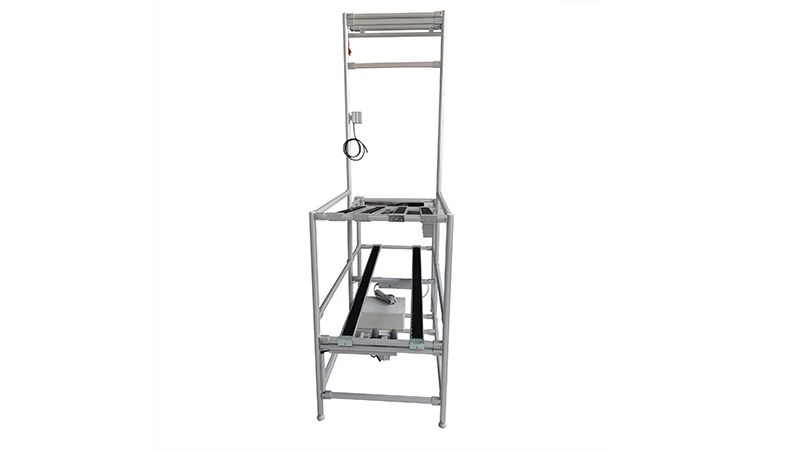
In the hum of a busy factory, every second counts. The rhythm of assembly lines, the movement of materials, and the coordination of teams all converge to create the heartbeat of manufacturing. Yet, for many facilities, this rhythm is often disrupted by clunky workspaces, static setups, and tools that feel more like obstacles than allies. Imagine a workstation that doesn't just hold parts but adapts to your team's needs, streamlines every reach, and grows with your production goals. That's not a distant dream—it's the reality of Aluminum Workbench C, a solution designed to turn chaotic workflows into symphonies of efficiency. In this article, we'll dive into how this unassuming piece of equipment, rooted in aluminum profile and lean system principles, is redefining what it means to optimize factory operations.
The Problem with Static Workspaces: Why Traditional Setups Fall Short
Walk into a factory that's been running on the same setup for a decade, and you'll likely spot the same frustrations: workbenches bolted to the floor, forcing workers to stretch or hunch to reach tools; material racks that require constant bending to access parts; and conveyor systems that feel more like bottlenecks than bridges between stations. These static setups were built for a bygone era—one where production lines rarely changed, and "good enough" was the standard for efficiency.
Take, for example, a traditional steel workbench. Heavy, immovable, and welded into place, it might handle heavy loads, but try adjusting its height for a shorter worker, or reconfiguring it to accommodate a new product line, and you're looking at hours (if not days) of downtime, not to mention the cost of hiring a welder or buying a whole new bench. Wooden workbenches fare little better—they warp over time, can't support heavy machinery, and offer zero flexibility when your workflow needs a tweak.
Then there's the issue of waste—one of the biggest enemies of any lean system. Time wasted searching for tools that aren't within arm's reach. Space wasted on benches that take up more room than necessary. Energy wasted on workers bending, twisting, or walking across the floor to grab materials. In a world where every minute of labor costs money and every inch of floor space is valuable, these inefficiencies add up fast. It's no wonder factory managers are left asking: There has to be a better way, right?
Aluminum Workbench C: A Game-Changer in Adaptive Manufacturing
Enter Aluminum Workbench C—a workstation that doesn't just solve these problems, but reimagines how workspaces should function. At first glance, it might look like a simple table, but beneath its sleek surface lies a design philosophy built on two core principles: flexibility and human-centricity . This isn't just about holding parts; it's about creating a hub where workers, materials, and processes come together in perfect harmony.
What makes Workbench C stand out? Let's start with its DNA. Unlike traditional workbenches made from steel or wood, this one is built around aluminum profile —a lightweight yet incredibly strong material that's become the backbone of modern manufacturing setups. Aluminum profiles are extruded with T-slots running along their length, which means you can attach, detach, and reposition accessories (like tool holders, shelves, or even small conveyors) in minutes, no welding or drilling required. It's like building with a set of high-tech Legos, but for grown-ups who need their workspaces to keep up with real-world demands.
But Workbench C isn't just about aluminum profile. It's a lean system in action. Lean manufacturing, at its core, is about eliminating waste—whether that's time, space, or effort. Workbench C embodies this by putting everything a worker needs exactly where they need it . No more walking to a distant shelf for a wrench or stretching over a cluttered surface to grab a component. Every tool, every part, every piece of equipment is positioned to minimize movement and maximize focus. It's lean thinking made tangible.

Breaking Down the Build: What Makes Workbench C Tick?
The Backbone: Aluminum Profile—Strong, Light, and Ready to Adapt
Let's get up close with the star of the show: the aluminum profile. These aren't your average metal bars. Aluminum profiles for Workbench C are precision-extruded, meaning they're shaped under high pressure to create a consistent, durable structure. Most are made from 6063 aluminum alloy—a material known for its strength-to-weight ratio. A typical profile might measure 40mm x 40mm or 30mm x 60mm, but sizes vary to suit different load needs. What really sets them apart, though, are those T-slots we mentioned earlier. Picture a groove running along each side of the profile, just wide enough to slide in a bolt, bracket, or accessory. Want to add a tool hook? Slide a bracket into the T-slot, tighten a knob, and you're done. Need to move the shelf up by 6 inches? Loosen the bolts, adjust, and retighten. It's that simple.
Aluminum's benefits don't stop at flexibility. It's also resistant to corrosion, which means Workbench C can hold up in factories with humidity, oil, or coolant—environments where steel might rust or wood might rot. And because it's lightweight, the bench is easy to move (if you add casters, which we'll get to later) but still strong enough to support heavy machinery. A standard 40mm x 40mm aluminum profile can handle up to 200kg per linear meter—plenty for most assembly tasks, from electronics to automotive parts.
Joints and Connectors: The Glue That Keeps It All Flexible
You can't build a flexible workbench with rigid joints, and Workbench C gets this right with its array of aluminum joints and connectors. Take the internal rotary aluminum joint , for example. This small but mighty component lets you connect two aluminum profiles at almost any angle—90 degrees, 45 degrees, even 135 degrees—and lock them in place with a hex key. Need to add a side shelf that tilts for easier access? Use a rotary joint. Want to create a corner workstation? Two joints and a few profiles later, you're set. Unlike welded joints, which are permanent, these connectors let you reconfigure the bench on the fly. A team assembling small circuit boards might need a compact, U-shaped setup one week; the next week, when they switch to larger components, they can stretch the bench into a straight line—all without calling in a contractor.
Then there are the parallel aluminum joints , which let you connect two profiles side by side, creating a wider surface or a double-decker shelf. And let's not forget the caster installation base —a simple bracket that attaches to the bottom of the aluminum profile, letting you add caster wheels for mobility. Lock the casters, and the bench stays put; unlock them, and you can roll it across the factory floor to a new station. It's flexibility that doesn't sacrifice stability.
Worksurface and Ergonomics: Where People Meet Productivity
A workbench is only as good as the surface workers interact with, and Workbench C nails this with its focus on ergonomics. The standard model (Workbench E, single deck without caster) comes with a 18mm-thick aluminum honeycomb panel worktop, which is lightweight, scratch-resistant, and easy to clean. But here's the kicker: the height is adjustable. Most traditional workbenches are fixed at 36 inches, which might be fine for some workers but a nightmare for others. Workbench C, though, can be built with adjustable legs (using aluminum profile and height-adjustable feet) so each worker can set the surface to elbow height—reducing strain on their shoulders and back. Studies show that ergonomic workstations can cut down on musculoskeletal injuries by up to 40%, and when workers are more comfortable, they're more focused and productive.
But it's the little details that make the difference. The edges of the worktop are rounded to prevent cuts, and the surface is non-slip—important when handling small parts that might roll off. Some models even come with ESD (electrostatic discharge) options, which are critical for electronics manufacturing. ESD worktops prevent static electricity from building up, protecting sensitive components like circuit boards from damage. It's these thoughtful touches that turn Workbench C from a "table" into a tool that cares about the people using it.

Integrating with the Ecosystem: Flow Racks and Conveyors as Partners
Workbench C isn't meant to stand alone. It's part of a larger ecosystem of material handling tools, and two of its best partners are flow racks and conveyors . Together, they create a seamless workflow where materials flow in, parts are assembled, and finished products flow out—all without a hitch.
Flow Racks: Streamlining Material Access
Imagine you're assembling a product that requires 10 different components. If those components are stored in bins on a shelf across the room, you're wasting time walking back and forth. Enter the flow rack—a tilted rack with rollers that lets materials "flow" to the front as you take the top bin. Workbench C pairs perfectly with flow racks like Material Rack B (3 row and 3 floor) , which can be positioned right next to the bench. Load the rack with bins of components from the back, and as you take a bin from the front, the next one slides down—no bending, no reaching, no wasted steps.
Flow racks are built with the same aluminum profile as Workbench C, so they match in both durability and flexibility. Need to adjust the height of the rack to align with the bench? Use the T-slots to move the shelves up or down. Want to add dividers to separate different components? Slide them into the T-slots and lock them in place. It's a system where the rack adapts to the bench, not the other way around. And because both are made from aluminum, they look and feel like part of the same setup—no mismatched, Frankenstein-like workspaces here.
Conveyors: Bridging Gaps in the Production Line
Once parts are assembled on Workbench C, they need to move to the next station—whether that's testing, packaging, or shipping. That's where conveyors come in. Roller conveyors, in particular, are a natural fit with Workbench C. Many conveyors use plastic roller track guide rails (yellow or grey, depending on your preference) that can be attached directly to the aluminum profile of the bench. Imagine a small conveyor belt extending from the end of Workbench C, carrying finished parts to the next workstation. No more carrying boxes across the floor; no more risk of dropping parts. It's a continuous flow that keeps the line moving.
Conveyors can also feed materials into Workbench C. For example, if you're assembling a product that starts with a base component, a conveyor can bring those bases right to the bench, so you never have to leave your seat. And because conveyors are built with the same T-slot aluminum profiles, you can adjust their height, angle, or length to match Workbench C's setup. Need to slow the conveyor down? Add a brake. Want to divert parts to another bench? Add a switch. It's integration that feels effortless.

How Workbench C Stacks Up: A Side-by-Side Comparison
Still not convinced that Aluminum Workbench C is a step up from traditional setups? Let's put it head-to-head with two common alternatives: the classic steel workbench and the wooden workbench. The table below breaks down key features to show why Workbench C is the clear winner for modern factories.
| Feature | Aluminum Workbench C | Traditional Steel Workbench | Traditional Wooden Workbench |
|---|---|---|---|
| Material | Aluminum profile (6063 alloy) | Steel (often carbon steel) | Hardwood (e.g., maple or oak) |
| Weight (per sq ft) | 8-10 lbs (lightweight, easy to move with casters) | 25-30 lbs (heavy, difficult to reposition) | 15-20 lbs (moderate weight, but prone to warping) |
| Reconfigurability | High: T-slots and removable joints allow for quick adjustments (tools, shelves, height) | Low: Welded or bolted joints; reconfiguration requires cutting/welding | Very low: Fixed structure; modifications damage the wood |
| Load Capacity | Up to 500 lbs (evenly distributed) | Up to 800 lbs (but heavier overall) | Up to 300 lbs (varies by wood type; risk of cracking under heavy loads) |
| Assembly Time | 1-2 hours (no special tools needed) | 4-6 hours (requires welding or heavy bolting) | 2-3 hours (needs sawing, sanding, and finishing) |
| Maintenance Needs | Low: Wipe clean; no rusting; T-slots occasionally need lubrication | High: Prone to rust (needs painting/oiling); bolts can seize | High: Warps with moisture; scratches easily; needs refinishing |
| Ergonomic Adjustments | Easy: Height-adjustable legs; tiltable worktops; customizable accessories | Hard: Fixed height; no built-in adjustments | Impossible: Fixed height and shape |
| Integration with Lean Systems | Seamless: Supports 5S (sort, set in order, shine, standardize, sustain); easy to adapt for continuous improvement | Limited: Static setup makes 5S implementation difficult | Very limited: Hard to organize; prone to clutter buildup |
The Bottom Line: Why Workbench C Delivers Real ROI
At the end of the day, every factory investment comes down to one question: Will it save me time and money? For Aluminum Workbench C, the answer is a resounding yes. Here's how it delivers ROI (return on investment) in ways that matter:
1. Reduced Downtime During Reconfigurations
Traditional workbenches take hours (or even days) to reconfigure. If your production line needs to switch from making Product A to Product B, you might have to disassemble the steel bench, weld new parts, or even buy a whole new bench. With Workbench C, reconfigurations take minutes. A team at a mid-sized electronics factory reported cutting setup time for new product lines from 8 hours to just 45 minutes after switching to Workbench C. That's 7+ hours of extra production time per changeover—time that adds up to thousands of dollars in output over a year.
2. Lower Labor Costs (Thanks to Less Waste)
Remember all that time wasted walking for tools or materials? Workbench C eliminates that. A study by the Manufacturing Institute found that workers spend up to 20% of their day searching for tools or moving materials in poorly organized workspaces. With Workbench C's integrated tool holders, flow racks, and conveyors, that wasted time drops to less than 5%. For a team of 10 workers making $25/hour, that's a savings of $750 per week (15% of 10 workers x 40 hours x $25/hour). Over a year, that's $39,000—more than enough to pay for the bench and then some.
3. Fewer Worker Injuries (and Lower Insurance Costs)
Ergonomic workspaces don't just make workers happier—they make them healthier. Repetitive strain injuries (RSIs), back pain, and muscle fatigue are common in factories with poor workbench design. Workbench C's height-adjustable surfaces, non-slip tops, and easy-reach tool placement reduce these risks. One automotive parts manufacturer reported a 35% drop in worker compensation claims after installing Workbench C stations. Lower claims mean lower insurance premiums, not to mention a more engaged and productive team.
4. Longer Lifespan Than Traditional Benches
Steel benches rust; wooden benches warp. Aluminum Workbench C, though? It's built to last. Most aluminum profiles have a lifespan of 15-20 years, even in harsh factory environments. Traditional steel benches might last 10 years (with regular maintenance), and wooden ones just 5-7. When you factor in replacement costs, Workbench C is actually the cheaper option over time. A $2,000 Workbench C that lasts 20 years costs $100/year, while a $1,000 steel bench that lasts 10 years costs $100/year—same annual cost, but with Workbench C, you get 10 extra years of flexibility and productivity.
Real-World Stories: How Factories Are Thriving with Workbench C
Numbers and tables are great, but nothing beats hearing from real factories that have made the switch. Let's take a look at two case studies that show Workbench C in action.
Case Study 1: A Small Electronics Manufacturer Finds Its Rhythm
Precision Electronics, a family-owned factory in Ohio with 30 employees, makes circuit boards for medical devices. Before Workbench C, their assembly line was a patchwork of wooden benches and steel shelves. Workers often complained of neck and back pain from leaning over fixed-height benches, and setup times for new board designs took up half a day. "We were always playing catch-up," says plant manager Maria Gonzalez. "If a customer ordered a new board, we'd spend hours moving tools, adjusting shelves, and reprinting labels. It was chaos."
In 2023, Precision Electronics invested in 10 Aluminum Workbench C stations, paired with flow racks and small roller conveyors. The results were immediate. "Workers can now adjust their bench height with a crank—no more bending," Maria says. "Tool holders slide right into the T-slots, so everyone has their soldering iron, tweezers, and magnifying glass within arm's reach. And when we switch designs? We reconfigure the benches in 20 minutes instead of 4 hours. Our output is up 25%, and the team's morale? Through the roof."
Case Study 2: An Automotive Supplier Cuts Waste with Lean Principles
Midwest Auto Parts, a supplier to major car manufacturers, was struggling with implementing lean manufacturing. Their old steel workbenches were static, making it hard to follow 5S (sort, set in order, shine, standardize, sustain) principles. "We'd organize a bench perfectly, but a week later, it was cluttered again because there was no built-in place for tools," explains lean coordinator Jake Thompson. "We needed flexibility to adapt as we learned, but our workbenches wouldn't let us."
After researching options, Jake's team chose Aluminum Workbench C for their main assembly line. "The T-slots were a game-changer for 5S," he says. "We added color-coded tool holders—red for screwdrivers, blue for wrenches—and mounted them right on the bench. Bins for scrap go on one side, finished parts on the other, and the flow rack behind the bench keeps components organized. Now, when we do a 5S audit, every bench looks the same. Waste? Down by 40%. And because the benches are lightweight, we can rearrange the line for better flow whenever we spot an opportunity. It's lean in action."
Building the Factories of Tomorrow—Today
Aluminum Workbench C isn't just a workstation. It's a statement about how manufacturing should work: flexible, human-centric, and relentlessly focused on eliminating waste. In a world where production lines need to pivot quickly (think: custom orders, seasonal demand, or new product launches), static workbenches are a relic of the past. Workbench C, with its aluminum profile backbone, lean system design, and seamless integration with flow racks and conveyors, is the future.
Whether you're running a small electronics shop or a large automotive plant, the message is clear: your workspace shouldn't hold you back. It should empower you. It should adapt to your team, not the other way around. It should turn chaos into order, waste into efficiency, and hard work into results.
So, what are you waiting for? The next time you walk through your factory, take a look at your workbenches. Are they helping your team thrive, or are they holding them back? If it's the latter, it might be time to say hello to Aluminum Workbench C. Your workers will thank you. Your bottom line will too.