- Company Articles
- Products and Technology
- Product knowledge
- Material Handling Trolleys: Five Way Straight Lean Pipe Joint Design Insights

Material Handling Trolleys: Five Way Straight Lean Pipe Joint Design Insights
Related Product
Five Way Straight Lean Pipe Joint
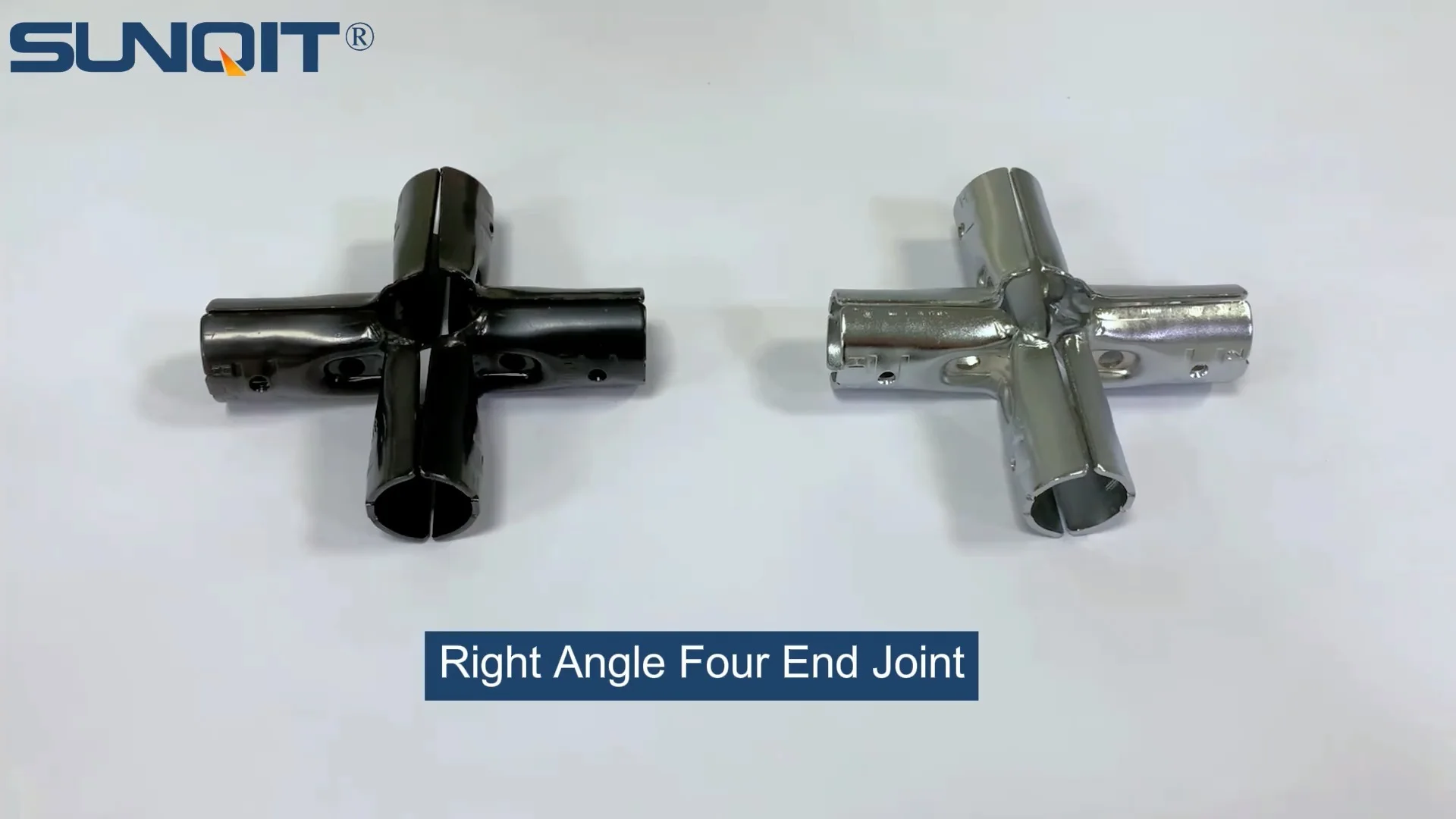
Five way straight lean pipe joint, for 5 pcs 28mm lean pipe connect in straight angle,which used widely in workbench, flow rack, hand trolley frame connection.
In the fast-paced world of manufacturing and warehouse operations, efficiency isn't just a buzzword—it's the backbone of productivity. Every tool, every component, and every piece of equipment plays a role in keeping workflows smooth, reducing downtime, and ensuring teams can focus on what matters most: creating value. Among these unsung heroes of the production floor, material handling trolleys stand out. They're the workhorses that move parts, tools, and finished goods from point A to B, quietly supporting everything from assembly lines to inventory management. But what makes a good material handling trolley great? Often, it's the smallest components that make the biggest difference. Today, we're shining a light on one such component: the five way straight lean pipe joint. This unassuming piece of hardware is a cornerstone of modular, flexible, and durable trolley design—and understanding its nuances can transform how you approach material handling systems.
The Basics: What Is a Lean Pipe Joint, Anyway?
Before diving into the specifics of the five way straight design, let's start with the fundamentals. Lean pipe joints are the connectors that hold together lean pipe systems—modular structures built from pipes (often steel, aluminum, or stainless steel) and accessories, used to create everything from workbenches to flow racks to, yes, material handling trolleys. These joints are the "glue" of lean manufacturing, enabling teams to build, modify, and repurpose structures with minimal time and effort. Unlike traditional welded frames, lean pipe systems rely on these joints to create sturdy, customizable setups that adapt to changing needs. And among the many types of lean pipe joints available—two-way, three-way, swivel, and more—the five way straight lean pipe joint stands out for its versatility and strength.
So, what exactly is a five way straight lean pipe joint? As the name suggests, it's a connector designed to join up to five lean pipes in straight or perpendicular directions. Picture a central hub with five connection points, each engineered to securely fasten a pipe. This design allows for the creation of complex, multi-directional structures without the need for multiple overlapping joints. Whether you're building a trolley with shelves, a rack with cross-bracing, or a workstation with integrated tool holders, this joint simplifies the process by reducing the number of components needed. It's a small part, but it punches well above its weight in terms of impact on design flexibility.
Design Insight 1: Functionality—More Directions, Less Complexity
The most obvious advantage of the five way straight lean pipe joint is its ability to connect multiple pipes in a single, central location. Let's break this down: traditional joints might handle two or three directions, meaning if you need to add a crossbar, a vertical support, and a diagonal brace to a trolley frame, you'd need multiple joints stacked or spaced apart. This not only increases the number of parts (and potential points of failure) but also complicates alignment. The five way joint eliminates this hassle by offering five connection points in one compact unit. For example, on a material handling trolley, you might use one five way joint to attach: two horizontal side rails, a vertical post for a shelf, a diagonal brace for stability, and a crossbar to mount a tool hook. All from one joint. This reduces assembly time, minimizes the risk of misalignment, and creates a cleaner, more streamlined structure.
But functionality isn't just about quantity—it's about precision. The best five way straight joints are engineered with tight tolerances, ensuring a snug fit with lean pipes. Many feature threaded holes or clamping mechanisms that grip pipes firmly, preventing wobbling or shifting under load. This is critical for material handling trolleys, which often carry heavy items (think boxes of components, finished products, or tools). A loose joint could lead to a wobbly trolley, increasing the risk of spills, damage, or even injury. The five way design distributes weight evenly across all connected pipes, reducing stress on any single connection and enhancing overall stability.

Design Insight 2: Durability—Built to Withstand the Factory Floor
Factory and warehouse environments are tough on equipment. Dust, moisture, constant movement, and heavy loads can take a toll on even the sturdiest components. That's why the material and construction of the five way straight lean pipe joint matter so much. Most high-quality joints are made from materials like galvanized steel, stainless steel, or even aluminum—each chosen for its strength and resistance to wear. For example, stainless steel joints are ideal for environments where corrosion is a concern (like food processing or pharmaceutical facilities), while galvanized steel offers a balance of strength and affordability for general manufacturing use.
Another durability feature to look for is surface coating. Many joints come with a PE (polyethylene) coating, which adds a layer of protection against scratches, dents, and chemical exposure. This is especially useful if your material handling trolleys move through areas with rough floors or come into contact with oils, solvents, or cleaning agents. The coating also provides a non-slip grip during assembly, making it easier to tighten pipes securely. Over time, this attention to material and coating ensures the joint maintains its integrity, reducing the need for replacements and keeping your trolleys in service longer.

Design Insight 3: Flexibility—Modularity at Its Best
Lean manufacturing is all about adaptability. Production lines change, inventory needs shift, and new processes are introduced—your material handling equipment should keep up. The five way straight lean pipe joint excels here because it's inherently modular. Unlike welded connections (which are permanent and hard to modify), lean pipe joints are designed to be disassembled and reassembled. Need to add a second shelf to your trolley? Simply loosen the five way joint, insert a new pipe, and tighten. Want to shorten the trolley to fit through a narrow doorway? Remove a section by detaching the joint, cut the pipe, and reattach. This flexibility means your initial investment in trolleys can grow and change with your business, rather than becoming obsolete when needs evolve.
This modularity also extends to compatibility with other lean pipe accessories. The five way joint plays well with components like caster wheels (for mobility), aluminum profiles (for lightweight shelving), and roller tracks (for easy loading/unloading). For example, you could design a trolley with a base frame built using five way joints, add caster wheels to the bottom (via dedicated caster mounting plates connected to the joints), attach aluminum profile shelves for organization, and install a roller track on top for sliding heavy boxes. The joint acts as the central hub, tying all these elements together into a cohesive, functional system.

Design Insight 4: Integration—Working Seamlessly with Other Components
A material handling trolley isn't just a frame on wheels—it's a system of interconnected parts. The five way straight lean pipe joint shines in its ability to integrate with these parts, enhancing the trolley's overall functionality. Let's take caster wheels, for instance. Most trolleys rely on caster wheels for mobility, and these wheels are typically mounted to the trolley's base frame. The five way joint can serve as a connection point for the vertical posts that support the base, while also attaching to horizontal rails that stabilize the wheel mounts. This ensures the wheels are securely anchored, even when the trolley is moving over uneven floors or carrying heavy loads.
Aluminum profiles are another component that pairs well with five way joints. Aluminum profiles are lightweight yet strong, making them perfect for shelves, side rails, or tool holders on trolleys. The T-slot design of many aluminum profiles allows for easy attachment of accessories (like bins, hooks, or labels), and the five way joint can connect these profiles to the main lean pipe frame. For example, you might use a five way joint to attach an aluminum profile shelf to the vertical posts of a trolley, creating a sturdy, lightweight storage area for small parts. The joint ensures the shelf is level and secure, even when loaded with items.
Roller tracks are another integration win. These tracks, which use small wheels to allow items to slide easily, are often added to trolley surfaces to simplify loading and unloading. The five way joint can support the side rails that hold the roller track in place, ensuring the track is aligned and stable. This is especially useful for "pick and place" operations, where workers need to quickly slide boxes or bins on and off the trolley without heavy lifting.
Comparing Joints: How the Five Way Straight Stacks Up
To truly appreciate the five way straight lean pipe joint, it helps to see how it compares to other common joint types. Let's take a look at a few popular options and their key features:
| Joint Type | Number of Directions | Typical Load Capacity | Best For | Key Limitation |
|---|---|---|---|---|
| Two Way Lean Pipe Joint | 2 (straight or 90°) | Medium (50-100kg per connection) | Simple frames, straight rails | Limited to two directions; requires multiple joints for complex structures |
| Three Way Lean Pipe Joint | 3 (e.g., two horizontal, one vertical) | Medium-High (80-150kg per connection) | Shelving units, basic trolleys | Still needs additional joints for diagonal bracing or extra rails |
| Five Way Straight Lean Pipe Joint | 5 (multiple directions from a central hub) | High (100-200kg per connection) | Complex trolleys, multi-shelf racks, workstations | Slightly larger profile than smaller joints; may be overkill for very simple setups |
As the table shows, the five way joint isn't the right choice for every situation—if you're building a simple two-rail cart, a two way joint might be all you need. But for material handling trolleys that require multiple shelves, cross-bracing, tool mounts, or integrated accessories, the five way joint offers unmatched efficiency and versatility. Its higher load capacity also makes it suitable for heavier-duty applications, ensuring your trolley can grow with your needs.
Practical Applications: Where the Five Way Joint Shines
Let's move from theory to real-world use cases. How do manufacturers and warehouses actually use the five way straight lean pipe joint in material handling trolleys? Here are a few examples:
1. Multi-Shelf Turnover Trolleys: These trolleys are used to transport batches of parts between assembly stations. A typical design might have three shelves, each supported by vertical posts. Using five way joints at the corners of each shelf allows for easy attachment of the vertical posts, horizontal side rails, and diagonal braces (to prevent swaying). The joints also make it simple to adjust shelf heights or add/remove shelves as needed.
2. Tool-Carrying Workstations on Wheels: Some trolleys double as mobile workbenches, equipped with tool hooks, bins, and even small shelves for parts. A five way joint can anchor the workbench top (often an aluminum profile or wooden board), a vertical rail for hanging tools, a side bin holder, and a lower shelf for supplies—all in one central location. This keeps tools organized and within arm's reach, boosting worker efficiency.
3. Heavy-Duty Material Racks: In warehouses, trolleys are often used to move large, heavy items like pallets or machinery parts. These require extra stability, which the five way joint provides by distributing weight across multiple support pipes. For example, a trolley designed to carry 500kg might use five way joints at each corner to connect four vertical posts, two horizontal base rails, and two diagonal cross-braces, creating a robust, box-like frame that can handle the load.
4. ESD-Safe Trolleys for Electronics Manufacturing: In electronics production, static electricity can damage sensitive components. ESD (electrostatic discharge) workbenches and trolleys are designed to dissipate static, and the five way joint plays a role here too. Stainless steel or aluminum joints (both conductive) help create a grounded frame, ensuring static is safely redirected away from components. The joint's secure fit also prevents gaps in the frame, which could disrupt the ESD protection.
Key Considerations When Choosing Five Way Joints
If you're ready to incorporate five way straight lean pipe joints into your material handling trolleys, here are a few factors to keep in mind:
Load Capacity: Check the manufacturer's specs for maximum load per connection. Remember, the joint's capacity is only part of the equation—you'll also need to consider the strength of the lean pipes and caster wheels.
Material Compatibility: Ensure the joint is compatible with your lean pipe size (most are designed for standard diameters like 28mm or 30mm). If you're using aluminum pipes, look for joints with non-marring coatings to prevent scratching the pipe surface.
Environment: Choose materials based on your workspace. Stainless steel for wet or corrosive environments, galvanized steel for general use, and aluminum for lightweight applications.
Ease of Assembly: Look for joints with user-friendly features like quick-release levers or pre-threaded holes. This reduces assembly time and makes it easier for teams to modify trolleys on the fly.
Supplier Reliability: Work with a reputable lean pipe supplier who offers consistent quality. Inconsistent joint sizing or poor material quality can lead to weak connections and frequent replacements.
Conclusion: Small Joint, Big Impact
Material handling trolleys are the unsung heroes of the production floor, and the five way straight lean pipe joint is their quiet enabler. By offering multiple connection points, distributing weight evenly, and enabling quick, tool-free modifications, this small component transforms ordinary trolleys into adaptable, durable, and efficient systems. Whether you're building a simple cart for moving parts or a complex workstation on wheels, the five way joint empowers you to design with flexibility, scale with ease, and focus on what matters most: keeping your operations running smoothly.
In the end, lean manufacturing isn't just about eliminating waste—it's about making every component count. The five way straight lean pipe joint does exactly that, proving that sometimes the most impactful innovations come in the smallest packages. So the next time you see a material handling trolley gliding across the factory floor, take a closer look—you might just spot the five way joint holding it all together, quietly driving efficiency one connection at a time.