- Company Articles
- Products and Technology
- Product knowledge
- Material of Gusset ALP 4040: Why Aluminum Alloy Stands Out for Industrial Use

Material of Gusset ALP 4040: Why Aluminum Alloy Stands Out for Industrial Use
Related Product
Gusset ALP 4040
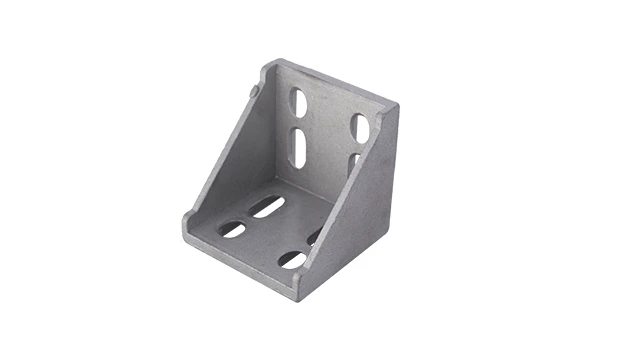
The 4040 bracket/Gusset is an external fastening method that creates a 90 degree connection. 4040 means this size is used for 40 series aluminum profile with a quick connection by bolt and nut. It is a lightweight bracket that requires no machining servic
Introduction: The Unsung Hero of Industrial Setups
Walk into any manufacturing plant, warehouse, or assembly line, and you'll see a symphony of structures working in harmony: workbenches holding precision tools, racks stacked with components, conveyors moving products seamlessly, and frames supporting heavy machinery. What you might not notice, though, is the quiet force holding many of these structures together—the gusset. And among the unsung heroes of gussets, the Gusset ALP 4040 stands tall. Small in size but mighty in function, this unassuming component is the backbone of stability in countless industrial setups. But what makes it so reliable? The answer lies in its material: aluminum alloy. Today, we're diving deep into why aluminum alloy isn't just a good choice for Gusset ALP 4040—it's the best choice for modern industrial needs.
What is Gusset ALP 4040, Anyway?
Before we get into the material, let's make sure we're all on the same page about what Gusset ALP 4040 actually is. In engineering terms, a gusset is a flat or angled piece of material used to strengthen the connection between two or more structural components. Think of it as the "reinforcement rib" that prevents joints from bending, twisting, or failing under stress. The ALP 4040 specifically is designed to work with aluminum profiles—those sleek, modular beams you see in everything from workbenches to machine frames. The "4040" refers to its dimensions, typically 40mm x 40mm, making it a versatile fit for standard aluminum profile systems.
Whether it's securing the corners of a workbench, reinforcing a material rack, or stabilizing a conveyor frame, Gusset ALP 4040 plays a critical role in ensuring these structures can handle the daily grind of industrial operations. But none of this would be possible without the right material. And that's where aluminum alloy steps in.

The Material Behind the Magic: Aluminum Alloy
Aluminum alloy isn't just "aluminum with extra stuff"—it's a carefully crafted blend of aluminum and other elements (like copper, magnesium, silicon, or zinc) designed to enhance specific properties. For Gusset ALP 4040, the goal is to create a material that's strong, lightweight, durable, and easy to work with. Let's break down why aluminum alloy checks all these boxes and more.
Lightweight Yet Mighty: The Strength-to-Weight Ratio That Changes the Game
One of the first things engineers notice about aluminum alloy is its incredible strength-to-weight ratio. Aluminum itself is about one-third the density of steel, which means aluminum alloy components are significantly lighter than their steel counterparts. But here's the kicker: they don't sacrifice strength. For example, 6061-T6 aluminum alloy—a common choice for industrial components—has a tensile strength of around 310 MPa (megapascals), which is more than enough to handle the stresses of most industrial applications. When you pair that with its low density (about 2.7 g/cm³), you get a material that's easy to transport, install, and reconfigure—all while supporting heavy loads.
Why does this matter for Gusset ALP 4040? Imagine a lean system in a factory where workstations need to be rearranged frequently to adapt to new production lines. A steel gusset might add unnecessary weight, making it harder (and more dangerous) for workers to move components. Aluminum alloy gussets, on the other hand, keep structures lightweight without compromising stability. This not only reduces the risk of workplace injuries but also cuts down on installation time and labor costs.
Corrosion Resistance: Battling the Elements (and Factory Grime)
Industrial environments are tough on materials. There's moisture from cleaning, oils from machinery, chemicals from production processes, and even humidity in the air. Over time, these elements can eat away at unprotected metals, leading to rust, weakening, and eventual failure. But aluminum alloy fights back. When exposed to oxygen, aluminum forms a thin, invisible layer of aluminum oxide on its surface. This layer acts as a barrier, preventing further corrosion. For extra protection, many aluminum components (including Gusset ALP 4040) are anodized—a process that thickens this oxide layer, making them even more resistant to wear and tear.
Compare this to steel, which rusts easily without protective coatings (like paint or galvanization). Those coatings can chip or wear off over time, leaving the steel vulnerable. Plastic might resist corrosion, but it lacks the strength needed for heavy-duty applications. Aluminum alloy? It's a low-maintenance champion, standing up to spills, humidity, and chemicals without breaking a sweat.
Machinability and Versatility: Shaping for Every Need
Industrial setups aren't one-size-fits-all. A workbench in an electronics factory might need precise, clean edges to avoid damaging sensitive components, while a material rack in a warehouse needs to withstand rough handling. Aluminum alloy's machinability makes it easy to customize Gusset ALP 4040 for these diverse needs. It can be cut, drilled, punched, and formed into almost any shape without cracking or weakening—something that's much harder to do with brittle materials like cast iron or even some plastics.
This versatility is a big reason why aluminum profile systems (including Gusset ALP 4040) are so popular in lean manufacturing. Lean systems thrive on flexibility—being able to adapt quickly to changes in production. With aluminum alloy, manufacturers can design gussets that fit unique joint angles, accommodate custom brackets, or integrate with other aluminum profile accessories (like corner codes or connectors) to create truly bespoke structures.
Thermal Conductivity: Keeping Cool Under Pressure
Factories and production lines generate heat—from machinery, lighting, and even human activity. Over time, excess heat can weaken materials, warp structures, or even damage sensitive equipment. Aluminum alloy's high thermal conductivity helps mitigate this risk. It efficiently transfers heat away from joints and components, preventing hotspots that could compromise structural integrity. This is especially important for Gusset ALP 4040, which often sits at the intersection of heat-generating machinery and support structures. By dissipating heat quickly, aluminum alloy ensures the gusset (and the entire structure) stays stable, even during long production runs.
Sustainability: Eco-Friendly by Design
In today's world, sustainability isn't just a buzzword—it's a business imperative. Companies are under increasing pressure to reduce their environmental footprint, and material choices play a huge role in that. Aluminum alloy shines here, too. First, aluminum is 100% recyclable, and recycling it uses just 5% of the energy required to produce new aluminum from raw bauxite ore. That means when a Gusset ALP 4040 reaches the end of its life, it can be melted down and turned into a new component with minimal environmental impact.
Second, aluminum alloy's longevity reduces waste. A well-made aluminum gusset can last for decades, outliving plastic components that degrade or steel parts that rust. Fewer replacements mean less material waste and lower overall resource consumption. For companies aiming to build lean, eco-friendly operations, aluminum alloy isn't just a practical choice—it's a responsible one.

Aluminum Alloy vs. the Competition: A Head-to-Head Comparison
To really understand why aluminum alloy is the best material for Gusset ALP 4040, let's see how it stacks up against other common industrial materials: steel, plastic, and cast iron. The table below breaks down key properties that matter for structural components like gussets.
| Property | Aluminum Alloy (6061-T6) | Carbon Steel (Mild) | Plastic (Nylon) | Cast Iron |
|---|---|---|---|---|
| Density (g/cm³) | 2.7 | 7.85 | 1.1-1.2 | 7.0-7.5 |
| Tensile Strength (MPa) | 310 | 400-550 | 40-80 | 150-300 |
| Corrosion Resistance | Excellent (natural oxide layer) | Poor (rusts without coating) | Good (resists chemicals) | Fair (prone to rust) |
| Thermal Conductivity (W/m·K) | 167 | 45 | 0.2-0.3 | 40-50 |
| Recyclability | 100% recyclable, low energy use | Recyclable, moderate energy use | Limited recyclability (often downcycled) | Recyclable, high energy use |
| Machinability | Excellent (easy to cut, drill, form) | Good (but harder, requires more power) | Good (but can warp with heat) | Poor (brittle, hard to machine) |
As the table shows, aluminum alloy strikes a perfect balance of strength, weight, durability, and sustainability. Steel might be stronger, but its weight and corrosion issues make it less practical for flexible, long-term use. Plastic is lightweight but lacks the strength needed for heavy loads. Cast iron is durable but brittle and hard to work with. Aluminum alloy? It's the sweet spot—strong enough to support industrial stress, light enough to be mobile, and sustainable enough to align with modern environmental goals.
Real-World Applications: Where Gusset ALP 4040 Shines
Theory is great, but let's talk about real-world impact. Where do we actually see Gusset ALP 4040 making a difference, thanks to its aluminum alloy construction? Here are a few key applications:
Workbenches: The Heart of the Workshop
A workbench is where the magic happens—whether it's assembling electronics, repairing machinery, or packing products. It needs to be sturdy enough to support tools, materials, and workers, but also lightweight enough to move if needed. Gusset ALP 4040, made from aluminum alloy, is a staple in high-quality workbenches. It reinforces the corners and joints, ensuring the bench doesn't wobble when someone hammers a nail or uses a power tool. And because aluminum alloy is corrosion-resistant, the workbench can stand up to spills, oil, and cleaning chemicals without rusting or warping. Imagine a mechanic's workbench in a busy auto shop: without aluminum alloy gussets, the constant vibration and weight might loosen joints over time. With Gusset ALP 4040, the bench stays solid, project after project.
Lean Systems: Flexibility Meets Strength
Lean manufacturing is all about eliminating waste and maximizing efficiency. That means creating systems that can adapt quickly to changes in production—like reconfiguring a production line for a new product or scaling up output during peak seasons. Aluminum alloy gussets like ALP 4040 are perfect for lean systems because they're lightweight and modular. Workers can disassemble and reassemble structures (like material racks or conveyor frames) without heavy machinery, saving time and labor. And because aluminum alloy is strong, these reconfigured systems still maintain the stability needed for safe operation. A food processing plant, for example, might use Gusset ALP 4040 in a lean system to switch between packaging lines for different products. The aluminum alloy gussets make it easy to adjust the height of conveyors or the layout of workstations, all while ensuring food safety standards are met (thanks to corrosion resistance).
Material Racks and Turnover Trolleys: Moving Heavy Loads Safely
Material racks and turnover trolleys are the workhorses of warehouses and factories, carrying everything from raw materials to finished products. These structures need to handle heavy loads (often hundreds of kilograms) without bending or collapsing. Gusset ALP 4040, with its high strength-to-weight ratio, ensures that material racks stay upright even when fully loaded. For example, a material rack with three rows and three floors (like "Material Rack B" in industrial catalogs) relies on gussets to distribute weight evenly across the frame. Aluminum alloy's lightweight nature also makes turnover trolleys easier to push, reducing worker fatigue and the risk of injury. Compare that to steel trolleys, which are heavy and harder to maneuver—especially in tight warehouse spaces.
The Role of Aluminum Extrusion Profile in Gusset ALP 4040's Success
We can't talk about aluminum alloy gussets without mentioning aluminum extrusion profile. Extrusion is the process of pushing heated aluminum through a die to create complex cross-sectional shapes. It's what allows manufacturers to produce the precise, consistent aluminum profiles that Gusset ALP 4040 is designed to work with. Here's why extrusion matters:
First, extrusion creates profiles with uniform strength. Unlike casting (which can have weak spots), extrusion ensures the aluminum alloy is evenly distributed, making the profile (and the gusset that connects to it) stronger and more reliable. Second, extrusion allows for intricate designs. Aluminum extrusion profiles can have T-slots, grooves, or custom shapes that make it easy to attach gussets, brackets, and other accessories. This is why Gusset ALP 4040 fits so seamlessly with standard aluminum profiles—they're designed to work together from the start.
Third, extrusion is cost-effective for high-volume production. Once the die is created, manufacturers can produce large quantities of the same profile quickly and efficiently. This keeps the cost of aluminum profiles (and by extension, Gusset ALP 4040) lower than custom-machined steel parts. For businesses looking to scale their operations, this affordability is a game-changer.
Choosing the Right Aluminum Profile Accessories for Gusset ALP 4040
Gusset ALP 4040 is only as good as the accessories it's paired with. Aluminum profile systems rely on a range of accessories—like corner codes, connectors, and end caps—to create complete, functional structures. When choosing accessories for Gusset ALP 4040, look for ones made from compatible aluminum alloys (to ensure strength and corrosion resistance) and designed for easy installation (to save time). For example, 90° aluminum profile connectors work seamlessly with ALP 4040 gussets to create strong right-angle joints, while T-slot nuts allow for quick adjustments without drilling new holes. The key is to choose accessories that complement the gusset's strengths: lightweight, durable, and flexible.
Conclusion: The Future of Industrial Materials is Aluminum
Gusset ALP 4040 might be small, but its impact on industrial structures is huge. And at the heart of that impact is aluminum alloy—a material that brings together strength, lightweight design, corrosion resistance, versatility, and sustainability in a way no other material can. Whether it's supporting a workbench in a garage, reinforcing a lean system in a factory, or stabilizing a material rack in a warehouse, aluminum alloy gussets are quietly making industrial operations safer, more efficient, and more adaptable.
As manufacturing continues to evolve—toward leaner processes, greener practices, and more flexible systems—aluminum alloy will only grow in importance. It's not just a material for today; it's a material for the future. So the next time you walk through a factory or workshop, take a moment to appreciate the Gusset ALP 4040s holding everything together. And remember: behind that small, unassuming component is a big reason why modern industry works as well as it does—aluminum alloy.