- Company Articles
- Products and Technology
- Product knowledge
- Material Properties of 4040E EU Standard Aluminum Profile: Why It's Ideal for Lean Systems

Material Properties of 4040E EU Standard Aluminum Profile: Why It's Ideal for Lean Systems
Related Product
4040E EU Standard Aluminum Profile
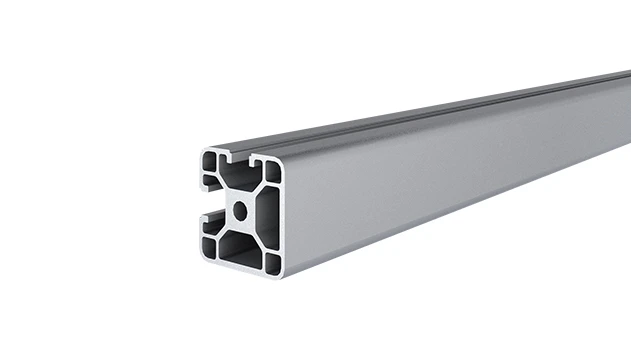
4040E is a 4.00x4.00 CM fractional 40 series square extrusion T-slot profile with two side open T-slots, two side with closed face, each side with 4.00cm face. The profile has align-a-grooves to assist in aligning connecting profiles.
In the world of manufacturing, where every second counts and waste is the enemy, lean systems have become the gold standard for efficiency. But here's the thing: you can't build a strong lean system on weak foundations. The tools, equipment, and materials you choose shape how well your operation can adapt, grow, and eliminate waste. That's where the 4040E EU Standard Aluminum Profile comes in. It's not just another piece of metal—it's the backbone that turns good lean intentions into great, sustainable results. Let's dive into why this unassuming aluminum extrusion has become a go-to for engineers, plant managers, and lean enthusiasts alike.
1. What Makes Lean Systems Tick, and Why Materials Matter
First, let's get clear on what a lean system really needs. At its core, lean is about doing more with less: less time, less space, less money, and less hassle. To pull that off, your workspace and equipment need to be three things: adaptable , durable , and easy to assemble . Think about it—if you're constantly reconfiguring production lines to meet shifting demand, you can't afford to wait weeks for custom metalwork. If your workbenches or material racks wear out after a year, you're just throwing money away. And if putting together a simple flow rack requires a PhD in engineering, your team will waste precious time troubleshooting instead of producing.
That's where material selection becomes critical. Steel is strong, but it's heavy and hard to modify. Plastic is lightweight, but it bends under heavy loads. Wood? Don't even get me started on splinters and warping. What you need is a material that balances strength, flexibility, and practicality. Enter aluminum extrusion profile —specifically, the 4040E EU Standard. It's like the Swiss Army knife of industrial materials: reliable, versatile, and ready to tackle whatever your lean system throws at it.
2. Breaking Down the 4040E: What It Is and How It's Made
The 4040E is part of the EU standard aluminum profile family, a group of extruded aluminum shapes designed for consistency and compatibility. Let's start with the basics: "4040" refers to its dimensions—40mm by 40mm, a square cross-section that's just right for balancing stability and space efficiency. The "E" denotes its specific slot design and wall thickness, which we'll get into later. But what really sets it apart is how it's made: through aluminum extrusion , a process where heated aluminum is forced through a die to create precise, uniform shapes. This isn't just about looks—extrusion ensures every 4040E profile is identical, so you never have to worry about mismatched parts or wobbly assemblies.
Most 4040E profiles are made from 6063-T5 aluminum alloy, a workhorse material known for its excellent strength-to-weight ratio and corrosion resistance. T5 tempering (artificial aging) gives it that extra kick of hardness without making it brittle—perfect for withstanding the daily grind of a busy factory floor.

3. The Material Properties That Make 4040E Stand Out
Let's get technical (but not too technical) about what makes this profile special. Here's a breakdown of its key properties and why they matter for lean systems:
Strength Without the Bulk
At first glance, aluminum might seem "softer" than steel, but the 4040E holds its own. With a tensile strength of around 180 MPa and yield strength of 110 MPa, it can support heavy loads—think full pallets of components, industrial workbenches, or even small conveyor systems—without bending or warping. And here's the kicker: it's about 30% lighter than steel. That means you can build taller racks, heavier-duty workbenches, or mobile trolleys that are still easy for your team to move around. No more straining to reposition equipment during a line changeover—this stuff is strong enough to work hard, but light enough to keep your team moving fast.
Corrosion Resistance: Built to Last in Tough Environments
Factories aren't always pretty places. There's oil, coolant, dust, and sometimes even humidity to contend with. Steel rusts, wood rots, but aluminum? It forms a natural oxide layer that acts like a shield against corrosion. Most 4040E profiles take this a step further with anodized finishes—think of it as a permanent, scratch-resistant sunscreen for metal. This means your racks, workbenches, and flow systems won't degrade over time, even in messy environments. Less maintenance, fewer replacements, and more time focusing on production? That's lean gold.
Precision Engineering: T-Slots and Tolerances That Make Assembly a Breeze
The 4040E's real superpower is in its design: those iconic T-slots running along its length. These slots aren't just for show—they're the reason you can build, modify, and rebuild almost anything without welding or drilling. Slide in a bolt, add a bracket, attach a panel—done. No special tools, no waiting for a machinist, no permanent commitments. And because it's EU standard, the tolerances are tight: the slots are uniform, the corners are square, and every profile plays nice with the next. That consistency is a game-changer when you're trying to assemble a workbench or material rack in hours instead of days.
Lightweight, But Not Light on Performance
Let's circle back to weight. A 4040E profile weighs roughly 2.2 kg per meter—compare that to a similar steel profile, which might hit 8 kg per meter. That difference adds up fast. A 2-meter workbench frame made with 4040E weighs around 8.8 kg; with steel, it's 32 kg. That means your team can move it by hand, no forklift needed. Need to reconfigure your production line overnight? No problem. Want to add casters to a material rack so it can roll between stations? The lightweight frame won't strain the wheels. In lean terms, that's less waste (no waiting for equipment to move heavy objects) and more flexibility (adapt on the fly).
4. How 4040E Plays Nice with Aluminum Profile Accessories
A great profile is only as good as the friends it keeps—and the 4040E has a lot of friends. Aluminum profile accessories are the unsung heroes that turn a simple extrusion into a fully functional lean system. Let's talk about the ones that make a real difference:
- Connectors and Joints: 90° brackets, 45° angles, corner cubes—these little pieces let you join profiles at any angle without drilling. The 4040E's T-slots mean you can tighten them down securely, but still loosen them later if you need to rework the design.
- Panels and Covers: Add a plywood top for a workbench, a metal sheet for a toolboard, or a plastic panel for a machine guard—all slide right into the T-slots. No screws through the profile, no damage, no regrets.
- Casters and Feet: Want your rack to roll? Screw in a set of heavy-duty casters into the T-slots. Prefer it stationary? Swap in adjustable feet to level it on uneven floors. It's that easy.
- Roller Tracks and Guides: Building a flow rack for parts? Attach roller tracks directly to the T-slots, and suddenly you've got gravity-fed material delivery—perfect for kanban systems.
The best part? Because the 4040E is EU standard, these accessories are widely available. You don't have to order custom parts from a single supplier—just pick what you need, mix and match, and get building. That's the flexibility lean systems crave.
5. Real-World Impact: 4040E in Action
Let's get concrete. How does the 4040E actually improve a lean system ? Let's look at a common scenario: a small electronics manufacturer that needed to streamline its assembly line.
Before switching to 4040E, their workbenches were a hodgepodge of wooden tables and welded steel frames. When they launched a new product, reconfiguring the line took 2 weeks—they had to hire a welder to cut and rejoin steel, and the wooden surfaces warped under the weight of tools, leading to frequent replacements. Waste? Absolutely. Then they switched to 4040E.
Now, their workbench frames are built with 4040E profiles. When a new product comes in, they loosen a few bolts, rearrange the profiles, add new brackets, and they're up and running in 2 days. The anodized finish resists scratches from tools, and the T-slots let them attach ESD mats (critical for electronics) without glue or screws. They even built mobile material racks using 4040E and casters, so parts now roll directly to the line instead of being carried by hand. Waste? Reduced. Efficiency? Through the roof.
Another example: a automotive parts supplier using 4040E for flow racks. Their old steel racks were heavy and hard to adjust, so they were stuck with fixed shelf heights—meaning half the space was wasted on parts that didn't fit. With 4040E, they can move the shelf brackets up or down in minutes, using the T-slots to lock them in place. Now every inch of space is used, and parts flow smoothly from receiving to assembly. That's lean in action.
6. Comparing 4040E to Other Materials: Why Aluminum Extrusion Wins
Still not convinced? Let's stack the 4040E up against other common materials. The table below breaks down how it compares to steel, plastic, and even other aluminum profiles in key areas lean systems care about:
| Property | 4040E Aluminum Extrusion | Mild Steel Profile | Plastic Extrusion | Non-Standard Aluminum Profile |
|---|---|---|---|---|
| Weight (kg/m) | ~2.2 | ~8.0 | ~1.5 | ~2.5 (varies) |
| Assembly Time | Hours (no welding) | Days (requires welding) | Hours (but limited strength) | Days (non-standard accessories) |
| Load Capacity | High (supports 200+ kg/m) | Very High | Low (bends under >50 kg/m) | High (but inconsistent) |
| Corrosion Resistance | Excellent (anodized finish) | Poor (rusts without coating) | Good | Good (but depends on alloy) |
| Reusability | High (easily disassembled/rebuilt) | Low (welds are permanent) | Medium (can crack when reused) | Medium (non-standard parts limit reuse) |
| Cost (per meter) | Moderate | Low initial, high long-term (maintenance) | Low initial, very high long-term (replacements) | High (custom manufacturing) |
The takeaway? Steel is strong but rigid and heavy. Plastic is cheap but weak. Non-standard aluminum profiles lack the accessory ecosystem to be truly flexible. The 4040E hits that sweet spot: strong enough for industrial use, light enough to move, easy to assemble, and built to last. It's the rare material that saves you time and money in the long run.
7. Sustainability: Lean and Green Go Hand in Hand
Lean isn't just about efficiency—it's about sustainability, too. Reducing waste means more than just cutting production time; it means using resources wisely. Aluminum is 100% recyclable, and recycling it uses 95% less energy than producing new aluminum. When your 4040E profiles finally reach the end of their life (which, let's be honest, will be decades from now), they won't end up in a landfill—they'll become new profiles, new cans, new parts. That's a win for your bottom line and the planet.
Plus, because the 4040E is so durable, you'll replace it less often. No more throwing out warped wood or rusted steel—this profile is in it for the long haul. Less waste, less cost, more sustainability. That's lean thinking at its best.
8. Why the "E" in 4040E Matters
You might be wondering: with so many aluminum profiles out there, why the 4040E specifically? The "E" stands for a specific slot design and wall thickness that's optimized for versatility. The slots are 8mm wide, which is the most common size for accessories—meaning you'll never struggle to find brackets, bolts, or panels that fit. The wall thickness is 2mm, balancing strength and weight perfectly. Thicker walls might be stronger, but they add unnecessary weight; thinner walls save weight but compromise durability. The 4040E hits that balance, making it the most adaptable profile in the 40x40 range.
Final Thoughts: 4040E—The Lean System's Best Friend
At the end of the day, lean systems are about solving problems—big and small. The 4040E EU Standard Aluminum Profile doesn't just solve problems; it prevents them. It stops you from wasting time on complicated assemblies. It stops you from overspending on short-lived materials. It stops you from being stuck with a workspace that can't grow with your business.
Whether you're building a simple workbench , a complex flow rack, or an entire production line, the 4040E brings the flexibility, strength, and efficiency that lean system s demand. It's not just a material—it's a tool for making lean work, every single day.
So, the next time you're looking to upgrade your workspace, ask yourself: Is my current setup holding me back? If the answer is yes, it might be time to give the 4040E a closer look. Your team, your bottom line, and your lean goals will thank you.