- Company Articles
- Products and Technology
- Product knowledge
- Material Rack B Construction: Role of Parallel Lean Pipe Joints in Stability

Material Rack B Construction: Role of Parallel Lean Pipe Joints in Stability
Related Product
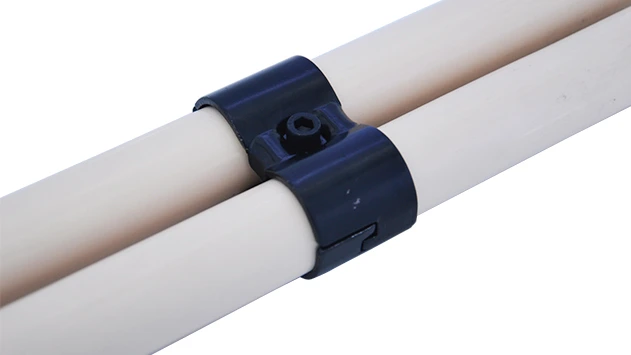
Parallel Lean Pipe Joint
Parallel lean pipe joint used for 2 pcs 28MM lean pipe connection in parallel direction to enhance frame structure, usually for heavy payload requirement for workbench. flow rack, hand trolley.
1. Introduction: The Backbone of Efficient Material Handling
In the bustling world of manufacturing and warehousing, where every second counts and every square foot of space matters, the unsung heroes of efficiency are often the structures we take for granted: material racks. These silent workhorses hold the lifeblood of production—raw materials, components, and finished goods—keeping operations running smoothly. Among the myriad of rack designs, one stands out for its versatility and common use in assembly lines and warehouses: Material Rack B (3 row and 3 floor). But what makes this rack a reliable choice, and why do some configurations wobble or fail while others stand strong under heavy loads? The answer lies in the details of its construction, particularly the yet critical components that hold it all together: the joints. Today, we're diving deep into the world of Material Rack B, exploring how parallel lean pipe joints act as the backbone of its stability, and why choosing the right joints isn't just a matter of engineering—it's a matter of keeping your entire operation on track.
2. Understanding Material Rack B: Design and Purpose
Let's start with the basics: what exactly is Material Rack B? As the name suggests, it's a multi-tiered storage solution characterized by its three rows and three floors—a design that maximizes vertical space while keeping items accessible. Picture a typical electronics assembly plant: small components like circuit boards, screws, and plastic casings need to be within arm's reach of workers on the line. Material Rack B, with its compact footprint and multiple levels, fits perfectly into such tight spaces, allowing operators to grab what they need without wasted movement.
But it's not just about space. Material Rack B is engineered to handle specific load requirements. Each floor is typically designed to hold anywhere from 50 to 150 kilograms, depending on the materials used in its construction. The "3 row and 3 floor" configuration means it can organize up to nine separate categories of items—ideal for sorting parts by type, production stage, or priority. In automotive warehouses, for example, you might find one floor dedicated to brake components, another to wiring harnesses, and the third to interior trim pieces, all neatly separated but within steps of the assembly line.
However, this design comes with a challenge: with three levels stacked vertically and three rows spanning horizontally, the rack's structure is under constant stress. The weight of materials, combined with the daily wear and tear of workers loading and unloading items, creates forces that can cause instability if the rack isn't properly reinforced. This is where the choice of materials and, more importantly, the joints that connect them, becomes make or break.

3. The Critical Role of Joints in Rack Stability
If you've ever built a bookshelf from a flat pack, you know the frustration of a wobbly structure. Tighten one screw, and another comes loose; load the top shelf, and the whole thing leans to one side. Now imagine that bookshelf scaled up to industrial size, holding hundreds of kilograms of metal parts instead of paperbacks. The stakes are infinitely higher. In industrial racks, joints are the connection points where tubes, pipes, and profiles meet—and they're often the weakest links in the structure. A poorly designed or installed joint can turn a solid rack into a safety hazard, risking not just damaged inventory but also worker injuries.
Why Joints Matter: The Weakest Link Principle
Structural engineering 101 teaches us that a chain is only as strong as its weakest link. For Material Rack B, which is typically constructed using lean pipe or aluminum profile, the "chain" is the network of horizontal and vertical pipes, and the "links" are the joints that hold them together. When a rack is loaded, weight isn't just pushed downward—it's distributed across every joint. A vertical pipe holding up a floor panel transfers its load to the horizontal pipes below, which in turn pass that load to the joints connecting them to the rack's legs. If even one joint fails to distribute that load evenly, the entire structure can twist, bend, or collapse.
Common Stability Issues with Poor Joints
What happens when joints aren't up to the task? Let's walk through a real scenario. A manufacturer in China recently reported that their Material Rack B units were "shaking like leaves" whenever workers pulled heavy bins from the top shelf. Upon inspection, engineers found that the original joints used were basic 90° crossing lean pipe joints—simple, cheap, but not designed for the lateral forces created by pulling loads from the sides. Over time, the joints had loosened, allowing the vertical pipes to shift outward, and the horizontal beams to sag. The result? Items fell off the shelves, production slowed as workers avoided the unstable racks, and the company faced costly repairs.
Other common issues include uneven weight distribution (joints that can't handle off-center loads), corrosion weakening the joint material, and poor assembly (joints not tightened to spec). In extreme cases, these problems can lead to rack collapse, which not only damages inventory but also shuts down production lines and violates safety regulations. The solution? Choosing joints engineered specifically for stability—like parallel lean pipe joints.

4. Parallel Lean Pipe Joints: Engineering for Stability
So, what sets parallel lean pipe joints apart? Let's break it down. Unlike 90° crossing joints, which connect pipes at right angles (think of a plus sign), parallel lean pipe joints are designed to connect two or more pipes that run alongside each other—parallel to one another. Imagine two vertical pipes standing side by side; a parallel joint would clamp them together, creating a reinforced column that's far sturdier than a single pipe. In Material Rack B, these joints are typically used along the vertical supports and horizontal beams, where stability is most critical.
Design Features That Boost Stability
Parallel lean pipe joints are engineered with two key goals in mind: maximizing contact area and minimizing movement. Most parallel joints feature a dual-clamp design, with two separate clamping mechanisms that grip the pipes tightly. This increases the surface area of contact between the joint and the pipes, distributing stress over a larger area and reducing the risk of slippage. Additionally, many parallel joints use set screws or locking nuts that prevent loosening over time—even with constant vibration from nearby machinery or repeated loading/unloading.
Another advantage is their rigidity. Unlike some rotatory joints, which allow for flexibility (useful in adjustable structures), parallel lean pipe joints are fixed, meaning once installed, they don't move. This fixed connection ensures that the pipes remain aligned, preventing the rack from "racking"—the side-to-side movement that causes wobbling. In Material Rack B, where vertical alignment is crucial to supporting the three floors, this rigidity is non-negotiable.
Material Matters: Chrome Plating and Durability
Parallel lean pipe joints aren't just about design—material quality plays a role too. Many high-quality parallel joints are made from zinc-plated steel or chrome-plated steel, which resist corrosion from moisture and chemicals. In environments like food processing or pharmaceutical manufacturing, where cleanliness is key, stainless steel parallel joints are even available, ensuring the rack remains stable and hygienic for years. This durability means the joints maintain their clamping force over time, unlike plastic or low-grade metal joints that can crack or deform under stress.
5. Material Rack B and Aluminum Profile: A Perfect Pair
While lean pipe is a traditional choice for building Material Rack B, many modern manufacturers are switching to aluminum profile for its lightweight yet strong properties. Aluminum profile—extruded aluminum with T-slots along its length—offers flexibility in assembly and is resistant to rust, making it ideal for humid or cleanroom environments. But how does aluminum profile work with parallel lean pipe joints, and does this combination enhance stability even further?
The answer is a resounding yes. Aluminum profile's T-slot design allows parallel joints to be mounted securely using bolts or brackets that slide into the slots, creating a connection that's both strong and adjustable. For example, when building the vertical supports of Material Rack B, using 4040 aluminum profile (a common size, 40mm by 40mm) with parallel aluminum joints ensures that each support column is reinforced along its entire length. The T-slots also allow for easy addition of accessories like side guards or label holders, without weakening the joint connections.
In one case study, a automotive parts supplier replaced their steel lean pipe Material Rack B units with aluminum profile versions, using parallel aluminum joints. The result? The racks were 30% lighter (making installation easier) while maintaining the same load capacity, and the aluminum joints showed no signs of corrosion after two years in a humid warehouse—something the steel joints couldn't claim. The parallel joints, paired with the rigid aluminum profile, also reduced lateral movement by 40%, according to the supplier's maintenance logs.
6. Comparing Joint Types: Which Offers the Best Stability?
To truly understand the value of parallel lean pipe joints, let's compare them to other common joint types used in Material Rack B construction. The table below breaks down key metrics like load capacity, rigidity, and assembly difficulty.
| Joint Type | Max Load Capacity (Per Joint) | Rigidity (1-10 Scale) | Assembly Difficulty (1-10, 1=Easiest) | Best For |
|---|---|---|---|---|
| Parallel Lean Pipe Joint | 200-300 kg | 9 | 6 | Vertical supports, horizontal beams, high-stability areas |
| 90° Crossing Lean Pipe Joint | 100-150 kg | 6 | 4 | Light-duty shelves, non-critical connections |
| Two-Way Lean Pipe Joint | 80-120 kg | 5 | 3 | Simple structures, temporary racks |
| 180° Fixed Lean Pipe Joint | 150-200 kg | 8 | 5 | Extending pipes in a straight line |
As the table shows, parallel lean pipe joints outperform other types in both load capacity and rigidity, making them the top choice for critical areas of Material Rack B. While they're slightly more difficult to assemble (requiring precise alignment of parallel pipes), the extra effort pays off in long-term stability. For example, the 90° crossing joint, while easier to install, simply isn't designed to handle the same level of stress as a parallel joint—making it a poor choice for the vertical supports that bear the weight of three floors of materials.
7. Real-World Impact: How Parallel Joints Solved Stability Issues
Let's step into the shoes of Maria, a production manager at a consumer electronics factory in Vietnam. Six months ago, her team was struggling with their Material Rack B units, which held small circuit boards and microchips for smartphone assembly. "Every time we loaded the top shelf, the rack would lean to the left," she recalls. "We had to limit the weight, which meant storing extra inventory on the floor—wasting space and slowing down workers." The original racks used two-way lean pipe joints, which were cheap but offered little support. After a near-miss when a shelf collapsed (fortunately, no one was hurt), Maria decided to upgrade.
Working with a lean system supplier, she replaced the two-way joints with parallel lean pipe joints on all vertical supports and horizontal beams. The difference was immediate. "The racks feel solid now," Maria says. "We can load the top shelf to its full capacity—about 120 kg per floor—and there's no wobble at all. Workers no longer hesitate to grab items from the top, which has cut down on retrieval time by 15%. Plus, we've had zero incidents since the upgrade."
Maria's experience isn't unique. A survey of 50 manufacturing facilities using Material Rack B found that those using parallel joints reported 70% fewer stability-related issues compared to those using other joint types. The most common feedback? "Peace of mind"—knowing that the racks can handle daily use without risk of failure.
8. Maintenance and Longevity: Keeping Your Rack Stable Over Time
Even the best parallel lean pipe joints won't last forever without proper maintenance. Like any mechanical component, they require regular check-ups to ensure they're performing at their best. Here's a quick guide to keeping your Material Rack B stable for years:
Regular Inspections
Schedule monthly inspections of all joints. Look for signs of loosening: can you wiggle the pipes by hand? Are the set screws or nuts backed out? Check for corrosion, especially in humid environments—rust or pitting on metal joints weakens their grip. For aluminum joints, look for cracks in the T-slot connections or bent brackets.
Tightening and Replacement
Use a torque wrench to tighten joint bolts to the manufacturer's specifications—over-tightening can strip threads, while under-tightening leads to loosening. If a joint is corroded, cracked, or no longer holds the pipe securely, replace it immediately. Don't wait for a failure; a single faulty joint can compromise the entire rack.
Environmental Considerations
If your warehouse is humid or exposed to chemicals, consider upgrading to stainless steel parallel joints or aluminum joints with anti-corrosion coatings. For outdoor use (though Material Rack B is typically indoor), look for joints with weatherproof seals to prevent water from seeping into connection points.
9. Beyond Stability: How Parallel Joints Enhance Lean Systems
Stability is just the beginning. Parallel lean pipe joints also play a key role in supporting lean manufacturing principles—those focused on reducing waste, improving flow, and maximizing efficiency. Here's how:
First, by ensuring Material Rack B is stable and reliable, parallel joints reduce waste from damaged inventory (no more fallen parts) and downtime (no more stopping production to fix wobbly racks). Second, their compatibility with aluminum profile and lean pipe makes it easy to reconfigure the rack as production needs change. Need to add a fourth floor? With parallel joints, you can simply extend the vertical supports and add new horizontal beams without rebuilding the entire structure.
Third, parallel joints contribute to a safer workplace, which is a cornerstone of lean systems. A stable rack reduces the risk of accidents, keeping workers focused on their tasks instead of worrying about falling objects. In fact, OSHA (Occupational Safety and Health Administration) reports that unstable storage racks are a leading cause of warehouse injuries—investing in parallel joints is an investment in compliance and worker well-being.
10. Conclusion: The Unsung Heroes of Material Handling
As we've explored, Material Rack B (3 row and 3 floor) is more than just a storage shelf—it's a carefully engineered system that relies on strong, stable joints to keep operations running smoothly. Parallel lean pipe joints, with their superior load capacity, rigidity, and durability, are the unsung heroes that turn a basic rack into a reliable workhorse. Whether paired with traditional lean pipe or modern aluminum profile, these joints ensure that your rack can handle the daily demands of production, protect your inventory, and keep workers safe.
So, the next time you walk past a Material Rack B in your facility, take a moment to look at the joints. They may be small, but they're holding up more than just materials—they're holding up your efficiency, your safety, and your bottom line. And if you're still using outdated joints? It might be time to make the switch. As Maria, the production manager in Vietnam, puts it: "Investing in parallel joints wasn't just a repair—it was a upgrade that paid for itself in months."
In the world of material handling, stability isn't optional. It's essential. And with parallel lean pipe joints, you're not just building a rack—you're building a foundation for success.