- Company Articles
- Products and Technology
- Product knowledge
- Material Rack B Construction: The Role of Three Way Aluminum Pipe Joints

Material Rack B Construction: The Role of Three Way Aluminum Pipe Joints
Related Product
Three Way Aluminum Pipe Joint
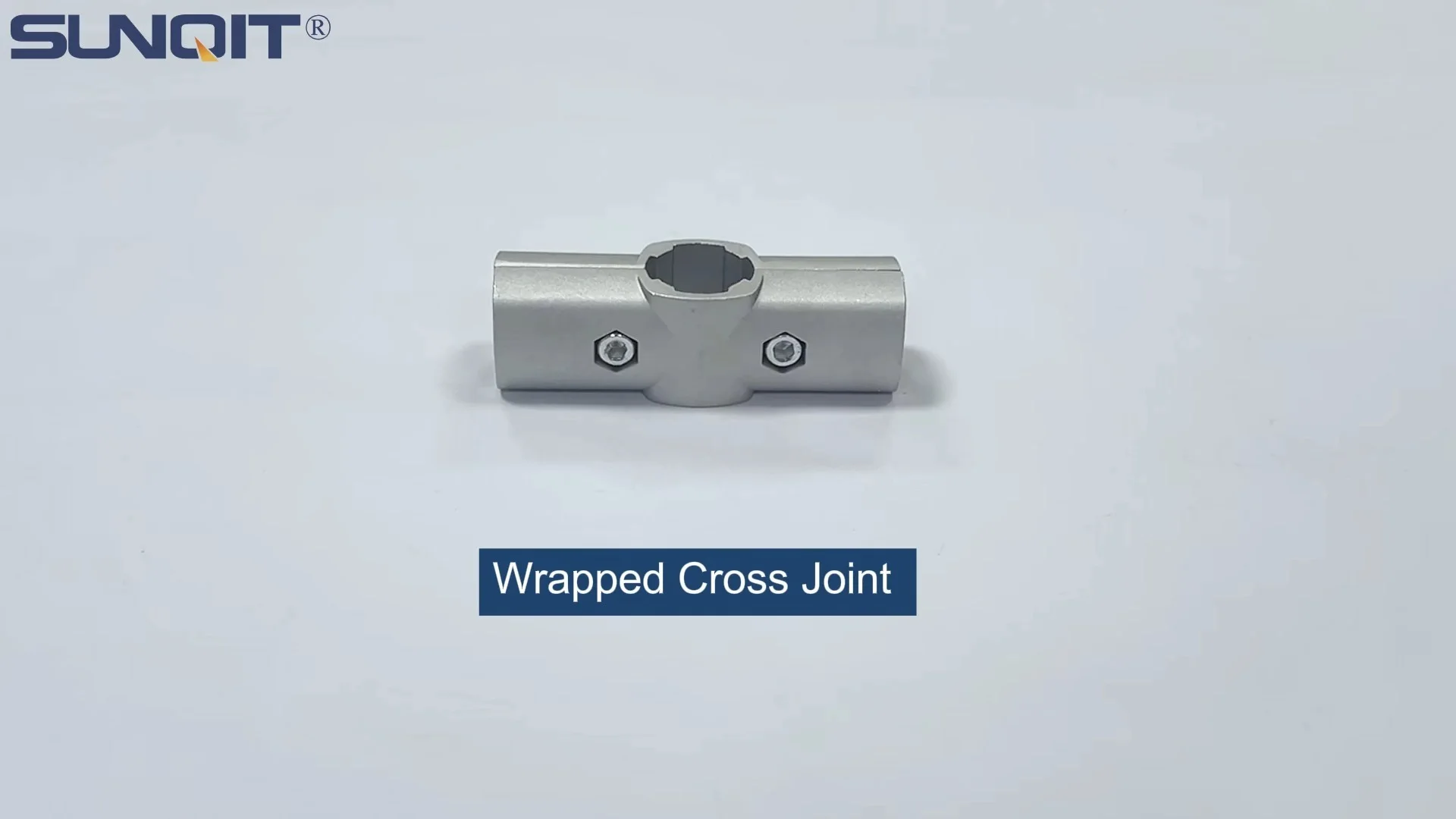
Aluminum 3 way pipe joint for 28mm aluminum pipe connection in 3 direction.
How modular components transform lean manufacturing workflows
1. Introduction: The Backbone of Lean Material Handling
In the fast-paced world of manufacturing, where every second counts and efficiency is the bottom line, the way we store and move materials can make or break a production line. Lean manufacturing isn't just a buzzword—it's a philosophy that hinges on eliminating waste, streamlining processes, and creating systems that adapt to changing needs. At the heart of this philosophy lies material handling: the unsung hero that keeps parts flowing, workers productive, and deadlines on track.
Enter the material rack b (3 row and 3 floor) —a workhorse in modern warehouses and factories. Designed to maximize vertical space while keeping items accessible, this rack isn't just a storage solution; it's a strategic tool that aligns with lean principles by reducing motion waste, improving inventory visibility, and ensuring materials are exactly where they need to be when they're needed. But what makes Material Rack B truly stand out isn't just its 3-row, 3-floor design—it's the precision engineering of its components, especially the three way aluminum pipe joint .
Aluminum has long been a favorite in manufacturing for its lightweight strength and versatility, and when paired with modular joints, it becomes a game-changer for building durable, adaptable structures. In this article, we'll dive deep into how Three Way Aluminum Pipe Joints form the cornerstone of Material Rack B construction, exploring their design, functionality, and the impact they have on creating efficient, lean systems. Whether you're a plant manager looking to optimize your warehouse layout or a small business owner scaling up production, understanding these components will help you build systems that grow with your needs.
2. Understanding Material Rack B: A Closer Look at the 3 Row and 3 Floor Design
Before we zoom in on the joints that hold it all together, let's first get to know Material Rack B itself. As the name suggests, this rack features 3 rows and 3 floors, a configuration that strikes a perfect balance between storage capacity and accessibility. Unlike bulky, one-size-fits-all steel racks that are difficult to reconfigure, Material Rack B is built with modularity in mind—thanks in large part to its use of aluminum profile and compatible components.
Imagine a typical electronics manufacturing facility: small components, delicate parts, and a constant need to switch between product lines. A static rack might force workers to stretch, bend, or walk extra steps to retrieve items, leading to fatigue and wasted time. Material Rack B solves this by organizing materials into three horizontal rows (left, center, right) and three vertical floors (top, middle, bottom), each level designed to hold specific types of items. For example, frequently used parts might live on the middle floor (eye level, no bending), while bulkier, less urgent items go on the top or bottom. This layout isn't just about organization—it's about respecting the human element of work, making tasks easier and more intuitive.
But what gives Material Rack B its flexibility? Unlike traditional welded racks, which are fixed in place and nearly impossible to modify, this rack is assembled using interlocking components. The frame is built from aluminum profile—hollow, extruded aluminum tubes with T-slots that allow accessories like shelves, dividers, and brackets to be attached anywhere along the length. And at the intersections where the vertical and horizontal profiles meet? That's where the Three Way Aluminum Pipe Joints come into play. These small but mighty connectors are what turn individual pieces of aluminum into a stable, customizable structure that can be adjusted, expanded, or repurposed as needs change.
Let's break down the specs: A standard Material Rack B might measure 120cm in width, 60cm in depth, and 180cm in height, with each floor spaced 60cm apart to accommodate various box sizes or bins. The aluminum profiles used are typically 40x40mm or 30x30mm—sturdy enough to hold up to 50kg per shelf (depending on the joint and profile thickness) while remaining lightweight enough for two people to assemble without heavy machinery. This combination of strength and portability is key for lean environments, where floor plans might need to shift seasonally or as new product lines are introduced.
3. The Unsung Hero: Three Way Aluminum Pipe Joints Explained
Now, let's shine a spotlight on the star of the show: the Three Way Aluminum Pipe Joint. At first glance, it might look like a simple plastic or metal connector, but its design is the result of careful engineering to balance strength, ease of use, and adaptability. So, what exactly is a Three Way Aluminum Pipe Joint, and why is it so critical for Material Rack B?
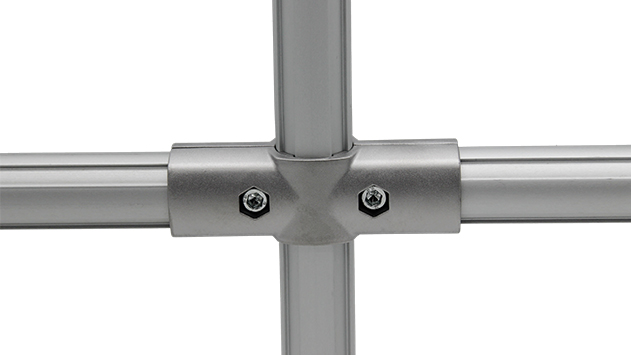
Put simply, a Three Way Aluminum Pipe Joint is a connector that allows three pieces of aluminum profile to meet at a single point, typically at 90-degree angles. Think of it as the cornerstone of the rack's frame—where vertical posts (up/down) meet horizontal beams (left/right/front/back). Unlike fixed joints that lock the profile in one position, these joints are often designed with internal threads or set screws that allow for (fine adjustment) during assembly, ensuring the rack is level and stable. Some models even feature rotating components, letting users pivot profiles slightly to align with uneven floors or custom layouts.
But why aluminum? Aluminum offers several advantages over other materials like steel or plastic. For starters, it's corrosion-resistant, making it ideal for environments where moisture or chemicals might be present (think food processing or automotive plants with frequent floor cleaning). It's also lightweight—about one-third the weight of steel—so assembling the rack doesn't require heavy lifting equipment. And perhaps most importantly for lean systems, aluminum is highly recyclable, aligning with sustainability goals that many modern manufacturers prioritize.
The design of the Three Way Aluminum Pipe Joint itself is clever. Most models have three cylindrical sleeves (one for each pipe) that slide over the ends of the aluminum profiles. Once in place, a set screw (usually made of steel for durability) is tightened through a hole in the sleeve, biting into the T-slot of the profile to secure it. This "clamping" mechanism means no welding or drilling is needed—just a hex key or screwdriver to tighten the joint. This not only speeds up assembly but also allows for disassembly: if you need to shorten the rack or reconfigure the layout, simply loosen the screws, remove the profiles, and reassemble in a new configuration. It's this modularity that makes Material Rack B a long-term investment, not a one-time purchase.
Let's consider a real-world scenario: A furniture manufacturer using Material Rack B to store wooden components suddenly lands a new contract requiring larger pieces. With traditional racks, they'd need to buy new ones or hire welders to modify existing frames. With Three Way Aluminum Pipe Joints? They can simply loosen the joints, add longer aluminum profiles to widen the rack, and reattach the shelves—all in an afternoon. No downtime, no extra costs, just adaptability.
Another key feature of these joints is their load distribution. When you place a heavy box on a shelf, the weight travels down through the horizontal profiles to the vertical posts, and the Three Way Joints act as stress points, evenly distributing the load across the entire frame. Poorly designed joints might bend or crack under pressure, but high-quality aluminum joints are engineered to handle static loads of up to 150kg per joint (depending on the model), ensuring the rack remains stable even when fully loaded. This reliability is crucial in manufacturing, where a collapsed rack could mean damaged inventory, production delays, or even safety hazards.

4. The Synergy Between Aluminum Profile and Three Way Joints
A rack is only as strong as its weakest link, and in Material Rack B, the relationship between the aluminum profile and Three Way Aluminum Pipe Joints is symbiotic. The profile provides the structural backbone, while the joints provide the connection points that turn that backbone into a functional structure. Let's explore how these two components work together to create a rack that's both strong and flexible.
First, the aluminum profile: Extruded aluminum profiles are designed with precision. The T-slots running along their length aren't just for show—they're a universal interface that allows accessories to be attached anywhere. For Material Rack B, this means shelves can be positioned at any height, dividers can be added between rows, and even hooks or tool holders can be mounted on the sides. But without a way to connect the profiles at the corners, this versatility would be useless. That's where the Three Way Joints step in: by securing the profiles at 90-degree angles, they create the rectangular frame that gives the rack its shape and stability.
It's important to note that not all aluminum profiles and joints are created equal. To ensure compatibility, manufacturers design joints to fit specific profile sizes. For example, a 40mm Three Way Joint will only fit 40mm profiles, with sleeves that match the profile's outer diameter exactly. This precision is key—if the joint is too loose, the rack will wobble; if it's too tight, assembly becomes frustrating and may damage the profile. Reputable suppliers (like those specializing in lean system components) ensure their joints and profiles are engineered to work together seamlessly, with tight tolerances that guarantee a snug, secure fit.
Another aspect of this synergy is adjustability. Suppose during assembly, you notice one corner of the rack is slightly higher than the others—a common issue with uneven warehouse floors. With traditional welded racks, you'd be stuck, but with Three Way Joints and aluminum profiles, you can make micro-adjustments. By loosening the set screws on one joint, you can slide the profile up or down by a few millimeters, then retighten to level the rack. This might seem like a small detail, but in a facility where precision matters (like a pharmaceutical lab or electronics cleanroom), it's a game-changer.
Let's also talk about expansion. As your business grows, so do your storage needs. Maybe you start with one Material Rack B, but six months later, you need two more to keep up with demand. Thanks to the modular design, you can connect multiple racks together using additional profiles and joints, creating a continuous storage system. The Three Way Joints even allow for T-shaped or L-shaped configurations, letting you wrap racks around corners or divide a space into zones. This scalability is a hallmark of lean systems—investing in components that grow with you, rather than requiring constant replacement.
Finally, there's the aesthetic and ergonomic factor. Aluminum profiles have a clean, modern look that's far more appealing than rusted steel or flimsy plastic racks. This might seem trivial, but studies show that organized, visually pleasing workspaces boost employee morale and productivity. Additionally, the smooth, rounded edges of aluminum profiles (and joints) reduce the risk of cuts or scrapes—an important safety feature in busy environments. When you combine this with the customizable height and layout of Material Rack B, you get a storage solution that's as easy on the eyes as it is on the back.

5. Building Material Rack B: A Step-by-Step Guide with Three Way Joints
Now that we understand the components, let's walk through how to actually build a Material Rack B using Three Way Aluminum Pipe Joints, aluminum profile, and a few essential aluminum pipe accessories . Don't worry—you don't need to be a master craftsman; with the right tools and a little patience, anyone can assemble this rack in under two hours.
Step 1: Gather Your Materials and Tools
Before you start, you'll need:
- 4 vertical aluminum profiles (height: 180cm, e.g., 40x40mm)
- 6 horizontal front/back profiles (width: 120cm, same profile size as vertical)
- 6 horizontal side profiles (depth: 60cm, same profile size)
- 8 Three Way Aluminum Pipe Joints (one for each top/bottom corner of the frame)
- Aluminum pipe accessories: 12 shelf brackets (to support the 3 floors), 24 set screws (for the joints), 12 end caps (to cover sharp profile ends)
- Tools: Hex key (size depends on the set screws), tape measure, level, rubber mallet (for gently tapping joints into place)
Step 2: Assemble the Base Frame
Start by building the bottom frame—the foundation of your rack. Take two 120cm front/back profiles and two 60cm side profiles. Connect them using Four Way Joints (or additional Three Way Joints, using two sleeves per joint) to form a rectangle. Make sure the corners are square by measuring the diagonals—both should be equal (e.g., 134cm for a 120x60cm frame). Once the base is square, attach a Three Way Joint to each corner, with the third sleeve pointing upward (this will hold the vertical profiles).
Step 3: Add the Vertical Posts
Slide the 180cm vertical profiles into the upward-facing sleeves of the base joints. Tighten the set screws just enough to hold the profiles in place (you'll fully tighten later). Now, measure the distance between the top of the vertical profiles—they should all be the same height (180cm). Use a level to ensure each post is straight (no leaning left or right).
Step 4: Build the Top Frame
Repeat Step 2 to create the top frame, using the remaining front/back and side profiles. Then, attach Three Way Joints to each corner of this top frame, with the third sleeve pointing downward. Slide the top frame onto the vertical posts, making sure the joints align with the top of the posts. Tighten the set screws on the top joints, then go back and fully tighten all base joint screws—this locks the vertical posts in place.
Step 5: Install the Floors
Now it's time to add the shelves. Measure 60cm from the base and mark each vertical post—this is where the first (bottom) floor will go. Attach shelf brackets to the vertical posts using the T-slots (slide the bracket's T-nut into the slot and tighten with a screw). Place horizontal shelf supports across the brackets, then add a plywood or aluminum panel on top (cut to 120x60cm). Repeat for the middle (120cm from the base) and top (180cm) floors. For extra stability, you can add diagonal braces using shorter aluminum profiles and Two Way Joints, but this is optional for most light-to-medium loads.
Step 6: Finishing Touches
Snap the end caps onto the exposed ends of the aluminum profiles to prevent dust buildup and protect workers from sharp edges. Give the entire rack a final check with the level to ensure it's stable, and tighten any loose set screws. If you need to move the rack later, simply add casters (another aluminum pipe accessory) to the base frame using the T-slots—no need to disassemble!
The beauty of this process is that it's reversible and adaptable. Want to make the rack taller? Swap out the vertical profiles for longer ones. Need deeper shelves? Use 80cm side profiles instead of 60cm. The Three Way Joints make it all possible, turning a pile of aluminum into a customized storage solution in hours.
6. Comparative Analysis: Three Way Aluminum Joints vs. Traditional Joints
To truly appreciate the value of Three Way Aluminum Pipe Joints, let's compare them to the traditional joints used in older rack systems. From welded steel to plastic snap-on connectors, each type has its pros and cons—but in the context of lean manufacturing, some clearly outperform others. Below is a detailed comparison table highlighting key factors like cost, assembly time, durability, and flexibility.
| Feature | Three Way Aluminum Pipe Joints | Welded Steel Joints | Plastic Snap-On Joints | Threaded Steel Pipe Fittings |
|---|---|---|---|---|
| Material | Aluminum alloy (lightweight, corrosion-resistant) | Mild steel (heavy, prone to rust without coating) | ABS plastic (light, low strength) | Galvanized steel (strong, but heavy) |
| Assembly Time | Low (10-15 minutes per joint with hex key) | High (requires welding equipment and skilled labor) | Low (snaps on, but may loosen over time) | Medium (requires threading pipes, can be time-consuming) |
| Load Capacity | Medium-High (up to 150kg per joint, depending on profile) | High (unlimited, but fixed design) | Low (up to 20kg per joint, risk of breaking) | High (up to 200kg per fitting, but rigid) |
| Reusability | Excellent (can be disassembled and reused indefinitely) | Poor (welded joints are permanent; modifying requires cutting/welding) | Poor (plastic degrades over time; snaps may break when removed) | Medium (can be unscrewed, but threads may strip with reuse) |
| Corrosion Resistance | Excellent (aluminum naturally resists rust; no coating needed) | Poor (requires painting or galvanizing; prone to rust in wet environments) | Good (plastic doesn't rust, but may crack in extreme temperatures) | Medium (galvanized coating prevents rust, but can chip) |
| Cost (per joint) | Medium ($5-$15, depending on size/brand) | High (includes labor and equipment; not sold individually) | Low ($1-$3, but low durability) | Medium-High ($8-$20, plus cost of threading pipes) |
| Flexibility/Adjustability | Excellent (profiles can be cut to length; joints allow angle adjustments) | None (fixed design; cannot be adjusted) | Low (limited to specific pipe sizes; no angle adjustment) | Low (fixed lengths; difficult to adjust after assembly) |
| Best For | Lean manufacturing, modular systems, dynamic workspaces | Heavy-duty, static storage (e.g., warehouses with fixed layouts) | Light-duty, temporary use (e.g., home garages, small workshops) | Plumbing, fixed industrial structures (non-lean environments) |
As the table shows, Three Way Aluminum Pipe Joints excel in the areas that matter most for lean systems: flexibility, reusability, and ease of assembly. While welded steel joints might offer higher load capacity, they lack the adaptability needed in modern manufacturing, where change is constant. Plastic joints are cheap but flimsy, and threaded steel fittings are rigid and time-consuming to install.
Consider this case study: A automotive parts supplier was using welded steel racks for storing engine components. When they introduced a new line of smaller parts, they realized the racks were too deep, causing workers to dig through bins to find items. Replacing the racks would cost $10,000 and require downtime. Instead, they switched to Material Rack B with Three Way Aluminum Joints. They disassembled the old racks (recycling the steel), assembled the new aluminum racks in a weekend, and saved $7,000. Six months later, when they needed to expand, they added two more racks using the same components. The total cost? $3,000 for a system that's now fully adaptable to future changes.
Another example: A bakery using plastic snap-on racks for storing ingredient bins found that the joints would crack in the warm, humid environment, leading to collapsed shelves and wasted flour. Switching to aluminum joints eliminated this issue—aluminum doesn't degrade in heat, and the set screws keep the racks tight even with daily use. The bakery now reports zero shelf failures and has reduced waste by 15%.
7. Maintenance and Longevity: Keeping Your Rack in Top Shape
Like any piece of equipment, Material Rack B and its Three Way Aluminum Pipe Joints require regular maintenance to ensure they last. The good news? Aluminum is low-maintenance by nature, and with a few simple steps, you can extend the life of your rack to 10+ years—even in busy industrial environments.
Regular Inspections
Start by inspecting the joints every 3-6 months. Over time, vibrations from nearby machinery or frequent loading/unloading can loosen set screws. Grab your hex key and gently tighten any screws that feel wobbly—don't overtighten, as this can strip the threads or damage the aluminum profile. Also, check the T-slots for debris like dust, dirt, or small parts. A quick wipe with a dry cloth or compressed air will keep accessories (like shelf brackets) sliding smoothly.
Cleaning
Aluminum profiles and joints are resistant to corrosion, but they're not immune to grime. In environments like food processing or automotive shops, oil, grease, or chemicals can build up on the rack. Clean the profiles with a mild detergent and a soft sponge—avoid abrasive cleaners or steel wool, which can scratch the surface. For joints, use a small brush (like a toothbrush) to clean out the sleeves and set screw holes. Dry thoroughly to prevent water spots.
Replacing Worn Parts
Even the best joints will eventually wear out. If a set screw becomes stripped, or a joint sleeve cracks (rare, but possible under extreme load), replace it immediately. Most suppliers sell Three Way Aluminum Pipe Joints individually, so you won't need to replace the entire rack. The same goes for aluminum pipe accessories: if a shelf bracket bends or an end cap falls off, swap it out for a new one. Keeping a few spare joints and screws on hand can save you from downtime.
Protecting Against Extreme Conditions
While aluminum is corrosion-resistant, it can still be affected by harsh chemicals (like acids) or saltwater (in marine environments). If your rack is in such a setting, consider anodizing the aluminum profiles—this electrochemical process adds a protective layer that enhances corrosion resistance. Anodized aluminum also comes in different colors, so you can color-code racks by department or product line.
Weight Distribution
Even though Three Way Joints are strong, overloading the rack can strain the joints and profiles. Always follow the weight limits (typically 50kg per shelf for 40x40mm profiles), and distribute heavy items evenly across the shelves. Avoid placing all the weight on one corner—this can bend the vertical posts or loosen the joints over time. If you're unsure about a load, test it gradually: start with a lighter weight, check for bending or wobbling, then add more.
With proper maintenance, your Material Rack B will not only last longer but also remain safe to use. A well-cared-for rack is a silent partner in your lean system, keeping materials organized and accessible so your team can focus on what they do best—producing quality products.
8. Conclusion: The Future of Lean Material Handling
Material Rack B isn't just a storage solution—it's a testament to how thoughtful design and modular components can transform the way we work. At its core are Three Way Aluminum Pipe Joints: small, unassuming connectors that embody the principles of lean manufacturing—efficiency, flexibility, and sustainability. By choosing aluminum over steel, modular over fixed, and adaptable over permanent, manufacturers and warehouse operators are building systems that grow with their businesses, reduce waste, and empower their teams.
As we look to the future, the role of components like Three Way Aluminum Pipe Joints will only become more critical. With the rise of smart manufacturing and Industry 4.0, factories are moving toward dynamic, data-driven environments where layouts change as often as production schedules. Static racks simply can't keep up. But Material Rack B, with its aluminum profile, Three Way Joints, and endless aluminum pipe accessories, is ready to adapt. Imagine racks equipped with sensors that monitor load levels, or profiles with integrated LED lights to highlight low-stock items—all built on the same modular foundation we've explored today.
Whether you're a small workshop just starting out or a large manufacturer looking to optimize your workflow, the lesson is clear: invest in systems that work for you, not against you. Material Rack B and Three Way Aluminum Pipe Joints are more than just tools—they're investments in efficiency, safety, and sustainability. And in a world where every detail matters, that's the difference between falling behind and leading the pack.
So, the next time you walk through a warehouse or production line, take a closer look at the racks. Chances are, if they're flexible, sturdy, and built to last, they're held together by the unsung heroes of lean material handling: Three Way Aluminum Pipe Joints. And now, you'll know just how much thought, engineering, and innovation went into those small but mighty connectors.