- Company Articles
- Products and Technology
- Product knowledge
- Material Rack B Customization: Lean Pipe Fixed Clamps for Adjustable Shelves

Material Rack B Customization: Lean Pipe Fixed Clamps for Adjustable Shelves
Related Product
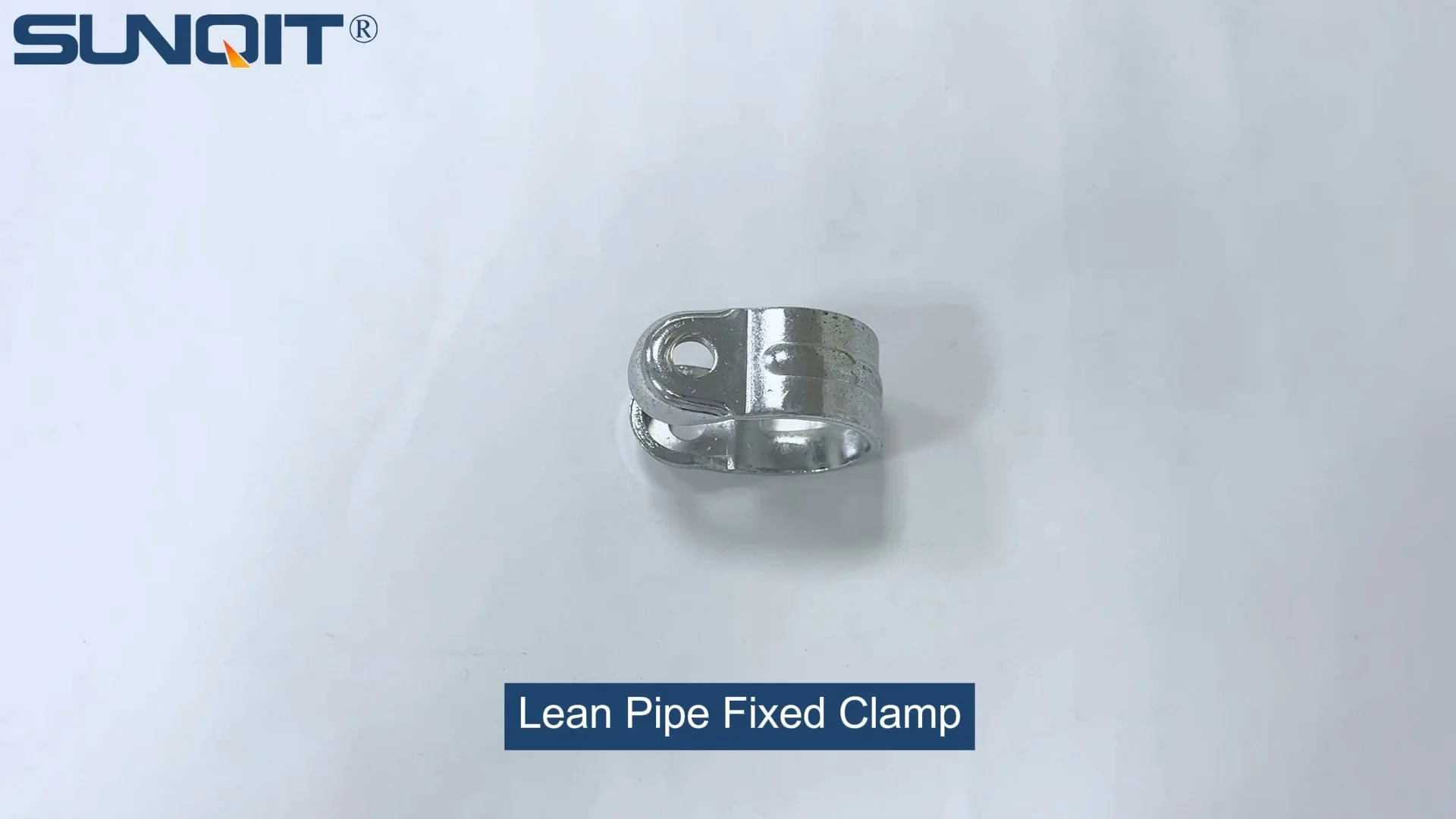
Lean Pipe Fixed Clamp
Lean pipe fixed clamp is used for pipe connector fixing the correct position during workbench flow rack hand trolley assemble work.
The Backbone of Efficient Production – Why Material Racks Matter
Walk into any well-run manufacturing facility, and you'll notice a silent hero keeping the chaos at bay: material racks. These unassuming structures aren't just metal and pipes—they're the circulatory system of production, ensuring that parts, tools, and components flow seamlessly to where they're needed most. Without them, workbenches become cluttered, assembly lines stall, and employees waste precious minutes hunting for misplaced items. In the world of lean manufacturing, where every second and every square foot counts, a poorly designed material rack isn't just an inconvenience; it's a bottleneck that eats into profits and productivity.
But not all material racks are created equal. Traditional fixed-shelf racks might work for static storage, but modern production lines demand flexibility. A electronics plant assembling smartphones one week and tablets the next can't rely on rigid shelves designed for a single product. A automotive workshop switching between engine parts and interior components needs storage that adapts as quickly as their workflows do. This is where customizable solutions step in—and at the forefront of this revolution is Material Rack B, a 3-row, 3-floor system built for adaptability, especially when paired with the right tools: lean pipe fixed clamps.
Meet Material Rack B: More Than Just a Storage Solution
Let's start with the basics: Material Rack B (3 row and 3 floor) isn't your average storage unit. At first glance, its structure is straightforward—three horizontal rows, each divided into three vertical floors— but that simplicity is deceptive. Designed with lean principles in mind, this rack is a blank canvas for customization, engineered to grow, shrink, and reconfigure alongside your production needs. Whether you're storing small electronic components, heavy machinery parts, or bulky packaging materials, its modular design ensures there's a place for everything, and everything in its place.
What sets Material Rack B apart? For one, its versatility in load capacity. The 3-row, 3-floor layout strikes a balance between vertical space utilization and accessibility—no more stretching to reach the top shelf or bending to dig through the bottom. Each floor can be adjusted to accommodate items of different heights, from 6-inch circuit boards to 2-foot toolboxes. But the real magic lies in how those adjustments happen. Unlike fixed racks that require welding or drilling to modify, Material Rack B relies on a system of pipes and joints that can be reconfigured in minutes. And the star of this show? Lean pipe fixed clamps.
The Anatomy of Material Rack B
To understand why Material Rack B is a game-changer, let's break down its components. The frame is typically constructed from durable materials like aluminum or steel pipes—lightweight enough to move (with casters, if needed) but strong enough to support heavy loads. The shelves, often made of metal or reinforced plastic, rest on horizontal support beams that span the rack's width. Here's where adjustability comes in: those support beams aren't welded in place. Instead, they're held secure by lean pipe fixed clamps, which attach to the vertical frame pipes and lock the beams at specific heights. Want to raise a shelf by 4 inches? Loosen the clamps, slide the beam up, and tighten them back down. It's that simple.
This design isn't just about convenience—it's about resilience. In fast-paced production environments, change is constant. A sudden rush order might require storing larger batches of materials; a new product line could mean smaller, more frequent deliveries. Material Rack B doesn't just tolerate these changes—it thrives on them. And at the heart of this adaptability is the lean pipe fixed clamp, a small but mighty component that turns a static rack into a dynamic tool for efficiency.
The Unsung Hero: Lean Pipe Fixed Clamps in Customization
If Material Rack B is the body, lean pipe fixed clamps are the joints that let it move. These unassuming devices are the key to transforming a rigid storage system into one that bends to your will. But what exactly are they, and how do they work?
What Are Lean Pipe Fixed Clamps?
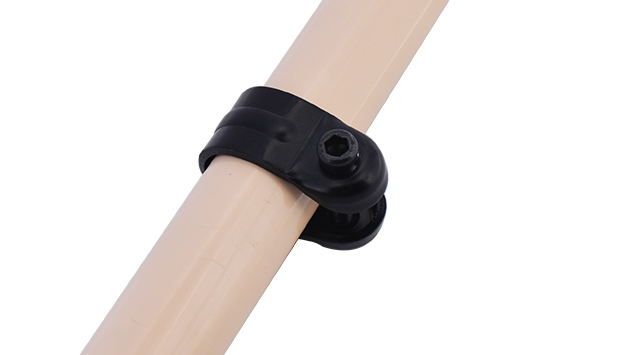
Lean pipe fixed clamps are mechanical fasteners designed to connect and secure pipes in lean manufacturing systems. Made from materials like zinc-plated steel or aluminum, they're built to withstand the wear and tear of daily use—think vibrations from nearby machinery, the weight of loaded shelves, and the occasional bump from a forklift or turnover trolley. Their design is simple but effective: a clamp that wraps around two pipes (usually a vertical frame pipe and a horizontal support beam) and tightens with a screw or lever, creating a secure, non-permanent bond.
Unlike traditional welding, which permanently fuses pipes together, lean pipe fixed clamps allow for quick adjustments. Need to lower a shelf to fit taller boxes? Loosen the clamp's screw, reposition the beam, and retighten. The connection is strong enough to hold hundreds of pounds but flexible enough to be reconfigured in minutes. This "build, test, adjust" cycle is a cornerstone of lean manufacturing, where continuous improvement isn't just a buzzword—it's a daily practice.
Why Lean Pipe Fixed Clamps Are Critical for Material Rack B
Imagine trying to customize Material Rack B without lean pipe fixed clamps. You'd be stuck with either welding (permanent, time-consuming, and expensive to modify) or flimsy plastic clips (unreliable for heavy loads). Lean pipe fixed clamps bridge the gap: they offer the strength of a permanent connection with the flexibility of a temporary one. This makes them ideal for Material Rack B's 3-row, 3-floor design, where each shelf might need to be adjusted independently based on what's being stored.
For example, consider a medical device manufacturer using Material Rack B to store components. On the top floor, they might keep small, lightweight parts like screws and washers—so the shelf can be set low for easy access. The middle floor, storing larger circuit boards, could be raised to eye level to prevent bending. The bottom floor, holding heavy metal casings, might be set higher to avoid strain when lifting. With lean pipe fixed clamps, each of these adjustments takes less than five minutes per shelf. Without them, the manufacturer would need to invest in three separate racks, wasting space and money.

Customization 101: Tailoring Material Rack B to Your Needs
So, you've decided to invest in Material Rack B. Now what? Customizing it with lean pipe fixed clamps isn't rocket science, but it does require a bit of planning. Let's walk through the process step by step, from assessing your needs to final assembly.
Step 1: Map Your Storage Requirements
Before you start adjusting shelves, take a day to observe your current workflow. What items will go on Material Rack B? How tall, wide, and heavy are they? Who will be accessing them—assembly line workers, forklift operators, or both? Jot down these details, and even sketch a rough layout. For example, if you're storing plastic bins of screws (light, small) and metal gears (heavy, bulky), you'll want to separate them by weight: heavier items on lower shelves for safety, lighter ones on top.
Don't forget to account for future needs, too. If you're expanding your product line next quarter, will you need to store new components? Leave extra space between shelves or choose a Material Rack B with extra vertical pipes to allow for adding more floors later. Lean systems are all about anticipating change, and your rack should be no exception.
Step 2: Choose the Right Lean Pipe Fixed Clamps
Not all lean pipe fixed clamps are the same. Some are designed for straight connections, others for angles (like 45° or 90° joints). For Material Rack B, you'll primarily need straight clamps to secure horizontal shelf beams to vertical frame pipes. Look for clamps rated for your maximum load—if you're storing 50-pound boxes on a shelf, choose clamps that can handle at least 75 pounds (it's better to overestimate than under). Also, consider the pipe diameter: Material Rack B typically uses 28mm or 30mm pipes, so make sure your clamps match.
Pro tip: Buy a few extra clamps. It's frustrating to run out halfway through assembly, and having spares on hand means you can make quick adjustments later without waiting for a supplier to deliver more.
Step 3: Assemble and Adjust
Now comes the fun part: putting it all together. Start by assembling the frame of Material Rack B—vertical pipes secured to a base (usually with casters for mobility, if needed). Then, attach the horizontal support beams using lean pipe fixed clamps. Tighten the clamps just enough to hold the beam in place, but not so tight that you can't adjust it later. Once all beams are in place, add the shelves (plywood, metal, or wire mesh, depending on your needs), and test the stability by placing a few items on each shelf. If a shelf sags or wobbles, tighten the clamps further or add extra clamps for support.
Remember: customization is an ongoing process. After a week of using the rack, check in with your team. Are the shelves at the right height? Is everything easy to reach? If not, grab a wrench, loosen the clamps, and tweak. That's the beauty of lean pipe fixed clamps—they turn "good enough" into "perfect" with minimal effort.

Beyond Storage: How Adjustable Shelves Boost Lean Systems
At this point, you might be thinking, "Okay, Material Rack B with lean pipe fixed clamps is great for storage—but how does it fit into my broader lean system?" The answer is simple: adjustable shelves aren't just about organization; they're about eliminating waste, the cornerstone of lean manufacturing. Let's break down how customization reduces three common types of waste: motion, inventory, and overprocessing.
Eliminating Motion Waste
Motion waste is any unnecessary movement by employees—bending, stretching, walking, or reaching. In a traditional fixed-rack setup, a worker might have to climb a ladder to reach the top shelf or kneel to grab something from the bottom, wasting time and increasing the risk of injury. With Material Rack B's adjustable shelves, you can position items at "golden zone" height—between knee and eye level—where they're easiest to reach. This cuts down on motion waste, letting employees focus on what they do best: building products, not hunting for parts.
Reducing Inventory Waste
Lean systems thrive on "just-in-time" inventory—storing only what you need, when you need it. But without adjustable storage, you might end up overstocking to avoid running out of space. For example, if a fixed shelf is too tall for small parts, you might fill it with extra inventory to "use the space," leading to excess stock that ties up cash and risks obsolescence. With Material Rack B, you can adjust shelf heights to fit exactly what you need today, so you're not tempted to overbuy. This keeps inventory lean and your budget healthy.
Minimizing Overprocessing
Overprocessing is doing more work than necessary—like repackaging items to fit into a fixed shelf. If a shelf is too narrow for your standard bins, you might spend hours transferring parts into smaller containers, a task that adds no value to the product. Material Rack B's adjustable shelves eliminate this: set the width and height to match your existing bins, and you can slide them directly onto the rack without extra steps. It's a small change, but multiplied across hundreds of parts, it adds up to significant time savings.
Comparing Material Racks: Why Material Rack B Stands Out
To truly appreciate Material Rack B's value, let's compare it to other common storage solutions. The table below pits it against two alternatives: a traditional fixed-shelf rack and a flow rack (another popular lean storage system).
| Feature | Material Rack B (3 row and 3 floor) with Lean Pipe Fixed Clamps | Traditional Fixed-Shelf Rack | Flow Rack |
|---|---|---|---|
| Adjustability | High: Shelf heights adjustable in minutes with lean pipe fixed clamps | Low: Fixed shelves; requires welding or drilling to modify | Medium: Some models have adjustable lanes, but not as flexible as Material Rack B |
| Load Capacity | Medium to High: Supports 50-200 lbs per shelf (depending on pipe material) | High: Can support heavy loads, but limited by fixed shelf spacing | Low to Medium: Best for lightweight, small parts (e.g., electronics) |
| Space Efficiency | High: 3-row, 3-floor design maximizes vertical space | Medium: Fixed spacing may leave unused gaps between shelves | Medium: Designed for first-in, first-out (FIFO) flow, which can take up more floor space |
| Cost | Moderate: Higher upfront than fixed racks, but lower long-term due to reusability | Low upfront, high long-term: Cheap to buy, expensive to modify | High: Specialized rollers and lanes increase cost |
| Ideal For | Multi-purpose storage: heavy parts, small components, tools | Static storage: rarely changing inventory (e.g., seasonal items) | Assembly lines: FIFO parts feeding directly to workbenches |
As the table shows, Material Rack B shines in versatility. It's not the cheapest option upfront, but its ability to adapt means you won't need to replace it every time your production needs change. For most manufacturers, that flexibility is worth the investment—especially when paired with lean pipe fixed clamps, which make customization almost effortless.
Real-World Impact: Success Stories with Customized Material Rack B
Still not convinced? Let's look at how two different industries have used Material Rack B with lean pipe fixed clamps to transform their workflows.
Case Study 1: Automotive Parts Manufacturer
A mid-sized automotive parts plant was struggling with storage chaos. Their old fixed racks were a mismatched collection of sizes, and employees spent 15-20 minutes per shift searching for parts. They invested in five Material Rack B units, customized with lean pipe fixed clamps to adjust shelf heights for different components: small bolts and washers on the top floor (low height), larger gaskets on the middle (medium height), and heavy metal brackets on the bottom (tall height). Within a month, part retrieval time dropped by 40%, and the plant saw a 15% increase in assembly line productivity. "We used to have three people just organizing shelves," said the plant manager. "Now, those employees are building parts instead of hunting for them."
Case Study 2: Electronics Assembly Shop
An electronics shop assembling smart home devices needed to switch between two product lines weekly: thermostats (small, lightweight parts) and security cameras (bulkier, with more components). Their fixed racks couldn't keep up—shelves set for thermostats were too short for camera housings, leading to piles of boxes on the floor. They installed Material Rack B with lean pipe fixed clamps, allowing them to adjust shelf heights in 10 minutes between production runs. The result? No more floor clutter, a 25% reduction in errors (fewer misplaced parts), and happier employees who no longer had to climb over boxes to reach tools.
Choosing the Right Supplier: Ensuring Quality and Compatibility
You've decided on Material Rack B and lean pipe fixed clamps—now you need to find a supplier. Not all suppliers are created equal, and cutting corners here can lead to wobbly racks, flimsy clamps, and frustrated employees. Here's what to look for:
Quality Materials: Material Rack B should be made from durable steel or aluminum, and lean pipe fixed clamps should have a strong, corrosion-resistant finish (like zinc plating). Ask for load-testing data—reputable suppliers will be happy to share it.
Customization Support: A good supplier won't just sell you a rack and clamps—they'll help you design the perfect layout. Look for suppliers with in-house experts who can review your storage needs and recommend shelf heights, clamp types, and accessories (like casters for mobility).
Compatibility: If you already have lean system components (like workbenches or flow racks), make sure the supplier's Material Rack B and clamps are compatible with your existing pipes. Most lean systems use standard pipe diameters, but it's better to double-check than to end up with clamps that don't fit.
Customer Service: What if a clamp breaks or a pipe bends? Choose a supplier with responsive customer service and fast replacement parts. You don't want your production line idled for a week waiting on a $5 clamp.
Conclusion: Invest in Flexibility, Invest in Efficiency
In the fast-paced world of manufacturing, standing still is falling behind. Material Rack B (3 row and 3 floor) isn't just a storage solution—it's an investment in flexibility, designed to grow and adapt alongside your business. And at the heart of that flexibility are lean pipe fixed clamps: small, unassuming tools that turn a static rack into a dynamic, customizable asset.
Whether you're a small workshop or a large factory, the benefits are clear: less waste, faster workflows, happier employees, and higher profits. So, take the time to assess your storage needs, customize your Material Rack B with lean pipe fixed clamps, and watch as chaos turns into order—and order turns into success.
After all, in lean manufacturing, the best systems aren't just built—they're built to evolve. And with Material Rack B, evolution has never been easier.