- Company Articles
- Products and Technology
- Product knowledge
- Material Rack B Durability: Five Way Straight Lean Pipe Joint Impact

Material Rack B Durability: Five Way Straight Lean Pipe Joint Impact
Related Product
Five Way Straight Lean Pipe Joint
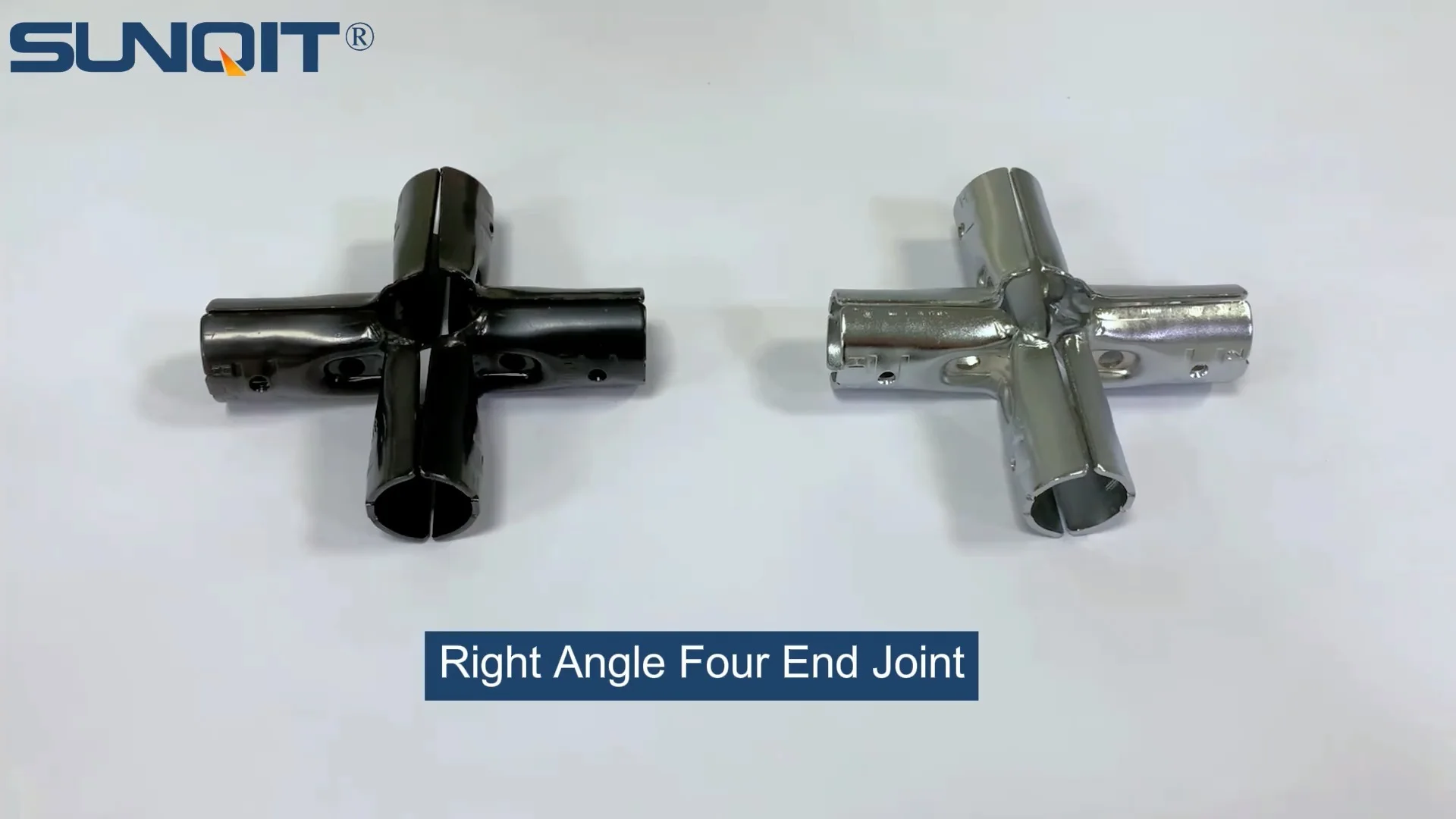
Five way straight lean pipe joint, for 5 pcs 28mm lean pipe connect in straight angle,which used widely in workbench, flow rack, hand trolley frame connection.
In the fast-paced world of manufacturing and logistics, where every second counts and efficiency is king, the unsung heroes of the production floor are often the tools and equipment that keep operations running smoothly. Material racks, in particular, serve as the backbone of organized workflows, holding everything from raw materials to finished products with the reliability that teams depend on daily. Among these workhorses, Material Rack B (3 row and 3 floor) stands out for its versatility and space-saving design—but what truly makes it a stalwart in busy warehouses and factories? The answer lies in the details, and one component, in particular, plays a starring role: the Five Way Straight Lean Pipe Joint. In this article, we'll explore how this unassuming yet critical part shapes the durability of Material Rack B, and why it matters for businesses aiming to build lean, long-lasting operations.
1. Lean Systems: The Foundation of Modern Material Handling
Before diving into the specifics of Material Rack B and its joints, it's essential to understand the philosophy that drives its design: lean systems. At its core, lean manufacturing is about minimizing waste—whether that's wasted time, space, or resources—while maximizing value. Material handling is a cornerstone of this philosophy; after all, a disorganized or inefficient rack setup can lead to delays, errors, and unnecessary labor. Lean systems demand tools that are not just functional, but adaptable, durable, and tailored to the unique needs of each workflow.
Material Rack B (3 row and 3 floor) embodies this ethos. With three rows and three floors, it's engineered to optimize vertical space, reducing the need for sprawling storage areas while keeping items accessible at a glance. This design is a favorite in industries like electronics, automotive, and pharmaceuticals, where quick access to components can make or break production timelines. But a rack is only as strong as its weakest link, and in the case of Material Rack B, that link isn't a weakness at all—it's the joints that hold its structure together.
2. Material Rack B: Design, Capacity, and Everyday Demands
Let's start by getting to know Material Rack B better. Picture a sturdy, modular structure standing tall in a factory corner, its three rows and three floors neatly organized with bins, boxes, or even roller tracks for easy material flow. Depending on the application, it might be constructed from aluminum lean pipe, stainless steel, or coated steel—materials chosen for their strength-to-weight ratio and resistance to corrosion. Its dimensions are typically tailored to standard pallet sizes or industry-specific needs, but a common configuration might measure around 1500mm in height, 1200mm in length, and 450mm in depth, offering ample storage without overwhelming floor space.
What makes the 3-row, 3-floor design so effective? For one, it balances density with accessibility. Unlike taller racks that require ladders or forklifts, Material Rack B keeps items within arm's reach, reducing the risk of accidents and cutting down on retrieval time. In electronics manufacturing, for example, it might hold small circuit boards or component trays; in automotive plants, it could store fasteners, gaskets, or tooling. No matter the use case, the rack is subjected to constant wear: items are loaded and unloaded multiple times a day, workers lean against it, and vibrations from nearby machinery test its stability. Over time, these stresses can take a toll—unless the structure is built to withstand them.
This is where the joints come into play. Think of a material rack as a human body: the pipes are the bones, and the joints are the ligaments and tendons that connect them, distributing weight and movement evenly. A weak joint can cause the entire structure to wobble, bend, or even collapse under load. For Material Rack B, which often carries heavy or fragile items, the joints must not only support static weight but also resist the dynamic forces of daily use. Enter the Five Way Straight Lean Pipe Joint—a component designed to do exactly that.

3. The Five Way Straight Lean Pipe Joint: Engineering for Strength
At first glance, a lean pipe joint might seem like a simple piece of hardware, but the Five Way Straight Lean Pipe Joint is a marvel of functional design. As its name suggests, it's a connector that allows up to five pipes to meet at a single point—four in a straight line (horizontal or vertical) and one perpendicular, creating a sturdy, multi-directional junction. This might not sound revolutionary until you consider how traditional joints limit design: a two-way joint only connects two pipes, a three-way joint adds a third, but five-way? That's flexibility with strength, and it's a game-changer for Material Rack B.
Most Five Way Straight Lean Pipe Joints are made from high-quality steel, then chrome-plated for extra durability. The chrome finish isn't just for aesthetics—it acts as a barrier against rust and corrosion, crucial in environments where moisture or chemicals might be present (like food processing or pharmaceutical facilities). The joint's interior is precision-machined to grip pipes tightly, often with a friction-fit design that eliminates the need for welding or excessive bolts. When assembled correctly, it forms a rigid connection that feels more like a single piece of metal than separate components.
But why five ways? For Material Rack B's 3-row, 3-floor structure, this versatility is key. Imagine the vertical supports (the "legs" of the rack) needing to connect to horizontal beams (the "shelves") and diagonal braces (for stability). A five-way joint can anchor all these elements at critical points, reducing the number of connectors needed and creating a more unified structure. This not only simplifies assembly but also distributes weight more evenly across the rack. For example, a shelf loaded with 50kg of components will transfer that weight through the horizontal pipes to the five-way joints, which then channel it down to the vertical supports and, ultimately, the floor. Without a strong joint, that weight could cause the shelf to sag or the vertical pipes to bow—compromising both safety and functionality.
| Joint Type | Max Pipes Connected | Typical Load Capacity (per joint) | Best For | Durability in High-Stress Environments |
|---|---|---|---|---|
| Two Way Lean Pipe Joint | 2 | 50-80kg | Simple straight lines (e.g., single-shelf racks) | Low (prone to loosening under vibration) |
| Three Way Lean Pipe Joint | 3 | 80-120kg | Basic L-shapes or T-junctions | Moderate (good for light to medium loads) |
| Five Way Straight Lean Pipe Joint | 5 | 150-200kg | Multi-directional structures (e.g., Material Rack B) | High (resists vibration, distributes weight evenly) |
| 90° Crossing Lean Pipe Joint | 4 (cross-shaped) | 100-140kg | Cross beams or overhead supports | Moderate-High (good for static loads) |
The table above highlights how the Five Way Straight Lean Pipe Joint outperforms other common connectors, especially in load capacity and durability. Its ability to handle 150-200kg per joint means Material Rack B can safely carry heavier loads across its three floors without compromising structural integrity. In contrast, a three-way joint might struggle with the same weight, leading to gradual deformation or joint failure over time.

4. Real-World Durability: How the Joint Extends Rack Lifespan
To truly appreciate the impact of the Five Way Straight Lean Pipe Joint, let's look at a real-world scenario. Consider a mid-sized electronics manufacturer that relies on Material Rack B to store sensitive circuit boards and small components. The facility operates two shifts daily, with workers constantly loading and unloading items from the rack's three floors. Over the course of a year, that's thousands of interactions—each one putting stress on the rack's joints.
If the rack were equipped with standard three-way joints, here's what might happen: after six months of use, the joints connecting the horizontal shelves to the vertical supports might start to loosen. The constant vibration from nearby assembly lines would cause the bolts to wiggle free, making the rack wobble when loaded. Workers might notice items shifting or shelves sagging, leading to inefficiencies as they slow down to adjust or rearrange. By the end of the first year, the rack might need repairs—replacing joints, reinforcing weak spots, or even replacing the entire structure if damage is severe.
Now, swap those three-way joints for Five Way Straight Lean Pipe Joints. The difference is striking. The chrome-plated finish resists the minor spills and humidity in the factory air, preventing rust from weakening the metal. The five-way design distributes the weight of the circuit boards evenly across the vertical and horizontal pipes, so no single joint bears too much load. Even with daily use and vibration, the tight friction fit of the joints keeps them secure—no loose bolts, no wobbling, no sagging shelves. After a year, the rack still stands straight, its structure as solid as the day it was assembled. Maintenance is minimal: a quick inspection every few months to ensure joints are tight, and the rack is good to go for another year (or more).
This isn't just about avoiding downtime—it's about cost savings. A single rack replacement can cost hundreds of dollars, not to mention the labor hours lost during repairs. By investing in durable joints upfront, businesses extend the lifespan of their Material Rack B units, reducing long-term expenses and ensuring a consistent, reliable workflow.

4. Beyond Durability: The Five Way Joint's Role in Lean Flexibility
Durability is the primary benefit of the Five Way Straight Lean Pipe Joint, but it's not the only one. In lean systems, flexibility is just as important as strength. Manufacturing needs change over time: a product line expands, a new material is introduced, or workflows are reorganized to boost efficiency. A material rack that can't adapt to these changes becomes a liability, not an asset.
The Five Way Straight Lean Pipe Joint shines here, too. Because it allows for multiple pipe connections, it makes reconfiguring Material Rack B a breeze. Need to add an extra shelf? Simply loosen a few joints, insert a new horizontal pipe, and tighten—no welding, no cutting, no specialized tools. Want to adjust the height of a floor to accommodate taller items? The five-way joints make it easy to reposition vertical supports without compromising the rack's stability. This adaptability is a hallmark of lean pipe systems, and it's why they're favored by businesses that value agility.
Consider a scenario where a pharmaceutical company decides to expand its production of a new drug. Their existing Material Rack B units, equipped with five-way joints, can be quickly modified to add more storage space for the new packaging materials. Without the five-way design, this might require purchasing entirely new racks—a costly and time-consuming process. Instead, the team reconfigures the existing racks in a matter of hours, keeping operations on track and avoiding unnecessary waste.
5. Choosing the Right Lean Pipe Supplier: Quality Matters
Of course, not all Five Way Straight Lean Pipe Joints are created equal. The difference between a high-quality joint and a cheap knockoff is like night and day—and it shows in performance. A subpar joint might look similar at first glance, but it's made from thinner steel, has a chrome finish (or none at all), and its interior isn't precision-machined. Over time, this leads to loose connections, rust, and premature failure—putting your materials, your workers, and your bottom line at risk.
This is why choosing a reputable lean pipe supplier is critical. A trusted supplier understands the demands of manufacturing environments and tests their joints rigorously for load capacity, corrosion resistance, and durability. They use high-grade steel and apply finishes that meet industry standards, ensuring their products can withstand the toughest conditions. They also offer expert advice: helping you select the right joint for your Material Rack B configuration, providing assembly tips, and standing behind their products with warranties.
When evaluating a lean pipe supplier, ask the tough questions: What materials do they use for their joints? Do they test for load capacity and corrosion resistance? Can they provide case studies or references from other customers in your industry? A supplier that can answer these questions confidently is one that prioritizes quality—and that's the partner you want.
6. Conclusion: The Small Component That Makes a Big Difference
In the grand scheme of manufacturing and logistics, the Five Way Straight Lean Pipe Joint might seem like a small detail. But as we've explored, it's a detail that has a outsized impact on the durability, flexibility, and cost-effectiveness of Material Rack B (3 row and 3 floor). It's the unsung hero that keeps the rack standing tall, even under the daily grind of a busy factory. It's the reason businesses can adapt to changing needs without overhauling their storage systems. And it's a testament to the power of thoughtful engineering in lean systems.
So the next time you walk through a warehouse or production floor, take a moment to look at the material racks. Notice the joints holding them together—the ones that never get the credit but do the hard work. Chances are, if the rack is sturdy, reliable, and built to last, it's equipped with Five Way Straight Lean Pipe Joints. And behind those joints? A lean pipe supplier committed to quality, and a business that understands that in manufacturing, the strongest foundations are built on the smallest, most critical details.
In the end, Material Rack B's durability isn't just about the pipes or the finish—it's about the joints that connect them. And when those joints are Five Way Straight Lean Pipe Joints, you're not just buying a rack—you're investing in a system that grows with you, stands strong for years, and keeps your operations lean, efficient, and ready for whatever the future brings.