- Company Articles
- Products and Technology
- Solution
- Material Rack B: How It Helps Strengthen Lean Management in Parts Storage

Material Rack B: How It Helps Strengthen Lean Management in Parts Storage
Related Product
Strengthen Lean Management
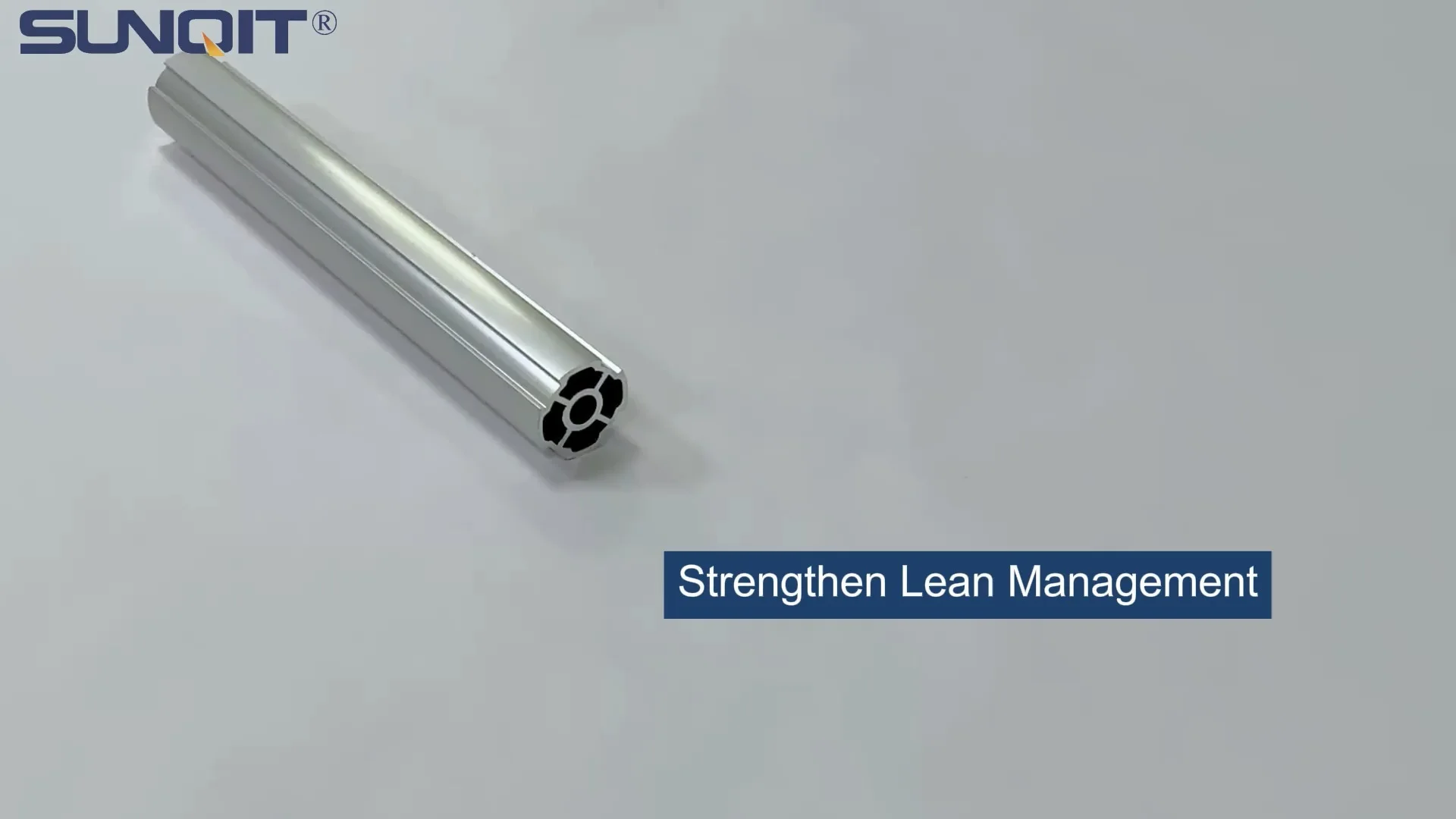
This product is called reinforced aluminum tube, and its bending strength is about twice that of the basic aluminum tube. The end face can process m1o threaded holes, install foot cups and other accessories, or convert internal and external screws in
Walk into any manufacturing facility, warehouse, or assembly plant, and you'll quickly notice one thing that separates the (efficient) from the chaotic: how parts and materials are stored. Picture this: a production line where workers spend 15 minutes rummaging through unlabeled bins for a single component. Or a storage area where boxes are stacked haphazardly, blocking walkways and risking damage to fragile parts. These aren't just minor inconveniences—they're silent productivity killers. In a world where every second counts, disorganized parts storage drains time, increases errors, and undermines the very foundation of lean management. But what if there was a tool designed to turn this chaos into order? Enter Material Rack B (3 row and 3 floor) —a humble yet powerful solution that's quietly revolutionizing how teams implement lean principles in their daily operations.
Lean management, at its core, is about eliminating waste—whether that's wasted time, wasted space, or wasted effort. And when it comes to parts storage, waste often hides in plain sight: unused vertical space, unclear part locations, and inefficient retrieval processes. Material Rack B isn't just a storage rack; it's a lean enabler. With its structured 3-row, 3-floor design, compatibility with aluminum profile components, and seamless integration with roller track systems, it's built to address the root causes of storage-related waste. In this article, we'll dive into how this unassuming rack system becomes a cornerstone of lean success, transforming disorganized storage areas into models of efficiency.
What Exactly Is Material Rack B?
Before we explore its lean superpowers, let's start with the basics: What is Material Rack B? At first glance, it might look like any other storage rack, but a closer inspection reveals thoughtful design choices tailored to lean environments. As the name suggests, Material Rack B is defined by its "3 row and 3 floor" configuration—a structure that maximizes vertical storage while keeping parts accessible at eye level. Unlike generic shelving units, which often force teams into one-size-fits-all storage, Material Rack B is engineered for flexibility, thanks in part to its use of aluminum profile frames. This modularity means it can adapt to changing needs, whether you're storing small electronic components, bulky mechanical parts, or anything in between.
Let's break down the anatomy of Material Rack B. The "3 row" aspect refers to three parallel columns of storage space across the rack's width, while "3 floor" denotes three horizontal shelves (or "floors") stacked vertically. This creates a grid-like structure—9 distinct storage zones in total—each of which can be labeled, color-coded, or customized to hold specific parts. The frame is typically constructed from lightweight yet durable aluminum profile, chosen for its strength-to-weight ratio and resistance to corrosion. Many models also integrate roller track sections on select floors, allowing parts to "flow" forward as they're retrieved—perfect for implementing FIFO (First-In-First-Out) inventory management, a key lean principle.
But what truly sets Material Rack B apart is its focus on usability. The shelves are positioned at ergonomic heights, reducing the need for workers to bend, stretch, or climb to reach parts. The aluminum profile components are easy to assemble without welding or specialized tools, meaning teams can reconfigure the rack in hours, not days, if production needs change. And because it's designed to be part of a larger lean system , it plays well with other tools: think label holders, bin dividers, and even mobile carts for seamless material transport. In short, Material Rack B is storage with a purpose—supporting lean goals from the ground up.
Key Features of Material Rack B: Built for Lean Success
To understand how Material Rack B strengthens lean management, we need to look at its standout features. Each design choice—from its 3-row, 3-floor layout to its use of aluminum profile—directly addresses a common storage pain point, turning inefficiencies into opportunities for improvement. Let's explore these features and how they align with lean principles.
1. The 3-Row, 3-Floor Layout: Maximizing Space, Minimizing Waste
One of the biggest sources of waste in storage is underutilized vertical space. Traditional shelving often stops at eye level, leaving valuable space above unused—or worse, crammed with rarely accessed items that become "out of sight, out of mind" inventory. Material Rack B's 3-floor design takes advantage of vertical real estate without sacrificing accessibility. Each floor is spaced to allow easy reach (typically around 18–24 inches apart), so workers can grab parts without ladders or stools. The 3-row configuration, meanwhile, ensures that similar parts are grouped logically—for example, row 1 for electrical components, row 2 for mechanical parts, and row 3 for tools—reducing the time spent searching across scattered locations.
Consider a scenario: A team previously stored all their small plastic parts in a single large bin on a bottom shelf. Workers would have to dig through the bin, displacing other parts and often misplacing items in the process. With Material Rack B, they can split those parts into three smaller bins—one per row on the middle floor—each labeled with clear visual cues (e.g., color-coded stickers, photos of the part). Now, retrieval time drops from 5 minutes to 30 seconds, and the risk of misplacing parts plummets. That's lean in action: eliminating waste by designing storage around how people actually work.
2. Aluminum Profile: Flexibility to Adapt to Change
Lean isn't a one-and-done project; it's a continuous improvement journey. That means storage solutions need to evolve as production needs change—whether you're adding a new product line, scaling up output, or reorganizing your workflow. Material Rack B's use of aluminum profile makes this adaptability possible. Aluminum profiles are modular, meaning they can be cut to length, connected with simple brackets, and reconfigured without specialized tools. Unlike welded steel racks, which are fixed in place, Material Rack B can be modified in hours: add a shelf, adjust the height of a floor, or even disassemble and relocate the entire rack if your layout shifts.
Take a small electronics manufacturer, for example. When they first implemented Material Rack B, they used it to store circuit boards and resistors. Six months later, they introduced a new product requiring larger components—so they simply added an extra floor to the rack, using aluminum profile extensions and brackets. No need to buy a whole new rack; no downtime for installation. This flexibility not only saves money but also reinforces a lean mindset: the system grows with the team, rather than holding them back.
3. Roller Track Integration: Enabling Smooth Material Flow
In lean management, "flow" is everything—the uninterrupted movement of materials from storage to production. When parts get stuck in bottlenecks (like a shelf that requires manual lifting to retrieve items), flow breaks down, and waste creeps in. Material Rack B solves this by integrating roller track systems into select floors. Roller tracks are exactly what they sound like: sets of small, smooth-rolling wheels mounted on a track, allowing bins or parts to glide forward with minimal effort. This transforms static storage into dynamic flow—perfect for FIFO inventory management.
Imagine a production line assembling small appliances. The line uses screws, washers, and bolts, which are restocked daily. With a traditional shelf, workers have to pull the bin from the back, set it on the floor, grab what they need, and push it back—a process that takes extra steps and risks spilling contents. With Material Rack B's roller track-equipped floor, the bin sits on the track, and as front parts are used, the bin slides forward automatically. When restocking, new inventory is added to the back, ensuring older parts are used first (FIFO), reducing the risk of expired or obsolete stock. It's a small change, but it adds up: fewer steps, less physical strain, and a smoother, more predictable flow of materials.

How Material Rack B Strengthens Lean Management: Real-World Impact
Features are important, but what really matters is results. How does Material Rack B translate its design into tangible lean outcomes? Let's look at three key areas where it makes a difference: reducing search time, improving space utilization, and fostering a culture of organization.
Reducing Search Time: From "Hunting" to "Grasping"
In lean terms, "motion waste" refers to any unnecessary movement of people or equipment. When workers spend time walking to distant shelves, bending to reach low bins, or searching through unlabeled containers, that's motion waste—and it's surprisingly costly. A 2023 study by the Manufacturing Performance Institute found that factory workers spend up to 25% of their day searching for tools and parts. That's over two hours per shift wasted on a task that should take seconds.
Material Rack B attacks this waste head-on. Its 3-row, 3-floor grid creates a "home" for every part, with clear zones that can be labeled with part numbers, photos, or barcodes. When combined with color-coded bins (e.g., red for high-priority parts, blue for low-stock items), workers can locate what they need at a glance. The integration of roller track further speeds things up: parts glide to the front, eliminating the need to reach deep into shelves. The result? Search time drops dramatically. One automotive parts supplier reported a 40% reduction in part retrieval time after implementing Material Rack B, freeing up workers to focus on value-adding tasks like assembly and quality checks.
Improving Space Utilization: Doing More with Less
Space is a precious resource in any facility, and lean management demands that every square foot earns its keep. Material Rack B's vertical design turns underused airspace into productive storage. By stacking three floors of parts, it reduces the footprint needed to store the same number of items compared to single-level shelving. For example, a traditional 4-foot-wide shelf might hold 12 bins on one level; Material Rack B, with its 3 floors, can hold 36 bins in the same width—tripling storage capacity without expanding the rack's footprint.
This space efficiency has ripple effects across the facility. With smaller storage areas, there's more room for production lines, workstations, or collaborative spaces. One aerospace components manufacturer, for instance, was able to add an additional assembly station after replacing three traditional shelves with two Material Rack B units, freeing up 150 square feet of floor space. It's not just about storing more—it's about creating a more open, flexible workspace that supports lean workflows.
Fostering a Culture of Organization: Lean Isn't Just a Tool, It's a Habit
Lean management isn't just about tools and systems; it's about culture. When storage areas are organized, labeled, and intuitive, it sends a message: "We value order, and we respect our team's time." Material Rack B becomes a visual reminder of this commitment. Its clean, grid-like structure sets a standard for organization that spills over into other areas of the facility. Workers start labeling their workbenches, keeping tools in designated spots, and taking pride in a clutter-free environment. Over time, this becomes a habit—a culture where waste is noticed and eliminated, not ignored.
Consider a team that struggled with 5S implementation (Sort, Set in Order, Shine, Standardize, Sustain) before installing Material Rack B. "Set in Order" (organizing items for easy access) was a constant challenge, as parts kept migrating to "temporary" piles on workbenches. After installing the rack, the team assigned each part a specific location on the 3-row, 3-floor grid, with photos and labels. Within weeks, workers were instinctively returning parts to their "homes," and the "temporary" piles disappeared. Material Rack B didn't just organize parts—it organized behavior, making 5S a natural part of the daily routine.

Material Rack B vs. Traditional Storage Solutions: A Comparison
To truly appreciate Material Rack B's impact, it helps to see how it stacks up against common alternatives. Let's compare it to two traditional storage solutions: basic wooden shelving and generic steel racks. The table below highlights key differences in design, lean alignment, and practicality.
| Feature | Material Rack B (3 row and 3 floor) | Basic Wooden Shelving | Generic Steel Racks |
|---|---|---|---|
| Structure | 3-row, 3-floor grid with aluminum profile frame; optional roller track integration | Single or double shelves; fixed height; no standardized layout | Heavy steel frames with adjustable shelves; limited configuration options |
| Space Efficiency | Maximizes vertical space with 3 floors; compact footprint | Low vertical utilization; requires more floor space for the same storage capacity | Good vertical space use but often bulky; hard to reposition |
| Flexibility | Modular aluminum profile design; easy to reconfigure or relocate | Fixed; cannot be adjusted without tools; prone to damage | Adjustable shelf heights but difficult to modify frame structure |
| Lean Alignment | Supports FIFO (via roller track), 5S, and waste reduction; visual organization | No built-in lean features; encourages clutter and motion waste | Can support basic organization but lacks flow and flexibility features |
| Durability | Aluminum profile resistant to corrosion; withstands daily use | Prone to warping, water damage, and wear; short lifespan | Highly durable but heavy; prone to rust if not coated |
The table tells a clear story: Material Rack B isn't just another storage option—it's a lean-specific tool. Its modularity, space efficiency, and focus on flow make it uniquely suited to support lean goals, while traditional solutions often become obstacles to improvement.

Implementing Material Rack B: Tips for Success
Adding Material Rack B to your facility is a step in the right direction, but to fully leverage its lean potential, you need a plan for implementation. Here are a few practical tips to ensure your team gets the most out of this tool:
Start with a "Current State" Assessment
Before installing the rack, map out your current storage process. Which parts are used most frequently? Where are the bottlenecks in retrieval? How much space is currently wasted? This assessment will help you decide where to place Material Rack B (e.g., near high-traffic workstations) and how to configure the 3 rows and floors (e.g., placing frequently used parts on the middle floor for easy access).
Label Everything—And Make It Visual
A well-organized rack is useless if no one knows what goes where. Invest in clear, durable labels for each row, floor, and bin. Use photos (not just text) for quick identification, especially for teams with diverse language backgrounds. Color-code zones by part type or priority (e.g., green for daily use, yellow for weekly, red for emergency stock). The goal is to make the rack "self-explaining"—so even a new team member can find a part in seconds.
Train the Team on Maintenance
Material Rack B is low-maintenance, but it still needs care. Train your team to keep the roller track clean (debris can jam the wheels), tighten loose aluminum profile joints, and report damage promptly. Schedule weekly "Shine" sessions (part of 5S) to wipe down shelves and check labels—turning maintenance into a team responsibility, not just a task for managers.
Conclusion: Material Rack B—Small Tool, Big Lean Impact
In the world of lean management, success often hinges on the details—the tools that make daily workflows smoother, more efficient, and less wasteful. Material Rack B (3 row and 3 floor) is one such detail. It may not grab headlines like high-tech automation or AI-powered inventory systems, but its impact is undeniable. By maximizing space, reducing search time, and fostering a culture of organization, it transforms parts storage from a productivity drain into a source of strength.
At its core, lean management is about respect—for your team's time, for your customers' needs, and for the resources you've worked hard to build. Material Rack B embodies this respect. It says, "We care enough to give you the tools to work smarter, not harder." And when teams feel this commitment, they don't just follow lean principles—they live them. So the next time you walk through a facility and see a clean, organized storage area with Material Rack B at its center, remember: it's not just a rack. It's a symbol of a lean culture in action—one part, one shelf, one 3-row, 3-floor system at a time.