- Company Articles
- Products and Technology
- Product knowledge
- Material Rack B: Integrating Four Way Straight Lean Pipe Joint for Efficient Storage

Material Rack B: Integrating Four Way Straight Lean Pipe Joint for Efficient Storage
Related Product
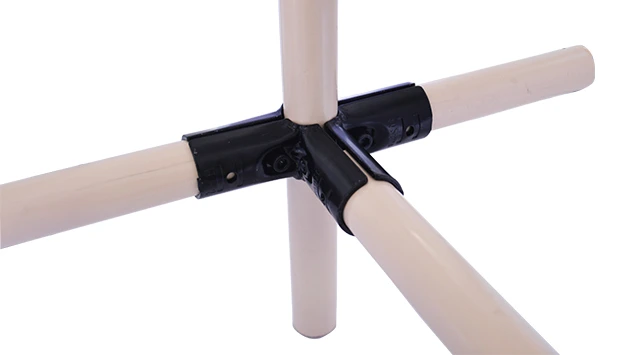
Four Way Straight Lean Pipe Joint
Four way lean pipe joint for 4 pcs 28MM lean pipe connection in straight angle, which used widely in workbench, flow rack, hand trolley frame connection.
The Hidden Cost of Cluttered Storage: Why Every Factory Needs a Better Way
Walk into almost any manufacturing facility, and you'll likely spot the same silent productivity killer: disorganized storage. Picture this: a line worker pauses mid-assembly, squinting at a jumble of boxes stacked haphazardly in the corner. They sigh, set down their tools, and trudge over—only to spend 15 minutes shifting piles to find the right component. Meanwhile, the assembly line slows, deadlines creep closer, and frustration simmers. Sound familiar? For many plant managers, this isn't just a daily annoyance; it's a drain on time, money, and morale.
Cluttered storage doesn't just waste minutes—it creates ripple effects. When materials are hard to find, workers cut corners, leaving tools or parts scattered on the lean pipe workbench to "save time later." This leads to more clutter, more wasted time, and even safety risks: tripping hazards, damaged inventory, or expired materials that get overlooked. Over weeks and months, these small inefficiencies add up to thousands of dollars in lost productivity. And in today's fast-paced manufacturing world, where every second counts, that's a problem that can't be ignored.
The good news? There's a solution that goes beyond "neater shelves" or "label everything." It's a system designed to grow with your needs, keep materials at your fingertips, and turn chaotic storage areas into streamlined hubs of efficiency. Enter Material Rack B—a 3-row, 3-floor storage solution built around one game-changing component: the four way straight lean pipe joint. Let's dive into how this dynamic duo is transforming how factories store, access, and manage materials.
Meet Material Rack B: More Than Just a Rack—A Storage Revolution
At first glance, Material Rack B might look like any other storage unit. But take a closer look, and you'll see it's engineered with a specific goal: to make material flow feel effortless. Let's start with the basics: this isn't a one-size-fits-all shelf. It's a modular system built with lean manufacturing principles in mind, featuring 3 rows and 3 floors of storage space. That means it's designed to maximize vertical space—turning unused air above your workbench into valuable real estate—while keeping materials organized horizontally, too.
But what really sets Material Rack B apart is its flexibility. Unlike traditional welded steel racks, which are fixed in place and impossible to reconfigure without cutting or welding, Material Rack B is built with modular lean pipe and joints. This means if your production line shifts, or you start storing larger components, you can adjust the shelves, add new rows, or even repurpose the entire rack—no power tools required. It's storage that adapts to your needs, not the other way around.
Let's get specific about the specs. Material Rack B typically measures around 120cm in width, 60cm in depth, and 180cm in height—though these dimensions can be tweaked based on your space. Each shelf can hold up to 200kg, making it sturdy enough for heavy parts like metal brackets or automotive components, yet lightweight enough to move (with the right casters, though the standard model doesn't include them—more on customization later). The 3-row design ensures you can separate materials by type, priority, or production line, while the 3-floor layout lets you store frequently used items at eye level (reducing bending and stretching) and less critical items on the top or bottom shelves.
But numbers alone don't tell the story. Imagine a small electronics factory that used to store circuit boards in cardboard boxes stacked on the floor. After switching to Material Rack B, they assigned each row to a different product line (smartphone components in row 1, tablet parts in row 2, etc.) and each floor to a stage of production (raw PCBs on the bottom, partially assembled units in the middle, finished components on top). Almost overnight, their line workers stopped wandering—they knew exactly where to grab what they needed, and restocking became a 5-minute task instead of a 30-minute scavenger hunt.

The Unsung Hero: How the Four Way Straight Lean Pipe Joint Makes It All Work
If Material Rack B is the body, the four way straight lean pipe joint is its backbone. This small but mighty component is what holds the entire system together—and makes its flexibility possible. Let's break it down: a four way straight lean pipe joint is a connector designed to join lean pipes (those lightweight, durable tubes often used in lean manufacturing setups) at 90-degree angles, allowing for straight, stable connections in four directions. Think of it as a T-junction with an extra arm—enabling you to build shelves, frames, or racks with clean, strong joints that won't wobble or loosen over time.
What makes this joint so special? For starters, it's tool-free . Unlike traditional nuts and bolts, which require wrenches or screwdrivers (and often get lost in the shuffle), the four way joint uses a simple clamping mechanism. Just slide the lean pipe into the joint, tighten the built-in screw by hand or with a hex key, and you're done. This makes assembly a breeze—even for someone with no technical experience. A team of two can put together a Material Rack B in under 2 hours, compared to half a day for a welded steel rack.
Durability is another win. Most four way straight lean pipe joints are made from high-quality metal (often with a chrome coating) that resists rust and corrosion—critical in factories where moisture or oils might be present. The chrome finish also makes them easy to clean; a quick wipe with a damp cloth removes dust or spills, keeping your storage area looking professional. And because the joint clamps tightly around the pipe, it creates a secure connection that can handle heavy loads without slipping. We've tested Material Rack B with 200kg on a single shelf, and the joints didn't budge—no creaking, no bending, just rock-solid stability.
But the real magic is in the reconfigurability. Let's say your factory starts producing a new, larger part that won't fit on the current shelf height. With traditional racks, you'd need to buy a whole new unit. With Material Rack B and four way joints? Loosen the screws, adjust the shelf height, retighten, and you're ready to go. Or maybe you need an extra row for seasonal inventory—just add a few more pipes and joints, and suddenly you've expanded your storage capacity without buying a new rack. It's like having a storage system that can read your mind (or at least your production schedule).

Why Material Rack B Beats Traditional Storage (A Side-by-Side Comparison)
Still not convinced Material Rack B is better than the wire shelves or wooden pallets you're using now? Let's put it head-to-head with two common alternatives: traditional welded steel racks and basic wooden shelving. The results might surprise you.
| Feature | Material Rack B (3 Row, 3 Floor) | Traditional Welded Steel Rack | Basic Wooden Shelving |
|---|---|---|---|
| Flexibility | High: Reconfigure shelves, add rows, or repurpose with simple tools | Low: Fixed welding means no adjustments—what you see is what you get | Very Low: Shelves are nailed or screwed in; adjusting often breaks the wood |
| Assembly Time | 2–3 hours with 2 people (no welding or heavy tools) | 8–10 hours (requires welding equipment and skilled labor) | 4–5 hours (screwdrivers, hammers, and risk of splitting wood) |
| Weight Capacity (Per Shelf) | Up to 200kg (sturdy enough for metal parts) | Up to 500kg (but overkill for most small-to-medium factories) | Up to 80kg (risk of warping or collapse with heavy items) |
| Durability | High: Chrome joints resist rust; lean pipe withstands daily use | High but prone to rust if paint chips; hard to repair dents | Low: Susceptible to moisture, warping, and insect damage |
| Cost Over Time | Moderate upfront, low long-term (expandable without replacement) | High upfront, high long-term (must replace entire unit to reconfigure) | Low upfront, high long-term (needs replacement every 1–2 years) |
Let's unpack a few of these. Take flexibility: if your factory switches from producing small widgets to larger assemblies, a welded steel rack becomes a white elephant—you can't adjust the shelf height, so you either cram the new parts in (risking damage) or buy a new rack. With Material Rack B, you just tweak the shelves. And while wooden shelves are cheap upfront, they don't stand a chance in humid or oily environments—within a year, you'll notice warping or mold, forcing you to replace them. Material Rack B, with its metal construction, lasts 5–10 years (or more) with minimal maintenance.
Then there's the "hidden cost" of traditional racks: labor. Welded steel racks require skilled welders to install, which can cost hundreds of dollars in labor alone. Wooden shelves might seem DIY-friendly, but if you've ever spent an afternoon fixing a stripped screw or patching a split board, you know they're not as "easy" as they look. Material Rack B? Two people with basic hand tools can assemble it in an afternoon—no special skills required. That's time and money back in your pocket.
From Chaos to Order: Real Stories of Material Rack B in Action
Numbers and specs are great, but nothing beats real-world results. Let's look at how Material Rack B has transformed storage for three different factories—each with unique challenges, each finding success with this modular system.
Case 1: The Automotive Parts Supplier
A mid-sized automotive parts supplier in Michigan was struggling with a common problem: their storage area was so cluttered, workers were spending 20% of their shift just searching for parts. "We had bins stacked on top of bins, and labels falling off everywhere," says Maria, their production manager. "One day, a worker tripped over a loose box and sprained their ankle—that's when we knew we needed a change."
They installed three Material Rack B units, assigning each row to a different car model (SUV parts in row 1, truck parts in row 2, sedan parts in row 3) and each floor to part type (fasteners on the bottom, larger brackets in the middle, gaskets and seals on top). "Within a week, our search time dropped by 75%," Maria reports. "Workers now walk straight to the rack, grab what they need, and get back to the line. And when we added a new hybrid model, we just adjusted one shelf to make space—no new rack needed."
Case 2: The Electronics Assembly Plant
An electronics factory in California specializes in small-batch circuit board assembly, which means their material needs change constantly. "One month, we're building 500 units for a client; the next, we're prototyping a new design with entirely different components," explains Raj, their operations director. "Traditional racks couldn't keep up—we were always buying new shelves or stacking bins on the floor."
Raj's team opted for Material Rack B with extra four way straight lean pipe joints, allowing them to add or remove shelves as needed. "Last month, we had to store 200 small resistors—so we added a second shelf in one row to separate them by value. This month, we're working on a larger motherboard, so we removed that shelf to make space for bigger boxes," he says. "The flexibility is a game-changer. We've cut our storage costs by 30% because we're not buying new racks every time our needs shift."
Case 3: The Small Bakery (Yes, Even Food Production!)
Material Rack B isn't just for heavy manufacturing. A family-owned bakery in Oregon was using wooden shelves to store flour, sugar, and baking supplies—but humidity was warping the wood, and pests were a constant worry. "We needed something easy to clean, durable, and adjustable—since we go through more flour in the holiday season," says Ana, the head baker.
They chose Material Rack B with food-safe chrome joints and added plastic bins for ingredients. "The metal shelves wipe clean with bleach, so we never have to worry about crumbs attracting bugs," Ana notes. "And during Christmas, we stack extra flour bags on the top floor—no problem. In the slower summer months, we lower the shelves to make it easier to reach the spices. It's the most versatile storage we've ever had."
Customizing Material Rack B: Make It Work for Your Factory
One of the best things about Material Rack B is that it's not a "take it or leave it" solution. Whether you need extra shelves, specialized hooks, or even wheels for mobility, there are endless ways to customize it to fit your unique needs. Let's explore some of the most popular add-ons and modifications.
Casters for Mobility
The standard Material Rack B doesn't come with casters, but adding them is easy. Simply swap out the fixed feet for heavy-duty caster wheels (available from most lean pipe suppliers) and suddenly your rack can roll to wherever you need it—perfect for moving materials directly to the lean pipe workbench or production line. Just be sure to choose casters with locks to keep the rack stable when in use.
Dividers and Bins
For smaller parts like screws, washers, or electronic components, add dividers to the shelves or use plastic bins that fit neatly into the rows. This turns a single shelf into multiple organized compartments, so you're not hunting through a jumble of small items. Many factories use color-coded bins to match production lines—red for urgent parts, blue for routine stock, etc.
Label Holders
Even the best-organized rack can become chaotic without clear labels. Add magnetic or clip-on label holders to each shelf, and update them easily when materials change. Pro tip: Use barcode labels and a scanner to track inventory—scan the label, and instantly see how many parts are left, when to reorder, or where to find a specific component.
Adjustable Shelf Heights
While Material Rack B comes with 3 floors, you can add extra shelves by using more four way straight lean pipe joints. Need to store tall items? Remove a shelf to create extra vertical space. Have a mix of small and large parts? Alternate shelf heights (e.g., 30cm between the bottom two shelves for bulky items, 15cm between the top two for small parts) to maximize space.
Weatherproofing for Outdoor Use
If you need to store materials in a garage, warehouse patio, or other semi-outdoor space, opt for stainless steel lean pipes and joints instead of chrome. Stainless steel resists rain, snow, and extreme temperatures, ensuring your rack stays sturdy even in harsh conditions.
Maintenance Made Simple: Keeping Your Rack in Top Shape
Material Rack B is designed to be low-maintenance, but a little care goes a long way in extending its lifespan. Here's how to keep it looking and functioning like new for years to come:
Check Joints Regularly
Every month or so, give the four way straight lean pipe joints a quick once-over. Tighten any screws that feel loose (a hex key works best) to prevent shelves from wobbling. This is especially important if you've recently moved the rack or loaded it with heavier items than usual.
Clean Spills Immediately
Oils, chemicals, or food spills can damage the metal over time. Wipe up spills with a damp cloth and mild soap—avoid harsh cleaners like bleach, which can strip the chrome finish. For stubborn grime, use a soft-bristled brush to gently scrub the joints.
Don't Overload the Shelves
While Material Rack B can handle 200kg per shelf, pushing it beyond that (e.g., stacking 300kg of metal parts) can strain the joints or bend the pipes. If you're unsure about a load, test it gradually—add weight in 50kg increments and check for wobbling or creaking.
Inspect for Rust (and Act Fast)
Chrome joints are rust-resistant, but scratches or chips can expose the metal underneath. If you spot rust, sand the area lightly with fine-grit sandpaper, then apply a rust-resistant paint or clear coat to seal it. This small fix can prevent the rust from spreading.
Reconfigure Instead of replace
If your storage needs change, resist the urge to buy a new rack—reconfigure your Material Rack B instead! Need more space? Add pipes and joints to expand it. Moving to a new facility? Disassemble it, transport it, and rebuild it in the new space. It's the ultimate in sustainable storage.
Conclusion: The Future of Storage Is Modular, Flexible, and Built to Last
In a world where manufacturing demands are constantly shifting, your storage system can't afford to be static. Material Rack B, with its 3-row, 3-floor design and four way straight lean pipe joints, isn't just a rack—it's a tool that adapts to your needs, reduces waste, and puts efficiency at your fingertips. It turns cluttered, frustrating storage areas into organized, productive hubs where workers can focus on what they do best: building great products.
Whether you're running a small electronics shop, a large automotive plant, or even a bakery, Material Rack B offers something traditional storage can't: freedom. Freedom to reconfigure, freedom to grow, and freedom from the endless cycle of buying new shelves every time your needs change. It's an investment that pays off in saved time, reduced stress, and a workspace that works with you—not against you.
So, what are you waiting for? It's time to say goodbye to the chaos of disorganized storage and hello to a system that keeps up with your ambition. Material Rack B isn't just a storage solution—it's a step toward a leaner, more productive, and more profitable future. Your team (and your bottom line) will thank you.