- Company Articles
- Products and Technology
- Product knowledge
- Material Rack B Mobility: Benefits of Flat Swivel Castor Wheel with Brake in Factory Layouts

Material Rack B Mobility: Benefits of Flat Swivel Castor Wheel with Brake in Factory Layouts
Related Product
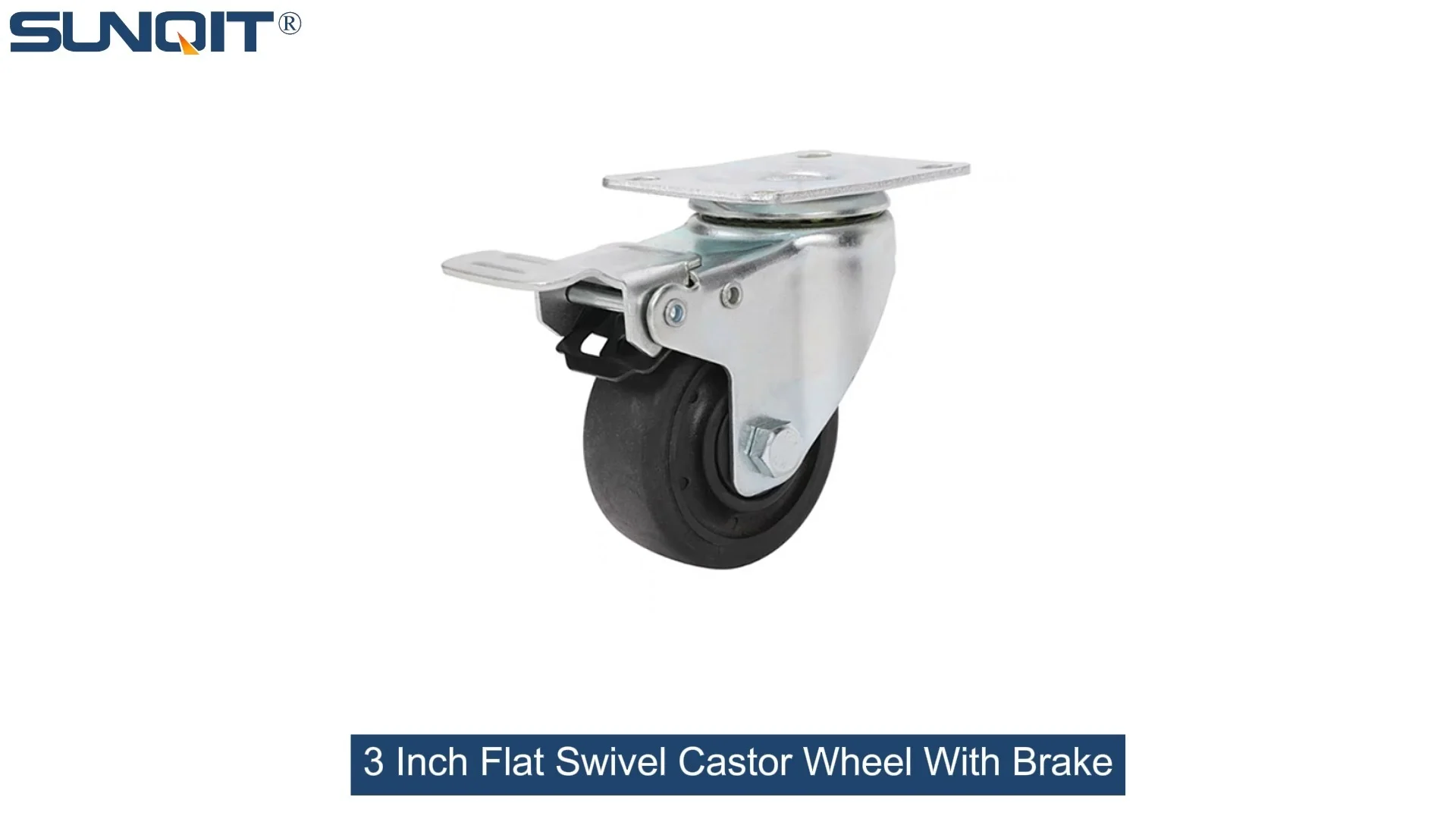
Flat Swivel Castor Wheel With Brake
Chair Casters Ball Bearing Wheels Rubber Base with brake design. Resistant to abrasion, impact and corrosion. Heavy payload can hold 70Kgs per pcs,which can make it works at a stable and smooth status.
Walk into any busy factory, and you'll quickly realize that the unsung heroes of daily operations aren't just the high-tech machines or the skilled workers—they're the tools that keep everything moving. Material racks, workbenches, and carts form the backbone of material handling, ensuring parts, components, and finished goods flow seamlessly from one station to the next. But here's the thing: even the sturdiest rack or most efficient workbench can fall short if it's stuck in one place. In today's fast-paced manufacturing world, adaptability isn't just a nice-to-have; it's a necessity. That's where mobility comes in—and not just any mobility, but the kind that's reliable, safe, and tailored to the unique demands of factory floors.
Today, we're diving deep into a pairing that's transforming how factories handle materials: the Material Rack B (3 row and 3 floor) and the flat swivel castor wheel with brake . If you've ever struggled with rigid, immovable storage racks that slow down production or limit your ability to reconfigure workflows, this is for you. We'll explore why these two components work so well together, the specific benefits they bring to factory layouts, and how they fit into broader lean system principles. By the end, you'll understand why investing in the right mobility solutions isn't just about moving racks—it's about unlocking a more efficient, safer, and adaptable operation.
First, Let's Talk About Material Rack B (3 Row and 3 Floor): The Workhorse of Factory Storage
Before we get to the wheels, let's get to know the rack itself. Material Rack B (3 row and 3 floor) is a staple in many manufacturing facilities, and for good reason. Designed with three rows and three levels (or "floors"), it's built to maximize vertical storage space without sacrificing accessibility. Imagine a sturdy, open-frame structure that can hold everything from small electronic components to heavier mechanical parts, with each shelf easily reachable by workers on foot or with a pallet jack. Its modular design often means it can be customized with dividers, bins, or labels, making organization a breeze—no more hunting for that one part buried at the back of a cluttered shelf.
Why It Matters: In factories where space is at a premium, vertical storage is a game-changer. Material Rack B's three rows and three floors mean you can store more items in the same footprint, freeing up floor space for other equipment like workbenches , assembly lines, or conveyors. But here's the catch: if that rack is bolted to the floor or sitting on fixed legs, its benefits are limited. You can optimize storage, but you can't optimize how that storage interacts with the rest of your workflow.
Traditional fixed racks are like furniture in a small apartment—great for holding things, but a hassle when you want to rearrange. Maybe you need to shift production to a new line, or a rush order requires prioritizing a different set of materials. With a fixed rack, you're stuck either moving everything off the rack (wasting time and labor) or working around it (creating inefficiencies). That's where adding mobility—specifically, the right casters—turns Material Rack B from a static storage unit into a dynamic tool that adapts to your needs.
The Problem with "Just Any Caster": Why Not All Wheels Are Created Equal
You might be thinking, "Can't I just slap any old caster on a rack and call it mobile?" Technically, yes—but in practice, that's a recipe for frustration, safety risks, and wasted money. Factory floors are tough environments: they're often uneven, covered in small debris, and subject to constant traffic from workers, forklifts, and other equipment. A cheap, flimsy caster might work for a week, but it won't stand up to heavy loads, frequent swiveling, or the need to stop securely when in use.
Let's break down the requirements for a caster on a Material Rack B: it needs to support the weight of the rack plus the materials stored on its three floors (which can add up quickly), swivel smoothly to navigate tight corners or around obstacles, and lock securely to prevent accidental movement when loading/unloading. It also needs to protect your factory floor—scratches, dents, or marks from metal wheels can lead to costly repairs over time. And if your facility deals with sensitive electronics, it might even need to be ESD (electrostatic discharge) safe, though that's a topic for another day.
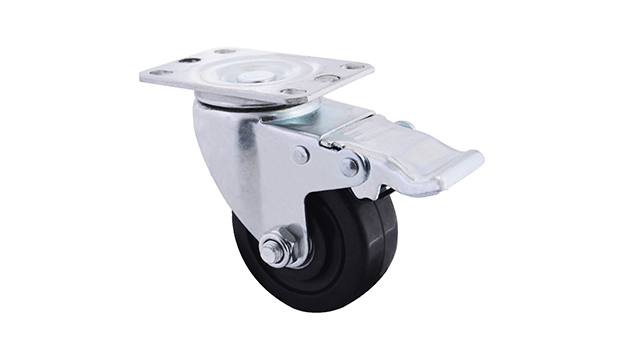
Enter the flat swivel castor wheel with brake . This isn't just a wheel on a stem; it's a engineered solution designed to meet the unique demands of factory material handling. Let's break down what makes it special:
- Flat Design: Unlike bulky, protruding casters, the flat mount ensures the rack sits lower to the ground, improving stability and reducing the risk of tipping—critical when the rack is fully loaded.
- Swivel Functionality: 360-degree rotation allows the rack to move in any direction, making it easy to maneuver through narrow aisles or around equipment without having to backtrack.
- Brake Mechanism: A reliable brake locks both the wheel and the swivel, preventing movement even on slightly inclined floors or when workers are loading/unloading heavy items.
- Durable Materials: Typically made with high-quality polyurethane wheels (which are gentle on floors and provide good traction) and sturdy metal frames, these casters are built to handle daily use in tough environments.
The Benefits: How Flat Swivel Casters with Brake Transform Factory Layouts
Now that we understand the "what" and "why" of Material Rack B and its casters, let's get to the real meat: the benefits. These aren't just theoretical—they're tangible improvements that show up in daily operations, from faster production times to fewer workplace accidents. Let's explore each one.
1. Flexibility to Reconfigure Layouts in Minutes (Not Days)
One of the biggest advantages of mobile Material Rack B units is the ability to adapt your factory layout on the fly. In traditional setups with fixed racks, changing the flow of materials might require disassembling and reassembling storage systems, which can take hours or even days. With a rack on swivel casters, it's as simple as unlocking the brakes, rolling the rack to its new position, and locking it back down. This is a game-changer for:
- Seasonal Demand Spikes: If your factory ramps up production for the holidays or a big order, you can quickly move Material Rack B units closer to assembly lines to reduce the distance workers have to travel for materials.
- New Product Launches: Introducing a new product often means reconfiguring workstations. Mobile racks can be shifted to support new workflows without disrupting existing operations.
- Space Optimization: During slow periods, you can consolidate racks to free up floor space for maintenance, training, or other activities, then spread them out again when production picks up.
Real Example: A mid-sized automotive parts manufacturer we worked with recently switched to mobile Material Rack B units. Previously, when they needed to retool a line for a new car model, they spent two full days moving fixed racks and reorganizing materials. With the flat swivel casters, the same process now takes less than two hours. That's 14 extra hours of production time—time that directly translates to more units built and more revenue.
2. Labor Efficiency: Less Time Moving, More Time Producing
Labor is one of the biggest costs in manufacturing, and anything that reduces the time workers spend on non-value-added tasks (like walking back and forth to retrieve materials) is a win. Fixed racks often mean workers have to travel to the rack, pick items, and carry them back to their workbench —a process that might take 5-10 minutes per trip, multiple times an hour. Multiply that by dozens of workers, and you're looking at hundreds of wasted hours per week.
With mobile Material Rack B units, you can bring the materials to the workers. Imagine a scenario where each assembly station has a dedicated mobile rack stocked with the parts they need for the next hour of production. When the rack is empty, a material handler simply swaps it out with a full one, and workers never have to leave their stations. This "point-of-use" storage cuts down on travel time, reduces fatigue, and lets workers focus on what they do best: assembling, inspecting, and building quality products.
And because the casters swivel smoothly, even fully loaded racks are easy to move—no need for two workers to manhandle a heavy cart. A single material handler can reposition a rack with minimal effort, freeing up colleagues to focus on other tasks.
3. Safety First: Reducing Risks on the Factory Floor
Factory safety is non-negotiable, and immovable racks can actually create hazards if not managed properly. Workers might strain their backs lifting heavy items from low or high shelves on fixed racks, or trip over cords or debris while walking to retrieve materials. Unstable homemade carts (we've all seen them—rigs with mismatched wheels or no brakes) are a common cause of workplace accidents, from minor bumps to serious spills.
The flat swivel castor with brake addresses these risks head-on:
- Stability: The flat mount and low center of gravity reduce the risk of the rack tipping, even when loaded unevenly.
- Secure Braking: The brake ensures the rack stays put when workers are loading/unloading, preventing accidental movement that could cause injuries or damage to materials.
- Ergonomic Access: Mobile racks can be positioned at the optimal height for workers, reducing bending, reaching, and twisting—common causes of musculoskeletal injuries.
- Reduced Congestion: By allowing racks to be moved out of high-traffic areas when not in use, mobile solutions help keep walkways clear, lowering the risk of collisions between workers and equipment.
4. Compatibility with Lean System Principles: Minimizing Waste, Maximizing Value
At its core, a lean system is about eliminating waste—whether that's waste of time, space, labor, or materials. Fixed racks contribute to several types of waste: transportation waste (workers moving to materials), waiting waste (workers waiting for materials to be brought to them), and even inventory waste (overstocking because it's hard to rotate materials in fixed storage).
Mobile Material Rack B units with flat swivel casters directly combat these wastes:
- Transportation Waste: As we discussed, bringing materials to the point of use reduces unnecessary movement.
- Waiting Waste: Faster access to materials means less downtime for workers.
- Inventory Waste: Mobile racks make it easier to implement "first in, first out" (FIFO) inventory systems, as you can rotate stock by simply moving the rack and accessing older items first.
- Space Waste: The ability to consolidate racks when not in use means you're not tying up valuable floor space with underutilized storage.
In short, these mobile racks aren't just tools—they're enablers of lean manufacturing. They help create a more responsive, efficient operation where every square foot of space and every minute of labor is used to add value, not waste.

How Does It Compare? A Look at Other Caster Options
To really appreciate the benefits of the flat swivel castor with brake, it helps to compare it to other common caster types. Let's put them side by side in a table to see how they stack up for use with Material Rack B:
| Caster Type | Maneuverability | Weight Capacity | Safety (Braking) | Floor Protection | Best For |
|---|---|---|---|---|---|
| Flat Swivel with Brake | Excellent (360° swivel, tight turns) | High (up to 500 lbs per caster) | Excellent (locks wheel and swivel) | Good (polyurethane wheels) | Heavy-duty, frequent movement, tight spaces |
| Rigid Caster (No Swivel) | Poor (only moves forward/backward) | High | Variable (some have brakes, but no swivel lock) | Good | Straight-line movement only (e.g., along conveyors) |
| Swivel Caster Without Brake | Excellent | Medium to High | Poor (risk of accidental movement) | Good | Light loads, temporary use (not recommended for factory storage) |
| Large-Diameter Pneumatic Caster | Good (rolls over rough terrain) | Very High | Good (but bulky) | Poor (large wheels can damage floors) | Outdoor use or extremely rough floors (overkill for most factories) |
As you can see, the flat swivel castor with brake hits the sweet spot for most factory environments. It offers the maneuverability needed for dynamic layouts, the safety of a secure brake, and the durability to handle heavy loads—all without sacrificing floor protection. Rigid casters are too limiting, swivel without brakes are unsafe, and pneumatic casters are overkill for smooth indoor floors.

Installation and Maintenance: Keeping Your Mobile Racks Rolling Smoothly
So, you're convinced—mobile Material Rack B units with flat swivel casters are the way to go. Now what? Let's talk about installation and maintenance, because even the best equipment will underperform if not set up and cared for properly.
Installation Tips
Installing flat swivel casters with brake on Material Rack B is relatively straightforward, but there are a few key steps to ensure a secure fit:
- Check the Rack's Base: Make sure the bottom frame of the rack is flat and sturdy enough to mount the casters. Most Material Rack B units come with pre-drilled holes for casters, but if not, you may need to drill holes (use a metal drill bit and measure carefully to avoid damaging the rack).
- Use the Right Hardware: The casters should come with bolts, nuts, and washers rated for the weight they'll support. Never substitute with cheaper hardware—this is a critical safety point.
- Mount Evenly: Install casters at all four corners (and possibly a fifth in the center for extra stability on larger racks) to ensure the rack sits level. An uneven rack is more likely to tip or have casters wear unevenly.
- Test the Brakes: Once installed, lock and unlock the brakes several times to ensure they engage smoothly and hold the rack securely. If a brake feels loose or doesn't lock properly, tighten the hardware or replace the caster if needed.
Maintenance 101
To keep your casters rolling smoothly for years, follow these simple maintenance steps:
- Clean the Wheels Regularly: Factory floors can accumulate dust, dirt, and small debris that can get stuck in wheel bearings. Wipe wheels with a damp cloth weekly, and use a small brush to remove debris from swivel joints.
- Lubricate Moving Parts: Apply a few drops of machine oil to swivel joints and wheel bearings every 3-6 months (more often if the rack is used heavily). This prevents rust and ensures smooth movement.
- Inspect Brakes Monthly: Check that brake levers move freely and that the brake pads make full contact with the wheels. replace worn brake pads immediately—don't wait for them to fail.
- Check for Wear: Look for signs of uneven tire wear, loose bolts, or bent frames. Catching issues early prevents costly repairs or accidents later.
With proper installation and maintenance, your flat swivel casters should last 3-5 years or more, even in busy factory environments.
Beyond the Rack: How This Mobility Fits into Your broader Material Handling Ecosystem
While we've focused on Material Rack B, the benefits of flat swivel casters with brake extend beyond just storage racks. They're part of a larger ecosystem of mobile material handling solutions that includes workbenches, flow racks, and turnover trolleys. Imagine a factory where:
- Mobile Material Rack B units feed parts to mobile workbenches , which can be positioned alongside assembly lines.
- Flow racks on casters move finished subassemblies to the next station in the production process.
- Turnover trolleys with the same casters transport materials between warehouses and production floors.
This interconnected system of mobile tools creates a seamless flow of materials that adapts to your needs in real time. It's not just about individual components—it's about creating a factory that can pivot, grow, and evolve without being held back by fixed infrastructure.
Final Thoughts: Investing in Mobility is Investing in Your Factory's Future
At the end of the day, the Material Rack B (3 row and 3 floor) paired with flat swivel castor wheels with brake is more than just a storage solution—it's a statement about how you run your factory. It says you value efficiency, safety, and adaptability. It says you're willing to invest in tools that make your workers' lives easier and your operations more productive. And in today's competitive manufacturing landscape, that's not just smart—it's essential.
If you're still using fixed racks, take a walk through your factory and ask yourself: How much time is wasted moving materials? How often do you wish you could reconfigure a line but can't because the racks are stuck? How many near-misses or small accidents have happened because of unstable, unbraked carts? The answers might surprise you—and they might just convince you that mobility is worth the investment.
Whether you're a small shop looking to scale or a large manufacturer aiming to stay ahead of the curve, the combination of Material Rack B and flat swivel casters with brake offers a clear path to better efficiency, safer operations, and a more adaptable future. So why wait? Start exploring how mobility can transform your factory layout today—and watch as those "unsung heroes" of material handling become the stars of your operation.