- Company Articles
- Products and Technology
- Product knowledge
- Material Rack B Optimization: Integrating Stainless Steel Swivel Roller Balls 1 Inch

Material Rack B Optimization: Integrating Stainless Steel Swivel Roller Balls 1 Inch
Related Product
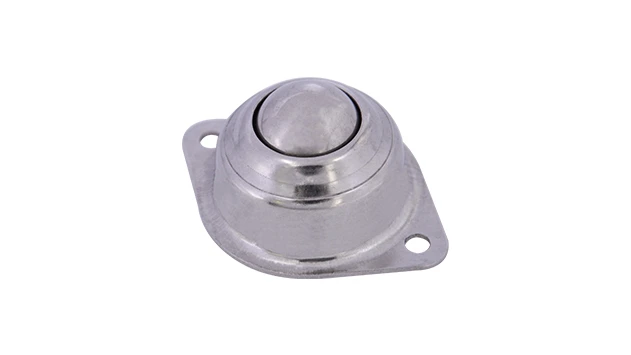
Stainless Steel Swivel Roller Balls 1 Inch
Swivel roller ball casters are convenient and flexible to roll,high-speed and stable operation, used for rotating and changing the direction of the conveyor.Ball transfer unit is made of high quality carbon steel, anti-corrosion and wear resistance.
In the fast-paced world of manufacturing, every second counts. From the moment raw materials enter the facility to the final product rolling off the line, efficiency isn't just a goal—it's the backbone of profitability. At the heart of this efficiency lies something simple yet critically important: material handling. Today, we're diving into a game-changing upgrade for one of the most workhorse tools in factories worldwide: the Material Rack B. Specifically, how integrating 1 inch stainless steel swivel roller balls transforms this 3-row, 3-floor storage solution from a basic into a dynamic, lean-driven asset that redefines workflow possibilities.
The Unsung Hero: Material Rack B in Modern Factories
Walk through any electronics assembly plant, automotive parts warehouse, or medical device workshop, and you'll likely spot Material Rack Bs lining the production floors. With their three rows and three floors, these racks are designed to maximize vertical space while keeping components within arm's reach of assembly lines. For years, they've been the go-to for teams needing organized storage of small parts, tools, and semi-finished products. But as manufacturing demands evolve—shorter production cycles, frequent product changes, and the need for real-time adaptability—even the most reliable tools can show their limitations.
Consider a typical scenario: A worker in a 3C assembly plant needs to retrieve a batch of circuit boards from the middle shelf of a Material Rack B., this means stepping closer, reaching in, and manually sliding the container out—a process that, repeated hundreds of times daily, adds up to wasted motion and fatigue. Multiply this by dozens of workers across multiple shifts, and the impact on overall productivity becomes impossible to ignore. Worse, rigid shelving systems often struggle to accommodate varying container sizes, forcing teams to use one-size-fits-all storage that wastes space or risks damaging delicate components.
The Problem with Static Storage: Why Traditional Racks Fall Short
To understand why the upgrade matters, let's break down the key pain points of traditional Material Rack B designs:
- Stagnant Material Flow : Fixed shelves mean items don't move on their own. Workers must exert physical effort to pull or push containers, slowing down access times and increasing the risk of repetitive strain injuries.
- Limited Flexibility : Adjusting shelf heights or reconfiguring layouts often requires tools, downtime, and extra labor—critical drawbacks in environments where production lines switch between products weekly (or even daily).
- Wasted Space : Without dynamic movement, shelves are often underutilized. Bulky containers take up more room than necessary, while smaller items get lost in the mix, leading to inefficiencies in inventory management.
- Durability Concerns : Many standard racks use plastic or low-grade metal components that wear down quickly under heavy use, leading to squeaky, uneven surfaces that jam containers or damage sensitive parts like those in medical devices.
These aren't just minor inconveniences—they directly contradict the core principles of lean manufacturing: eliminating waste, optimizing flow, and empowering workers to focus on value-adding tasks. That's where the integration of 1 inch stainless steel swivel roller balls comes in—a small change with outsized impact.

Stainless Steel Swivel Roller Balls: The Secret to Effortless Motion
At first glance, a 1 inch stainless steel swivel roller ball might seem like a simple component. But its design is engineered for precision. Made from high-grade stainless steel, these balls are corrosion-resistant—essential in environments where moisture or cleaning agents are present, like medical device facilities. Their 1-inch diameter strikes the perfect balance: large enough to support heavy plastic bins (up to 50kg per shelf, in testing) without being bulky, and small enough to fit seamlessly into the Material Rack B's existing framework.
What truly sets these roller balls apart is their 360-degree swivel capability. Unlike fixed rollers that only move in one direction, these balls rotate freely, allowing containers to glide smoothly in any direction—forward, backward, left, right, or even diagonally. This multidirectional movement turns static shelves into active surfaces where items seem to "float" into place, reducing the force needed to move them by up to 70%, according to internal trials with manufacturing partners.
Key Benefits of 1 Inch Stainless Steel Swivel Roller Balls:
-
Effortless Movement
: Containers slide with minimal force, cutting retrieval time by 30-40% in real-world use.
-
Durability
: Stainless steel construction resists rust, scratches, and wear, even in high-traffic areas.
-
Versatility
: Accommodates everything from small plastic bins (10x15cm) to larger totes (40x60cm), thanks to adaptive swivel action.
-
Easy Installation
: Designed to fit standard Material Rack B holes, requiring no major modifications—most teams can upgrade a full rack in under an hour.

Optimizing Material Rack B: Before vs. After the Upgrade
To truly grasp the impact of integrating stainless steel swivel roller balls, let's compare the traditional Material Rack B with the optimized version. The difference isn't just in mechanics—it's in how it transforms daily workflows, worker satisfaction, and bottom-line results.
| Metric | Traditional Material Rack B | Optimized Material Rack B (with 1" Stainless Steel Swivel Roller Balls) |
|---|---|---|
| Container Retrieval Time | 8-10 seconds per container | 3-5 seconds per container |
| Force Required to Move a 20kg Bin | 15-20 Newtons | 4-6 Newtons |
| Adaptability to Container Sizes | Limited to pre-set shelf spacing | Flexible—handles varying heights/depths |
| Maintenance Frequency | Quarterly (due to shelf wear, stuck bins) | Bi-annually (only lubrication needed for roller balls) |
| Worker Fatigue Reports | 15-20% of shifts report arm/back strain | 2-3% of shifts report minor discomfort |
The numbers speak for themselves, but the real magic happens on the factory floor. Take, for example, a medical device manufacturer in Guangdong that upgraded 20 Material Rack Bs with 1 inch stainless steel swivel roller balls last year. Within the first month, their assembly line supervisors noticed a shift: workers were moving more confidently, spending less time adjusting containers, and focusing more on precise assembly tasks. By the end of the quarter, the plant recorded a 12% increase in daily units produced—all without adding extra staff or extending shifts. "It's like night and day," one production manager noted. "The racks used to feel like a chore; now they're almost invisible—just a smooth extension of the workflow."
Beyond Storage: How This Upgrade Fits Into Your Lean Solution
At its core, manufacturing isn't just about making products—it's about making systems that can grow, adapt, and improve over time. That's the philosophy behind lean manufacturing, and it's why this Material Rack B optimization is more than a simple upgrade; it's a step toward a more cohesive, responsive lean solution. By reducing wasted motion, improving accessibility, and enhancing flexibility, the roller ball-integrated racks align perfectly with two key lean principles: "eliminate muda (waste)" and "respect for people."
Consider how this ties into broader production systems. In a typical 3C assembly line, Material Rack Bs are often positioned alongside lean pipe workbenches, where workers assemble components. With the upgraded racks, components flow more smoothly from storage to workbench, cutting the time between "need" and "use." This seamless transition reduces bottlenecks, allowing teams to maintain a steady, uninterrupted pace—exactly what's needed for high-mix, low-volume production runs common in today's electronics industry.
But the benefits don't stop at the assembly line. Warehouse teams, too, reap rewards. When receiving new inventory, staff can quickly slide containers onto the racks without struggling to align them with shelf edges. During cycle counts, auditors can easily access any shelf from any angle, reducing the time spent on inventory checks by up to 25%. And when production lines reconfigure for a new product, the racks adapt without a hitch—no tools, no downtime, just a quick adjustment of bin positions to match the new workflow.
Real-World Impact: A 3C Assembly Plant's Success Story
Let's zoom in on a concrete example: a mid-sized 3C assembly plant in Shenzhen specializing in smartwatch components. Prior to upgrading, the plant relied on 15 traditional Material Rack Bs to store small electronic parts (microchips, batteries, connectors) for their assembly lines. Workers reported spending 15-20 minutes per hour just retrieving and replacing containers, and the plant was struggling to meet tight delivery deadlines for a new client.
After integrating 1 inch stainless steel swivel roller balls into all 15 racks, the changes were immediate. Workers noted that containers "almost move by themselves," cutting retrieval time to 5-8 minutes per hour. Over a 10-hour shift, this translated to nearly 2 extra hours of productive work per employee. Within two months, the plant not only caught up on delayed orders but also increased their daily output by 18%—all while reducing worker complaints about arm fatigue by 90%. "We didn't just upgrade racks," the plant manager shared. "We upgraded how our team interacts with their workspace. That's the kind of change that sticks."
Built to Last, Designed to Evolve: The Role of Aluminum Lean Pipe
Of course, none of this optimization would be possible without a strong, flexible foundation. That's where aluminum lean pipe comes into play. The Material Rack B's frame is constructed from high-quality aluminum lean pipe—lightweight yet incredibly strong, with a smooth surface that complements the roller balls' movement. Unlike traditional steel pipes, aluminum lean pipe resists corrosion, making it ideal for clean environments like medical device facilities. It's also modular by design, meaning if your needs change six months from now—say, you need to add a fourth shelf or widen a row—you can easily reconfigure the rack without replacing the entire structure.
This modularity is key to sustainability, another critical focus for modern manufacturers. By choosing a system that's reusable and adaptable, you're not just investing in today's needs—you're building for tomorrow's challenges. A Material Rack B with aluminum lean pipe and stainless steel roller balls isn't a one-time purchase; it's a long-term partner in your lean journey, capable of evolving as your products, processes, and industry standards change.
Looking Ahead: The Future of Material Handling
As manufacturing continues to embrace digitalization and smart factories, the line between "equipment" and "intelligent system" will blur. But even as IoT sensors and AI-driven analytics take center stage, the fundamentals of good material handling remain: making it easier for people to do their best work. The Material Rack B optimization we've explored today is a testament to that truth—simple, practical, and human-centered.
What's next? Imagine integrating these roller ball-equipped racks with smart labeling systems, where QR codes on bins trigger automatic inventory updates as they're moved. Or combining them with lightweight conveyors that transport bins directly from the racks to assembly stations, creating a fully connected material flow loop. The possibilities are endless, but they all start with the same principle: building tools that work with your team, not against them.
Ready to Transform Your Material Handling?
At the end of the day, manufacturing excellence isn't about having the most advanced machines—it's about having the right tools optimized for how you work. The Material Rack B, enhanced with 1 inch stainless steel swivel roller balls, is more than just a storage solution. It's a statement that your team's time, effort, and efficiency matter. Whether you're in 3C assembly, medical device manufacturing, or any industry where material handling impacts your bottom line, this upgrade offers a clear path to better performance, happier workers, and a stronger competitive edge.
So, take a look at your current Material Rack Bs. Are they supporting your lean goals, or holding you back? The future of efficient material handling is here—and it's rolling smoothly, one swivel at a time.