- Company Articles
- Products and Technology
- Product knowledge
- Material Rack B Stability: How Adjustable Leveling Feet Prevent Collapses

Material Rack B Stability: How Adjustable Leveling Feet Prevent Collapses
Related Product
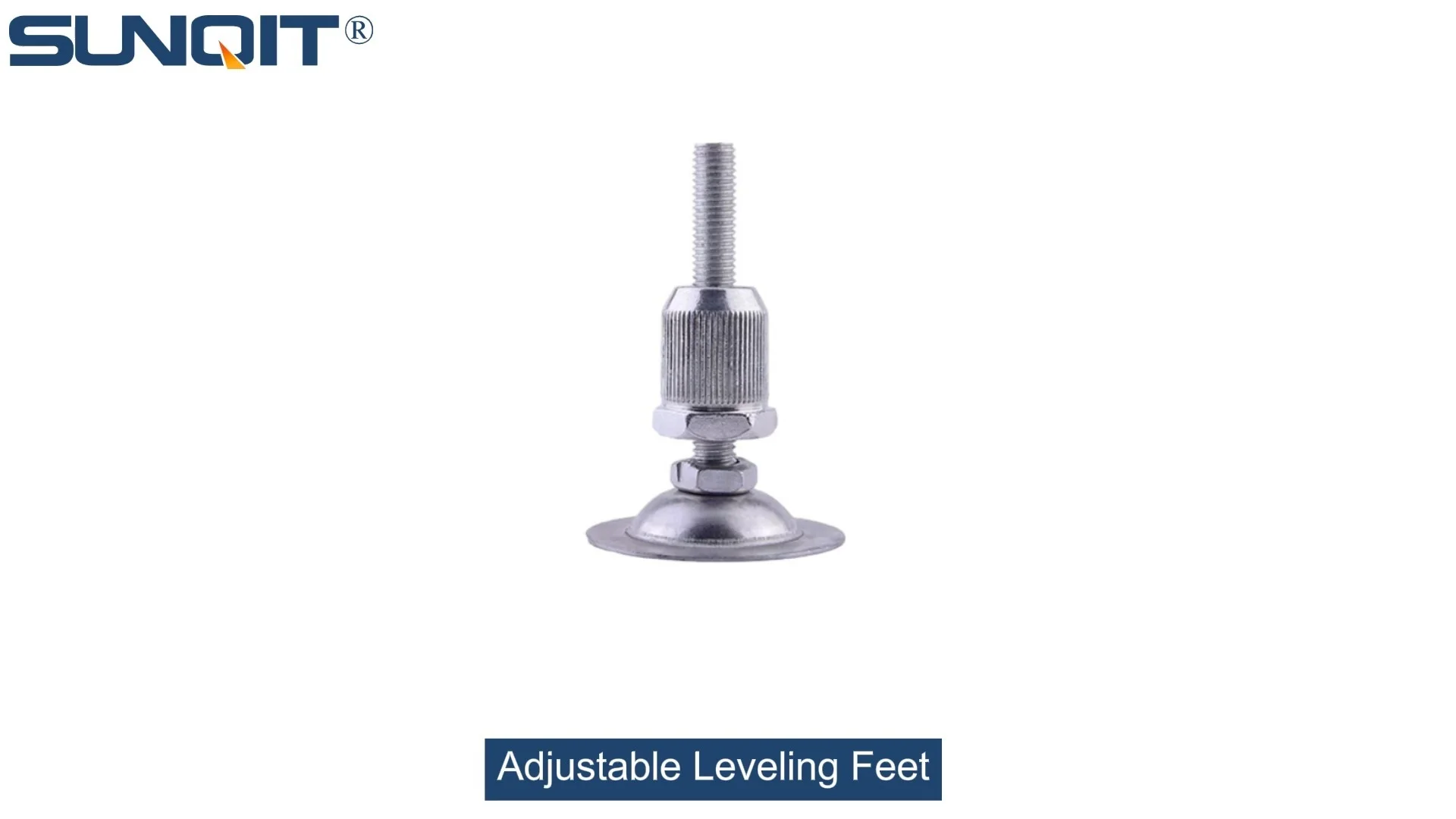
Adjustable Leveling Feet
Adjustable leveling feet are designed to keep machines level when placed on uneven or sloped ground. Otherwise known as adjustable equipment feet, they are available to order in a wide variety of size and load capacity combinations.
Walk into any busy warehouse or manufacturing facility, and you'll likely spot rows of Material Rack B (3 row and 3 floor) standing tall, their shelves loaded with components, tools, or finished products. These racks are the unsung workhorses of the operation—quietly holding the backbone of daily workflows, enabling teams to grab what they need, when they need it. But what happens when that quiet reliability is broken? A sudden creak, a tilt, a collapse. The aftermath isn't just a mess of scattered inventory; it's lost productivity, damaged goods, and worst of all, risk to the people who keep the facility running.
In this article, we're diving deep into the stability of Material Rack B, a staple in lean system setups worldwide. We'll explore why stability matters more than you might think, what causes these racks to fail, and how one often-overlooked component—adjustable leveling feet—acts as a silent guardian against collapses. Whether you're a warehouse manager, a facility engineer, or simply curious about the mechanics of industrial storage, this piece will show you how the right small parts can make a massive difference in keeping your operations safe and efficient.
Material Rack B: The Backbone of Modern Storage
First, let's get to know Material Rack B (3 row and 3 floor) up close. This isn't just any storage rack—it's a carefully designed solution built to maximize vertical space while keeping items accessible. Picture a structure with three vertical rows and three horizontal floors, each shelf sturdy enough to hold boxes, bins, or even heavy machinery parts. Its dimensions are typically tailored to fit standard warehouse aisles, with heights ranging from 1.8 to 2.5 meters, depths around 60 cm, and widths that can be adjusted based on the facility's needs. What makes it so popular? Versatility. It works in electronics assembly plants, automotive workshops, and even retail distribution centers, holding everything from small components to bulkier items.
But here's the thing: with great capacity comes great responsibility. A fully loaded Material Rack B can hold hundreds of kilograms—sometimes more, depending on the materials used (steel, aluminum, or reinforced composites). That weight, combined with its height, creates a significant leverage effect. If the base isn't stable, even a small imbalance can lead to disaster. Imagine stacking heavy cartons on the top shelf; if the rack leans just a few degrees, the center of gravity shifts, and suddenly, the entire structure is at risk of tipping. That's why stability isn't just a "nice-to-have" for Material Rack B—it's a critical safety requirement.
Why Stability Matters: The Hidden Costs of Collapsing Racks
Let's start with the obvious: safety. A collapsing rack can crush equipment, damage inventory, and, most tragically, injure or kill workers. According to the Occupational Safety and Health Administration (OSHA), over 100 warehouse workers are injured each year due to falling storage racks, with some incidents resulting in fatalities. These aren't just statistics—they're preventable tragedies. Beyond physical harm, collapses disrupt operations for hours or even days. Imagine a key Material Rack B in your production line giving way: workers can't access the parts they need, assembly lines stall, deadlines get missed, and customers grow frustrated. The financial toll adds up fast—damaged goods, overtime pay to recover lost time, and potential fines if safety regulations are violated.
Then there's the hidden cost of inefficiency. An unstable rack might not collapse outright, but it can still cause problems. Shelves that sag or tilt make it harder to load and unload items, slowing down workers. Uneven shelves might damage delicate inventory, like electronics or glassware, leading to waste. Over time, these small inefficiencies chip away at your bottom line. In a lean system, where every second and every square foot counts, instability is the enemy of productivity. It turns your Material Rack B from an asset into a liability—a silent drain on resources that could be better spent elsewhere.

What Causes Material Rack B to Collapse? The Culprits Behind Instability
To understand how to prevent collapses, we first need to understand what causes them. Let's break down the most common culprits:
1. Uneven Floors: The Silent Saboteur
Most warehouses and factories don't have perfectly level floors. Over time, concrete can crack, settle, or shift due to heavy equipment traffic, temperature changes, or poor initial construction. Even a slope of 1-2 degrees might seem minor, but for a tall Material Rack B, it's enough to throw off balance. Imagine placing a bookcase on a tilted floor—the books would slide, and the case itself might tip. Now scale that up to a rack holding hundreds of kilos, and you've got a recipe for disaster.
2. Overloading: Pushing the Limits
Every Material Rack B has a weight limit, specified by the manufacturer. But in the rush to meet deadlines, it's easy to ignore those numbers. Workers might stack heavier items on the top shelf to free up lower space, or add "just one more box" to a shelf that's already full. Overloading strains the rack's frame, weakening joints and causing shelves to bow. Over time, this stress can compromise the entire structure, making it vulnerable to collapse—even if the floor is perfectly level.
3. Poor Installation: Cutting Corners
A rack is only as stable as its installation. If the base isn't secured properly, or if components are missing (like bolts or brackets), the structure becomes wobbly. Even something as simple as not tightening a joint enough can lead to instability over time. In busy facilities, installation is often rushed, with teams prioritizing speed over precision. This "good enough" approach might work in the short term, but it's a ticking time bomb for long-term safety.
4. Environmental Factors: Vibrations and Wear
Warehouses are noisy, busy places. Forklifts rumble by, conveyor belts hum, and workers move heavy pallets—all creating vibrations that shake racks. Over months or years, these vibrations can loosen bolts, shift components, and even cause the rack to "walk" slightly across the floor. Temperature and humidity changes don't help either; metal frames expand and contract, weakening connections. Without regular maintenance, these small issues compound, turning a stable rack into an unstable one.

Adjustable Leveling Feet: The Unsung Heroes of Stability
Now, let's meet the star of the show: adjustable leveling feet. These small, unassuming components are often overlooked, but they're the key to keeping Material Rack B (3 row and 3 floor) stable. So, what exactly are they? Adjustable leveling feet are threaded devices attached to the bottom of the rack's legs. They have a base (usually made of rubber or metal) that sits on the floor and a stem that screws into the rack leg. By turning the base, you can raise or lower each foot individually, adjusting the rack's height to compensate for uneven floors.
How They Work: Precision in Every Turn
Think of adjustable leveling feet as tiny "height controllers" for each leg of the rack. Let's say your Material Rack B has four legs. If the floor dips under the front-left leg, you simply twist the leveling foot on that leg to extend it, lifting the rack slightly on that side. If the back-right corner is higher, you shorten the foot there. The result? The rack stands perfectly level, even on the most uneven surfaces. Most leveling feet have a rubber pad on the bottom, which adds friction to prevent slipping and reduces vibration transfer from the floor to the rack.
Materials Matter: Durability for the Long Haul
Not all leveling feet are created equal. The best ones are made from high-strength materials like stainless steel or zinc-plated steel, which resist rust and corrosion—critical in damp or dusty warehouse environments. The rubber pads should be thick and resilient, able to withstand heavy weights without cracking or deforming. Some advanced models even have suction-cup bases for extra grip, or locking mechanisms to prevent accidental adjustment after installation. When choosing leveling feet for your Material Rack B, opt for ones rated to handle at least 1.5 times the rack's maximum load—this ensures they won't fail under stress.

Solving Stability Issues: How Adjustable Leveling Feet Tackle the Culprits
Let's connect the dots: how do adjustable leveling feet address the specific causes of Material Rack B collapses? The table below breaks it down:
| Stability Issue | How It Affects Material Rack B | Adjustable Leveling Feet Solution |
|---|---|---|
| Uneven Floors | Causes rack to lean, shifting center of gravity. | Individual height adjustment per leg levels the rack, restoring balance. |
| Vibration | Loosens joints and causes rack to "walk" across the floor. | Rubber pads absorb vibration; secure base prevents movement. |
| Overloading (Indirectly) | Stresses frame, increasing risk of tipping on uneven bases. | Level base distributes weight evenly, reducing strain on individual legs. |
| Floor Settlement Over Time | Rack becomes unstable as floor shifts. | Feet can be readjusted to adapt to new floor conditions, no need for full reinstallation. |
As the table shows, adjustable leveling feet aren't just a "quick fix"—they're a proactive solution that addresses multiple stability threats at once. By keeping the rack level, they ensure weight is distributed evenly across all legs, reducing strain on joints and shelves. By absorbing vibration, they prevent loosening over time. And by allowing for easy readjustment, they adapt to changing floor conditions, ensuring long-term stability.
Material Rack B and Lean System: A Match Made in Efficiency
If you're familiar with lean system principles, you know the goal is to eliminate waste—whether that's wasted time, wasted space, or wasted resources. Material Rack B plays a key role in lean systems by maximizing storage density and keeping items within easy reach. But an unstable rack introduces a new kind of waste: the waste of inefficiency and risk. Adjustable leveling feet help turn Material Rack B into a leaner, more effective tool by ensuring it operates at peak performance.
In a lean system, every component should add value. A stable rack reduces the need for rework (like restacking fallen items), minimizes downtime (no more stopping production to clean up collapses), and improves workflow (workers can access items quickly without worrying about safety). Adjustable leveling feet make the rack more adaptable, too. If you rearrange your warehouse layout, you can move the Material Rack B to a new spot and level it in minutes—no need for shims, wedges, or expensive floor repairs. This flexibility is a cornerstone of lean thinking, allowing you to adapt to changing needs without wasteful delays.
Real-World Success: How One Warehouse Fixed Its Collapse Problem
Let's look at a real example of how adjustable leveling feet transformed Material Rack B stability. XYZ Electronics, a mid-sized manufacturer in Ohio, was struggling with frequent rack instability. Their main warehouse had uneven floors due to years of forklift traffic, and their Material Rack B units (used to store circuit boards and small components) would often lean, causing items to slide off shelves. In one incident, a rack collapsed, damaging $10,000 worth of inventory and halting production for half a day.
The facility manager, Maria, initially tried using wooden shims under the rack legs to level them. But the shims would slip, rot, or compress over time, and the racks would lean again. Frustrated, she researched solutions and came across adjustable leveling feet. She ordered a set for one rack as a test, installed them, and leveled the rack in under an hour. Six months later, that rack hadn't shifted an inch. Encouraged, Maria upgraded all 20 Material Rack B units in the warehouse. The results? Zero collapses in the following year, a 30% reduction in time spent restacking items, and happier workers who no longer worried about unstable shelves. "It was one of the best investments we ever made," Maria said. "The leveling feet paid for themselves in saved inventory and productivity."
Maintenance Tips: Keeping Your Leveling Feet (and Rack) Stable for Years
Adjustable leveling feet are low-maintenance, but they do need occasional care to keep working their best. Here's how to ensure long-term stability for your Material Rack B:
1. Inspect Regularly
Check the leveling feet monthly. Look for signs of wear: cracked rubber pads, rust on the stems, or loose locking mechanisms. Tighten any feet that have shifted, and replace pads that are worn down—this ensures maximum grip on the floor.
2. Clean Debris
Dust, dirt, and small debris can get trapped under the leveling feet, causing the rack to rock. Sweep or vacuum under the rack legs regularly, and wipe the rubber pads with a damp cloth to remove grime.
3. Relevel After Moving
If you relocate your Material Rack B, always relevel it with the adjustable feet. Even a short move can throw off the balance, and assuming the new spot is level is a risky mistake.
4. Upgrade When Needed
If your warehouse handles heavier loads over time, consider upgrading to higher-capacity leveling feet. Most manufacturers provide load ratings, so check that your feet can still handle the weight your rack is now supporting.
Leveling Feet vs. Other Solutions: Why They're the Best Choice
You might be wondering: are there other ways to stabilize a Material Rack B? Let's compare adjustable leveling feet to common alternatives:
Casters vs. Leveling Feet: Mobility vs. Stability
Casters (wheels) are great for racks that need to be moved frequently, but they're terrible for stability. Even locked casters can roll slightly under heavy loads or vibration. Leveling feet, by contrast, are fixed and provide a solid, immovable base—perfect for racks that stay in one place, like Material Rack B.
Shims vs. Leveling Feet: Temporary vs. Permanent
Wooden or metal shims are a cheap, quick fix for uneven floors, but they're not reliable long-term. Shims can crack, slip, or compress, and they're hard to adjust precisely. Leveling feet offer infinite adjustability and stay in place, making them a permanent solution.
Floor Repair vs. Leveling Feet: Cost vs. Convenience
Resurfacing or repairing a warehouse floor can cost tens of thousands of dollars and require shutting down operations. Leveling feet cost a fraction of that and can be installed in minutes, with no downtime. For most facilities, they're the far more practical choice.
Conclusion: Invest in Stability, Invest in Success
Material Rack B (3 row and 3 floor) is more than just a storage solution—it's a critical part of your facility's efficiency and safety. And at the heart of its stability lies a small but mighty component: the adjustable leveling foot. By addressing uneven floors, reducing vibration, and ensuring even weight distribution, these feet prevent collapses, protect workers, and keep operations running smoothly.
If you manage a warehouse or factory with Material Rack B units, don't overlook the importance of leveling feet. They're not an "extra" expense—they're an investment in reliability, efficiency, and peace of mind. Choose high-quality, durable feet, install them properly, and maintain them regularly. Your team, your inventory, and your bottom line will thank you.
In the world of lean system operations, stability isn't just about avoiding disasters—it's about creating a foundation for success. And with adjustable leveling feet, that foundation is stronger than ever.