- Company Articles
- Products and Technology
- Product knowledge
- Material Rack B Upgrades: Adding Adjustable Leveling Feet for Uneven Warehouse Floors

Material Rack B Upgrades: Adding Adjustable Leveling Feet for Uneven Warehouse Floors
Related Product
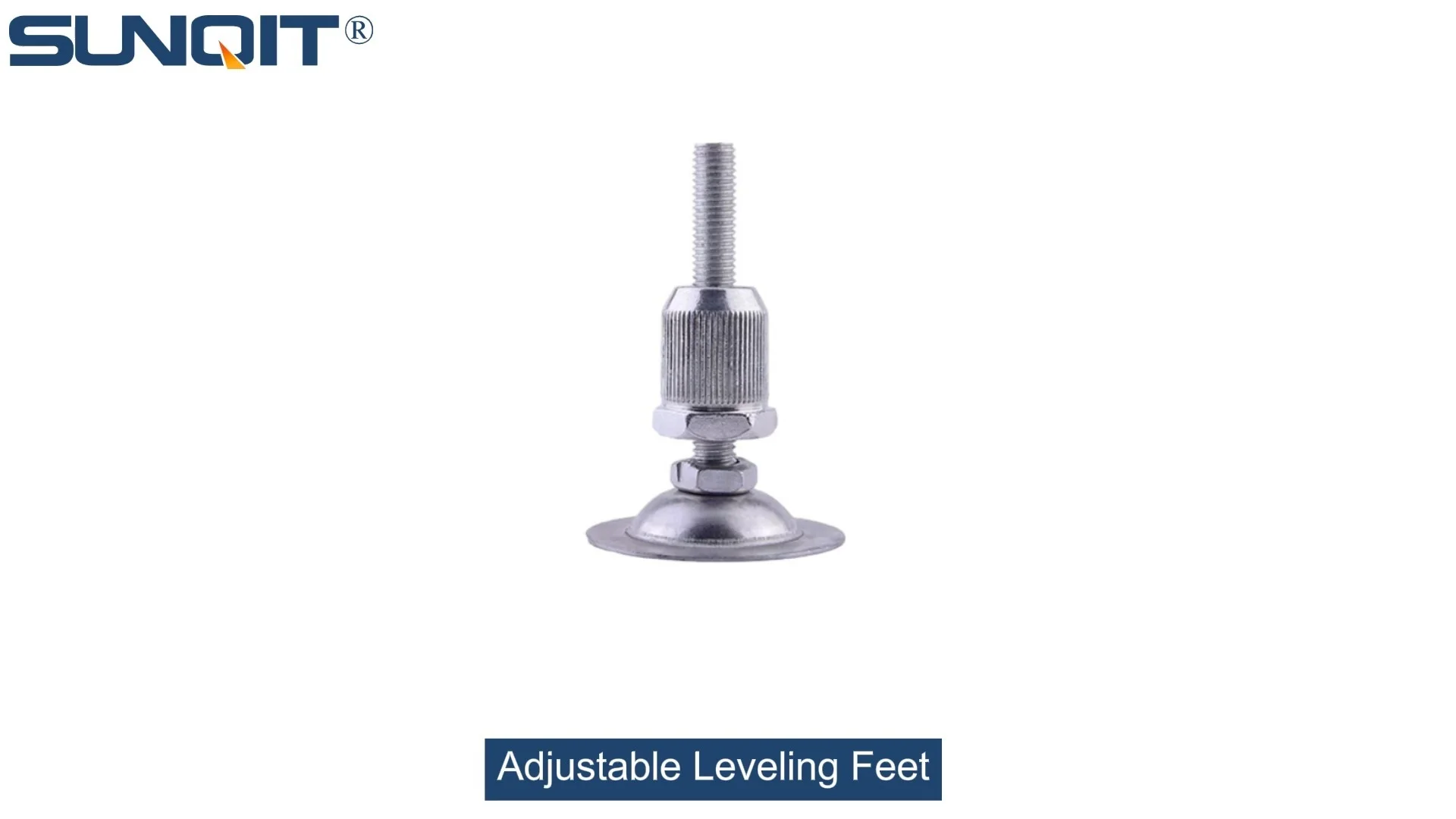
Adjustable Leveling Feet
Adjustable leveling feet are designed to keep machines level when placed on uneven or sloped ground. Otherwise known as adjustable equipment feet, they are available to order in a wide variety of size and load capacity combinations.
The Hidden Challenge of Uneven Floors in Your Warehouse
Walk into any warehouse, and you'll quickly notice the obvious elements: rows of racks towering toward the ceiling, forklifts humming along designated paths, workers in steel-toed boots moving with purpose. But there's a quieter, more insidious issue that often flies under the radar—uneven floors. It's not something most managers lose sleep over, but those small dips, slopes, and bumps? They're quietly undermining your operations, one wobbly rack at a time.
Think about it: Warehouses take a beating. Decades of heavy machinery, shifting inventory loads, and even minor foundation settling can leave floors less than perfectly flat. In older facilities, it's almost a given; in newer ones, poor installation or subpar concrete work can lead to unevenness too. And while a half-inch slope here or a small bump there might seem trivial, when you're dealing with storage racks designed to hold hundreds of pounds of inventory, those imperfections become a big deal.
This is especially true for workhorse racks like Material Rack B (3 row and 3 floor) . A staple in warehouses across industries—from automotive parts to electronics—this rack is prized for its versatility: three rows and three floors mean it maximizes vertical space without sacrificing accessibility. But here's the catch: Without a way to adapt to uneven floors, even the sturdiest rack can turn into a liability. Shelves tilt. Boxes slide. Workers waste time realigning inventory. And worst of all, instability creeps in, putting both your team and your products at risk.
Meet Material Rack B: A Reliable Workhorse—But Not Without Flaws
Before we dive into the upgrade, let's get to know Material Rack B (3 row and 3 floor) a little better. If you've spent any time in a warehouse, you've probably seen this rack in action. It's the one that looks like a well-organized bookshelf on steroids: three vertical rows of shelves, each stacked three levels high, typically made from durable steel or aluminum. Its design is straightforward, which is part of its appeal—easy to assemble, easy to load, and built to handle the daily grind of warehouse life.
Warehouses love it for storing everything from small parts bins to larger turnover boxes. In assembly lines, it might hold components waiting to be installed; in distribution centers, it's where bulk inventory gets staged before shipping. Its three-row, three-floor layout strikes a sweet spot between capacity and accessibility—you don't need a ladder to reach the top shelf, and you can fit a surprising amount of stock without taking up too much floor space.
But here's where things go sideways (literally): Material Rack B, like many standard racks, comes with fixed feet. These are simple, rigid supports that bolt to the bottom of the frame, designed to sit flat on a perfect floor. The problem? Perfect floors are rare. In most warehouses, those fixed feet end up sitting unevenly—one might be slightly off the ground, another digging into a bump, leaving the entire rack teetering ever so slightly. Over time, that wobble adds up. Shelves start to sag. Fasteners loosen. And if you're storing fragile items or heavy loads, the risk of something going wrong skyrockets.
I talked to a warehouse manager in Texas last year who summed it up perfectly: "We had these Material Rack B units near our loading dock, and no matter how we adjusted the shelves, the boxes on the bottom row kept sliding forward. We'd prop them up with wood shims, but those would slip out, and we'd be back to square one. It felt like fighting a losing battle." Sound familiar?

The Upgrade: Adjustable Leveling Feet—Small Parts, Big Impact
The good news? You don't need to rip up your warehouse floor or replace all your racks to fix this problem. The solution is simpler, more affordable, and surprisingly effective: adding adjustable leveling feet to Material Rack B. These small, unassuming components are like the unsung heroes of warehouse stability—they let you fine-tune each corner of the rack, compensating for uneven floors and locking in a level, secure base.
So, what exactly are adjustable leveling feet? Think of them as tiny, heavy-duty screws with a rubber or metal base. They replace the fixed feet on the bottom of Material Rack B, and here's how they work: Each foot has a threaded stem that screws into the rack's frame. By twisting the foot clockwise or counterclockwise, you raise or lower that corner of the rack. Once it's level, you tighten a locking nut to hold it in place. That's it. No fancy tools, no complicated installation—just a few twists, and suddenly your rack is standing firm, even on the wonkiest of floors.
But these aren't just any screws. The best adjustable leveling feet for Material Rack B are built tough: galvanized steel stems to resist rust, rubber bases to grip the floor and prevent slipping, and a wide enough footprint to distribute the rack's weight evenly. Some even come with anti-vibration features, which is a bonus if your warehouse has heavy machinery that shakes the floor (looking at you, pallet jacks).
The upgrade itself is straightforward. Most Material Rack B units are designed with standardized mounting holes for feet, so swapping out fixed feet for adjustable ones takes less than 30 minutes per rack—even if you're not a DIY expert. You'll need a wrench to loosen the old feet and tighten the new ones, but that's about it. No need to call in a contractor or shut down operations for hours. It's the kind of upgrade you can do on a slow afternoon, and by the end of the day, you'll already notice the difference.

Why This Upgrade Matters: Benefits You Can't Ignore
Okay, so adjustable leveling feet fix a wobbly rack. But why should you care? Let's break down the benefits—because this small change ripples out into big wins for your warehouse.
1. Stability That Saves You from Headaches (and Accidents)
First and foremost: safety. A wobbly rack is an accident waiting to happen. When shelves tilt, items can slide or fall—risking damage to inventory, equipment, or worse, your team. I've heard horror stories of workers getting hit by falling boxes, or forklifts catching a loose rack and causing a domino effect. Adjustable leveling feet eliminate that wobble, locking the rack in place so it stays put, even when bumped by a passing cart or loaded with heavy stock.
And let's not forget compliance. OSHA has strict guidelines about storage rack stability, and uneven floors can put you at risk of violations. Adding leveling feet isn't just a fix—it's a proactive step to keep your warehouse up to code and your team safe.
2. Efficiency That Adds Up to Real Time Savings
When your racks are level, everything gets easier. Workers don't have to spend time straightening crooked boxes or fishing items that slid off the shelf. Picking times speed up because inventory is where it's supposed to be, not teetering on the edge. Even stock counts become faster and more accurate—no more guessing if a box is "supposed" to be leaning that way.
Remember that Texas warehouse manager I mentioned earlier? After upgrading to adjustable leveling feet, he told me his team's time spent on "rack maintenance" (read: shimming, straightening, and reloading) dropped by 30%. "That's hours every week we're now using to get orders out faster," he said. "It's not just about the racks—it's about letting my team do their jobs without fighting the equipment."
3. Durability That Extends the Life of Your Racks
Fixed feet on an uneven floor put extra stress on your rack's frame. When one corner is higher than the others, the weight isn't distributed evenly, leading to premature wear and tear. Over time, that can bend frames, crack welds, or loosen bolts—all of which mean costly repairs or replacements down the line.
Adjustable leveling feet spread the weight evenly across all four corners, reducing stress on the frame and extending the life of your Material Rack B units. Think of it like putting a sturdy pair of shoes on a runner—proper support makes all the difference in how long they last.
4. Adaptability for a Changing Warehouse
Warehouses aren't static. You might rearrange racks to accommodate new inventory, expand into a new section, or even move a rack to a different part of the floor. With fixed feet, that means dealing with whatever unevenness exists in the new location. But with adjustable leveling feet? You can take the same rack, move it anywhere, and tweak the feet to fit the new floor conditions. It's like having a rack that can "walk" and adjust to its surroundings—no shims, no guesswork, no hassle.

Technical Deep Dive: What Makes These Leveling Feet Work
Not all adjustable leveling feet are created equal, so it's important to choose the right ones for Material Rack B. Let's break down the specs that matter, so you know what to look for when upgrading.
| Feature | Standard Fixed Feet | Upgraded Adjustable Leveling Feet |
|---|---|---|
| Adjustment Range | 0mm (fixed) | Typically 0-50mm (2 inches), enough to handle most floor unevenness |
| Material | Basic steel, prone to rust | Galvanized steel or stainless steel stem; rubber or nylon base for grip |
| Weight Capacity | Limited by fixed contact area | Up to 1,000 lbs per foot (varies by model), ideal for heavy racks |
| Locking Mechanism | None (fixed in place) | Locking nut to secure adjustment and prevent slipping |
| Compatibility | Only fits perfectly flat floors | Works on uneven, sloped, or bumpy floors |
The key features to prioritize are adjustment range (look for at least 2 inches to cover most floor issues), material (galvanized steel resists corrosion in damp warehouses), and weight capacity (ensure they can handle the total load of your rack plus inventory). The rubber or nylon base is also crucial—it prevents the feet from sliding on smooth floors and protects concrete from scratches.
Installation is a breeze, even if you're not a handy person. Here's a quick step-by-step:
1. Remove the existing fixed feet from Material Rack B using a wrench.
2. Screw the adjustable leveling feet into the same mounting holes (they're designed to fit standard rack threads).
3. Place a level on top of the rack and adjust each foot by twisting the stem—clockwise to lower, counterclockwise to raise—until the rack is perfectly level.
4. Tighten the locking nut against the rack frame to hold the adjustment in place.
5. Repeat for all four corners, and you're done. Total time per rack? About 20-30 minutes.
Real-World Impact: How One Warehouse Transformed Its Operations
Let's put this all into context with a real example. Meet ABC Manufacturing, a mid-sized company in Michigan that makes automotive components. They have a 50,000-square-foot warehouse with a mix of storage racks, including 12 Material Rack B units used to store small parts bins. Their facility is about 20 years old, and like many older warehouses, the floor near the back wall has a slight slope—nothing drastic, just enough to cause problems.
Before the upgrade, ABC's team was struggling. The Material Rack B units along the sloped wall were constantly wobbling. Bins would slide off the shelves, and workers had to stop what they were doing to them up. Once, a bin of small metal parts fell and spilled, leading to a 45-minute cleanup. Their maintenance team was spending 2-3 hours a week just shimming and adjusting the racks. "It was frustrating," said their operations director, Maria. "We knew the floor was the issue, but replacing it would cost hundreds of thousands of dollars. We felt stuck."
Then, Maria's team discovered adjustable leveling feet. They ordered a set for one rack as a test, installed them in under 30 minutes, and immediately noticed a difference. "The rack stood straight for the first time since we put it up," Maria told me. "We waited a week, and no bins slid. No wobbling. So we ordered enough for all 12 racks."
The results? In the six months after the upgrade:
• Time spent on rack adjustments dropped from 3 hours/week to less than 30 minutes.
• Bin spills decreased by 100% (zero incidents).
• Picking accuracy improved by 5% (fewer errors from misaligned bins).
• Worker satisfaction scores went up—employees reported feeling "less stressed" and "more efficient."
And the cost? About $150 per rack for the leveling feet, plus a few hours of labor. Compare that to the $200,000+ price tag of resurfacing the floor, and it's a no-brainer. "It's the best ROI we've had in years," Maria said. "We should have done this sooner."
Beyond the Rack: How This Upgrade Fits Into Your Lean System
If your warehouse follows lean system principles, you know that efficiency isn't about big, flashy changes—it's about the small, continuous improvements that add up over time. Adding adjustable leveling feet to Material Rack B is a perfect example of lean in action: identifying a hidden waste (time spent adjusting racks, damaged inventory, worker frustration) and eliminating it with a simple, cost-effective solution.
Lean is all about creating value and reducing waste, and uneven racks create plenty of waste:
•
Time waste
: Workers spending hours fixing shelves instead of picking orders.
•
Inventory waste
: Damaged items that can't be sold or used.
•
Resource waste
: Shims, tape, and other quick fixes that don't last.
•
Worker waste
: Mental energy spent on avoidable frustrations.
By upgrading to adjustable leveling feet, you're tackling all these wastes at once. You're creating a more stable, predictable workspace—exactly what lean aims for. And once your racks are level, you'll find it easier to implement other lean practices, like 5S (Sort, Set in Order, Shine, Standardize, Sustain). A level rack is easier to "Set in Order" (everything has a place), easier to "Shine" (no more bins hiding in corners), and easier to "Standardize" (consistent storage across all units).
I've worked with lean consultants who often say, "You can't build a lean system on a shaky foundation." Well, your racks are part of that foundation. By making them stable, you're laying the groundwork for a more efficient, productive, and sustainable warehouse.
Conclusion: Small Change, Big Results for Your Warehouse
Uneven warehouse floors might be a silent problem, but they're not an unsolvable one. Upgrading your Material Rack B (3 row and 3 floor) units with adjustable leveling feet is a simple, affordable way to transform wobbly, frustrating racks into stable, efficient storage solutions. It's a small change that delivers big results: safer workspaces, happier workers, faster operations, and a warehouse that's better equipped to handle whatever the day throws at it.
So, if you've been fighting with sliding bins, wobbly shelves, or the constant need to shim your racks, it's time to take action. Invest in adjustable leveling feet. Your team will thank you, your inventory will stay put, and your bottom line will reflect the savings. After all, in warehouse management, the best solutions are often the ones that fix a big problem with a small part.
As Maria from ABC Manufacturing put it: "We used to see those racks as a headache. Now? They're just… part of the solution. And that's the difference between a warehouse that's struggling and one that's thriving."