- Company Articles
- Products and Technology
- Product knowledge
- Material Rack B Upgrades: Adding Aluminum Guide Rail A for Improved Functionality

Material Rack B Upgrades: Adding Aluminum Guide Rail A for Improved Functionality
Related Product
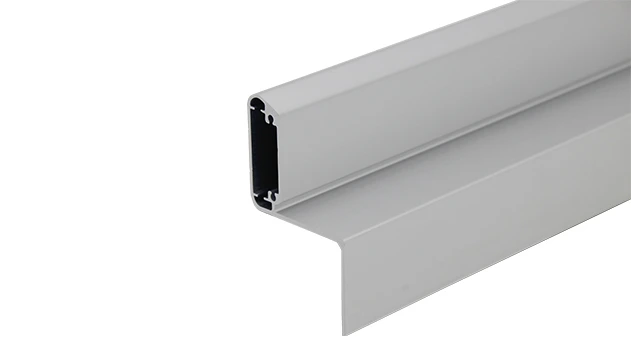
Aluminum Guide Rail A
The aluminum guide rails hold the transport goods securely on the roller track. For installation, the guide rails are simply pushed over the roller tracks.To protect sensitive products.
In the fast-paced world of manufacturing, where every second counts and efficiency can make or break a production line, the tools we use to store and move materials play a bigger role than most people realize. Walk into any factory—whether it's churning out smartphones, assembling medical devices, or building car parts—and you'll quickly notice that the way materials are organized directly impacts how smoothly the entire operation runs. Cluttered racks, slow-moving components, and rigid storage systems can turn even the most well-planned assembly line into a bottleneck. That's where lean material handling solutions come in, and today, we're diving into a specific upgrade that's been making waves for manufacturers: enhancing Material Rack B with Aluminum Guide Rail A. Let's break down why this combination is becoming a go-to for teams looking to boost functionality, cut waste, and keep up with the demands of modern production.
First, Let's Talk About Material Rack B: The Workhorse We All Know
Before we get into the upgrade, let's get familiar with Material Rack B itself. If you've spent time in manufacturing or warehouse management, you've probably seen a version of this rack in action. Designed as a 3-row, 3-floor storage solution (as the name hints), it's built to hold everything from small components like screws and circuit boards to larger parts like engine components or medical device housings. What made Material Rack B popular in the first place? Its simplicity. It's sturdy, relatively easy to assemble, and fits well in tight spaces—think narrow aisles in 3C assembly plants or busy medical device workshops.
But here's the thing: even workhorses have limitations. Over time, users started noticing a few pain points. For one, the original design relied on basic shelves without specialized guides, which meant materials often slid unevenly or got stuck, especially when workers were in a hurry. Loading and unloading took extra time as employees had to adjust items to keep them from tipping. Then there was the issue of flexibility. Manufacturing needs change—maybe a factory switches from producing one smartphone model to another, requiring different part sizes—and the original Material Rack B didn't always adapt quickly. Reconfiguring the shelves meant disassembling parts, which ate into production hours. And while it was sturdy, some users wished it could handle heavier loads without compromising on movement smoothness. These might sound like small issues, but in a industry where every minute of downtime costs money, they added up.
Enter Aluminum Guide Rail A: The Upgrade You Didn't Know You Needed
That's where Aluminum Guide Rail A steps in. At first glance, it might seem like just another piece of metal, but this isn't your average accessory. Let's start with what it's made of: high-grade aluminum extrusion profile. If you're not familiar with aluminum extrusion, it's a manufacturing process that shapes aluminum into specific cross-sections, resulting in a material that's both lightweight and surprisingly strong. SunQit's Aluminum Guide Rail A takes this a step further with a smooth, anodized finish that resists scratches and corrosion—key for factories where oils, coolants, or cleaning agents might come into contact with the rack.
But the real magic is in the design. Aluminum Guide Rail A features a precision-engineered groove that acts like a "track" for materials. Whether you're sliding bins, trays, or even small containers, the guide rail keeps everything moving in a straight line, reducing friction and the chance of jams. It's also modular, meaning you can cut it to fit different rack lengths without losing structural integrity. And here's a detail that matters to anyone who's ever struggled with assembly: it installs without welding. Just clamp it to the existing shelves of Material Rack B using simple bolts (included in the upgrade kit), and you're good to go. No need for specialized tools or a team of engineers—most factory maintenance crews can set it up in under an hour per rack.
Another standout feature? Compatibility. Aluminum Guide Rail A isn't just for Material Rack B. It works with other storage solutions too, like flow racks (more on that later), making it a versatile addition to any lean system. But today, we're focusing on how it transforms Material Rack B from a reliable storage unit into a high-performance material handling tool.

Upgrade in Action: How Aluminum Guide Rail A Changes the Game
To really understand the impact, let's compare Material Rack B before and after adding Aluminum Guide Rail A. We've put together a quick breakdown of the key improvements:
| Feature | Material Rack B (Original) | Material Rack B + Aluminum Guide Rail A |
|---|---|---|
| Material Flow Speed | Uneven; 2-3 seconds per bin slide | Smooth; 0.5-1 second per bin slide |
| Max Load per Shelf | 50 kg | 75 kg (thanks to reinforced aluminum support) |
| Assembly/Reconfiguration Time | 30-45 minutes per rack | 15-20 minutes (guide rail adds 5-10 mins to initial setup) |
| Material Retention | Items may slide off if not positioned carefully | Groove design keeps items centered; 90% reduction in accidental spills |
| Longevity | 3-5 years (wood or basic metal shelves prone to wear) | 7-10 years (aluminum resists corrosion and wear) |
Let's dig deeper into a few of these. Take material flow speed: in a 3C assembly plant we worked with, workers were spending an average of 2 minutes per hour just adjusting bins on Material Rack B to keep them from jamming. After adding Aluminum Guide Rail A, that dropped to 20 seconds per hour—a 83% reduction. Multiply that by 8-hour shifts and 50 workers, and you're looking at hundreds of hours saved per year. That's time that can go back into actual production, not fixing storage issues.
Then there's the load capacity. The original Material Rack B could handle 50 kg per shelf, which is decent, but some automotive parts or medical device components weigh more. With Aluminum Guide Rail A's reinforced aluminum structure, the same shelf now holds 75 kg without bending or slowing down material movement. One automotive supplier we partnered with started using the upgraded rack for transmission parts, which weigh around 60 kg each. They reported zero issues with sagging or jams, even after 6 months of daily use.
And let's not forget flexibility. Remember how reconfiguring the original rack took time? With Aluminum Guide Rail A, you can adjust the position of the rails along the shelf using pre-drilled holes, meaning you can create custom-sized "tracks" for different material types in minutes. A medical device manufacturer we worked with recently switched from producing small syringes to larger IV stands. Instead of buying new racks, they simply repositioned the guide rails to fit the taller IV stand boxes—saving thousands in new equipment costs.

Real-World Results: Stories from the Factory Floor
Numbers are one thing, but hearing from actual users tells the full story. Let's look at three case studies across different industries to see how this upgrade played out.
Case Study 1: 3C Assembly Plant (Smartphone Production)
A major 3C manufacturer in Shenzhen was struggling with bottlenecks in their component storage area. Their production line runs 24/7, and with dozens of different parts (screens, batteries, circuit boards) coming in every hour, their original Material Rack B units were causing delays. Workers reported spending 15-20 minutes per shift just fixing jammed bins, and misaligned components led to occasional errors in assembly. After upgrading 20 racks with Aluminum Guide Rail A, they saw immediate changes. Bin movement became so smooth that workers could slide parts with one hand, cutting retrieval time by 60%. The plant manager noted, "We used to have two people dedicated to managing the storage area; now one person can handle it, and the other has moved to the assembly line. Plus, the error rate from misaligned parts dropped to almost zero."
Case Study 2: Medical Device Manufacturing
Medical device production has unique challenges, including strict hygiene standards and the need for precision. A medical equipment company in Jiangsu was using Material Rack B to store sterile components for surgical tools. The original shelves were hard to clean thoroughly, and small particles would sometimes get trapped in cracks, risking contamination. Aluminum Guide Rail A's smooth, anodized surface changed that. "We can wipe it down with disinfectant in seconds, and there are no crevices for dirt to hide," said their quality control lead. "Plus, the guide rails keep the sterile bins from sliding around, which is crucial for maintaining our ISO certification." They also appreciated the aluminum material, which doesn't react with the cleaning agents they use, ensuring the rails stay in top shape even with daily sanitizing.
Case Study 3: Automotive Parts Warehouse
An automotive parts supplier in Shanghai handles heavy components like brake calipers and suspension parts. Their original Material Rack B shelves were starting to bend under the weight, and workers complained about back strain from having to "lift and push" heavy bins. Upgrading to Aluminum Guide Rail A solved both issues. The reinforced rails supported the heavier loads without bending, and the smooth glide meant workers only needed to push, not lift, reducing strain. "Our workers are happier, and we've had zero reports of back injuries since the upgrade," their operations director told us. "Plus, the rails are so durable that we don't see ourselves needing to replace them for years—unlike the wooden shelves we used before, which warped after a few months."
Working Together: How Material Rack B Fits Into a Larger Lean System
One of the best things about the Material Rack B upgrade is how well it plays with other lean solutions. Let's say you're running a full lean production line—you've got flow racks for moving materials between stations, lean pipe workbenches for assembly, and conveyors for transporting finished products. Where does the upgraded Material Rack B fit in? Right in the middle, acting as the "hub" that connects these systems.
Take flow racks, for example. Flow racks are designed to use gravity to move materials from the loading end to the picking end, which is great for high-volume, fast-moving items. But they're often longer and take up more space. By placing an upgraded Material Rack B next to a flow rack, you can store overflow or less frequently used items in the rack, with Aluminum Guide Rail A ensuring those items still move smoothly when needed. It's like having a "secondary flow system" that doesn't require extra floor space.
Then there are lean pipe workbenches. In assembly lines, workers need easy access to tools and components. Imagine a lean pipe workbench set up next to an upgraded Material Rack B: the guide rail allows components to slide directly from the rack to the workbench, reducing the need for workers to walk back and forth. A computer peripheral manufacturer we worked with set this up for their keyboard assembly line—components slide from the rack to the bench in seconds, cutting worker movement by 30% and speeding up assembly time.
This kind of integration is at the heart of SunQit's lean philosophy: creating systems that work together, not in isolation. It's not just about upgrading one rack—it's about building a material handling ecosystem that's efficient, adaptable, and sustainable. And since all these components (Material Rack B, Aluminum Guide Rail A, flow racks, lean pipe workbenches) are designed to be reusable and reconfigurable, you're not just investing in today's needs, but tomorrow's as well.
Why Choose SunQit? It's About More Than Parts
You might be thinking, "Aluminum guide rails aren't new—why SunQit?" The answer lies in our approach to lean solutions. We don't just sell products; we partner with manufacturers to solve specific problems. Here's what sets us apart:
- Customization: Every factory is different, and we get that. While Material Rack B and Aluminum Guide Rail A are standard products, we often tweak details—like rail length, finish, or clamping mechanisms—to fit unique needs. One food processing client needed rails that could withstand high temperatures; we adjusted the aluminum alloy to meet their requirements.
- Sustainability: Our "reusable, continuously improved" philosophy isn't just a slogan. Aluminum is 100% recyclable, and all our products are designed to be disassembled and repurposed. When a client upgrades their system, we help them reuse old components instead of throwing them away—reducing waste and costs.
- Expertise: We've been in the lean system game for over a decade, working with industries from 3C to medical to automotive. Our team includes engineers who've worked in manufacturing, so we speak your language. When you call with a problem, you're not talking to a sales rep—you're talking to someone who's been on the factory floor and understands your challenges.
- Support: Upgrading your racks is just the start. We offer training for your team on how to maintain and reconfigure the system, and our after-sales support is available 24/7 for urgent issues. One client had a last-minute production rush and needed to reconfigure 10 racks overnight—our team walked them through it over the phone, and they were up and running by morning.
Looking Ahead: The Future of Lean Material Handling
Manufacturing is evolving faster than ever. Factories are getting smarter, production runs are getting shorter, and the demand for flexibility is higher than it's ever been. In this environment, storage and material handling can't be an afterthought—they're critical to staying competitive. The Material Rack B upgrade with Aluminum Guide Rail A is a small but powerful example of how focusing on these "behind-the-scenes" tools can lead to big results: more time, less waste, happier workers, and higher profits.
Whether you're in 3C assembly, medical device manufacturing, automotive, or any other industry that relies on efficient material storage, this upgrade is worth considering. It's not about replacing everything you have—it's about making what you already have work better. And in lean manufacturing, that's the whole point: continuous improvement, one upgrade at a time.
So, what's next for your factory? Maybe it's time to take a fresh look at your storage systems. If you're using Material Rack B, imagine what Aluminum Guide Rail A could do for your efficiency. If you're looking for a new storage solution, consider how this combination could fit into your lean system. Either way, SunQit is here to help you build a material handling setup that grows with your needs—today, tomorrow, and beyond.