- Company Articles
- Products and Technology
- Product knowledge
- Material Rack Design: Maximizing Storage Space with Aluminum Honeycomb Panel Shelves

Material Rack Design: Maximizing Storage Space with Aluminum Honeycomb Panel Shelves
Related Product
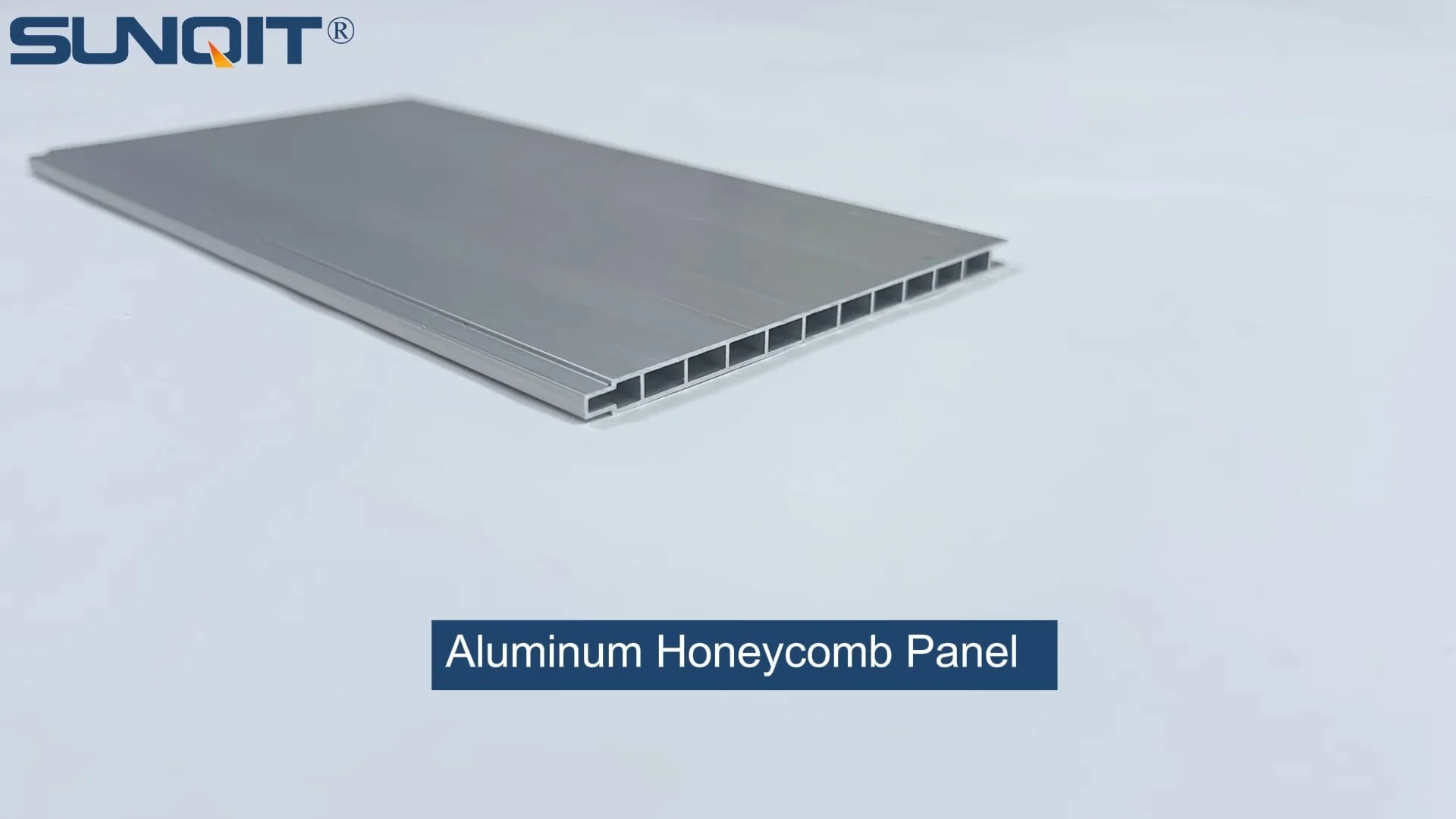
Aluminum Honeycomb Panel
Aluminum honeycomb panel used as table top, side wall, it is connected one pcs by one pcs from the side slot to make a full pieces.This panel width 105mm, 55mm, 35mm are optional for slection.
If you've ever walked into a busy workshop, factory, or warehouse, you know the feeling: rows of materials stacked haphazardly, tools scattered across surfaces, and that subtle yet persistent frustration of spending 10 minutes hunting for a single part. In the world of manufacturing and logistics, storage isn't just about "having a place to put things"—it's the backbone of efficiency. A well-designed material rack doesn't just hold inventory; it streamlines workflows, reduces downtime, and even boosts team morale by turning chaos into order. But here's the catch: not all storage solutions are created equal. Heavy steel shelves might feel sturdy, but they're a nightmare to reconfigure. Wooden racks warp over time, and plastic? It lacks the heft to handle industrial-grade loads. So, what's the sweet spot between strength, flexibility, and space efficiency? Enter aluminum honeycomb panel shelves—a game-changer that's quietly revolutionizing how we think about material storage.
The Storage Struggle: Why "Good Enough" Racks Fall Short
Let's start with the basics. Most facilities start with whatever storage they can get their hands on: hand-me-down steel racks from a previous location, DIY wooden shelves cobbled together on a tight budget, or generic plastic units that seem "fine" at first. But as operations grow, these "good enough" solutions quickly reveal their flaws. Steel racks, for example, are notoriously heavy. Installing them requires heavy machinery, and if you ever need to rearrange your floor plan? Good luck—they're practically permanent. Then there's the weight capacity conundrum: a steel shelf might hold 500 lbs per level, but when you factor in the shelf's own weight, you're losing valuable payload capacity. Wooden racks, on the other hand, are prone to warping in humid environments, and they can't stand up to the daily bumps and scrapes of a busy workshop. Even worse, they're a fire hazard in settings with sparks or heat. Plastic racks? They're lightweight, sure, but their load limits are often too low for industrial use, and they crack under repeated stress. The result? Wasted space, frequent replacements, and a workflow that's constantly fighting against its storage system.
And then there's the space problem. Traditional racks are often designed with fixed dimensions—6 feet tall, 3 feet deep, with shelves spaced 18 inches apart. But what if you need to store tall, narrow parts? Or small, heavy components that could fit in tighter vertical spaces? Those fixed shelves become dead zones, eating up floor space without adding value. In a world where every square foot of facility space costs money, dead zones aren't just inefficient—they're expensive. So, what if there was a way to design racks that are strong enough to handle heavy loads, light enough to reconfigure, and smart enough to maximize every inch of vertical and horizontal space? That's where aluminum honeycomb panel shelves come in.
Aluminum Honeycomb Panels: The Unsung Hero of Modern Storage
At first glance, aluminum honeycomb panels might not look like much. They're thin, lightweight, and have a distinctive grid pattern that resembles a beehive (hence the name). But don't let their appearance fool you—these panels are engineering marvels. Here's how they work: two thin aluminum sheets (the "skins") are bonded to a hexagonal honeycomb core made from aluminum foil. This structure borrows a trick from nature: bees build honeycombs because the hexagonal shape is inherently strong, distributing weight evenly across the entire structure. Translated to industrial design, that means aluminum honeycomb panels offer an unbeatable strength-to-weight ratio. A 4x8 foot aluminum honeycomb panel can weigh as little as 15 lbs but support over 1,000 lbs of evenly distributed weight. Compare that to a solid steel shelf of the same size, which might weigh 50+ lbs and offer similar load capacity—and suddenly, the appeal becomes clear.
But strength and lightness are just the start. Aluminum honeycomb panels bring a host of other benefits to the table. For one, they're corrosion-resistant. Unlike steel, which rusts when exposed to moisture, aluminum forms a natural oxide layer that protects it from the elements. That makes these panels ideal for humid environments, like food processing facilities or outdoor storage areas. They're also eco-friendly: aluminum is 100% recyclable, and the honeycomb design uses minimal material, reducing waste. And let's talk about versatility. These panels can be cut to any size, drilled, or even coated with anti-slip finishes to keep materials in place. Need a shelf that's 24 inches wide for small parts bins? No problem. A 6-foot-long shelf for bulky equipment? Just as easy. This flexibility is a game-changer for customizing storage to your exact needs.
Perhaps the biggest advantage, though, is how they pair with aluminum profiles. Aluminum profiles—extruded aluminum beams with T-slot grooves—are the backbone of modular industrial systems. Think of them as the "Lego blocks" of the manufacturing world: you can connect them with brackets, bolts, or specialized joints to build everything from workbenches to material racks. When you combine aluminum honeycomb panels with aluminum profiles, you get a storage system that's both rock-solid and infinitely adaptable. The profiles provide the structural framework, while the honeycomb panels serve as lightweight, high-strength shelves. Want to add a new level to your rack? Just slide in a few more profiles and a honeycomb panel. Need to move the entire rack to a new location? Since both components are lightweight, you can do it with a team of two instead of four. It's storage that grows with your business, not against it.

Aluminum Profiles: The Silent Partner in Space-Saving Design
If aluminum honeycomb panels are the "muscle" of a modern material rack, aluminum profiles are the "bones." These extruded aluminum beams are designed with precision in mind—their T-slot grooves allow for quick, tool-free connections with a variety of accessories, from brackets to shelves to casters. But what makes them so essential for maximizing storage space? Let's break it down.
First, aluminum profiles are incredibly strong for their weight. A standard 40x40mm aluminum extrusion profile (a common size in industrial settings) can support hundreds of pounds per linear foot, even though it weighs a fraction of a steel beam of the same dimensions. This means you can build taller racks without worrying about structural instability. A steel rack might top out at 8 feet due to weight concerns; an aluminum profile rack can easily reach 12 feet or more, opening up vertical space that would otherwise go unused. And since the profiles are lightweight, you don't need reinforced flooring to support them—critical in older facilities where floor load limits are a concern.
Second, modularity is baked into their design. Traditional steel racks require welding or bolting to assemble, which makes reconfiguration a nightmare. Want to adjust the height of a shelf? You'll need a cutting torch and a welder. With aluminum profiles, it's as simple as loosening a few bolts, sliding the brackets to the desired height, and tightening them back up. This flexibility is key for adapting to changing storage needs. Maybe this month you're storing small electronic components, so you need shelves spaced 12 inches apart. Next month, you switch to larger machinery parts, and suddenly you need 24-inch gaps. With aluminum profiles, you can make that change in an afternoon, not a week. And since the profiles are compatible with a wide range of accessories—like roller tracks, bin dividers, and even lighting—you can customize each shelf for specific materials. Need a section for flowing parts? Add a roller track to the honeycomb panel. Storing fragile items? Install a lip to prevent slipping. The possibilities are endless.
Finally, aluminum profiles are aesthetically clean and low-maintenance. Unlike steel, they don't require painting to prevent rust, and their sleek, silver finish gives facilities a modern, professional look. They're also easy to clean—just wipe them down with a damp cloth, and they're good as new. For facilities that prioritize organization and visual clarity (like medical device manufacturing or electronics assembly), this matters. A cluttered, rusty rack sends a message about your operation; a clean, modular aluminum system says you value efficiency and precision.

Design Principles: How to Maximize Storage with Honeycomb Panels and Aluminum Profiles
Now that we've covered the "why" of aluminum honeycomb panels and aluminum profiles, let's dive into the "how." Designing a space-maximizing material rack isn't just about slapping shelves on a frame—it's about balancing accessibility, weight distribution, and flexibility. Here are the key principles to keep in mind:
1. Think Vertically, Not Just Horizontally
The biggest mistake in storage design is underutilizing vertical space. Most facilities have 10–12 foot ceilings, but traditional racks rarely go higher than 6–8 feet because of weight and accessibility issues. Aluminum honeycomb panels and profiles solve both problems. Since the system is lightweight, you can safely build racks up to ceiling height without overloading the floor. To make the top shelves accessible, pair the rack with a rolling ladder or a hydraulic lift (both of which are easier to maneuver than you might think). Pro tip: Reserve the lower, eye-level shelves for frequently accessed items (like daily-use tools or fast-moving parts) and the upper shelves for seasonal or rarely used materials. This "golden zone" strategy ensures you're not wasting prime real estate on items that gather dust.
2. Optimize Shelf Depth and Spacing
One size does not fit all when it comes to shelf depth. A shelf that's too deep leads to "backstock burial"—items at the back get forgotten, while you're constantly shuffling things to reach them. Too shallow, and you're wasting horizontal space. Aim for depths that match your materials: 18–24 inches for small parts bins, 30–36 inches for larger boxes or equipment. Aluminum honeycomb panels are easy to cut to custom depths, so you're not stuck with standard 24-inch or 36-inch options. As for spacing between shelves, use adjustable brackets (thanks to those T-slots in the aluminum profiles!) to set heights based on what you're storing. A shelf for 6-inch tall bins needs only 8 inches of vertical space (including clearance), while a shelf for 2-foot tall machinery might need 30 inches. By tailoring spacing to your inventory, you can fit 3–4 more shelf levels in the same vertical footprint.
3. Prioritize Accessibility and Workflow
A rack that maximizes space but makes it impossible to grab what you need is useless. The goal is to reduce "touch time"—the seconds (or minutes) spent retrieving an item. To do this, group materials by workflow. For example, if your assembly line has stations A, B, and C, design racks that feed directly into each station with the parts they need. Use roller tracks on aluminum honeycomb panels to let materials "flow" to the workstation, eliminating the need to carry heavy bins. Caster wheels (another aluminum profile accessory!) are a game-changer here: mount your rack on lockable casters, and you can roll it right to the assembly line, cutting down on walking time. Just make sure the shelves are at a comfortable height—between 30–60 inches for most adults—to avoid bending or reaching excessively. For lower shelves, use pull-out drawers or tilt bins; for upper shelves, invest in a lightweight rolling ladder with a platform.
4. Balance Weight and Distribution
Aluminum honeycomb panels are strong, but they're not indestructible. Always check the load rating of your panels (typically 100–150 lbs per square foot for standard models) and distribute weight evenly. Heavy items should go on lower shelves to keep the rack stable; lighter items can go on top. Avoid overloading a single section—spread out bulky materials across multiple shelves. And don't forget about the aluminum profiles: while they're strong, the joints (where profiles connect) are stress points. Use reinforced brackets for corners and heavy-load areas, and follow the manufacturer's guidelines for maximum span between vertical supports (usually 3–4 feet for 40x40mm profiles). A little planning here prevents sagging shelves and ensures your rack lasts for years.
Real-World Example: Material Rack B (3 Row and 3 Floor) with Honeycomb Panels
Let's put these principles into practice with a concrete example: Material Rack B, a 3-row, 3-floor storage system designed for a mid-sized electronics assembly plant. The goal? Store small to medium-sized component bins (8x12 inches) while keeping the rack mobile enough to move between workstations. Here's how aluminum honeycomb panels and aluminum profiles made it possible:
First, the frame: Built with 40x40mm aluminum extrusion profiles, the rack stands 6 feet tall (ideal for worker accessibility), 4 feet wide, and 2 feet deep. The vertical supports are spaced 2 feet apart to ensure stability, and the entire frame is mounted on lockable casters (another keyword win!) for mobility. Now, the shelves: Each of the 3 floors uses a 4x2 foot aluminum honeycomb panel with a 1/8-inch anti-slip coating to keep bins from sliding during transport. The panels are secured to the aluminum profiles using T-slot brackets, allowing for height adjustments in 1-inch increments. Between the shelves, the team added vertical dividers (also made from aluminum profiles) to create 3 rows, each 16 inches wide—perfect for 8-inch bins side by side.
The result? A rack that holds 27 bins (3 rows x 3 floors x 3 bins per row) in a footprint of just 8 square feet. But here's the kicker: because the honeycomb panels are lightweight, the entire rack (fully loaded) weighs less than 200 lbs—light enough for two workers to push across the shop floor. Compare that to a steel version of the same rack, which would weigh 400+ lbs and require a forklift to move. Plus, if the plant starts using larger bins next year, they can simply adjust the shelf heights and remove the dividers—no need to buy a new rack. It's a flexible, space-efficient solution that grows with the business.
Beyond Racks: Integrating Honeycomb Panels with Workbenches
Material storage doesn't exist in a vacuum—it's part of a larger workflow that includes workbenches, assembly stations, and packing areas. The beauty of aluminum honeycomb panels and profiles is that they seamlessly integrate with these other elements, creating a cohesive, space-saving system. Take workbenches, for example. A typical workshop workbench is a standalone table with a solid wood or steel top. But with aluminum profiles, you can build a workbench that doubles as storage: mount honeycomb panel shelves above the bench for tools, and add a lower shelf for materials. Suddenly, your workbench isn't just a flat surface—it's a vertical storage hub that keeps everything you need within arm's reach.
Even better, you can customize the workbench to match your tasks. Need a surface for electronics assembly? Use an ESD (electrostatic discharge) honeycomb panel to protect sensitive components. Welding? Opt for a heat-resistant coating. The possibilities are endless, and because the entire system is modular, you can add shelves, lighting, or tool hooks as your needs change. It's storage that works with your workflow, not against it.
Honeycomb Panels vs. the Competition: How They Stack Up
Still not convinced aluminum honeycomb panels are right for you? Let's compare them to three common alternatives:
| Feature | Aluminum Honeycomb Panels | Steel Shelves | Wooden Shelves | Plastic Shelves |
|---|---|---|---|---|
| Weight (per 4x8 ft panel) | 15–20 lbs | 50–70 lbs | 30–40 lbs | 10–15 lbs |
| Load Capacity (evenly distributed) | 1,000+ lbs | 1,000+ lbs | 300–500 lbs | 100–300 lbs |
| Corrosion Resistance | Excellent (no rust) | Poor (needs coating) | Poor (warps in moisture) | Good (but prone to cracking) |
| Customization | Easy (cut to size, drillable) | Difficult (requires welding) | Moderate (cuttable, but heavy) | Limited (pre-made sizes only) |
| Cost (initial investment) | Moderate ($50–$100 per panel) | High ($100–$200 per panel) | Low ($20–$50 per panel) | Low ($10–$30 per panel) |
| Lifespan | 10–15 years | 10–15 years (with maintenance) | 3–5 years | 2–3 years |
As the table shows, aluminum honeycomb panels hit the sweet spot: they're lighter than steel, stronger than wood and plastic, and more durable than both. While the initial cost is higher than wood or plastic, the lifespan and flexibility mean they pay for themselves in reduced replacement costs and increased efficiency.
Maintenance Tips: Keeping Your Honeycomb Panel Rack in Top Shape
Like any equipment, your aluminum honeycomb panel rack needs a little TLC to last. Here's how to keep it running smoothly:
- Inspect regularly: Every month, check for loose brackets, sagging panels, or damaged casters. Tighten bolts as needed—aluminum profiles can loosen slightly with vibration.
- Clean gently: Wipe honeycomb panels with a damp cloth and mild soap. Avoid abrasive cleaners, which can scratch the anti-slip coating.
- Don't overload: Stick to the panel's load rating (usually listed on a sticker). Overloading is the #1 cause of shelf failure.
- Lubricate casters: If your rack has casters, apply a drop of lubricating oil to the wheels every 3 months to keep them rolling smoothly.
- Reconfigure carefully: When adjusting shelf heights, support the panel with a temporary brace to avoid bending or damaging the honeycomb core.
Conclusion: Storage That Grows with Your Business
In the end, material rack design isn't just about storing things—it's about creating a foundation for growth. Aluminum honeycomb panel shelves, paired with versatile aluminum profiles, offer a solution that's strong enough to handle today's loads, flexible enough to adapt to tomorrow's needs, and smart enough to maximize every inch of space. Whether you're running a small workshop or a large manufacturing plant, this combination turns storage from a headache into a competitive advantage. So, the next time you look at your cluttered, outdated racks, ask yourself: Is my storage working for me, or against me? With aluminum honeycomb panels, the answer can be a resounding "for me."