- Company Articles
- Products and Technology
- Product knowledge
- Material Science of Four Way Straight Lean Pipe Joint: Why Aluminum Is the Top Choice

Material Science of Four Way Straight Lean Pipe Joint: Why Aluminum Is the Top Choice
Related Product
Four Way Straight Lean Pipe Joint
Four way lean pipe joint for 4 pcs 28MM lean pipe connection in straight angle, which used widely in workbench, flow rack, hand trolley frame connection.
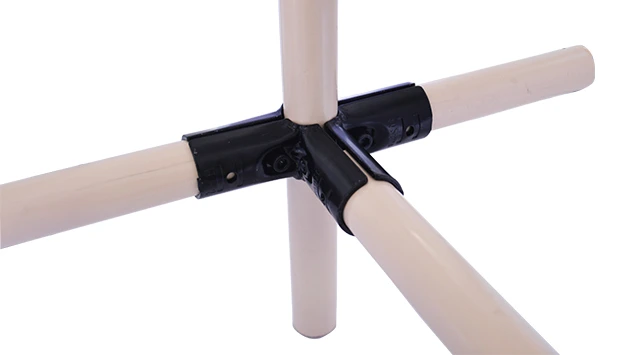
Walk into any modern manufacturing facility, and you'll notice a silent hero powering the rhythm of production: lean pipe systems. These modular, adaptable structures—workbenches, flow racks, conveyors, and material trolleys—are the backbone of lean manufacturing, designed to eliminate waste, streamline workflows, and boost efficiency. But behind their versatility lies a critical component that often goes unnoticed: the joints. Specifically, the four way straight lean pipe joint, a small but mighty connector that holds the entire system together. Its material? That's not just a detail—it's the difference between a system that lasts for years and one that falters under pressure. Today, we're diving into the material science behind this unsung hero and uncovering why aluminum has emerged as the top choice for manufacturers and lean pipe suppliers worldwide.
The Unsung Role of the Four Way Straight Lean Pipe Joint
Before we talk materials, let's appreciate the joint itself. In lean manufacturing, flexibility is king. Production lines change, workbenches need reconfiguring, and material flows shift—all to meet evolving customer demands. The four way straight lean pipe joint is the linchpin of this flexibility. As its name suggests, it connects four pipes in a straight, cross-like formation, allowing for multi-directional builds: think workbenches with overhead racks, flow racks with vertical dividers, or conveyor systems that branch into multiple lanes. Unlike fixed joints, it doesn't lock you into a single design; instead, it lets you adapt on the fly. But for this adaptability to work, the joint must be strong enough to bear weight, durable enough to withstand daily use, and lightweight enough to make reconfiguration easy. That's where material choice becomes make-or-break.
Material Selection: The Foundation of Lean System Reliability
When lean pipe suppliers design joints, they're balancing a laundry list of requirements: load capacity, resistance to corrosion and wear, cost, ease of assembly, and even sustainability. Historically, manufacturers have turned to three main materials: steel, plastic, and aluminum. Each has its merits, but only one checks all the boxes for the demands of modern lean systems. Let's break them down.
Steel: The Heavyweight Contender
Steel is the traditional workhorse of industrial applications. It's strong—really strong. A steel four way joint can handle heavy loads, making it a go-to for rugged environments like automotive manufacturing. But strength comes with a price: weight. Steel is dense (about 7.85 g/cm³), which makes assemblies bulky and hard to move. Ever tried reconfiguring a steel workbench? It's a two-person job at minimum. Then there's corrosion. Bare steel rusts quickly, so manufacturers often coat it with chrome (hence terms like "four way straight lean pipe joint chrome"). While chrome adds protection, it's an extra step in production, driving up costs, and it can chip over time, leaving the steel underneath vulnerable. For lean systems that prioritize agility and low maintenance, steel starts to feel like overkill.
Plastic: The Lightweight Underdog
Plastic joints are lightweight (density around 0.9–1.5 g/cm³) and cheap to produce, which sounds appealing at first. They're easy to mold into complex shapes, and they won't rust. But here's the catch: plastic lacks the tensile strength needed for industrial use. Over time, under constant load or temperature fluctuations, plastic joints can warp or crack. In electronics manufacturing, where static control is critical, plastic also falls short—it doesn't conduct electricity, making it a poor fit for ESD workstations. For low-weight, low-stress applications (think retail display racks), plastic might work, but in a factory setting, it's a temporary fix, not a long-term solution.
Aluminum: The Goldilocks Solution
Enter aluminum. At first glance, it might seem unassuming—softer than steel, pricier than plastic—but dig deeper, and its advantages shine. Aluminum's density is just 2.7 g/cm³, about one-third that of steel, making assemblies significantly lighter and easier to handle. Yet, when alloyed with elements like copper, magnesium, or zinc, aluminum gains impressive strength—enough to support the loads of most industrial workbenches, flow racks, and conveyors. Unlike steel, it resists corrosion naturally: its surface forms a thin, protective oxide layer that regenerates if scratched, eliminating the need for coatings like chrome. And unlike plastic, it's thermally and electrically conductive, making it suitable for environments where heat dissipation or static control matters. Aluminum isn't just good—it's the sweet spot between strength, weight, and durability.

Aluminum vs. Steel vs. Plastic: A Data-Driven Comparison
To truly understand aluminum's edge, let's put the numbers side by side. The table below compares key properties of aluminum (6061 alloy, a common choice for industrial applications), mild steel, and polypropylene (a popular plastic for joints):
| Property | Aluminum (6061 Alloy) | Mild Steel | Polypropylene Plastic |
|---|---|---|---|
| Density (g/cm³) | 2.7 | 7.85 | 0.9–1.1 |
| Tensile Strength (MPa) | 310 | 400–550 | 30–40 |
| Yield Strength (MPa) | 276 | 250–300 | 15–25 |
| Corrosion Resistance | Excellent (natural oxide layer) | Poor (requires coating) | Good (but prone to UV degradation) |
| Thermal Conductivity (W/m·K) | 167 | 45 | 0.2–0.3 |
| Recyclability | 95%+ recyclable, retains 90% of original properties | Recyclable, but energy-intensive | Limited recyclability (often downcycled) |
The data tells the story: aluminum offers steel-like strength at a fraction of the weight, with superior corrosion resistance and recyclability. Plastic can't compete on strength, and steel can't match aluminum's agility. For lean pipe suppliers and manufacturers, this translates to lower shipping costs (lighter products), easier on-site assembly (one person can reconfigure an aluminum workbench), and longer system lifespans (no rust, minimal maintenance). It's no wonder aluminum has become the material of choice.

Aluminum's Secret Weapon: The Power of Extrusion
Beyond its inherent properties, aluminum's manufacturability gives it another edge. Aluminum is easily extruded—a process where the metal is pushed through a die to create complex cross-sectional shapes. This is why "aluminum profile" manufacturing is so efficient: suppliers can produce custom shapes (like the T-slots in lean pipe joints) in one step, with tight tolerances. For four way straight lean pipe joints, extrusion allows for precision-engineered connection points that fit seamlessly with aluminum lean pipe and accessories, reducing wobble and improving stability. Steel, by contrast, is harder to extrude and often requires welding or machining, which adds cost and complexity. Plastic can be molded, but again, the strength just isn't there. Aluminum extrusion is the reason lean systems can be both highly customizable and consistently reliable.
Real-World Impact: Aluminum Joints in Action
Let's step out of the lab and into the factory. How do aluminum four way joints perform in real-world settings? Take automotive manufacturing, where production lines run 24/7. A typical workbench might hold tools, parts bins, and even small machinery—all supported by aluminum joints. Because aluminum is lightweight, workers can reposition the bench in minutes when the production line changes, minimizing downtime. In electronics manufacturing, where cleanliness is critical, aluminum's corrosion resistance means joints won't flake or rust, keeping sensitive components free from contamination. And in logistics, flow racks with aluminum roller tracks (paired with roller track connectors) rely on four way joints to maintain alignment, ensuring smooth material flow from receiving to shipping.
Lean pipe suppliers also benefit from aluminum's popularity. Since aluminum joints are lightweight, they're cheaper to ship and store, reducing inventory costs. Their modularity means suppliers can stock a few standard joint types and still meet diverse customer needs, from simple workbenches to complex conveyor systems. And with sustainability becoming a key purchasing factor, aluminum's recyclability (95% of aluminum can be recycled repeatedly without losing quality) makes it a selling point for eco-conscious manufacturers. It's a win-win: suppliers move more product, and customers get systems that align with their green goals.
Debunking Myths: Is Aluminum "Not Strong Enough"?
A common pushback we hear is, "Aluminum is too soft for industrial use." It's true that pure aluminum is soft, but industrial aluminum joints use alloys like 6061-T6, which are heat-treated to increase hardness and strength. The 6061 alloy has a tensile strength of 310 MPa—strong enough to support a 500 kg load per joint, which is more than enough for most factory applications. To put that in perspective: a typical car wheel is made from 6061 aluminum, and it supports the weight of a car. If it can handle that, it can handle a workbench. The myth of aluminum being "weak" is just that—a myth, perpetuated by outdated about pure aluminum, not the high-performance alloys used today.
The Future of Lean Systems: Aluminum Leads the Way
As manufacturing evolves—toward smaller batch sizes, faster changeovers, and greener operations—aluminum's role will only grow. Lean systems are no longer just about efficiency; they're about adaptability and sustainability. Aluminum joints enable both. With advancements in extrusion technology, we're seeing even more complex joint designs, like internal rotary aluminum joints that allow for 360-degree rotation, and multi-angle fixed joints that reduce the need for additional connectors. Lean pipe suppliers are also experimenting with recycled aluminum alloys, further lowering the carbon footprint of their products.
In industries like aerospace and renewable energy, where weight and corrosion resistance are critical, aluminum is already the standard. It's only a matter of time before other sectors follow suit. The four way straight lean pipe joint, once a component, is now a symbol of how material science drives manufacturing innovation. And at its core is aluminum—a material that doesn't just meet the demands of today's factories but anticipates the needs of tomorrow's.
Conclusion: Aluminum Isn't Just a Choice—It's the Future
The four way straight lean pipe joint may be small, but its impact on lean manufacturing is enormous. It's the connector that turns pipes into productivity, and its material determines whether that productivity is fleeting or lasting. Steel is strong but cumbersome, plastic is cheap but fragile, but aluminum? Aluminum is the perfect balance—strong enough to support industrial loads, light enough to enable agility, and durable enough to stand the test of time. Its natural corrosion resistance, recyclability, and ease of manufacturing make it the clear favorite for lean pipe suppliers and manufacturers alike.
So the next time you walk through a factory, take a closer look at those workbenches, flow racks, and conveyors. Chances are, the joints holding them together are aluminum. And now you know why: it's not just about metal—it's about material science, innovation, and the relentless pursuit of efficiency that defines lean manufacturing. Aluminum isn't just the top choice for four way straight lean pipe joints; it's the foundation on which the next generation of manufacturing will be built.