- Company Articles
- Products and Technology
- Product knowledge
- Material Science of Three Way Aluminum Pipe Joints: Alloy Composition Benefits

Material Science of Three Way Aluminum Pipe Joints: Alloy Composition Benefits
Related Product
Three Way Aluminum Pipe Joint
Aluminum 3 way pipe joint for 28mm aluminum pipe connection in 3 direction.
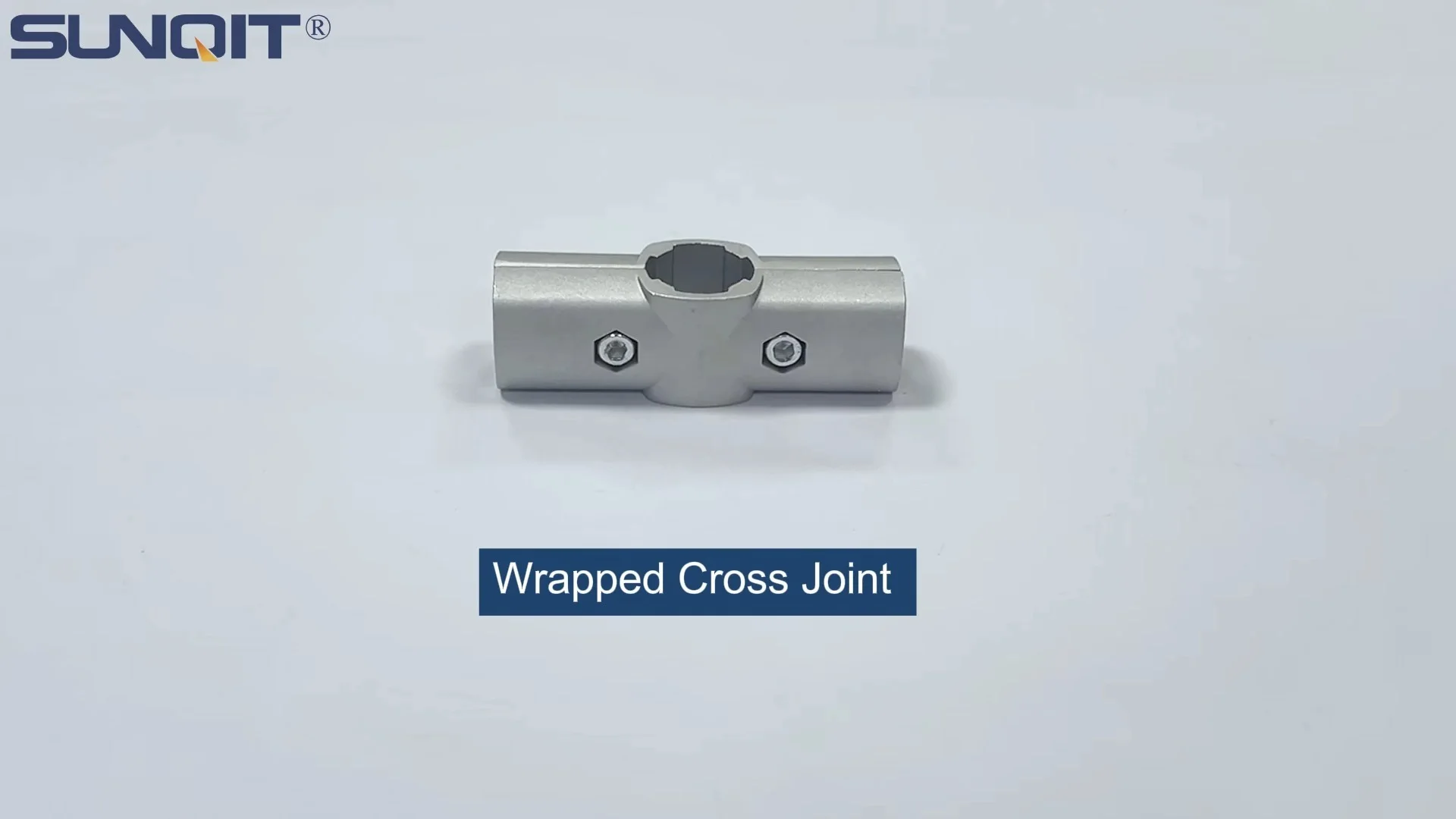
Walk through any modern factory, warehouse, or assembly line, and you'll likely spot a hidden hero holding everything together: three way aluminum pipe joints. These unassuming components—small, often overlooked—are the quiet architects of stability in workbenches, material racks, and flow systems. But what makes them so reliable? The answer lies in the science of aluminum alloys. The right blend of metals, carefully crafted through decades of material engineering, turns a simple piece of aluminum into a joint that balances strength, durability, and versatility. In this article, we'll dive into the material science behind three way aluminum pipe joints, exploring how alloy composition shapes their performance and why they've become indispensable in industries worldwide.
What Are Three Way Aluminum Pipe Joints? A Closer Look
Before we dig into the science, let's clarify what three way aluminum pipe joints actually are. Picture a T-shaped or Y-shaped connector, typically made of aluminum alloy, designed to link three pipes or profiles at precise angles—usually 90 degrees or 120 degrees. These joints are the "knees" and "elbows" of modular systems, allowing manufacturers to build custom structures like workbenches, material racks, and conveyor supports without welding or complex tools. Unlike rigid steel brackets, they offer flexibility: you can disassemble, reconfigure, and reuse them as needs change. But their real magic? The aluminum alloy they're made from. It's not just any aluminum—it's a carefully engineered blend that makes these joints strong enough to support heavy loads, light enough to handle easily, and resilient enough to last in tough industrial environments.
The Material Science Behind Aluminum Alloys: Why Composition Matters
Aluminum as a Base: Lightweight and Versatile
Pure aluminum is soft and malleable—great for foil or wiring, but not for holding up a 500-pound workbench. That's where alloys come in. By mixing pure aluminum with small amounts of other metals (called alloying elements), engineers transform its properties. Aluminum's natural advantages—low density (about a third of steel), excellent corrosion resistance, and high thermal conductivity—remain, but alloying adds strength, hardness, and durability. For three way pipe joints, which need to balance load-bearing capacity with ease of manufacturing, the choice of alloy is critical. The most common alloys used today are 6061 and 6063, each with a unique mix of elements tailored to specific needs.
Key Alloys in Three Way Joints: 6061, 6063, and Beyond
Walk into any aluminum profile supplier's catalog, and you'll see these numbers pop up: 6061 and 6063. They're part of the 6xxx series of aluminum alloys, which are heat-treatable and known for their excellent extrusion properties—making them perfect for shaping into the precise, complex geometries of three way joints. Let's break them down:
6061 Aluminum Alloy : Often called the "workhorse" alloy, 6061 is a favorite for heavy-duty applications. Its composition includes silicon (0.4-0.8%), magnesium (0.8-1.2%), and small amounts of copper (0.15-0.4%). This mix creates a alloy with high tensile strength (around 310 MPa) and good ductility, meaning it can bend slightly under stress without breaking. It's also highly machinable, so manufacturers can drill, tap, or mill it to add threads or grooves for connecting pipes.
6063 Aluminum Alloy : If 6061 is the workhorse, 6063 is the "craftsman" alloy. With a higher silicon content (0.2-0.6%) and lower magnesium (0.45-0.9%), it's designed for extrusion—the process of pushing heated alloy through a die to create complex shapes. 6063 has a smoother surface finish and better corrosion resistance than 6061, making it ideal for applications where appearance or exposure to moisture matters, like food processing or pharmaceutical facilities. Its tensile strength is lower (around 205 MPa), but it's more than enough for medium-load uses like light-duty workbenches or retail display racks.
The Role of Alloying Elements: Silicon, Magnesium, and More
What do these elements actually do? Let's take silicon first. In 6063, higher silicon levels lower the alloy's melting point, making it flow more easily through extrusion dies. This allows for sharper corners, smoother surfaces, and intricate details—critical for three way joints that need to fit snugly with pipes. Magnesium, on the other hand, forms compounds like Mg2Si (magnesium silicide) when heat-treated. These tiny particles act as "reinforcements," strengthening the alloy without adding weight. That's why 6061, with more magnesium, has higher tensile strength. Copper, found in small amounts in 6061, boosts hardness and fatigue resistance—useful for joints that undergo repeated stress, like those in conveyor systems.
Other elements play supporting roles too. Manganese improves corrosion resistance, while chromium helps control grain size during heat treatment, ensuring consistent strength across the joint. Even impurities are tightly controlled: too much iron, for example, can form brittle compounds that weaken the alloy. It's a balancing act—every element is added with a purpose, and the result is a material that's greater than the sum of its parts.
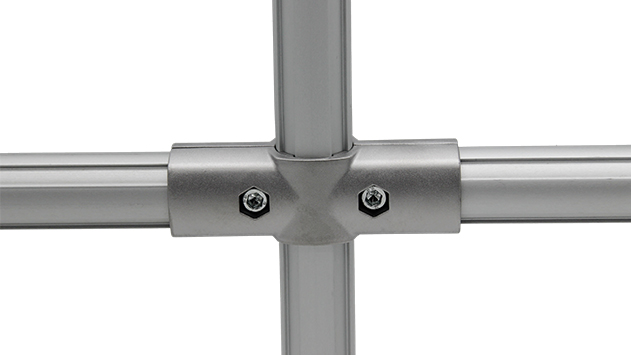
Benefits of Optimal Alloy Composition: Strength, Durability, and More
Tensile Strength and Load-Bearing Capacity
For three way joints, tensile strength is non-negotiable. Imagine a material rack stacked with heavy components: the joints holding the rack together must withstand the downward pull of gravity without deforming. 6061 alloy shines here. Its high tensile strength (310 MPa) means a single 2-inch joint can support over 200 kg of weight—enough for most industrial loads. 6063, while weaker, still handles 150-180 kg, which is more than sufficient for lighter uses like office shelving or small workbenches. But strength isn't just about raw numbers; it's about consistency. Thanks to precise alloy control, manufacturers can guarantee that every joint meets the same strength standards, reducing the risk of failure in critical systems.
Corrosion Resistance: Fighting Rust in Industrial Environments
Industrial spaces are tough on metal. Factories are full of moisture, chemicals, and temperature swings—all enemies of unprotected steel, which rusts quickly. Aluminum alloys, however, fight back. When exposed to air, aluminum forms a thin, invisible layer of aluminum oxide (Al2O3) that acts as a barrier against corrosion. But alloy composition amplifies this effect. 6063, with its lower copper content, resists corrosion better than 6061, making it a top choice for humid environments like food processing plants or outdoor warehouses. Even in harsh settings—think coastal areas with salt spray or factories using caustic cleaning agents—aluminum joints hold up where steel would rust and plastic would degrade. This longevity translates to lower replacement costs and less downtime for maintenance.
Machinability and Formability: Ease of Manufacturing
Ever wondered how three way joints get their precise T-shapes or smooth threads? It's all thanks to the alloy's machinability and formability. Aluminum extrusion profile manufacturing relies on the alloy's ability to flow under heat and pressure, and 6063 is a star here. Its high silicon content makes it softer at extrusion temperatures, allowing it to fill even the most detailed die cavities—like the small grooves that lock pipes into place. 6061, while stronger, is still machinable: manufacturers can drill holes, cut threads, or add notches without cracking the material. This ease of processing keeps production costs low and allows for custom designs. Need a joint with extra holes for wiring? No problem. A Y-shaped joint instead of a T-shape? The alloy can handle it.
Thermal Conductivity: A Hidden Advantage
Here's a benefit you might not expect: aluminum alloys are excellent thermal conductors. In applications where heat management matters—like electronics manufacturing or automotive assembly lines—this is a game-changer. For example, workbenches used to test circuit boards generate heat from equipment; aluminum joints help dissipate that heat, preventing overheating and protecting sensitive components. In cold environments, like refrigerated warehouses, the same conductivity helps prevent condensation buildup on joints, reducing corrosion risk. It's a subtle advantage, but one that adds up in industries where temperature control is critical.

From Alloy to Extrusion: The Manufacturing Journey of Aluminum Extrusion Profiles
Alloy composition sets the stage, but the real art is in turning that alloy into a functional three way joint. The star of this process? Extrusion. Aluminum extrusion profile manufacturing is like squeezing toothpaste from a tube—except on an industrial scale, with molten alloy and precision dies. Here's how it works:
First, the alloy billet (a cylindrical block of 6061 or 6063) is heated to around 450-500°C—hot enough to soften the metal but not melt it. Then, it's loaded into an extrusion press, where a hydraulic ram pushes the billet through a steel die. The die is shaped like the desired joint—T-shaped, Y-shaped, or custom—and as the billet flows through, it takes on that shape. After extrusion, the hot profile is cooled with water or air, then "aged" (heated again at a lower temperature) to strengthen the alloy through precipitation hardening. Finally, it's cut to length, and any finishing touches—like threading or anodizing—are added.
This process is what makes aluminum extrusion profiles so versatile. Unlike casting, which can create complex shapes but often results in porous or weak spots, extrusion produces uniform, dense material with consistent strength. For three way joints, this uniformity is critical: every part of the joint must be equally strong to avoid failure at the "corners" of the T or Y shape. Extrusion also allows for tight tolerances—meaning joints fit together perfectly with aluminum pipes and accessories, reducing wobble and improving stability.

Comparing Alloys: Which One Fits Your Needs? (Table)
| Alloy Type | Key Alloying Elements | Tensile Strength (MPa) | Corrosion Resistance | Machinability | Best For |
|---|---|---|---|---|---|
| 6061 | Si (0.4-0.8%), Mg (0.8-1.2%), Cu (0.15-0.4%) | 310 | Good | Excellent | Heavy-duty workbenches, material racks, load-bearing structures |
| 6063 | Si (0.2-0.6%), Mg (0.45-0.9%) | 205 | Excellent | Superior (ideal for extrusion) | Light-duty shelving, food processing equipment, humid environments |
| 7075 (High-Strength Option) | Zn (5.1-6.1%), Mg (2.1-2.9%), Cu (1.2-2.0%) | 570 | Fair | Moderate | Aerospace, military, or ultra-high-load applications (rare for standard joints) |
Beyond Alloys: Aluminum Profile Accessories and the Ecosystem of Three Way Joints
Three way aluminum pipe joints don't work alone—they're part of a larger ecosystem of aluminum profile accessories. Think of them as the "glue" that connects pipes, brackets, casters, and panels into cohesive systems. For example, a typical workbench might use three way joints to connect vertical legs to horizontal supports, paired with aluminum profile accessories like end caps (to smooth sharp edges), rubber strips (to dampen noise), and caster wheels (for mobility). The key? Compatibility. Because most aluminum profiles and joints use standard sizes (like 20x20mm or 40x40mm), you can mix and match components from different suppliers to create custom solutions. This modularity is a huge advantage over fixed systems: if your workbench needs to grow, just add more pipes and joints. If a joint wears out, swap it out in minutes—no welding or special tools required.
Real-World Applications: Where Three Way Aluminum Pipe Joints Shine
Now that we understand the science, let's look at where these joints make a real difference. In automotive factories, 6061 three way joints support heavy conveyor systems that move car parts along the assembly line. Their high strength ensures they can handle the weight of engines and chassis, while their corrosion resistance stands up to the lubricants and coolants used in manufacturing. In electronics plants, 6063 joints are used in ESD workstations (though not our focus here), where their smooth surfaces prevent static buildup and their corrosion resistance protects sensitive components from moisture.
Retail and logistics also rely on these joints. Warehouses use them to build custom material racks—like "material rack b (3 row and 3 floor)" from supplier catalogs—where 6063's corrosion resistance keeps stored goods safe in humid conditions. Even small businesses benefit: cafes use aluminum joint systems to build mobile display shelves, and workshops use them for tool storage. The common thread? Flexibility. Whether you need a heavy-duty structure or a lightweight, temporary setup, three way aluminum pipe joints deliver.
Why Aluminum Stands Out: Comparing with Steel, Plastic, and Stainless Steel
Aluminum alloys aren't the only option for pipe joints, but they often outshine the competition. Let's see how they stack up:
Steel : Steel is strong, but it's heavy—three times heavier than aluminum for the same volume. This makes steel joints harder to install and more expensive to ship. They also rust without protective coatings, adding maintenance costs. While steel might be cheaper upfront, aluminum's longevity and lower handling costs often make it the better long-term investment.
Plastic : Plastic joints are lightweight and cheap, but they lack strength. They warp under heat, crack in cold temperatures, and degrade under UV light. For temporary, low-load uses, they're fine—but in industrial settings, they're a liability. Aluminum joints, by contrast, handle heat, cold, and heavy loads without breaking a sweat.
Stainless Steel : Stainless steel resists corrosion well, but it's even heavier than carbon steel and much more expensive. It's overkill for most applications where aluminum works just as well. Unless you need extreme corrosion resistance (like in marine environments), aluminum offers better value.
Conclusion: The Future of Three Way Aluminum Pipe Joints – Innovations in Alloy Science
Three way aluminum pipe joints may seem simple, but they're a testament to the power of material science. By tweaking the composition of aluminum alloys—adding a little silicon here, a dash of magnesium there—engineers have created a material that's strong, lightweight, corrosion-resistant, and endlessly versatile. As industries demand more efficient, sustainable solutions, we'll likely see even better alloys emerge: maybe new blends with higher strength-to-weight ratios or alloys tailored for 3D printing, opening up even more design possibilities. But for now, 6061 and 6063 remain the gold standard, quietly holding together the systems that keep our factories, warehouses, and workplaces running.
The next time you walk through a factory or use a modular workbench, take a moment to appreciate the three way aluminum pipe joints. They may not grab headlines, but they're the unsung heroes of modern manufacturing—proof that even the smallest components can have a big impact when backed by smart material science.