- Company Articles
- Products and Technology
- Product knowledge
- Material Science: What Makes One Side Rotatory Chrome Parallel Lean Pipe Joints Durable?

Material Science: What Makes One Side Rotatory Chrome Parallel Lean Pipe Joints Durable?
Related Product
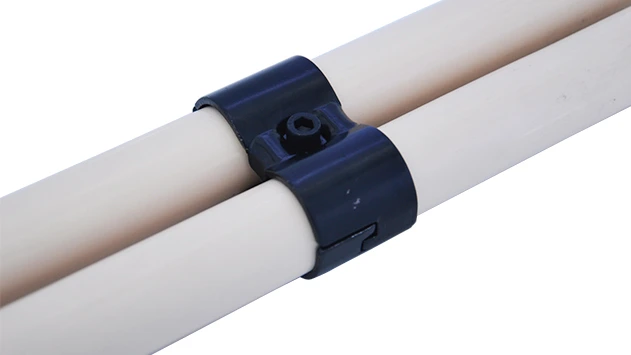
Parallel Lean Pipe Joint
Parallel lean pipe joint used for 2 pcs 28MM lean pipe connection in parallel direction to enhance frame structure, usually for heavy payload requirement for workbench. flow rack, hand trolley.
In the world of manufacturing and production, where every second counts and efficiency is king, lean systems have become the backbone of modern operations. From automotive assembly lines to electronics manufacturing floors, these systems rely on a delicate balance of moving parts, stationary structures, and flexible components working in harmony. But if you peel back the layers of a well-oiled lean system, you'll find that its strength often lies in the smallest, most unassuming parts—like the joints that hold everything together. Today, we're diving deep into one such component: the one side rotatory chrome parallel lean pipe joint. It might sound like a mouthful, but this humble piece of engineering plays a critical role in keeping lean systems running smoothly. The question is, what makes it so durable? Let's unpack the material science, design ingenuity, and manufacturing magic that give these joints their impressive lifespan.
First Things First: What Even Is a One Side Rotatory Chrome Parallel Lean Pipe Joint?
Before we get into the "why" of durability, let's make sure we're all on the same page about the "what." If you've ever walked through a factory or warehouse, you've probably seen lean pipes in action—those modular tubes and connectors that form workbenches, flow racks, conveyors, and material trolleys. They're the building blocks of lean systems, designed to be lightweight, flexible, and easy to reconfigure. But to turn a bunch of pipes into a functional structure, you need joints. And not just any joints—joints that can handle movement, weight, and the daily wear and tear of a busy production environment.
Enter the one side rotatory chrome parallel lean pipe joint. As the name suggests, this joint is designed to connect two lean pipes in a parallel arrangement (meaning they run alongside each other) while allowing rotation on one side. Imagine a workbench where one section needs to pivot to load materials, or a flow rack where a section tilts to feed parts to an assembly line—this joint makes that movement possible. The "chrome" part refers to its finish, which isn't just for looks; it's a key player in durability. And "one side rotatory" means the rotation is limited to one end, keeping the other side fixed for stability. In short, it's a multitasker: it holds pipes together, allows controlled movement, and stands up to heavy use. But how?
The Material Science Behind the Durability: It Starts with What It's Made Of
Durability isn't an accident—it's engineered, and it all starts with the materials. Let's break down the components that make these joints tough enough to handle the demands of a lean system.
1. The Base Metal: Strength from the Inside Out
At the core of every one side rotatory chrome parallel lean pipe joint is a base metal, typically steel or aluminum. Why these metals? Because they offer an unbeatable combination of strength, ductility (the ability to bend without breaking), and cost-effectiveness. Let's start with steel. Most joints use low-carbon steel as a base because it's easy to machine (meaning it can be shaped into precise forms) and has good tensile strength—the ability to resist breaking under tension. But plain steel alone isn't enough. To boost its performance, manufacturers often add small amounts of alloys like manganese, chromium, or molybdenum. Manganese, for example, enhances hardenability (how well the steel responds to heat treatment) and tensile strength, while chromium adds corrosion resistance—a preview of the chrome plating we'll discuss later.
Aluminum is another common base material, especially in applications where weight is a concern. Aluminum lean pipe systems are lighter than steel, making them easier to reconfigure and move. But aluminum alone is softer than steel, so it's often alloyed with copper, magnesium, or silicon to increase strength. For instance, an aluminum-magnesium alloy (like 5052 aluminum) has excellent corrosion resistance and good formability, making it a popular choice for joints that need to balance lightness and durability. The key here is that the base metal isn't just "metal"—it's a carefully selected alloy designed to provide a strong foundation for the joint's other features.
2. Chrome Plating: More Than Just Shiny—It's a Shield
Now, let's talk about the "chrome" in the joint's name. Chrome plating is a process where a thin layer of chromium is electroplated onto the surface of the base metal. This isn't just for aesthetics (though the mirror-like finish is a nice bonus); it's a critical protective barrier. Chromium is naturally resistant to corrosion, which is a big deal in manufacturing environments where moisture, oils, and chemicals can take a toll on metal parts. But that's not all—chrome plating also hardens the surface of the joint. The plating process creates a layer of chromium oxide on the surface, which has a hardness of around 800-1000 HV (Vickers hardness), compared to the base steel's 150-200 HV. That's a massive jump in surface hardness, which translates to better wear resistance. Think about it: every time the joint rotates, there's friction between moving parts. A harder surface means less material wears away over time, keeping the joint tight and functional longer.
But not all chrome plating is created equal. The thickness of the plating matters—too thin, and it might chip or wear off; too thick, and it could crack under stress. Most manufacturers aim for a plating thickness of 5-10 microns (that's 0.005-0.01 millimeters) for these joints. This sweet spot provides enough protection without compromising the joint's flexibility. Additionally, the plating process itself is tightly controlled. Before plating, the base metal is cleaned to remove oils, rust, or debris—any imperfection here could cause the chrome to peel later. Then, the part is submerged in a chromium electrolyte bath and subjected to an electric current, which deposits the chromium ions onto the surface. It's a precise science, and getting it right is half the battle in ensuring durability.
3. The Role of Alloys: Making the Metal Work Harder
We touched on alloys earlier, but let's dive deeper. Even with a strong base metal and chrome plating, the joint's durability hinges on the specific mix of elements in its composition. For steel-based joints, adding vanadium, for example, can refine the grain structure of the metal, making it stronger and more resistant to fatigue (the weakening of metal due to repeated stress). Molybdenum, on the other hand, improves high-temperature strength—useful in environments where machinery generates heat. For aluminum joints, zinc is often added to create heat-treatable alloys (like 6061 aluminum), which can be strengthened through a process of heating and cooling, further boosting their load-bearing capacity.
These alloy additions might seem minor—often just a few percent by weight—but they have a huge impact on performance. It's like adding the right spices to a recipe: a little goes a long way in enhancing the final result. By tailoring the alloy composition to the joint's intended use (e.g., heavier loads vs. frequent rotation), manufacturers ensure that the joint can handle the specific stresses it will face in the field.

Design Engineering: How Shape and Structure Boost Durability
Materials are only part of the story. Even the strongest metal will fail if the design is flawed. The one side rotatory chrome parallel lean pipe joint's durability also comes down to clever engineering choices that distribute stress, minimize wear, and maximize stability.
1. The Rotation Mechanism: Minimizing Friction, Maximizing Movement
The "one side rotatory" feature is what makes this joint unique—and it's also a potential weak point if not designed carefully. When a joint rotates, the contact points between moving parts are prone to friction and wear. To combat this, manufacturers often incorporate small bearings or bushings into the rotation mechanism. Bearings reduce friction by using rolling elements (like balls or rollers) to separate the moving parts, so instead of sliding against each other, they roll, which generates far less heat and wear. Bushings, typically made of durable plastics or bronze, act as a low-friction barrier between metal surfaces, absorbing some of the stress and preventing direct metal-on-metal contact.
Another key design feature is the pivot point itself. The joint is engineered so that the rotation axis is centered and aligned with the pipe's load, ensuring that weight is distributed evenly during movement. If the pivot were off-center, it would create uneven stress, leading to premature wear or even bending. Think of it like a door hinge: if the hinge pins are misaligned, the door sticks and the hinge wears out faster. The same principle applies here—precision alignment is critical.
2. Parallel Alignment: Spreading the Load
The "parallel" part of the joint's name refers to how it connects two pipes—side by side, in a parallel configuration. This isn't just for space-saving; it's a structural choice that enhances durability. When pipes are parallel, the load they carry is spread across a wider area, reducing the stress on any single point of the joint. For example, if you have a workbench made with parallel pipes connected by these joints, the weight of tools or materials on the bench is distributed across both pipes and the joint, rather than on one spot. This even distribution prevents stress concentrations, which are a common cause of metal fatigue and failure.
The joint's shape also plays a role here. Most parallel lean pipe joints have a "U" or "C" shape that wraps around the pipes, providing multiple contact points. This design ensures a tight, secure fit that resists twisting or bending under load. It's like using two hands to carry a heavy box instead of one—more support means less strain.
3. Load-Bearing Capacity: Built to Handle the Weight
A joint is only as good as its ability to carry weight without deforming. To maximize load-bearing capacity, designers calculate the maximum stress the joint will face (based on factors like pipe diameter, material thickness, and intended use) and then reinforce critical areas. This might mean thickening the metal at the connection points, adding ribs or gussets (triangular supports) to strengthen corners, or using a larger diameter for the pivot pin. For example, a joint designed for heavy-duty flow racks might have a thicker base plate and a larger pivot pin than one used for lightweight workbenches. These adjustments ensure that the joint can handle not just static loads (like a stationary stack of materials) but also dynamic loads (like parts sliding down a conveyor or a trolley being pushed around), which often exert more force.

Manufacturing Processes: Crafting Durability, Step by Step
Even with the right materials and design, a joint's durability depends on how it's made. The manufacturing process is where precision, care, and quality control come into play, turning raw materials into a reliable component.
1. Precision Machining: Getting the Fit Just Right
After the base metal is cast or extruded into a rough shape, it undergoes precision machining to refine its dimensions. This might involve cutting, drilling, milling, or turning the metal to create the exact shapes needed for the joint—like the holes for the pivot pin, the grooves for the pipes, or the flat surfaces for the chrome plating. Machining is done using computer numerical control (CNC) machines, which can achieve tolerances as tight as 0.001 inches. Why does this matter? A poorly machined joint with uneven surfaces or misaligned holes will wear faster, as the parts won't fit together snugly, leading to rattling, increased friction, and stress points. Tight tolerances ensure that every component fits perfectly, reducing unnecessary movement and wear.
2. Heat Treatment: Strengthening the Metal from Within
For steel joints, heat treatment is often a critical step. This process involves heating the metal to a specific temperature, holding it there, and then cooling it rapidly (quenching) or slowly (tempering) to alter its microstructure. For example, quenching can harden the steel, making it more resistant to wear, while tempering reduces brittleness, ensuring the joint doesn't crack under impact. Aluminum joints might undergo a similar process called precipitation hardening, where the alloy is heated to allow tiny particles to form within the metal, strengthening it. Heat treatment is a delicate balance—too much heat can weaken the metal, while too little won't provide the desired strength. Manufacturers carefully monitor temperature and timing to get the perfect balance for each joint's intended use.
3. Quality Control: Testing Before It Leaves the Factory
Before a joint ever makes it to a customer, it undergoes rigorous testing to ensure it meets durability standards. This might include:
- Tensile testing: Pulling the joint until it breaks to measure its ultimate strength and how much it stretches before failing.
- Compression testing: Squashing the joint to see how much weight it can bear without deforming.
- Wear testing: Simulating thousands of rotations to check for signs of wear on the pivot mechanism.
- Corrosion testing: Exposing the joint to salt spray or moisture to ensure the chrome plating and base metal resist rust.
These tests aren't just box-checking—they're essential for ensuring that the joint will perform as expected in real-world conditions. A joint that passes these tests is far more likely to last for years in a busy factory than one that skips quality control.
A Closer Look: Comparing Materials for Durability
To put all this into perspective, let's compare the durability of chrome-plated steel joints with other common options, like unplated steel or aluminum lean pipe joints. The table below breaks down key performance metrics:
| Material Type | Surface Hardness (HV) | Corrosion Resistance | Wear Resistance (Cycles Before Wear) | Typical Lifespan in Heavy Use |
|---|---|---|---|---|
| Unplated Steel Joint | 150-200 | Low (prone to rust) | 5,000-10,000 | 1-2 years |
| Chrome-Plated Steel Joint | 800-1000 | High (resistant to moisture, oils) | 50,000-100,000 | 5-7 years |
| Aluminum Lean Pipe Joint (Alloyed) | 60-100 (unplated); 150-200 (anodized) | High (natural oxide layer) | 30,000-60,000 | 3-5 years |
As you can see, the chrome-plated steel joint outperforms the others in hardness, wear resistance, and lifespan—thanks to its combination of strong base material, chrome plating, and careful design. Aluminum joints hold their own, especially in lightweight applications, but the chrome-plated steel joint is the workhorse for heavy-duty, high-cycle environments.
Why Durability Matters in Lean Systems
At this point, you might be thinking, "Okay, so these joints are durable—but why does that matter so much?" In lean systems, durability isn't just a nice-to-have; it's a cornerstone of efficiency, safety, and cost-effectiveness.
1. Reducing Downtime: Keeping the Line Moving
In manufacturing, downtime is the enemy. Every minute a production line is stopped due to a broken joint means lost output, missed deadlines, and frustrated workers. A durable joint reduces the risk of unexpected failures, keeping the system running smoothly. For example, if a joint in a flow rack fails, the entire rack might need to be disassembled to replace it, halting the flow of materials to the assembly line. A joint that lasts 5-7 years instead of 1-2 means fewer replacements, less downtime, and more consistent productivity.
2. Cost Efficiency: Saving Money in the Long Run
It's true that a high-quality, durable joint might cost more upfront than a cheaper, flimsier alternative. But over time, it's almost always a better investment. Let's do the math: A budget joint might cost $5 and last 1 year, requiring replacement every 12 months. A durable chrome-plated joint might cost $15 but last 5 years. Over 5 years, the budget option would cost $25 (5 joints x $5), while the durable one costs $15—a 40% savings. Plus, you avoid the labor costs of replacing joints, the cost of downtime, and the risk of damaged materials from a sudden failure. It's the classic "buy once, cry once" principle—investing in quality upfront saves money and headaches later.
3. Safety: Protecting Workers and Products
A failed joint isn't just an inconvenience—it can be dangerous. If a joint holding up a heavy material rack fails, the rack could collapse, injuring workers or damaging expensive equipment. Durable joints provide peace of mind, knowing that the structures they support are stable and secure. Additionally, worn joints can become loose over time, leading to wobbly workbenches or unstable trolleys, which increase the risk of accidents. By choosing durable joints, companies prioritize the safety of their employees and the integrity of their products.
Conclusion: The Unsung Hero of Lean Systems
The one side rotatory chrome parallel lean pipe joint might not be the most glamorous component in a lean system, but it's a testament to the power of material science, design engineering, and careful manufacturing. Its durability comes from a perfect storm of factors: a strong, alloyed base metal, a protective chrome plating, a friction-minimizing rotation mechanism, and a stress-distributing parallel design. Together, these elements create a joint that can withstand the daily grind of manufacturing, keeping lean systems running efficiently for years.
As lean systems continue to evolve, with new materials and technologies emerging (like advanced composites or 3D-printed components), the basic principles of durability will remain the same: start with the right materials, design for strength and function, and build with precision. And while we might not always notice them, these small, sturdy joints will keep doing their job—quietly, reliably, and durably—holding the backbone of modern manufacturing together.