- Company Articles
- Products and Technology
- Product knowledge
- Materials for Flat Rigid Castor Wheels: Aluminum vs Steel for Heavy-Duty Use

Materials for Flat Rigid Castor Wheels: Aluminum vs Steel for Heavy-Duty Use
Related Product
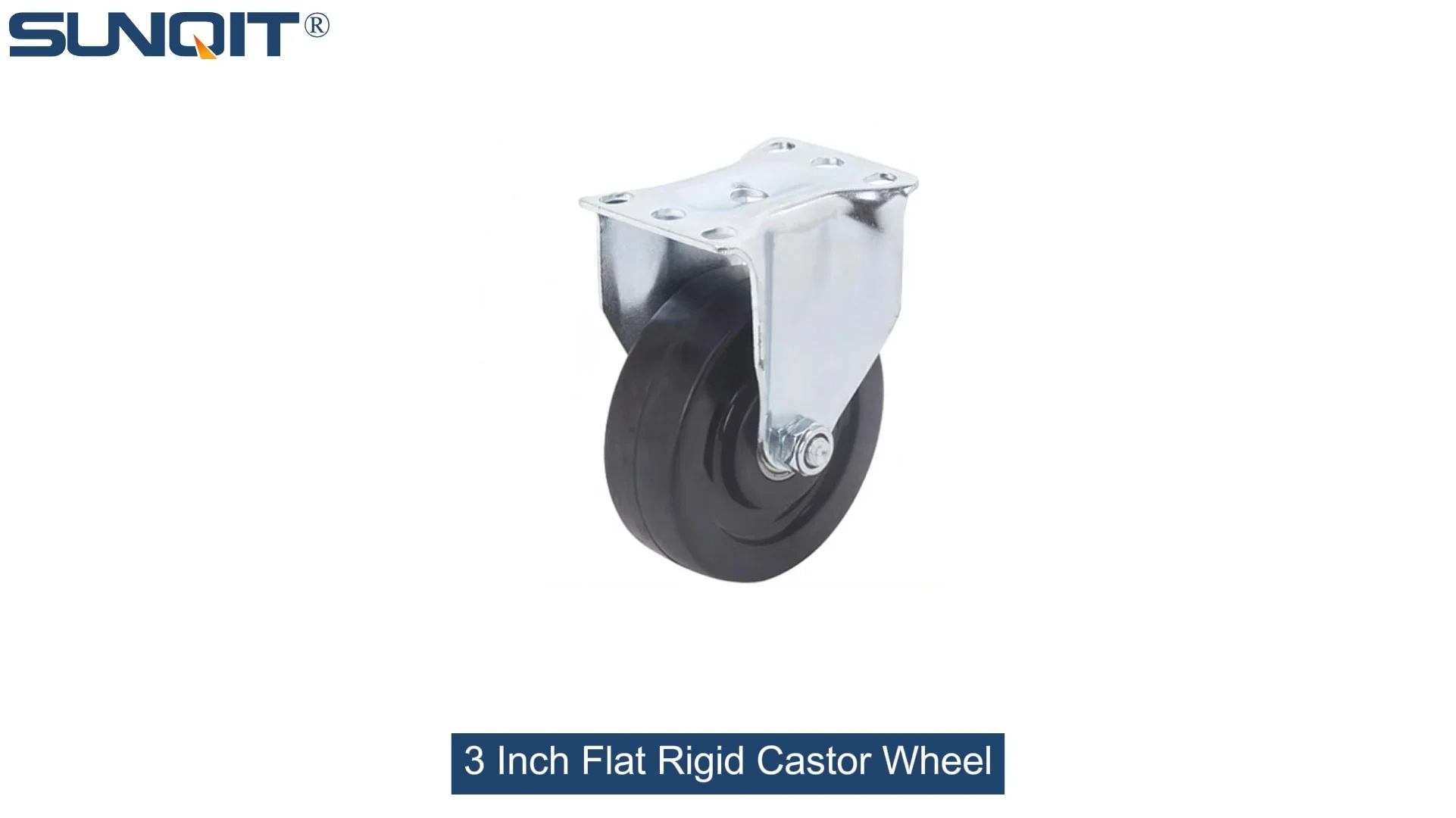
Flat Rigid Castor Wheel
Chair Casters Ball Bearing Wheels Rubber Base. Resistant to abrasion, impact and corrosion. Heavy payload can hold 70Kgs per pcs,which can make it works at a stable and smooth status.
Choosing the right foundation for your workflow—because every wheel matters in keeping operations rolling smoothly
Introduction: The Unsung Heroes of Industrial Mobility
Walk through any factory, warehouse, or workshop, and you'll notice a silent workforce hard at work: caster wheels. These small but mighty components carry everything from heavy machinery to delicate components, turning static workbenches into mobile stations and clunky storage racks into agile material handlers. But not all caster wheels are created equal. When it comes to heavy-duty use—think assembly lines, loading docks, or lean manufacturing cells—the material of the caster wheel's frame and components can make or break efficiency, safety, and long-term cost-effectiveness.
Today, we're diving deep into two of the most popular materials for flat rigid caster wheels: aluminum and steel. Both have loyal advocates, but their strengths and weaknesses shine in different environments. Whether you're outfitting a new lean system, upgrading a production line, or simply trying to reduce downtime from broken wheels, understanding the nuances of these materials will help you make a choice that aligns with your team's daily needs. Let's start by asking: What makes a caster wheel "heavy-duty," and why does the material matter?
Why Material Choice Defines Performance: Beyond "Strong Enough"
A caster wheel's job is deceptively simple: support weight, reduce friction, and withstand repeated use. But in heavy-duty settings, "support weight" might mean 500 pounds per wheel, "reduce friction" could require smooth rolling over uneven concrete, and "withstand use" might translate to 12-hour shifts, seven days a week. Add environmental factors—humidity, chemicals, extreme temperatures—and suddenly, "strong enough" isn't enough. The material determines how well the wheel resists corrosion, handles impact, and even how much energy your team expends pushing a loaded trolley.
Aluminum and steel are both metals, but their atomic structures, manufacturing processes, and inherent properties set them worlds apart. Aluminum is lightweight and corrosion-resistant; steel is dense and supremely strong. Choosing between them isn't just about picking a metal—it's about matching the material to your workflow's unique demands. Let's break down each material, starting with the lighter contender: aluminum.

Aluminum Caster Wheels: Lightweight Powerhouse or Delicate Balance?
Aluminum has long been favored in industries where weight and corrosion resistance are non-negotiable. Think aerospace, medical equipment, and cleanrooms. But when it comes to caster wheels, aluminum's appeal lies in its unique blend of strength and agility. Most aluminum caster wheels are made from aluminum pipe or extruded aluminum profiles, which are shaped under high pressure to create strong, uniform structures. This process, called extrusion, allows manufacturers to design wheels with hollow cores—reducing weight without sacrificing durability.
One of aluminum's biggest selling points is its natural resistance to rust. Unlike steel, aluminum forms a thin oxide layer when exposed to air, which acts as a protective barrier against moisture and chemicals. This makes aluminum caster wheels ideal for environments where cleanliness is critical, like food processing plants or pharmaceutical labs. Imagine a team in a medical device workshop pushing a trolley loaded with sterile tools: an aluminum wheel won't leave rust streaks on the floor or contaminate sensitive products. That's a game-changer for compliance and daily cleanup.
But aluminum isn't all sunshine and smooth rolling. Its lightweight nature is a double-edged sword. While it makes carts easier to push (reducing worker fatigue), it can't match steel's load capacity. A standard aluminum caster wheel might handle 300–400 pounds per wheel, whereas steel can easily exceed 1,000 pounds. This makes aluminum a poor fit for ultra-heavy loads, like automotive engines or large machinery parts. Additionally, aluminum is softer than steel, so it's more prone to dents and scratches. In a busy warehouse where carts collide with pallet racks or concrete curbs, an aluminum wheel might show wear faster than its steel counterpart.
Real-World Example:
A electronics manufacturer in California switched to aluminum caster wheels on their assembly line workbenches last year. Their goal? Reduce the effort required to reposition workstations during line changeovers. The result: Workers reported 30% less strain when moving benches, and the plant saw a 15% drop in downtime between shifts. The tradeoff? They had to limit each bench to 400 pounds—down from 600 with their old steel wheels. For their lightweight circuit boards and small components, though, the tradeoff was worth it.
Another advantage of aluminum is its versatility. Aluminum pipe accessories, like brackets and connectors, are easy to machine and customize. This means manufacturers can design caster wheels with unique features—like integrated brakes or swivel locks—without adding significant weight. For lean system setups, where adaptability is key, this flexibility lets teams tweak their caster wheels to fit evolving workflows. Need a wheel that locks in place during assembly but rolls freely during transport? Aluminum's malleability makes that possible.

Steel Caster Wheels: The Heavyweight Champion of Durability
If aluminum is the marathon runner—light and efficient—steel is the weightlifter: brute strength, no compromises. Steel caster wheels are often made from stainless steel pipe series or carbon steel, both of which are known for their exceptional load-bearing capacity. Carbon steel, in particular, is alloyed with carbon to increase hardness, making it ideal for heavy-duty applications. Stainless steel, on the other hand, adds chromium to the mix, boosting corrosion resistance (though not quite to aluminum's level).
Steel's claim to fame is its sheer toughness. A steel caster wheel can easily support 1,000 pounds or more per wheel, making it the go-to choice for industries like construction, automotive manufacturing, and logistics. Imagine a warehouse trolley loaded with steel beams: a steel wheel won't bend, crack, or deform under that pressure. Even better, steel handles impact like a pro. If a loaded trolley slams into a wall (we've all seen it happen), a steel wheel is far more likely to bounce back than an aluminum one.
But strength comes at a cost—literally and figuratively. Steel is dense, so steel caster wheels are heavy. This means pushing a loaded trolley requires more force, which can lead to worker fatigue over time. In lean manufacturing, where every second and every ergonomic detail counts, this extra effort can slow down workflows. Steel is also prone to rust if not properly treated. Without a protective coating (like zinc plating or powder coating), steel wheels exposed to moisture or chemicals will start to corrode, leading to squeaky, uneven rolling and eventual failure.
Real-World Example:
A midwestern automotive plant relies on steel caster wheels for their heavy-part trolleys. These trolleys carry engine blocks weighing up to 800 pounds each, and they're moved dozens of times daily between machining and assembly. The plant tested aluminum wheels briefly but found they bent under the load, causing wheels to wobble and damage the concrete floor. Steel wheels, despite being heavier, have lasted 3–5 years with minimal maintenance—far longer than the 1–2 year lifespan of the aluminum prototypes. For them, durability trumps weight.
Steel's density also makes it a better conductor of heat and cold. In extreme temperature environments—like freezers or foundries—steel wheels can become uncomfortably hot or cold to the touch, though this is rarely a dealbreaker. More importantly, steel's rigidity makes it less forgiving on uneven floors. While aluminum's slight flexibility can absorb small bumps, steel wheels transmit every imperfection in the floor directly to the trolley, leading to a bumpier ride (and potentially damaging fragile cargo).

Aluminum vs. Steel: A Head-to-Head Comparison
To make the choice clearer, let's put aluminum and steel caster wheels side by side. The table below compares key factors like load capacity, corrosion resistance, and cost, so you can see how they stack up in real-world scenarios.
| Factor | Aluminum Caster Wheels | Steel Caster Wheels |
|---|---|---|
| Weight | Lightweight (30–50% lighter than steel) | Heavy (dense, high mass per unit volume) |
| Load Capacity | 300–600 lbs per wheel (standard); up to 1,000 lbs with reinforced aluminum alloys | 800–2,000 lbs per wheel (standard); higher with heat-treated steel |
| Corrosion Resistance | Excellent (natural oxide layer; no coating needed for most environments) | Good with coating (zinc, powder); poor if uncoated (prone to rust) |
| Durability | Moderate (resists dents in low-impact settings; may bend under heavy loads) | Excellent (withstands impacts, heavy loads, and rough surfaces) |
| Cost | Higher upfront cost (aluminum is pricier than steel raw material) | Lower upfront cost (steel is abundant and cheaper to process) |
| Maintenance | Low (no rust prevention needed; occasional lubrication) | Moderate (requires coating upkeep; regular cleaning to prevent rust) |
| Best For | Light-to-medium loads, clean environments, lean systems, ergonomic workflows | Heavy loads, high-impact settings, outdoor use (with coating), industrial manufacturing |
Applications in Lean Systems: How Material Choice Drives Efficiency
In lean manufacturing, every decision is about eliminating waste—whether it's time, effort, or resources. Caster wheels might seem like a small detail, but they play a big role in creating a "flow" state where materials and workers move without unnecessary friction. Let's explore how aluminum and steel caster wheels fit into lean system setups, and why one might be better than the other depending on your goals.
Lean systems thrive on adaptability. Workstations need to be reconfigured quickly, material racks should follow the production line, and tools should be within arm's reach. Aluminum caster wheels excel here because their lightweight design makes repositioning equipment easy. For example, a lean cell producing small electronics might use aluminum workbenches on casters, allowing the team to shift the layout from assembly to testing in minutes. The wheels' corrosion resistance also aligns with lean's focus on cleanliness—no rust means less time spent cleaning and more time producing.
Steel, on the other hand, shines in lean environments where heavy, repetitive loads are the norm. Think of a lean warehouse using kanban systems to restock parts. Steel caster wheels on pallet jacks and heavy-duty trolleys can handle constant trips between storage and the production line, carrying hundreds of pounds of materials without slowing down. Their durability also reduces waste from equipment failure—fewer broken wheels mean fewer disruptions to the workflow.
The key is to match the wheel to the task. A lean system that prioritizes ergonomics and quick changeovers will lean (pun intended) toward aluminum. One that focuses on high-volume, heavy-part production will opt for steel. Some teams even mix and match: aluminum wheels on worker-facing equipment (like workbenches) and steel wheels on material-handling equipment (like trolleys). This hybrid approach lets them balance efficiency and strength.
Accessories and Add-Ons: Enhancing Performance, Regardless of Material
No caster wheel is an island. The right accessories can turn a basic wheel into a tailored solution, whether you're using aluminum or steel. Let's look at a few key accessories that complement both materials and help you get the most out of your investment.
Brakes and Locks: Both aluminum and steel wheels can be fitted with brakes to prevent rolling during use. Aluminum's lightweight design pairs well with foot-operated brakes, which add minimal extra weight. Steel wheels, with their higher load capacity, often use heavier-duty brake systems, like side-mounted locks that engage with the wheel's rim.
Bearings: The bearing inside the wheel determines how smoothly it rolls. For aluminum wheels, ball bearings are common—they're lightweight and reduce friction, keeping the wheel easy to push. Steel wheels often use roller bearings, which distribute weight more evenly and handle heavier loads without wearing out.
Coatings: While aluminum doesn't need coatings for corrosion resistance, some teams add rubber or polyurethane treads to aluminum wheels to reduce noise and protect floors. Steel wheels almost always benefit from coatings—zinc plating for rust resistance, or powder coating for color-coding (e.g., red wheels for "heavy load only").
Swivel Joints: For caster wheels that need to rotate (not just roll straight), swivel joints are essential. Aluminum swivel joints are lighter and easier to adjust, making them ideal for equipment that needs precise positioning. Steel swivel joints are bulkier but stronger, better for heavy trolleys that need to maneuver tight corners.
Maintenance Tips: Extending the Life of Your Caster Wheels
Whichever material you choose, proper maintenance will extend your caster wheels' lifespan and keep them performing at their best. Here are a few tips tailored to aluminum and steel:
For Aluminum Wheels: Keep them clean! While aluminum resists rust, dirt and grime can trap moisture and wear down the oxide layer over time. Wipe wheels with a damp cloth weekly, and use a mild detergent for grease or oil. Lubricate bearings every 3–6 months with a lightweight oil to keep rolling smooth.
For Steel Wheels: Inspect coatings regularly for chips or scratches—touch up with paint or rust inhibitor to prevent corrosion. Grease bearings every 2–3 months (more often in wet environments) to reduce friction and protect against moisture. Avoid dragging steel wheels over rough surfaces, as this can damage the tread and lead to uneven wear.
Conclusion: The Right Wheel for Your Workflow
Aluminum and steel caster wheels each bring unique strengths to the table. Aluminum is the lightweight, corrosion-resistant choice for ergonomic, fast-paced environments where agility matters most. Steel is the heavy-duty workhorse, built to handle massive loads and rough conditions with unyielding durability. There's no "better" material—only the right material for your workflow.
When making your decision, start by asking: What's the maximum weight per wheel? What's the environment like (wet, dry, clean, rough)? How often will the wheel be moved, and by whom? Answering these questions will narrow down your options and help you choose a wheel that supports your team's goals, whether that's faster changeovers, heavier loads, or fewer maintenance headaches.
Remember, the best caster wheel is the one your team forgets about—because it works so well, it never crosses their mind. Whether you go with aluminum, steel, or a mix, investing in the right material today will pay off in smoother operations, happier workers, and fewer disruptions tomorrow. After all, in the world of heavy-duty mobility, the wheel that keeps turning is the one that keeps your business moving forward.
So, which will you choose? The lightweight agility of aluminum, or the unbreakable strength of steel? Whichever you pick, here's to rolling toward a more efficient, more productive workflow.