- Company Articles
- Products and Technology
- Product knowledge
- Materials Selection Guide: Parallel Lean Pipe Joints with One Side Rotatory Function

Materials Selection Guide: Parallel Lean Pipe Joints with One Side Rotatory Function
Related Product
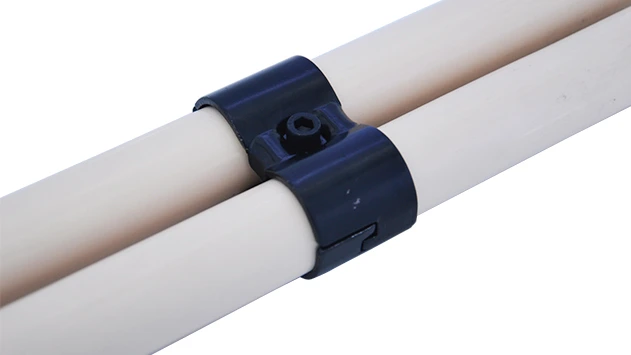
Parallel Lean Pipe Joint
Parallel lean pipe joint used for 2 pcs 28MM lean pipe connection in parallel direction to enhance frame structure, usually for heavy payload requirement for workbench. flow rack, hand trolley.
Imagine walking into a bustling electronics manufacturing plant. The air hums with the quiet whir of machines, and teams of workers move with purpose, assembling circuit boards that will soon power smartphones and laptops. But in one corner, a bottleneck forms: a workbench that's too rigid to adjust for a new component size, forcing workers to stretch awkwardly or pause to reconfigure tools. Down the line, a flow rack meant to feed parts to the assembly line jams because the angle of its roller track is fixed, slowing material flow to a crawl. Sound familiar? For production managers and facility engineers, these inefficiencies aren't just frustrating—they eat into profits, delay deadlines, and demotivate teams.
The secret to smoothing out these kinks often lies in the smallest components of your workflow system: the joints that hold your workbenches, racks, and trolleys together. Today, we're diving deep into a game-changing component: the parallel lean pipe joint with one side rotatory function . This unassuming piece of hardware—with one fixed end and one rotating end—offers a level of flexibility that can transform rigid, one-size-fits-all setups into adaptable, team-centric workspaces. But to unlock its full potential, you need to choose the right material. In this guide, we'll break down how to select materials for these joints, why it matters, and how the right choice can turn your lean system from "good enough" to "game-changing."
What Are Parallel Lean Pipe Joints with One Side Rotatory Function?
Before we jump into materials, let's make sure we're all on the same page about what these joints are and why they're so valuable. At their core, lean pipe systems (also called "flexible pipe systems") are modular frameworks built from tubes and joints, designed to support lean manufacturing principles—eliminating waste, improving flow, and adapting to change. Think of them as the "Lego blocks" of industrial workspaces: you can mix and match tubes, joints, and accessories to build workbenches, flow racks, turnover trolleys, and more.
The parallel lean pipe joint with one side rotatory function is a specialized connector in this system. Here's how it works: one end of the joint is fixed (it locks tightly to a lean tube, aluminum pipe, or aluminum profile), while the other end rotates freely—usually 180 degrees or more. This rotation lets you adjust the angle of connected components without disassembling the entire structure. Need to tilt a flow rack's roller track to speed up material flow? Rotate the joint. Want to reposition a shelf on a workbench to reduce worker reach? Twist the rotating end. It's flexibility without the hassle of tools or downtime.
These joints are particularly useful in dynamic environments, like production assemble lines, where workflows change with new product launches, or warehouses where seasonal demand shifts require quick reconfigurations. They're also a staple in industries like automotive, aerospace, and electronics, where precision and adaptability are non-negotiable.
Why Material Selection for These Joints Is Critical
You might be thinking: "It's just a joint—does the material really matter that much?" The short answer: absolutely. The material of your parallel lean pipe joint impacts everything from durability and load capacity to cost, safety, and even compliance with industry regulations. Choose the wrong material, and you could end up with joints that rust in a humid warehouse, crack under heavy loads, or fail to protect sensitive electronics from electrostatic discharge (ESD). On the flip side, the right material ensures your joint lasts for years, supports your team's needs, and integrates seamlessly with your existing lean pipe and accessories .
Let's break down the key factors that make material selection so important:
- Load Capacity: A joint made from flimsy plastic won't support the weight of heavy components on a flow rack, while a beefy stainless steel joint might be overkill (and overpriced) for a lightweight turnover trolley.
- Environmental Resistance: Humidity, chemicals, and temperature extremes can degrade materials. A joint for a food processing plant needs to resist corrosion; one for a cleanroom requires low particle emission.
- ESD Safety: In electronics manufacturing, static electricity can fry sensitive components. Joints made from conductive materials (like stainless steel) might need grounding, while those with non-conductive coatings (like PE coated lean pipe) can help protect against ESD.
- Cost vs. Longevity: Cheaper materials (like plastic) might save money upfront but need frequent replacement. Investing in aluminum or stainless steel could lower long-term costs by reducing maintenance and downtime.
- Compatibility: The joint material must work with your existing tubes. If you're using aluminum lean pipe , an aluminum joint will bond better and look more cohesive than a mismatched material.

Materials for Parallel Lean Pipe Joints: Pros, Cons, and Best Uses
Now, let's explore the most common materials used for parallel lean pipe joints with one side rotatory function. We'll compare their key properties, ideal applications, and limitations to help you choose.
| Material | Key Properties | Best For | Limitations |
|---|---|---|---|
| Aluminum | Lightweight (1/3 the weight of steel), corrosion-resistant, good thermal/electrical conductivity, easy to machine, often anodized for extra protection. | Cleanrooms, electronics manufacturing (with ESD coatings), food processing, or applications where weight matters (e.g., mobile turnover trolleys). | Lower load capacity than steel; can dent under extreme impact. |
| Stainless Steel | High strength, excellent corrosion resistance (especially 304/316 grades), heat-resistant, durable in wet/humid environments. | Heavy-duty applications (e.g., automotive assembly lines), outdoor use, chemical plants, or areas with frequent washdowns (e.g., pharmaceutical facilities). | Heavier than aluminum; more expensive; can conduct electricity (may require grounding for ESD-sensitive areas). |
| Plastic-Coated Steel (PE Coated) | Steel core for strength, polyethylene (PE) coating for non-conductivity, ESD protection, and scratch resistance; affordable. | Electronics manufacturing (ESD workbenches), retail, or environments where non-slip/non-conductive surfaces are needed. | Coating can chip with heavy impact; not as heat-resistant as bare steel. |
| Reinforced Nylon | Lightweight, non-conductive, corrosion-proof, quiet (no metal-on-metal squeaking); often reinforced with fiberglass for strength. | Light-load applications (e.g., small parts storage racks), medical facilities (easy to sanitize), or where noise reduction is key. | Lowest load capacity; can warp in high temperatures. |
Aluminum: The Go-To for Most Lean Systems
For many facilities, aluminum (and aluminum lean pipe systems) is the sweet spot. Here's why: Aluminum joints are lightweight, so they're easy to handle during assembly and reduce the overall weight of mobile equipment like turnover trolley and rack setups. They're naturally corrosion-resistant, thanks to a thin oxide layer that forms on the surface—no need for painting or coatings (though anodized finishes add extra durability and color options, like silver or black). Aluminum also conducts heat and electricity, but when paired with ESD-safe accessories (like rubber mats or grounding kits), it works well in electronics manufacturing.
One of the biggest advantages of aluminum is its compatibility with aluminum profile and aluminum extrusion profile systems. Many modern lean systems use aluminum profiles (t-slot extrusions) instead of round pipes, as they offer more mounting options for accessories like shelves, lights, or tools. Aluminum joints designed for these profiles create a seamless, professional look and often have built-in features like t-slot nuts for quick adjustments.
Stainless Steel: When Strength and Durability Are Non-Negotiable
Stainless steel joints are the workhorses of lean systems. If your application involves heavy loads (think: engine parts on a flow rack) or harsh conditions (outdoor storage, chemical exposure), stainless steel is worth the investment. Grade 304 stainless steel is the most common—it resists rust and staining in most environments—while grade 316 adds molybdenum for extra corrosion resistance, making it ideal for marine or saltwater applications.
Stainless steel joints are also a favorite in food, beverage, and pharmaceutical industries, where strict hygiene standards require easy-to-clean surfaces. Unlike aluminum, stainless steel doesn't pit or corrode when exposed to water or cleaning chemicals, so it maintains its integrity even after daily washdowns.
PE Coated Steel: Balancing Affordability and ESD Safety
For facilities on a budget or those needing ESD protection, PE coated steel joints are a solid choice. The steel core provides strength (similar to bare steel), while the polyethylene coating acts as a barrier against static electricity—critical for ESD workbench setups in electronics manufacturing, where a single static discharge can ruin a circuit board.
PE coated joints also come in bright colors (like yellow or blue), which can help with visual management in lean systems—color-coding zones for raw materials, work-in-progress, or finished goods, for example. Just be mindful of impact: the coating can chip if hit with heavy tools, so they're best for moderate-use environments.

Real-World Applications: How the Right Joint Material Solves Problems
To make this tangible, let's walk through three scenarios where choosing the right material for a parallel lean pipe joint with one side rotatory function made all the difference.
Scenario 1: Electronics Manufacturing (ESD Workbench Setup)
A contract manufacturer producing smartphone circuit boards needed to build 50 ESD-safe workbenches for their assembly line. Workers would be handling sensitive microchips, so static protection was critical. They chose aluminum lean pipe for the frame (lightweight, easy to adjust) and PE coated steel joints for the rotating components. The PE coating prevented static buildup, while the aluminum tubes kept the workbenches light enough for workers to reposition if needed. The rotating joints allowed teams to adjust the angle of tool holders and component bins, reducing strain and speeding up assembly time by 15%.
Scenario 2: Automotive Parts Warehouse (Heavy-Duty Flow Racks)
A warehouse storing engine blocks and transmission parts needed flow racks that could handle 500+ lbs per shelf. They opted for stainless steel joints with one side rotation, paired with thick-walled steel pipes. The stainless steel joints provided the strength to support heavy loads, while the rotating ends let workers tilt the roller tracks to control how quickly parts slid down to the picking area. Even in the humid warehouse environment, the stainless steel joints showed no signs of rust after two years of use.
Scenario 3: Bakery (Mobile Turnover Trolleys)
A commercial bakery needed trolleys to move dough trays from the mixing area to the oven. The trolleys had to be lightweight (to maneuver through narrow kitchen aisles) and easy to clean (to meet food safety standards). They chose aluminum joints with rotating shelves, paired with aluminum profile frames. The aluminum was corrosion-resistant (no rust from dough moisture), and the rotating shelves let workers load/unload trays from both sides of the trolley, cutting down on movement time by 20%.
Choosing a Lean Pipe Supplier: What to Look For
Even the best material choice won't save you if your supplier cuts corners on quality. When shopping for parallel lean pipe joints (and lean pipe and accessories ), here's what to prioritize in a lean pipe supplier :
1. Quality Certifications
Reputable suppliers will have certifications like ISO 9001 (quality management) or ISO 14001 (environmental management). For ESD products, look for ANSI/ESD S20.20 compliance. These certifications ensure the supplier follows strict quality control processes—critical for joints that need to perform reliably.
2. Range of Materials and Accessories
Your supplier should offer a full lineup of materials (aluminum, stainless steel, PE coated) and accessories (casters, roller tracks, workbench tops) so you can source everything from one place. This simplifies ordering, reduces shipping costs, and ensures compatibility between components.
3. Customization Options
Every facility is unique. A good supplier will let you customize joints—whether it's a specific rotation angle, a custom coating, or a modified size to fit your existing tubes. Avoid suppliers that only offer "one-size-fits-all" products.
4. Technical Support
Lean systems can be complex. Look for suppliers with in-house engineers who can help you design your setup, recommend materials, and troubleshoot issues. Some even offer on-site consultations to assess your workflow and suggest improvements.
5. After-Sales Service
What happens if a joint fails? A reliable supplier will stand behind their products with warranties (at least 1 year) and fast replacement policies. Avoid suppliers that disappear after the sale.
Final Thoughts: Invest in Flexibility, Invest in the Right Material
The parallel lean pipe joint with one side rotatory function might seem like a small part of your workflow system, but it's a critical one. It's the difference between a rigid workspace that fights against change and a flexible one that adapts to your team's needs. By choosing the right material—aluminum for lightweight flexibility, stainless steel for heavy-duty strength, PE coated for ESD safety, or nylon for light loads—you're not just buying a joint; you're investing in efficiency, durability, and worker satisfaction.
Remember: the best material depends on your specific needs. Start by asking: What's the load? What's the environment? Do I need ESD protection? Then, partner with a lean pipe supplier who understands your goals and can guide you to the right solution. With the right joint and material, you'll transform your workspace from a source of frustration into a competitive advantage.
Here's to smoother workflows, happier teams, and leaner operations—one joint at a time.