- Company Articles
- Products and Technology
- Product knowledge
- Materials Used in Internal Straight Aluminum Joints: Aluminum Alloys & Benefits

Materials Used in Internal Straight Aluminum Joints: Aluminum Alloys & Benefits
Related Product
Internal straight aluminum joint
Aluminum pipe joint inside connection used for two pcs 28pcs aluminum pipe connection in straight angle,it connects two pcs pipe from inside.
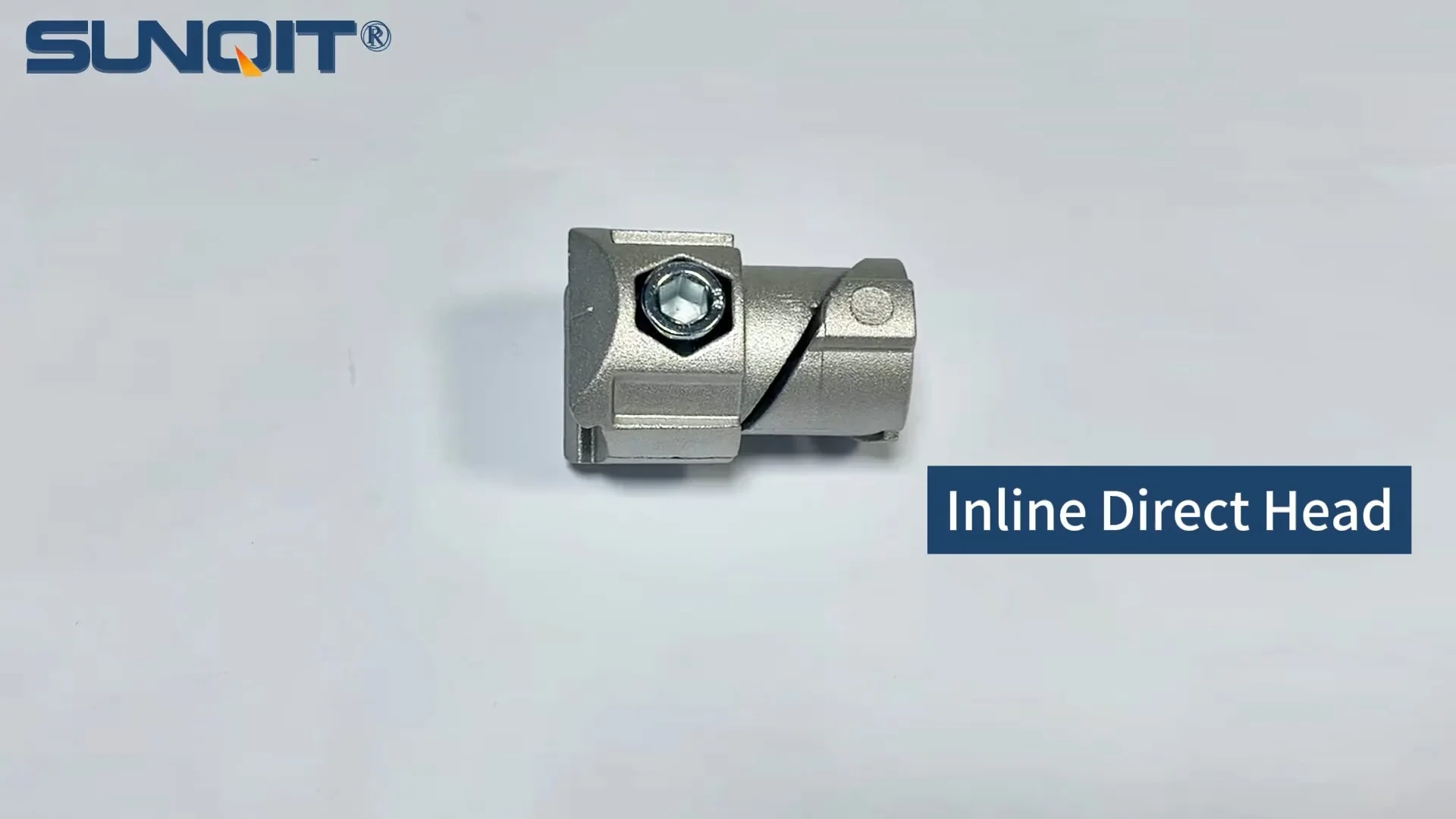
In the fast-paced world of manufacturing and industrial setups, every component plays a role in keeping operations running smoothly—even the ones that often go unnoticed. Take, for example, the joints that hold together workbenches, material racks, and conveyor systems. These small but critical parts are the unsung heroes of modular setups, ensuring stability, flexibility, and durability. Among these, internal straight aluminum joints stand out as a cornerstone of modern lean manufacturing systems. Designed to connect aluminum pipes and profiles seamlessly, they offer a unique blend of strength and adaptability. But what makes these joints so reliable? The answer lies in the aluminum alloys they're made from—and the countless benefits those alloys bring to the table.
What Are Internal Straight Aluminum Joints?
Before diving into materials, let's clarify what internal straight aluminum joints are. As the name suggests, these are connectors designed to join two or more aluminum pipes or profiles in a straight line, with the joint mechanism housed internally (i.e., inside the pipe or profile ends). Unlike external joints, which clamp around the outside of pipes, internal straight joints fit snugly into the hollow core of aluminum tubes, creating a clean, streamlined connection. This design not only enhances aesthetics but also reduces the risk of snags or interference with tools, materials, or workers—making them ideal for high-traffic areas like assembly lines or warehouses.
Internal straight aluminum joints are versatile by nature. They're used in everything from simple workbenches (like the aptly named Workbench E, a single-deck setup without casters) to complex material racks (such as Material Rack B, a 3-row, 3-floor storage system) and even turnover trolleys. Their modularity is key: because they connect aluminum pipes and profiles quickly and securely, they allow teams to reconfigure setups on the fly—no welding or specialized tools required. This flexibility is a hallmark of lean system principles, where minimizing waste (including time wasted on retooling) is paramount.
The Aluminum Alloys Behind Internal Straight Joints
At the heart of every internal straight aluminum joint is its material: aluminum alloy. Pure aluminum is soft and malleable, making it unsuitable for load-bearing applications. By blending aluminum with other elements like magnesium, silicon, and copper, manufacturers create alloys that retain aluminum's lightweight properties while boosting strength, corrosion resistance, and durability. For internal straight joints, two alloys reign supreme: 6061-T6 and 6063-T5. Let's break down why these alloys are the top choices.
6061-T6 Aluminum Alloy
6061 is one of the most widely used aluminum alloys in industrial applications—and for good reason. Composed primarily of aluminum, with small additions of magnesium (0.8-1.2%) and silicon (0.4-0.8%), it strikes an exceptional balance between strength and workability. The "T6" in its name refers to the heat treatment process it undergoes: solution annealing followed by artificial aging, which strengthens the alloy by forming fine, uniform precipitates within its structure.
For internal straight joints, 6061-T6 offers several advantages. First, it has a tensile strength of around 310 MPa (megapascals), which is more than enough to handle the stresses of daily use in manufacturing environments—think heavy tools resting on a workbench or loaded material racks. Second, it boasts excellent machinability. Manufacturers can precision-engineer the internal threads, grooves, and tolerances needed for a tight, secure fit with aluminum pipes and profiles. Finally, 6061-T6 has good corrosion resistance, thanks to its magnesium content, which helps form a protective oxide layer on the surface—critical for joints exposed to oils, coolants, or humidity in factories.
6063-T5 Aluminum Alloy
If 6061-T6 is the "workhorse" alloy, 6063-T5 is the "craftsman's choice." With a higher silicon content (0.2-0.6%) and lower magnesium (0.45-0.9%), 6063 is known for its exceptional extrudability—the ability to be shaped into complex profiles via extrusion, a process where metal is forced through a die to create specific cross-sections. The "T5" temper involves cooling the alloy rapidly after extrusion and then artificially aging it, resulting in a smooth, consistent finish and moderate strength (tensile strength of ~215 MPa).
Why use 6063-T5 for internal straight joints? Aesthetics and precision. 6063 extrudes into clean, sharp edges with a smooth surface, making joints look polished and professional—important for setups where appearance matters, like customer-facing workbenches or display racks. It's also slightly more ductile than 6061, which means it can absorb minor impacts without cracking, adding to the joint's longevity. While not as strong as 6061-T6, 6063-T5 is more than sufficient for light to medium-duty applications, such as small turnover trolleys or lightweight aluminum guide rails.
Other Alloys: When Specialized Needs Arise
While 6061-T6 and 6063-T5 are the go-to choices, some applications call for specialized alloys. For example, in environments where corrosion resistance is critical (like food processing or marine facilities), 5052-H32 aluminum—with its higher magnesium content (2.2-2.8%)—may be used. It offers superior resistance to saltwater and chemicals but at the cost of slightly lower strength. For ultra-high-strength needs, such as joints supporting heavy machinery, 2024-T3 (with copper additions) might be employed, though it's less common due to its lower corrosion resistance and higher cost.

Key Benefits of Aluminum Alloys in Internal Straight Joints
Now that we understand the alloys, let's explore why they make internal straight aluminum joints so indispensable. From strength to sustainability, the benefits are both practical and long-lasting.
Lightweight Yet Strong: The Perfect Balance
Aluminum alloys are famously lightweight—about one-third the density of steel. This makes internal straight joints easy to handle during assembly: workers can carry, position, and connect joints without heavy lifting equipment, reducing fatigue and injury risk. Yet, as we've seen, alloys like 6061-T6 offer strength comparable to some steels on a weight-to-strength ratio. For example, a 6061-T6 internal straight joint can support the weight of a fully loaded material rack (like Material Rack B, with 3 rows and 3 floors of parts) without bending or warping. This combination of lightness and strength is a game-changer for modular setups, where portability and stability are equally important.
Corrosion Resistance: Built to Last
Aluminum naturally forms a thin oxide layer when exposed to air, which acts as a barrier against rust and corrosion. Alloys like 6061 and 6063 enhance this property, making internal straight joints resistant to moisture, oils, and most industrial chemicals. Compare this to steel joints, which require regular painting or coating to prevent rust, or plastic joints, which can degrade when exposed to solvents. In factories where spills or humidity are common, aluminum alloy joints maintain their integrity for years, reducing maintenance costs and downtime.
Modularity and Flexibility: Adapt to Change
Lean system principles emphasize adaptability— the ability to reconfigure workflows quickly to meet changing demands. Internal straight aluminum joints excel here. Because they connect via friction, threads, or spring-loaded mechanisms (no welding needed), they can be disassembled and reassembled in minutes. Need to shorten a workbench? Swap out a pipe and reposition the joint. Want to add a new shelf to a material rack? Just insert a new profile into the existing joint. This flexibility reduces waste (no need to buy new equipment) and keeps operations agile—key for staying competitive in today's market.
Compatibility with Aluminum Profile Accessories
Internal straight aluminum joints don't work in isolation—they're part of a larger ecosystem of aluminum profile accessories. From roller tracks to casters, these joints play well with others, making them a versatile choice for any setup. Let's take a closer look at this compatibility with a few common accessories:
| Accessory Type | Compatibility Feature | Benefit |
|---|---|---|
| Aluminum Guide Rails (e.g., Aluminum Guide Rail A/B) | Internal threads align with rail mounting holes | Secure, rattle-free connection for smooth material flow on roller tracks |
| Roller Tracks (e.g., 40 Steel Roller Track) | Hollow core design fits over joint ends | Stable base for gravity-fed material transport; no need for additional brackets |
| Caster Wheels | Threaded inserts in joint ends accept caster stems | Add mobility to workbenches or trolleys without welding casters directly to pipes |
| Aluminum Profile End Caps (e.g., 4040 Aluminum Profile End Cap) | Snaps into joint's outer rim to cover exposed ends | Prevents dust, debris, or fingers from getting stuck in hollow pipes; improves safety |
| Aluminum Pipe Clamps | Grooves on joint exterior lock clamps in place | Add cross-bracing or auxiliary components (like tool holders) without drilling new holes |
This compatibility isn't accidental. Manufacturers design internal straight joints to work seamlessly with standard aluminum profile sizes (e.g., 2020, 3030, 4040), ensuring that accessories from different suppliers fit together. This interoperability gives businesses the freedom to mix and match components, creating custom setups tailored to their needs.
Sustainability: Eco-Friendly by Design
In an era where sustainability matters, aluminum alloys shine. Aluminum is 100% recyclable, and recycling it uses just 5% of the energy required to produce new aluminum. When a joint reaches the end of its life, it can be melted down and reused, reducing waste. Additionally, the durability of aluminum alloys means joints last longer, cutting down on the need for frequent replacements—a win for both the planet and the bottom line.

Applications in Modern Manufacturing
To truly appreciate internal straight aluminum joints, let's look at how they're used in real-world scenarios. Here are three common applications where these joints prove their worth:
Workbenches: The Foundation of Assembly Lines
Workbenches are the heart of any assembly operation, and internal straight aluminum joints are the backbone of sturdy, reliable workbenches. Take Workbench E, a single-deck setup without casters, designed for precision tasks like electronics assembly. Its frame is built using aluminum pipes connected by internal straight joints, which ensure the bench doesn't wobble during use. The joints also allow for easy customization—adding a shelf, tool rail, or ESD (electrostatic discharge) mat—without compromising stability. For workers spending hours at a bench, this stability translates to better accuracy and reduced fatigue.
Material Racks: Organize Efficiently
Material Rack B, a 3-row, 3-floor storage system, relies on internal straight joints to keep shelves level and secure. Each vertical support pipe is connected to horizontal beams via these joints, creating a grid that can hold heavy boxes, components, or raw materials. Because the joints are adjustable, the rack can be modified to fit different-sized items—no need to buy a new rack when inventory changes. In warehouses, this adaptability means better space utilization and faster access to materials, keeping workflows moving.
Turnover Trolleys: Move Materials with Ease
Turnover trolleys transport parts between stations, and their frames need to be both lightweight and strong. Internal straight aluminum joints connect the trolley's aluminum pipes, keeping the overall weight low (so workers can push it easily) while ensuring the frame doesn't flex under load. Add casters to the joints, and the trolley becomes maneuverable, even in tight spaces. When not in use, the trolley can be disassembled for compact storage—another nod to lean principles of minimizing space waste.
Why Choose Aluminum Alloys Over Alternatives?
It's natural to wonder: why not use plastic, steel, or other materials for joints? Let's compare:
- Plastic Joints: Cheap and lightweight, but prone to cracking under heavy loads or high temperatures. They also degrade over time when exposed to UV light or chemicals, making them a short-term solution.
- Steel Joints: Strong, but heavy and prone to rust. They require tools to assemble (like wrenches for bolts) and are hard to reconfigure—once welded, they're permanent. Their weight also makes setups harder to move.
- Brass or Copper Joints: Corrosion-resistant but expensive and heavy. Overkill for most industrial applications, where aluminum alloys offer similar benefits at a lower cost.
Aluminum alloys strike the perfect balance: strength, lightness, corrosion resistance, and flexibility—all at a reasonable price. While they may cost more upfront than plastic, their longevity and low maintenance make them a smarter investment in the long run.
Conclusion: The Alloy Advantage
Internal straight aluminum joints may be small, but their impact on manufacturing and industrial setups is huge. By leveraging the unique properties of aluminum alloys like 6061-T6 and 6063-T5, these joints offer strength without weight, durability without maintenance headaches, and flexibility without waste. They're compatible with a wide range of aluminum profile accessories, making them a versatile choice for workbenches, material racks, and beyond. In a world where adaptability and efficiency are key, internal straight aluminum joints—powered by aluminum alloys—are more than just connectors; they're the building blocks of lean, agile, and sustainable operations.
So the next time you walk through a factory or warehouse, take a moment to look at the workbenches and racks around you. Chances are, internal straight aluminum joints are holding them together—quietly, reliably, and with the strength of aluminum alloys. And that's a material difference you can count on.