- Company Articles
- Products and Technology
- Product knowledge
- Materials Used in T Slot Aluminum Pipe with Board Holder: Why Aluminum Stands Out

Materials Used in T Slot Aluminum Pipe with Board Holder: Why Aluminum Stands Out
Related Product
T Slot Aluminum Pipe with Board Holder
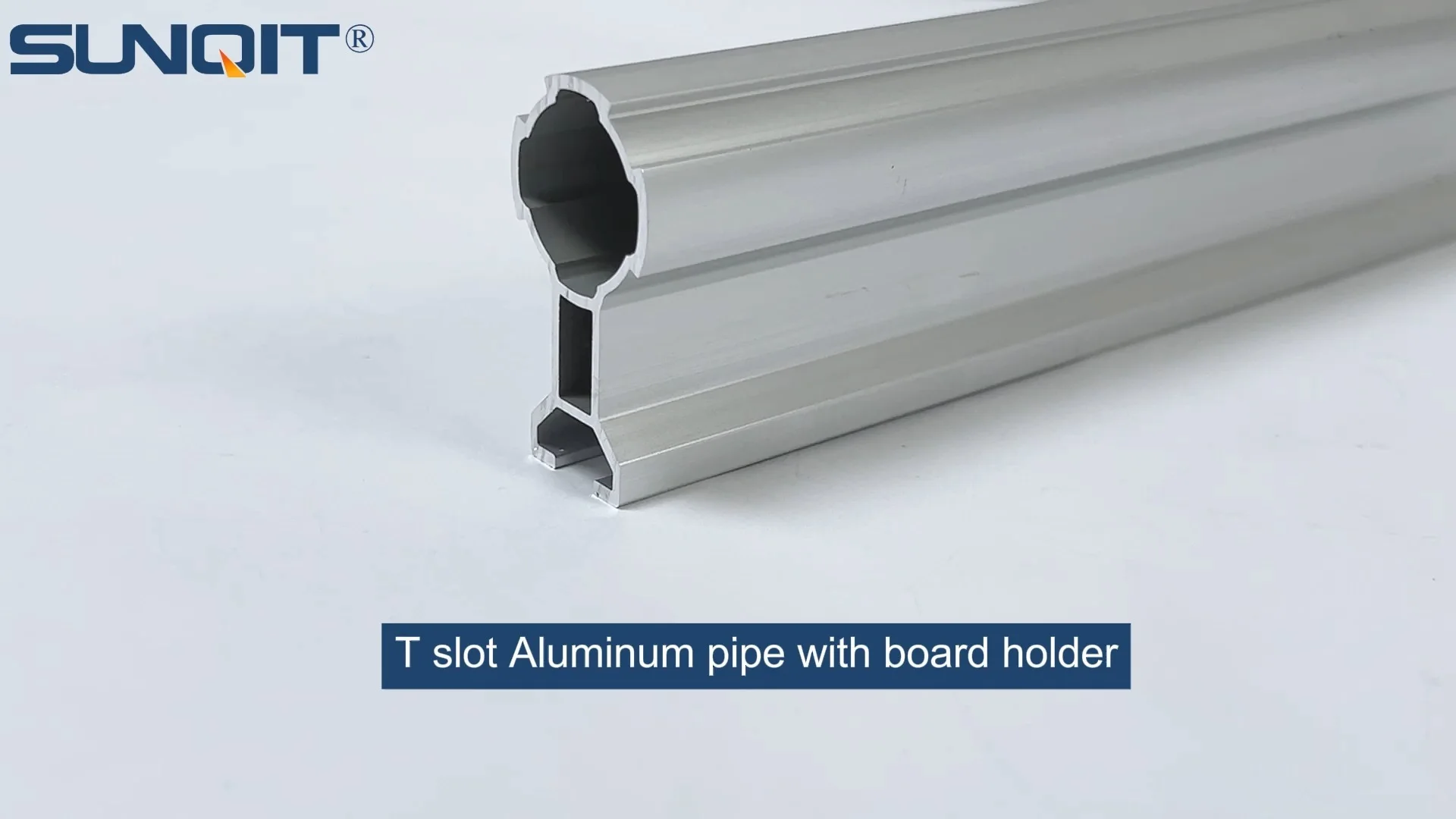
T slot Aluminum pipe with board holder,the pipe one side connected by a joint, the other side with a slot which can hold a tray or a aluminum pannel
Walk into any modern workspace—whether it's a bustling manufacturing plant, a sleek laboratory, or a cozy workshop—and you'll notice a silent hero keeping things organized: the humble yet mighty structures that hold tools, materials, and equipment. Behind these structures often lies a critical choice: the material. When it comes to building versatile, durable, and adaptable setups—especially for components like T slot aluminum pipes with board holders—one material rises above the rest: aluminum. But why? What makes aluminum the go-to choice for these essential workspace tools? Let's dive in.
What Even Is a T Slot Aluminum Pipe with Board Holder?
Before we unpack why aluminum shines, let's make sure we're all on the same page about the star of the show: the T slot aluminum pipe with board holder. Picture this: a long, slender pipe with a distinct "T" shaped groove (the "T slot") running along its length, paired with a sturdy holder designed to keep boards—think workbenches, tool trays, document holders, or even small shelves—securely in place. These two components, when combined, create a system that's as flexible as it is functional.
The magic starts with the T slot aluminum pipe itself. Unlike plain pipes, the T slot design isn't just for show—it's a genius engineering move. Those slots act as built-in connection points, letting you slide in brackets, clips, or (you guessed it) board holders without drilling holes or welding. It's like building with giant, industrial-grade Legos, but for grown-ups who need their setups to handle real work.
Then there's the board holder. Attached to the T slot pipe via simple aluminum profile accessories—think brackets, screws, or sliding clips—it holds everything from heavy wooden workbenches to lightweight plastic document trays. And because the T slot is adjustable, you can move the holder up, down, or sideways in minutes. Need to raise the board to eye level for a taller worker? Slide the bracket up. Switching from holding tools to holding blueprints? Swap out the holder for a slimmer one. No fuss, no mess, no calling a handyman.
The Material Showdown: Why Aluminum Beats Steel, Plastic, and Wood
Sure, T slot pipes and board holders can technically be made from other materials. But here's the thing: aluminum doesn't just "work"—it works smarter. Let's break down how it stacks up against the competition.
| Material | Weight (per 10ft pipe) | Corrosion Resistance | Adjustability | Lifespan (Avg.) |
|---|---|---|---|---|
| Aluminum | 8-12 lbs | Excellent (no rust) | High (T slot + reusable accessories) | 15-20+ years |
| Steel | 30-40 lbs | Poor (rusts without coating) | Low (welding/drilling required) | 10-15 years (with regular coating) |
| Plastic | 3-5 lbs | Good (resists chemicals) | Medium (fragile connections) | 3-5 years (prone to cracking) |
| Wood | 15-25 lbs | Poor (warps/rots with moisture) | Very low (permanent nails/screws) | 5-8 years (with maintenance) |
1. Lightweight but Strong: The "Goldilocks" of Workspace Materials
Ever tried lifting a 10-foot steel pipe? Spoiler: It's not fun. Steel is strong, sure, but it's also heavy—so heavy that moving a single pipe can require two people, and rearranging a whole setup? Forget about it. Plastic, on the other hand, is light, but it's flimsy. A plastic T slot pipe might sag under the weight of a full tool board, and the connections? They'll crack if you look at them wrong. Wood is somewhere in the middle, but it's bulky and prone to warping.
Aluminum? It's just right. A 10-foot T slot aluminum pipe weighs in at 8-12 pounds—light enough for one person to carry, mount, or reposition without breaking a sweat. But don't let the weight fool you: aluminum has a tensile strength of 20-30 ksi (that's "kips per square inch," or how much pulling force it can handle before snapping). For context, that's more than enough to hold a 50-pound tool board, a stack of materials, and a coffee mug (or three) without bending. It's the kind of strength that lets workers focus on the job, not on struggling with heavy equipment.
2. Corrosion Resistance: No Rust, No Fuss, No Maintenance
Let's talk about the enemy of most workspace materials: moisture. A little spill, a humid day, or even just condensation can turn steel into a rusty mess. Wood? It swells, warps, or rots. Plastic might hold up, but it can get brittle in sunlight or extreme temperatures. Aluminum? It laughs in the face of moisture.
Aluminum naturally forms a thin, invisible layer of aluminum oxide when it touches air. This layer acts like a shield, stopping rust in its tracks. Even if you spill water, oil, or cleaning chemicals on an aluminum pipe, it won't corrode. No need for painting, coating, or regular rust checks. In a busy workshop where spills happen (we see you, coffee mornings), that's a game-changer. Your T slot aluminum pipe with board holder will look as good in 10 years as it did on day one.
3. Flexibility: Adapt or Die (But Aluminum Never Dies)
Workspaces aren't static. A workshop that builds small gadgets today might switch to large machinery tomorrow. A lab that studies bacteria this month might need to rearrange for a new experiment next month. Rigid materials like steel or wood can't keep up—once you weld a steel pipe or nail a wooden board, changing it means starting over.
Aluminum? It's the ultimate adaptor. Thanks to the T slot design and aluminum profile accessories, you can reconfigure your setup in minutes. Need to add a second board holder? Slide a new bracket into the T slot and tighten a screw. Want to shorten a pipe? Cut it with a standard saw (no special tools needed). Moving to a new location? Disassemble the whole thing, load it into a van, and rebuild it at the new spot. It's like having a workspace that grows and changes with you—no demolition required.

The Secret Sauce: Aluminum Extrusion Profiles
So, what makes T slot aluminum pipes so precise and consistent? It's all in the manufacturing process: aluminum extrusion. Imagine squeezing toothpaste out of a tube—that's basically how extrusion works, but with molten aluminum and industrial-strength dies. Here's how it goes:
1. Heat it up: Aluminum billets (big blocks of aluminum) are heated to around 800°F (that's hot, but not as hot as steel, which needs 2,500°F+). This makes the aluminum soft and malleable, like clay.
2. Squish it: The heated aluminum is pushed (or "extruded") through a custom die—a metal plate with a hole shaped like the T slot pipe. As it comes out the other side, it cools and hardens into a long, continuous length of T slot aluminum pipe with perfect, uniform dimensions.
3. Cut and finish: The long pipe is cut into standard lengths (like 10ft or 20ft) and treated with a clear anodized coating to boost corrosion resistance and give it that sleek, professional look.
Why does this matter? Extrusion lets manufacturers create complex shapes—like the T slot—with pinpoint accuracy. Every pipe has the exact same slot size, wall thickness, and strength, which means aluminum profile accessories (brackets, clips, board holders) fit perfectly every time. No guesswork, no "this bracket is too loose" or "that screw doesn't line up." It's precision you can rely on.
Plus, extrusion is cost-effective for both small and large orders. Need 10 pipes for a home workshop? No problem. Need 1,000 for a factory? Extrusion scales easily, keeping costs down without sacrificing quality. That's why even small businesses can afford to invest in aluminum setups.

Aluminum Pipe Accessories: The Unsung Heroes
A T slot aluminum pipe is only as good as the accessories that go with it. And aluminum pipe accessories are where the real magic happens. These small but mighty parts turn a simple pipe into a fully functional workspace system. Let's meet a few key players:
- Aluminum Guide Rails
These slim, grooved rails attach to T slot pipes to guide tools, materials, or even the board holder itself. Think of them as the "tracks" that keep everything moving smoothly. In a manufacturing line, for example, aluminum guide rails might help slide a heavy board from one workstation to the next—no lifting required.
- Roller Track Connectors
Want to add a conveyor-like system to your board holder? Roller track connectors link sections of roller track (those little wheels that make sliding materials easy) to T slot pipes. Suddenly, your static board holder becomes a dynamic material handler—perfect for moving boxes, tools, or even circuit boards down the line.
- Adjustable Brackets
These are the workhorses of aluminum profile accessories. Slide them into the T slot, tighten a screw, and you've got a secure mount for your board holder (or shelves, lights, monitors—you name it). Most brackets are adjustable, so you can tilt the board holder 30°, 45°, or even 90° to get the perfect angle. No more straining your neck to read a document or reach a tool.
The best part? All these accessories are made from aluminum too, so they match the pipe's strength, corrosion resistance, and lightweight feel. Mix and match them, and you've got a custom setup that's tailored to your exact needs.
Real-World Wins: Where T Slot Aluminum Pipes with Board Holders Shine
Still not convinced? Let's look at how aluminum is transforming real workspaces:
1. Small Electronics Workshop
Maria runs a small shop that builds custom circuit boards. Her workspace is tight, so she needs every inch to count. She uses T slot aluminum pipes with board holders to organize her tools, circuit boards, and soldering equipment. "Last month, I switched from wooden shelves to aluminum, and it's night and day," she says. "I can move the board holders up when I'm standing, down when I'm sitting. If a big order comes in, I add more pipes—no drilling, no mess. And since aluminum doesn't conduct electricity (when anodized), I don't have to worry about short circuits. Worth every penny."
2. University Lab
Dr. Lee's biology lab studies plant growth, and experiments change weekly. "We used to have fixed wooden benches, and rearranging took days," he explains. "Now we have T slot aluminum pipes with board holders for lab notebooks, microscopes, and plant samples. When we start a new experiment, we reconfigure the whole setup in an hour. The aluminum is easy to clean with disinfectant, and it doesn't warp in the humid growth chambers. It's like having a lab that adapts to our science."
3. Automotive Repair Shop
Jake's auto shop deals with oil, grease, and the occasional spilled soda. "Steel shelves used to rust within a year, and plastic ones cracked under heavy tools," he says. "Aluminum? I've had the same T slot pipes and board holders for five years, and they still look new. The oil wipes right off, and I can hose down the area without worrying. Plus, the guys can move the tool boards around the garage—no more walking back and forth. Productivity's up, and I'm not replacing shelves every few years."
Sustainability: Aluminum Loves the Planet (And Your Budget)
In a world where "going green" isn't just a trend but a necessity, aluminum stands out as a sustainability champion. Here's why:
- Infinite Recyclability
Aluminum can be recycled repeatedly without losing quality. That means when you're done with your T slot aluminum pipe (maybe you're upgrading to a bigger setup), you can sell it for scrap, and it'll be melted down and turned into new pipes, cans, or car parts. No waste, no guilt. Compare that to plastic, which degrades when recycled (most plastic can only be recycled 2-3 times), or wood, which ends up in landfills.
- Energy Efficiency
Producing new aluminum from ore takes a lot of energy, but recycling aluminum uses just 5% of that energy. That's a 95% energy savings! So even if your aluminum pipe has been recycled a dozen times, it's still eco-friendly. Plus, aluminum extrusion plants are getting greener—many now run on renewable energy, further cutting their carbon footprint.
- Long Lifespan = Less Waste
Aluminum T slot pipes last 15-20+ years, which means you won't be throwing away broken plastic or rusted steel every few years. Fewer replacements = less waste in landfills, and more money in your pocket over time.
Choosing Your T Slot Aluminum Pipe with Board Holder: A Quick Guide
Ready to upgrade your workspace? Here's what to keep in mind:
- Load capacity: How heavy is the board (and what's on it)? Thicker aluminum extrusion profiles (like 40x40mm or 40x80mm) handle more weight.
- Environment: If you're in a wet or corrosive area (like a marine workshop), look for anodized aluminum and stainless steel accessories.
- Adjustability needs: Do you need to move the board holder often? Make sure the T slot is compatible with sliding brackets.
- Accessories: Don't skimp on aluminum pipe accessories—quality brackets and connectors make setup easier and last longer.
Final Thoughts: Aluminum Isn't Just a Material—It's a Workspace Upgrade
At the end of the day, choosing materials for your workspace isn't just about "what works"—it's about investing in something that makes your job easier, your team more productive, and your budget happier. T slot aluminum pipes with board holders check all those boxes, and aluminum is the reason why.
It's lightweight enough to move, strong enough to last, flexible enough to adapt, and sustainable enough to feel good about. Whether you're running a factory, a lab, or a home workshop, aluminum doesn't just stand out—it stands above. So next time you're building or upgrading your workspace, remember: when it comes to T slot pipes with board holders, aluminum isn't just a choice. It's the smart choice.