- Company Articles
- Products and Technology
- Product knowledge
- Maximizing Efficiency with Internal Straight Aluminum Joints in Lean Workstations

Maximizing Efficiency with Internal Straight Aluminum Joints in Lean Workstations
Related Product
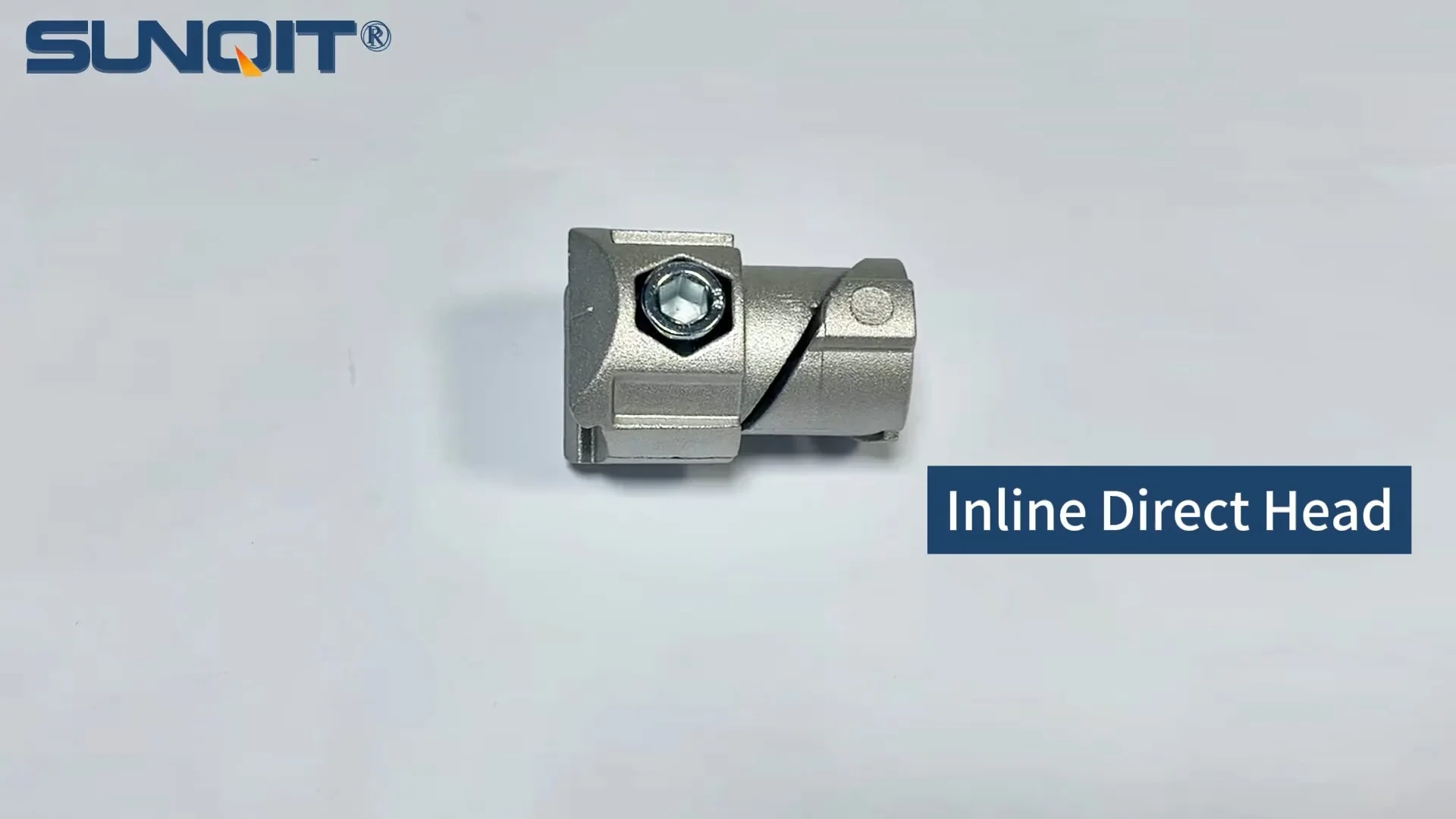
Internal straight aluminum joint
Aluminum pipe joint inside connection used for two pcs 28pcs aluminum pipe connection in straight angle,it connects two pcs pipe from inside.
The Hidden Power of Workstation Design in Lean Manufacturing
Walk into any high-performing manufacturing facility today, and you'll notice something immediately: the workspace feels intentional. Tools are within arm's reach, materials flow smoothly from one station to the next, and teams move with purpose—no unnecessary steps, no piles of unused equipment cluttering corners, no one standing around waiting for a workstation to be adjusted. This isn't luck; it's the result of lean manufacturing principles in action, where every element of the workspace is designed to eliminate waste and boost productivity.
But here's a truth that's often overlooked: lean manufacturing isn't just about processes—it's about people, and the spaces they work in. A workstation that's built to adapt to changing needs, support different tasks, and withstand the daily grind of production isn't just a "nice-to-have"; it's a critical driver of success. And at the heart of these adaptable workstations lies a component that's small in size but massive in impact: the joints that hold everything together.
Imagine (oops, scratch that— picture ) a production line where every time a new product is introduced, the team has to spend hours disassembling and rebuilding workstations because the joints connecting the frame are welded or bolted in place. Or a scenario where a simple height adjustment requires specialized tools and a maintenance crew, grinding operations to a halt. These are real problems that manufacturers face every day, and they're exactly the kind of waste lean principles aim to eliminate.
This is where internal straight aluminum joints enter the conversation. Designed to combine strength, flexibility, and ease of use, these unassuming components are redefining what lean workstations can do. Whether you're building a basic assembly bench, a complex material rack, or a custom ESD workstation for sensitive electronics, the right joints can turn a static workspace into one that evolves with your team's needs—without slowing them down.
What Are Internal Straight Aluminum Joints, Anyway?
Let's start with the basics. An internal straight aluminum joint is a connecting piece designed to join two aluminum pipes or profiles in a straight line, with the joint mechanism hidden inside the pipe rather than clamped or bolted on the outside. Think of it as the "invisible glue" that holds your workstation frame together—strong enough to support heavy loads, but sleek enough to keep the structure clean and unobstructed.
Unlike external joints, which wrap around the outside of pipes and can add bulk, create snags, or limit how close you can place accessories like shelves or tool holders, internal straight aluminum joints sit flush with the pipe's inner diameter. This design not only gives the workstation a cleaner, more professional look but also maximizes usable space. No more fumbling around bulky external clamps or worrying about tools catching on protruding joint parts during assembly.
Made from high-grade aluminum alloy, these joints are lightweight yet surprisingly tough. Aluminum's natural resistance to corrosion means they hold up well in factory environments where moisture, oils, or chemicals might be present—unlike plastic joints that can crack or degrade over time, or steel joints that rust without constant maintenance. And because aluminum is inherently lightweight, workstations built with these joints are easier to move (when paired with casters) and reconfigure, even for teams without heavy lifting equipment.
But what really sets internal straight aluminum joints apart is their simplicity. Most designs feature a split-body construction with a threaded core: you insert the joint into one pipe, align the second pipe, and tighten a screw or bolt to expand the joint inside both pipes, creating a secure, friction-based connection. No welding, no drilling, no specialized training required. A basic hex key or Allen wrench is often all you need to assemble or disassemble the joint, making reconfigurations a breeze.

Why Internal Straight Aluminum Joints Outshine the Rest: A Closer Look at the Benefits
To truly appreciate the value of internal straight aluminum joints, let's compare them to other common joint types used in workstation construction. The table below breaks down how they stack up against external aluminum joints, plastic snap-on joints, and traditional welded steel joints across key factors like flexibility, durability, and ease of use.
| Joint Type | Flexibility (Reconfigurability) | Durability (Load Capacity) | Ease of Assembly | Space Efficiency (Bulk) | Cost Over Time |
|---|---|---|---|---|---|
| Internal Straight Aluminum | High – Reusable, no damage to pipes when disassembled | Up to 200kg per joint (depending on pipe size) | Easy – Tool-free or basic hex key; 2-minute assembly | Excellent – Flush design, no external bulk | Low – Durable, reusable, minimal replacement needed |
| External Aluminum Clamp | Medium – Can be reconfigured, but leaves clamp marks | Similar to internal (180-200kg) | Moderate – Requires tightening multiple bolts | Poor – Bulky clamps protrude, limit accessory placement | Medium – Clamps may loosen over time; need replacement |
| Plastic Snap-On | High – Easy to snap on/off | Low – Max 50kg; prone to cracking under stress | Very Easy – No tools needed | Good – Slim profile, but less secure | High – Short lifespan; needs frequent replacement |
| Welded Steel | None – Permanent; cannot be reconfigured | Very High – Virtually unlimited for workstation use | Hard – Requires skilled labor and equipment | Excellent – Smooth, but static design | Very High – No reusability; full replacement needed for changes |
Flexibility: The Cornerstone of Lean Adaptability
In lean manufacturing, "flexibility" isn't just about being able to change things—it's about being able to change them quickly and without waste . Internal straight aluminum joints excel here. Because they don't require welding or permanent fasteners, you can disassemble a workstation at the end of a shift, reconfigure it for a new product line overnight, and have it ready for the morning crew—all without cutting pipes, drilling new holes, or throwing away perfectly good materials.
Consider a scenario where a manufacturer shifts from producing small electronic components to larger assemblies. With a welded steel workstation, this might mean ordering a brand-new bench or paying a welder to modify the existing one. With internal straight aluminum joints? The team can simply loosen the joints, adjust the frame height, add extra support beams, and reattach the worktop—all in under an hour, using basic tools. That's time saved, labor costs avoided, and materials reused.
Durability: Built to Last, Even in Tough Environments
Manufacturing floors are tough places for equipment. Between heavy tools being set down, materials sliding across surfaces, and the constant vibration of machinery, workstations take a beating. Internal straight aluminum joints are built to withstand this daily abuse.
Aluminum's inherent strength-to-weight ratio means these joints can support heavy loads—think of a workbench stacked with power tools, or a material rack holding boxes of metal components—without bending or warping. And because the joint is inside the pipe, it's protected from accidental impacts. Unlike external clamps that can get knocked loose or bent when something bumps into them, the internal design shields the joint mechanism from damage, ensuring a secure connection even after years of use.
For environments where cleanliness is critical—like medical device manufacturing or food packaging—aluminum's non-porous surface is easy to wipe down and sanitize, preventing the buildup of dirt, grease, or bacteria. Stainless steel joints might offer similar benefits, but they're heavier and more expensive, making aluminum a more practical choice for most lean workstation applications.
Ease of Use: Empowering Teams to Own Their Workspace
One of the most underrated benefits of internal straight aluminum joints is how they put control back in the hands of the people using the workstation. In many factories, reconfiguring a workstation requires submitting a request to maintenance, waiting for a technician, and hoping the change gets done before the next production deadline. With these joints, the assembly team can make adjustments themselves—no special training, no waiting, no red tape.
Take a simple example: a team member realizes their workbench is too low, causing back strain. With traditional bolted joints, they'd need a wrench, maybe a helper to hold the frame, and 20 minutes of struggling to loosen rusted bolts. With internal straight aluminum joints? They grab a hex key, loosen the joints at the legs, adjust the height, retighten, and get back to work—all in 5 minutes. This kind of autonomy doesn't just save time; it boosts morale. When teams can customize their workspace to fit their needs, they feel valued, and valued teams are more engaged and productive.

Building Better Workstations: How Internal Straight Aluminum Joints Play with Other Components
A joint is only as good as the system it's part of, and internal straight aluminum joints were designed to work seamlessly with other lean manufacturing components—specifically aluminum profiles, aluminum pipe accessories, and workbench essentials. Let's break down how these pieces come together to create a workstation that's greater than the sum of its parts.
Pairing with Aluminum Profiles: The Backbone of Your Workstation
Aluminum profiles—extruded aluminum beams with T-slots running along their length—are the perfect match for internal straight aluminum joints. The T-slots allow you to attach shelves, tool holders, monitor arms, and other accessories anywhere along the profile, without drilling holes or welding. When combined with internal joints, which create strong, straight connections between profiles, you get a frame that's both rigid and adaptable.
For example, to build a basic workbench (like the "workbench E (single deck-without caster)" model common in many factories), you'd start with four vertical aluminum profile legs, connected at the top and bottom by horizontal profiles using internal straight aluminum joints. The T-slots in the vertical profiles let you add adjustable shelves at any height, while the straight joints ensure the frame stays square and stable, even when someone leans on it or places heavy items on the worktop.
Aluminum profiles come in standard sizes—like 2020, 3030, or 4040 (referring to their width and height in millimeters)—and internal straight aluminum joints are designed to fit these sizes precisely. This standardization means you can mix and match components from different batches or suppliers without worrying about compatibility issues, making it easy to expand or modify your workstation down the line.
Accessorizing with Purpose: Pipes, End Caps, and Beyond
No workstation is complete without the accessories that make it functional, and internal straight aluminum joints play well with the full range of aluminum pipe accessories. Take end caps, for example: these simple plastic or rubber caps snap onto the ends of aluminum pipes to cover sharp edges, prevent dust from collecting inside, and give the workstation a finished look. Because internal joints sit inside the pipe, there's no protruding hardware to block the end cap—so installation is quick and hassle-free.
Another essential accessory is the T-slot rubber strip, which fits into the T-slots of aluminum profiles to protect wires, hoses, or small parts from slipping into the slot and getting stuck. When using internal joints, the profiles remain unobstructed, so the rubber strips can be installed along the entire length of the profile, ensuring full coverage. This might seem like a small detail, but anyone who's spent 10 minutes fishing a nut out of a T-slot knows how valuable it is!
For material handling, internal straight aluminum joints can be paired with roller tracks to create gravity-fed flow racks. Imagine a three-row, three-floor material rack (similar to "material rack b (3 row and 3 floor)") where components slide down roller tracks to the pick point. The frame of this rack, built with aluminum profiles and internal joints, provides a sturdy base for the roller tracks, ensuring they stay aligned and level—critical for smooth material flow. And if you need to adjust the rack's height or width later, the internal joints make disassembly and reassembly a breeze.
Real-World Results: How Manufacturers Are Using These Joints to Boost Efficiency
Talk is cheap; results matter. Let's look at how real manufacturers (and yes, we're keeping names anonymous to protect privacy) have used internal straight aluminum joints to solve common lean challenges and see measurable improvements in efficiency, productivity, and team satisfaction.
Case Study 1: Electronics Manufacturer Cuts Changeover Time by 40%
A mid-sized electronics company producing circuit boards was struggling with frequent product changes. Each new board model required a different workstation setup—different tool placement, different shelf heights, and sometimes even a different bench length. With their old welded steel workstations, each changeover took 2-3 hours, requiring the maintenance team to cut and reweld frames, and often resulting in downtime between production runs.
The solution? They switched to aluminum profiles and internal straight aluminum joints. Now, when a new product comes in, the assembly team disassembles the old workstation in 30 minutes, reconfigures the frame using the same profiles and joints, and has the new setup ready in under an hour. Total changeover time dropped from 3 hours to 1.5 hours—a 50% reduction—and because the team can do it themselves, they no longer have to wait for maintenance. The result? The company has increased its product mix by 30% without adding extra shifts, and employee satisfaction scores for "workspace flexibility" have jumped from 42% to 87%.
Case Study 2: Automotive Supplier Reduces Ergonomic Injuries by 25%
An automotive parts supplier was facing rising workers' compensation claims due to ergonomic injuries—back strains, shoulder pain, and carpal tunnel syndrome—caused by poorly adjusted workstations. Their old workbenches had fixed heights and rigid layouts, forcing tall team members to hunch and shorter ones to reach up, leading to chronic discomfort.
After switching to workstations built with internal straight aluminum joints and adjustable-height legs, the company empowered teams to customize their workbench heights, tool positions, and material placement. Within six months, ergonomic injury claims dropped by 25%, and the HR team reported a 40% decrease in days missed due to pain-related absences. One team member summed it up: "I used to go home with a sore back every night. Now I adjust my bench to fit me, and I feel fine. It's like night and day."
Long-Term Value: Why Internal Straight Aluminum Joints Are a Smart Investment
Let's talk about cost. At first glance, internal straight aluminum joints might seem more expensive than plastic snap-on joints or basic external clamps. And they are—up front. But lean manufacturing is about looking at the total cost of ownership , not just the initial price tag. When you factor in durability, reusability, and the time saved on reconfigurations and maintenance, aluminum joints quickly become the more cost-effective choice.
Consider this: A plastic joint might cost $2 compared to $8 for an internal aluminum joint. But a plastic joint typically lasts 6-12 months in a busy factory before cracking or wearing out, requiring replacement. An aluminum joint? It can last 5-10 years with minimal maintenance. Over 5 years, you'd spend $10 on plastic joints (replacing them every year) versus $8 on one aluminum joint. That's a 20% savings, not counting the labor cost of replacing joints every few months.
Then there's the value of time saved. If reconfiguring a workstation with traditional joints takes 2 hours and costs $50 in labor, and with aluminum joints it takes 30 minutes ($12.50 in labor), the savings add up fast. Do that 10 times a year, and you've saved $375 per workstation—more than enough to offset the initial cost of the aluminum joints.
And let's not forget about adaptability. In today's manufacturing landscape, where product lines change, customer demands shift, and new technologies emerge, a workstation that can't evolve becomes obsolete. With internal straight aluminum joints, your workstation isn't just a piece of equipment—it's an investment that grows with your business. You can add new profiles, repurpose the frame for a different task, or even expand it as your team grows, all without buying a brand-new workstation.
Choosing the Right Components: What to Look for in a Supplier
Now that you're convinced of the benefits of internal straight aluminum joints, how do you ensure you're getting a quality product? Not all aluminum joints are created equal, and choosing the wrong supplier can lead to weak connections, compatibility issues, or joints that wear out faster than expected.
First, look for suppliers who specialize in lean manufacturing components, not just general hardware. These suppliers understand the unique demands of factory environments and design their products with lean principles in mind—things like standardization, durability, and ease of use. They'll also offer a full range of compatible components, from aluminum profiles and end caps to roller tracks and casters, ensuring everything works together seamlessly.
Second, ask about material quality. The best internal straight aluminum joints are made from high-grade aluminum alloy (like 6063-T5, a common alloy for structural components) and undergo quality testing for strength and durability. Avoid suppliers who use recycled or low-grade aluminum, as these joints are more likely to bend or break under load.
Finally, look for suppliers who offer technical support. Even the easiest-to-use joints can have a learning curve, and a good supplier will provide assembly guides, video tutorials, or even on-site training to help your team get the most out of their new workstations. After all, the goal is to save time and boost efficiency, not to spend hours figuring out how to put the joints together.
Conclusion: The Future of Lean Workstations Is in the Joints
In the world of lean manufacturing, success lies in the details—the small, often overlooked components that make the difference between a workstation that holds your team back and one that propels them forward. Internal straight aluminum joints are one of those details. They're not flashy, they're not complicated, but they deliver measurable results: flexibility to adapt to change, durability to withstand the daily grind, and simplicity to put control back in the hands of your team.
Whether you're building a new lean workstation from scratch or upgrading an existing one, the message is clear: don't underestimate the power of a good joint. Internal straight aluminum joints, paired with aluminum profiles and the right accessories, can transform your workspace from a source of frustration to a tool for success—one that saves time, reduces waste, and empowers your team to do their best work.
So the next time you walk onto your factory floor, take a closer look at the joints holding your workstations together. Are they helping your team thrive, or are they holding them back? If it's the latter, maybe it's time to make the switch. Your team, your productivity, and your bottom line will thank you.