- Company Articles
- Products and Technology
- Product knowledge
- Maximizing Flexibility with Turning Angle Code 3030 in Warehouses

Maximizing Flexibility with Turning Angle Code 3030 in Warehouses
Related Product
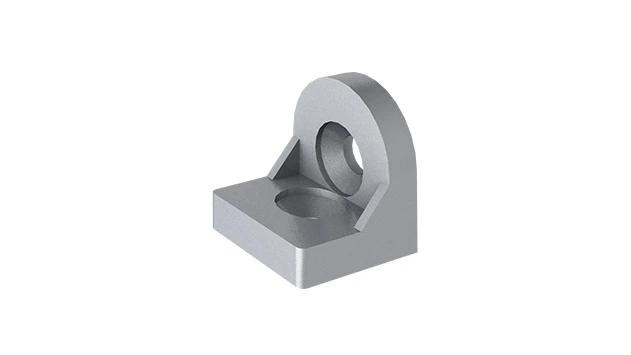
Turning Angle Code 3030
The turning angle aluminum profile connector provides a 90 degree hidden corner connection. 3030 it is means this size is used for 30 series aluminum profile.The corner code comes with set screws that allow for quick, easy connections.
Walk into any modern warehouse, and you'll likely notice a common challenge: the need to keep up with constant change. Seasonal demand spikes, new product lines, shifting inventory sizes, and evolving workflow processes—these are just a few of the hurdles warehouse managers face daily. In the past, many facilities relied on rigid, fixed structures: welded steel racks that couldn't be adjusted, workbenches bolted to the floor, and material handling systems that took weeks to reconfigure. But in today's fast-paced environment, rigidity is the enemy of efficiency. That's where modular solutions come in—and at the heart of many of these solutions lies a small but mighty component: the Turning Angle Code 3030.
If you're not familiar with Turning Angle Code 3030, you're not alone. It's one of those unsung heroes of warehouse design—quietly holding systems together while enabling the flexibility that modern operations demand. Paired with 3030 aluminum profiles, this unassuming connector is transforming how warehouses approach everything from workbench setup to material storage. In this article, we'll dive deep into what Turning Angle Code 3030 is, how it works, and why it's become a cornerstone of lean system implementation in warehouses worldwide. We'll also explore real-world applications, compare it to alternatives, and share tips for getting the most out of this versatile tool.
What Is Turning Angle Code 3030, Anyway?
Let's start with the basics. Turning Angle Code 3030 is a type of connector designed specifically for use with 3030 aluminum profiles—extruded aluminum bars with a square or rectangular cross-section, typically measuring 30mm x 30mm (hence the "3030" designation). These profiles are part of a broader family of aluminum extrusion profiles, which are prized for their strength, light weight, and adaptability. But a profile is just a piece of metal on its own; to build something useful—like a workbench, a material rack, or a turnover trolley—you need connectors. That's where Turning Angle Code 3030 steps in.
At first glance, Turning Angle Code 3030 looks like a simple L-shaped bracket, often made from aluminum or high-grade steel. But its design is deceptively clever. Most models feature pre-drilled holes that align with the T-slots running along the length of 3030 aluminum profiles. T-slots are grooves that allow bolts, nuts, and other accessories to slide into place, making it easy to attach components without welding or drilling new holes. When you insert a bolt through the Turning Angle Code 3030 and into the T-slot of a 3030 profile, you create a secure, adjustable connection that can be tightened, loosened, or repositioned as needed.
But what makes Turning Angle Code 3030 "turning," exactly? Unlike fixed-angle connectors, many versions of this code allow for slight adjustments in the angle between connected profiles—though most are designed for 90-degree connections, which are the most common in warehouse structures. Some models even feature rotating components or slotted holes, giving users a bit of wiggle room to fine-tune alignment. This flexibility is a game-changer, especially when building complex structures like multi-tiered material racks or ergonomic workbenches where precision matters.
Why 3030 Aluminum Profiles? The Perfect Partner for Turning Angle Code 3030
To understand the value of Turning Angle Code 3030, it helps to first appreciate why 3030 aluminum profiles are so popular. Aluminum extrusion profiles have been around for decades, but their use in warehouses has surged in recent years, thanks to their unique combination of properties:
- Strength-to-weight ratio: Aluminum is lighter than steel but still strong enough to support heavy loads—ideal for structures that need to be both sturdy and movable (like trolleys or mobile workbenches).
- Corrosion resistance: Unlike steel, aluminum doesn't rust, making it suitable for warehouses with high humidity or exposure to moisture (e.g., food storage, cold-chain facilities).
- T-slot versatility: The T-slots along the profiles mean you can attach accessories—shelves, bins, hooks, even roller tracks—anywhere along the length, not just at pre-drilled holes.
- Recyclability: Aluminum is 100% recyclable, aligning with the sustainability goals of many modern businesses.
Among aluminum profiles, 3030 is a sweet spot. It's larger than smaller profiles like 2020 (20mm x 20mm), which are better suited for lightweight applications, but smaller than 4040 or 4080 profiles, which are overkill for many warehouse tasks. This makes 3030 profiles perfect for mid-weight applications: workbenches that need to hold tools and components, material racks for boxes and parts, and trolleys for moving goods around the facility. And because they're standardized, 3030 profiles from different suppliers are often compatible—meaning you're not locked into a single brand when purchasing accessories like Turning Angle Code 3030.

The Benefits of Turning Angle Code 3030: More Than Just a Connector
So, what makes Turning Angle Code 3030 stand out from other connectors? Let's break down its key advantages:
1. Unmatched Flexibility
The biggest selling point of Turning Angle Code 3030 is its flexibility. Traditional welded steel connectors are permanent—once you weld two pieces together, changing the angle or disassembling the structure means cutting the welds and starting over. Plastic connectors, while cheaper, often lack the strength to support heavy loads and can degrade over time. Turning Angle Code 3030, by contrast, lets you assemble, disassemble, and reconfigure structures in minutes. Need to lower a workbench by 6 inches to accommodate a new employee? Loosen the bolts, slide the profiles, retighten, and you're done. Want to add a third shelf to a material rack? Just attach a few more Turning Angle Code 3030s and some extra profiles. It's like building with giant, industrial-grade Legos—and that adaptability is priceless in a warehouse that's always changing.
2. Durability Without the Weight
Warehouses are tough environments. Structures get bumped by forklifts, loaded with heavy boxes, and subjected to constant use. Turning Angle Code 3030 is built to withstand this abuse. Most models are made from aluminum alloy or stainless steel, which resist bending, cracking, and corrosion. Even under heavy loads, the connection remains stable, thanks to the way the T-slot design distributes weight evenly across the profile. And because aluminum is lightweight, structures built with 3030 profiles and Turning Angle Code 3030 are easier to move than steel alternatives—reducing the risk of injury when reconfiguring workspaces.
3. Cost-Effective in the Long Run
It's true: Modular aluminum systems can have a higher upfront cost than welded steel or plastic. But over time, Turning Angle Code 3030 more than pays for itself. Think about it: If you need to reconfigure a welded steel rack, you might have to hire a welder, rent equipment, and shut down part of the warehouse for days. With Turning Angle Code 3030, your existing staff can make changes in hours—no special skills required. Plus, when you no longer need a structure, you can disassemble it and reuse the profiles and connectors for something else. There's no waste, and no need to buy new materials for every project. It's a classic example of "buy once, use many times"—a core principle of lean system thinking, which focuses on minimizing waste and maximizing value.
4. Compatibility with a Wide Range of Accessories
Turning Angle Code 3030 isn't a one-trick pony. It works seamlessly with a host of aluminum profile accessories, turning basic 3030 profiles into fully functional systems. Need to add casters to a workbench so it can roll? Attach caster accessories to the bottom using Turning Angle Code 3030. Want to create a flow rack for parts to slide down? Mount roller track and accessories to the profiles with the same connectors. From aluminum honeycomb panels for workbench surfaces to plastic roller track guide rails for material flow, the possibilities are nearly endless. This compatibility means you can customize structures to fit your exact needs, rather than forcing your workflow to adapt to off-the-shelf solutions.

Real-World Applications: How Warehouses Are Using Turning Angle Code 3030
To really grasp the impact of Turning Angle Code 3030, let's look at some real-world scenarios. These examples come from warehouses we've worked with (names changed for privacy), but they're representative of the challenges many facilities face.
Case Study 1: Electronics Assembly Warehouse Adapts to New Product Lines
A mid-sized electronics manufacturer in the Midwest produces everything from circuit boards to small appliances. A few years ago, they launched a new line of smart home devices, which required longer assembly times and more workspace for components. Their existing setup included fixed wooden workbenches with built-in shelving—great for their old products, but too cramped for the new line. The operations manager estimated it would take 2 weeks and $15,000 to build new workbenches from scratch. Instead, they opted for a modular solution using 3030 aluminum profiles and Turning Angle Code 3030.
The team started by disassembling the wooden workbenches and recycling the materials. Then, they purchased 3030 profiles, Turning Angle Code 3030 connectors, aluminum honeycomb panels (for work surfaces), and a few caster wheels. Using basic hand tools, two employees assembled 12 new workbenches in just 3 days. The best part? Each workbench could be adjusted: shelves could be moved up or down to fit different component bins, and the height could be tweaked to match the ergonomic needs of individual workers. When the next product line launches later this year, they'll simply reconfigure the same workbenches instead of building new ones. "We saved so much time and money," the operations manager told us. "And the flexibility means we're ready for whatever comes next."
Case Study 2: E-Commerce Fulfillment Center Optimizes Material Storage
An e-commerce fulfillment center outside a major city was struggling with seasonal spikes. During the holidays, they needed extra storage for small items like phone cases and accessories. But during slower months, that storage space sat empty, wasting valuable square footage. Their traditional steel pallet racks were fixed in place, so they couldn't repurpose the area. Enter Turning Angle Code 3030 and 3030 aluminum profiles.
The center invested in a set of modular material racks using 3030 profiles, Turning Angle Code 3030 connectors, and plastic roller track guide rails (grey, to match their branding). These racks were lightweight enough to be moved by two people but strong enough to hold hundreds of small boxes. During peak season, they set up 10 racks in the unused space. When demand dropped, they disassembled the racks and stored the profiles and connectors in a small closet. The whole process took less than a day. "We used to rent extra warehouse space during the holidays, which cost us $5,000 a month," the warehouse manager explained. "Now, we just reconfigure our existing space. The modular racks paid for themselves in three months."
Common Configurations: Workbenches, Racks, and Trolleys
These case studies highlight just a few possibilities, but Turning Angle Code 3030 is used in countless other warehouse applications. To give you a better sense of how it all comes together, here's a breakdown of three common configurations, along with the components involved:
| Application | Key Components | Load Capacity | Assembly Time (2 People) |
|---|---|---|---|
| Single-Deck Workbench (Without Casters) | 3030 aluminum profiles (4 uprights, 4 crossbars), Turning Angle Code 3030 (8 units), aluminum honeycomb panel (1), aluminum profile accessories (shelf brackets, end caps) | Up to 300kg (evenly distributed) | 1–2 hours |
| Material Rack (3 Rows, 3 Floors) | 3030 aluminum profiles (4 uprights, 18 crossbars), Turning Angle Code 3030 (36 units), plastic roller track guide rails (yellow, for visibility), roller track placon mount connectors | Up to 200kg per shelf | 3–4 hours |
| Mobile Turnover Trolley | 3030 aluminum profiles (4 uprights, 8 crossbars), Turning Angle Code 3030 (16 units), caster wheels (4, with brakes), aluminum side guards, corrugated aluminum pipe (for handles) | Up to 150kg total | 2–3 hours |
Turning Angle Code 3030 vs. Alternatives: Why It Stands Out
Of course, Turning Angle Code 3030 isn't the only connector on the market. Let's compare it to some common alternatives to see why it's often the best choice for warehouse applications.
Welded Steel Connectors
Welded steel is the old standby for heavy-duty structures. It's strong, durable, and can support massive loads. But it's also permanent. Once welded, you can't adjust the angle or disassemble the structure without cutting the welds, which is time-consuming and risky (you might damage the profiles). Welded steel is also heavy—making it hard to move structures—and prone to rust if not painted regularly. For warehouses that need flexibility, welded steel is a non-starter.
Plastic Connectors
Plastic connectors are cheap and lightweight, making them popular for DIY projects or light-duty applications (like home workshops). But they lack the strength to support heavy loads—most max out at around 50kg per connection—and can warp or crack under stress or extreme temperatures. In a warehouse, where bumps and heavy use are daily occurrences, plastic connectors are likely to fail quickly. They're also not as compatible with T-slots, often requiring glue or specialized fasteners.
Other Angle Codes (e.g., 2020, 4040)
Turning Angle Code 3030 is part of a family of angle codes designed for different profile sizes. For example, Turning Angle Code 2020 works with 20mm x 20mm profiles, which are great for small, lightweight structures like desktop organizers. Turning Angle Code 4040 pairs with 40mm x 40mm profiles, which are better for heavy loads like industrial machinery bases. But 3030 strikes the perfect balance for most warehouse needs: it's strong enough for workbenches and material racks, light enough to be movable, and widely available. Unless you're building something extremely small or extremely heavy, 3030 is the way to go.
Tips for Implementing Turning Angle Code 3030 in Your Warehouse
Ready to start using Turning Angle Code 3030 and 3030 aluminum profiles in your warehouse? Here are some tips to ensure a smooth implementation:
1. Start with a Needs Assessment
Before you buy a single profile or connector, take the time to assess your needs. What are you building? How much weight does it need to support? Will it be stationary or mobile? How often will you need to reconfigure it? Answering these questions will help you choose the right profiles (3030 is a safe bet for most applications), connectors, and accessories. For example, if you're building a workbench for heavy tools, you'll want thicker-walled 3030 profiles and steel Turning Angle Code connectors instead of aluminum.
2. Invest in Quality Tools
You don't need fancy equipment to work with Turning Angle Code 3030, but a few basic tools will make the job easier: a hex key set (to tighten bolts in T-slots), a rubber mallet (to gently tap profiles into place), a level (to ensure structures are straight), and a tape measure (to avoid cutting profiles too short). Avoid using power tools like drills unless necessary—over-tightening bolts can strip the T-slots or damage the connectors.
3. Train Your Team
Modular systems are designed to be user-friendly, but that doesn't mean your team will know how to assemble them right away. Spend an hour or two training key staff on how to use Turning Angle Code 3030, align profiles, and secure connections. Provide a quick-reference guide with diagrams of common configurations. The more comfortable your team is with the system, the more likely they are to use it effectively—and to come up with creative ways to reconfigure structures on their own.
4. Label and Organize Components
If you're disassembling structures and reusing components, label everything! Use color-coded tape or tags to mark which profiles go with which connectors, and store them in labeled bins. This will save you hours of frustration when it's time to rebuild. A little organization goes a long way toward making modular systems feel like a breeze to use.
5. Test Before Full Deployment
Before rolling out a new configuration across your warehouse, build a prototype and test it. Load it with the maximum weight it will need to support, bump it with a pallet jack (gently!), and see how it holds up. If something feels wobbly, check the connections—maybe you need an extra Turning Angle Code 3030 or a sturdier profile. It's better to catch issues in the prototype phase than after you've built 10 identical structures.
The Future of Warehouse Flexibility: Turning Angle Code 3030 and Beyond
As warehouses continue to evolve—adopting automation, AI-driven inventory management, and more agile workflows—the demand for flexible infrastructure will only grow. Turning Angle Code 3030 and 3030 aluminum profiles are poised to play a central role in this evolution. They're not just tools for building structures; they're tools for building resilience. In a world where change is the only constant, the ability to adapt quickly is what separates successful warehouses from the rest.
But the innovation doesn't stop here. Manufacturers are constantly improving aluminum profile accessories, from self-locking bolts that reduce assembly time to recycled aluminum profiles that lower environmental impact. Turning Angle Code 3030 itself may see upgrades, like integrated cable management channels or quick-release mechanisms, making it even easier to use. Whatever the future holds, one thing is clear: modular solutions like Turning Angle Code 3030 are here to stay.
Final Thoughts: Small Component, Big Impact
At the end of the day, Turning Angle Code 3030 is a small component—but its impact on warehouse efficiency, flexibility, and cost-savings is enormous. By enabling quick, tool-free reconfiguration of 3030 aluminum profile systems, it empowers warehouses to adapt to change, reduce waste, and optimize workflows—all core principles of lean system implementation. Whether you're building a simple workbench or a complex material handling system, this unassuming connector is the key to unlocking a more agile, efficient, and future-ready warehouse.
So, the next time you walk through your warehouse and spot a wobbly shelf, a cramped workbench, or a storage area that's not quite right, remember: the solution might be as simple as a Turning Angle Code 3030 and a few 3030 aluminum profiles. With these tools in hand, you're not just building structures—you're building a warehouse that can keep up with whatever tomorrow brings.