- Company Articles
- Products and Technology
- Product knowledge
- Maximizing Floor Space with Aluminum Workbench A's Compact Design

Maximizing Floor Space with Aluminum Workbench A's Compact Design
Related Product
Aluminum Workbench A
Aluminum tube workbench is more flexible and durable, compared with traditional PE/ABS coated steel tube. It is easy to assemble, anti corrosion, rust protection, and recycle use after disassemble.
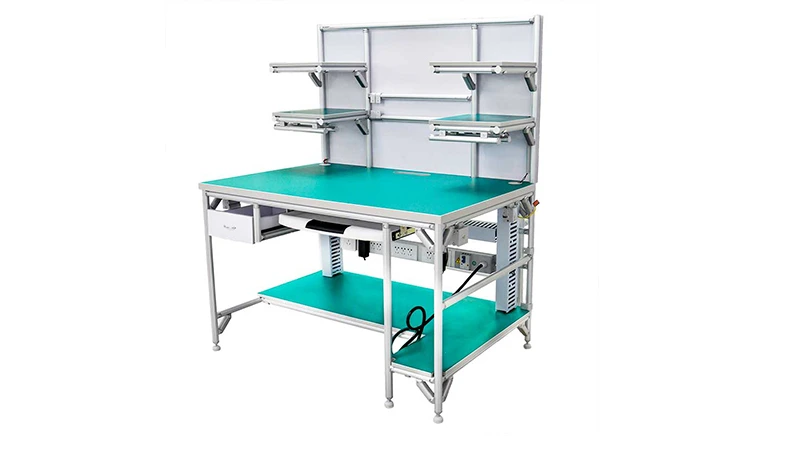
Walk into any manufacturing plant, warehouse, or small workshop, and you'll notice a common challenge: floor space is gold. Every square foot counts, and clutter—whether from bulky workbenches, disorganized tools, or inefficient material flow—can turn a productive space into a bottleneck. In today's fast-paced work environments, where agility and efficiency are non-negotiable, the right equipment isn't just about getting the job done—it's about doing it without wasting an inch of valuable space. That's where aluminum workbench A comes in. Designed with compactness at its core, this workbench isn't just a surface to work on; it's a space-saving solution that aligns with the demands of modern lean system workflows. Let's dive into how it transforms cramped workspaces into models of efficiency.
Design Philosophy: Compact, Yet Mighty
At first glance, you might wonder: How can a workbench be both compact and functional? After all, traditional workbenches often prioritize surface area over footprint, leaving little room for movement or additional equipment like flow rack setups. Aluminum workbench A flips that script. Its design starts with a simple question: What if we stripped away the unnecessary bulk without sacrificing strength or usability?
Crafted from high-grade aluminum—lightweight yet surprisingly durable—this workbench features a streamlined frame that cuts down on horizontal space without skimping on vertical utility. Let's break down the specs: measuring just 1200mm in length, 600mm in width, and 850mm in height (that's roughly 4 feet long, 2 feet wide, and 2.8 feet tall), it's built to fit into tight corners, alongside assembly lines, or even between flow rack units without blocking pathways. Compare that to a standard steel workbench, which might clock in at 1500mm x 750mm, and you're already saving over 3 square feet of floor space per bench. Multiply that by multiple workstations, and the savings add up fast.
But compactness doesn't mean cutting corners on capacity. Aluminum workbench A boasts a weight capacity of 300kg (about 660 pounds) on its single deck—plenty for heavy tools, raw materials, or even small machinery. The secret? Its aluminum extrusion profile frame, reinforced with internal support brackets, distributes weight evenly, ensuring stability even when loaded to the max. This blend of size and strength makes it a standout choice for everything from electronics assembly to automotive part inspection.
How Aluminum Workbench A Maximizes Space: A Closer Look
Saving space isn't just about having a smaller footprint; it's about how the workbench interacts with its surroundings. Aluminum workbench A excels here, thanks to three key design choices:
1. Vertical Space, Not Just Horizontal
Traditional workbenches often waste vertical space, leaving walls bare and tools scattered across the deck. Aluminum workbench A, however, is designed to play well with aluminum profile accessories —think overhead tool racks, side-mounted bins, and pegboards—that turn empty air into usable storage. By shifting tools and supplies upward, the deck stays clear for active work, and the floor around the bench remains uncluttered. For example, adding a simple aluminum guide rail above the bench lets you hang frequently used tools within arm's reach, eliminating the need for a separate tool chest that would eat up floor space.
2. Seamless Integration with Lean Systems
A lean system thrives on minimizing waste—including wasted space. Aluminum workbench A is built to slot into lean workflows effortlessly, especially when paired with flow rack systems. Imagine a production line where raw materials flow directly from a flow rack into the workbench, and finished parts move out just as smoothly. Because the workbench is compact, it can be positioned inches from the flow rack, reducing the distance workers need to reach for materials. This "one-touch" access cuts down on movement waste (a key lean principle) and keeps the area between the rack and bench clear—no more tripping over stray boxes or tools.
3. Optional Mobility with Caster Wheels
Sometimes, the best way to save space is to move when you're not needed. Aluminum workbench A (single deck-without caster) comes with pre-drilled holes for easy installation of caster wheel accessories. Adding lockable caster wheels transforms it from a stationary fixture into a mobile workstation that can be rolled aside during cleaning, rearranged for a new production layout, or even moved to a different area of the shop when demand shifts. Unlike heavy steel workbenches that require forklifts to reposition, this one can be moved by two people, making it a flexible asset in dynamic workspaces.

The Lean Connection: Supporting Efficient Workflows
If you're familiar with lean manufacturing, you know the goal is to create value with as little waste as possible. Space waste—whether from oversized equipment or poor layout—is a silent productivity killer. Aluminum workbench A isn't just a tool; it's a lean ally. Here's how:
5S-Friendly Design
The 5S methodology (Sort, Set in Order, Shine, Standardize, Sustain) relies on organization and visual clarity. Aluminum workbench A's clean, uncluttered deck makes "Set in Order" a breeze—tools have a designated place, and there's no extra space to hide unnecessary items. Pair it with color-coded bins (attached via aluminum profile accessories like side brackets) and you've got a workstation that practically enforces 5S principles. Workers spend less time searching for tools and more time producing, all while keeping the floor space around the bench tidy.
Adapting to U-Shaped and Cell Layouts
Lean production often uses U-shaped or cell layouts to minimize movement and improve communication. Aluminum workbench A's compact size lets you arrange multiple benches in a tight U-shape, with a flow rack at the open end for materials. This setup reduces the distance workers travel between stations, cutting down on "transport waste" and making collaboration easier. In a small electronics plant we worked with, replacing three traditional workbenches with four Aluminum Workbench A units in a U-shape freed up 12 square feet of floor space and reduced material handling time by 15%.

Accessories That Elevate: Caster Wheels and Aluminum Profile Add-Ons
A great workbench becomes even better with the right accessories. Aluminum workbench A is compatible with a range of aluminum profile accessories that enhance functionality without expanding its footprint. Let's highlight two game-changers:
Caster Wheels: Mobility Without Compromise
While the base model (Workbench E, single deck-without caster) is stationary, adding caster wheel accessories transforms it into a mobile workstation. These aren't your average casters—we're talking heavy-duty, lockable wheels with rubber treads that glide smoothly over concrete or warehouse floors. Lock the wheels, and the bench stays rock-steady during use; unlock them, and it rolls effortlessly, even when loaded. This is a game-changer for workshops that need to reconfigure layouts for different projects or clear space for deep cleaning.
Aluminum Profile Accessories: Customization for Every Need
From side-mounted tool rails to overhead bin holders, aluminum profile accessories let you tailor the workbench to your exact needs. For example:
- Aluminum guide rail A : Mounted along the back of the bench, it holds hanging tools or small parts bins, keeping them off the deck.
- Plastic roller track guide rail : Attached to the side, it creates a mini conveyor for moving small parts from the flow rack to the bench, reducing reaching and bending.
- Internal rotary aluminum joints : These let you adjust accessory angles on the fly—tilt a tool holder for better access, or swivel a bin to face you without moving the entire bench.
How It Stacks Up: Aluminum Workbench A vs. Traditional Workbenches
Still not convinced that compactness equals better performance? Let's put Aluminum Workbench A head-to-head with common alternatives in a space-saving showdown:
| Feature | Aluminum Workbench A | Traditional Steel Workbench | Traditional Wood Workbench |
|---|---|---|---|
| Footprint (W x L x H) | 600mm x 1200mm x 850mm | 750mm x 1500mm x 900mm | 800mm x 1800mm x 850mm |
| Floor Space Used | 0.72 sq.m | 1.125 sq.m | 1.44 sq.m |
| Weight Capacity | 300kg | 400kg | 200kg |
| Mobility (with caster wheels) | Yes (lockable casters available) | Bulky, hard to move even with casters | No (wood + casters = instability) |
| Lean System Compatibility | Seamless (paired with flow racks, 5S accessories) | Limited (large size disrupts flow) | Poor (hard to clean, no accessory integration) |
The numbers speak for themselves: Aluminum Workbench A uses 36% less floor space than a traditional steel bench and 50% less than a wood one, while still offering enough capacity for most tasks. Add in mobility and lean-friendly features, and it's clear which option makes the most of every square foot.
Real-World Impact: A Small Workshop's Success Story
Let's take a look at a real example. Precision Parts Co., a small machine shop in Ohio with just 1,200 sq.ft of floor space, was struggling to keep up with orders. Their three traditional steel workbenches took up nearly 40 sq.ft of space, leaving little room for a flow rack or material storage. Workers were constantly stepping over tools, and material delivery from the warehouse took extra time because there was no clear path to the benches.
They switched to four Aluminum Workbench A units, adding caster wheel accessories to two of them for mobility. By arranging the benches in a U-shape with a flow rack at the center, they freed up 18 sq.ft of floor space—enough to add a small assembly line for finished parts. The aluminum profile accessories , like overhead tool racks and side bins, kept tools organized, and the caster wheels let them roll benches aside when the delivery truck arrived.
The result? Production output increased by 22% in three months, and worker satisfaction scores went up—no more tripping over clutter, and tools were always where they needed to be. "We went from feeling cramped to feeling in control," said the shop foreman. "The workbenches didn't just save space—they changed how we work."
Built to Last, Easy to Care For
Space-saving design is only useful if the workbench holds up over time. Aluminum Workbench A is built with durability in mind, and its low-maintenance nature means it stays functional for years with minimal effort:
- Rust-resistant aluminum frame : Unlike steel, aluminum won't rust, even in humid warehouses or garages. A quick wipe with a damp cloth is all it takes to keep it clean.
- Sturdy joints : The internal rotary aluminum joints and aluminum profile connectors are built to withstand daily use. Tighten them once a quarter, and they'll stay solid.
- Caster wheel upkeep : If you add casters, simply check the wheels for debris monthly and lubricate the axles twice a year to keep them rolling smoothly.
In short, this workbench is designed to be a long-term investment—not a temporary fix. Its aluminum construction resists dents, scratches, and corrosion, ensuring it looks and performs like new for years.
Final Thoughts: Space as a Strategic Advantage
In the end, floor space isn't just about square footage—it's about opportunity. Every inch you free up is an inch you can use to add a flow rack , expand a production line, or create a safer, more efficient workspace. Aluminum workbench A isn't just a compact workbench; it's a tool that turns space constraints into space opportunities.
Whether you're running a large manufacturing plant or a small garage workshop, the right equipment can transform how you work. With its blend of compact design, strength, and compatibility with lean system principles and aluminum profile accessories , Aluminum Workbench A proves that you don't have to sacrifice functionality to save space. It's not just about working smaller—it's about working smarter.
So, take a look at your workspace today. Are your workbenches holding you back? Maybe it's time to think compact, think lean, and think Aluminum Workbench A.