- Company Articles
- Products and Technology
- Product knowledge
- Maximizing Load Capacity with One Way Rotatory Straight Lean Pipe Joints

Maximizing Load Capacity with One Way Rotatory Straight Lean Pipe Joints
Related Product
One Way Rotatory Straight Lean Pipe Joint
Two way lean pipe joint for 2 pcs 28MM lean pipe connection in straight angle with rotatory fucntion, which used widely in workbench, flow rack, hand trolley frame connection.
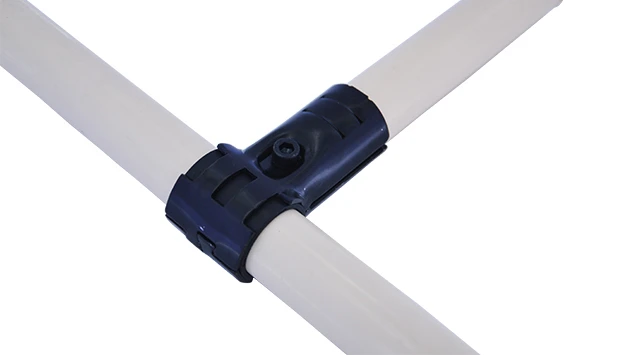
In the world of lean manufacturing, every component has a job to do—whether it's streamlining workflows, reducing waste, or keeping teams safe and efficient. But if there's one element that often flies under the radar while quietly holding everything together, it's the humble lean pipe joint. These small but mighty connectors are the backbone of structures like workbenches, roller tracks, and material racks, turning simple aluminum or steel pipes into robust, functional systems. Today, we're zeroing in on a specific star in this category: the one way rotatory straight lean pipe joint. Far more than just a "connector," this component is a game-changer for maximizing load capacity, flexibility, and longevity in lean setups. Let's dive in.
1. The Backbone of Lean Systems: Why Load Capacity Isn't Just About "Strength"
Before we get into the nitty-gritty of joints, let's take a step back. Lean manufacturing thrives on efficiency—minimizing waste, optimizing space, and ensuring every tool and workstation works with the team, not against them. But here's the thing: efficiency means nothing if the structures supporting your operations can't handle the day-to-day grind. Imagine a workbench in an electronics assembly line, loaded with circuit boards, soldering tools, and testing equipment. Or a roller track in a warehouse, moving heavy cartons from receiving to shipping. If these structures sag, wobble, or—worse—fail, you're looking at downtime, damaged materials, and even safety risks.
Load capacity, then, isn't just about "how much weight a structure can hold." It's about consistency, reliability, and adaptability. A well-designed lean system should handle its intended load easily , without straining components, and still allow for adjustments as your needs change. That's where the right lean pipe joint comes in. Joints are the critical link between pipes, and their design directly impacts how weight is distributed, how stable the structure remains, and how much abuse it can take over time.
2. Lean Pipe Joints 101: More Than Just "Connecting Pieces"
If you've ever walked through a factory or warehouse, you've probably seen lean pipe structures without even realizing it. Those modular workbenches with metal pipes and colorful connectors? The gravity-fed roller tracks that glide boxes from one station to the next? Those are all built using lean pipes (often aluminum, steel, or plastic-coated) and a variety of joints. Think of lean pipes as the "bones" of the structure, and joints as the "joints" in your body—they hold everything together, allow movement (when needed), and absorb stress.
Lean pipe joints come in all shapes and sizes, each tailored to specific needs: fixed joints for rigid, static structures; swivel joints for adjustable angles; crossing joints for intersecting pipes; and rotatory joints for controlled movement. But not all rotatory joints are created equal. Some allow 360° rotation, which is great for flexibility but can compromise stability under heavy loads. Others are fixed in direction, offering strength but little adaptability. That's where the one way rotatory straight lean pipe joint stands out: it marries controlled movement with impressive load-bearing capability, making it a versatile choice for dynamic work environments.

3. One Way Rotatory Straight Lean Pipe Joints: Design That Balances Movement and Strength
Let's break down what makes this joint unique. First, the "straight" design: unlike angled or crossing joints, this one connects pipes in a straight line, making it ideal for building long spans—think the legs of a workbench, the rails of a roller track, or the uprights of a material rack. But what really sets it apart is the "one way rotatory" feature. Instead of locking into a fixed position or spinning freely, this joint allows rotation in one direction only (usually 0-90°) and locks securely when rotated the other way. This controlled movement is a game-changer for two reasons: it lets you adjust angles when needed (say, tilting a workbench shelf for better ergonomics) and prevents accidental rotation that could weaken the structure under load.
Materials matter too. Most one way rotatory straight joints are made from high-grade steel, often chrome-plated for corrosion resistance. Chrome plating isn't just for looks—it adds a layer of durability, protecting the joint from rust in humid or dusty environments (common in manufacturing settings). The internal mechanism is equally important: a spring-loaded pin or friction lock ensures that once rotated into position, the joint stays put, even when weight is applied. This combination of sturdy materials and smart engineering is what gives the joint its impressive load capacity.
How It Works: A Closer Look at the Mechanics
Picture this: you're assembling a roller track for heavy automotive parts. The track needs to slope slightly downward to use gravity, but you don't want it to slope too much—otherwise, parts might slide too fast and get damaged. With a fixed joint, you'd have to measure and cut pipes at precise angles, leaving little room for adjustments. With a one way rotatory joint? You simply connect the pipes, rotate the joint to the perfect slope (say, 15°), and it locks into place. The one-way rotation means you can fine-tune the angle during setup, but once in use, the joint won't budge—even when a 50kg part rolls over it.
Internally, the joint uses a cam or ratchet system. When you rotate it in the "allowed" direction, the cam glides over notches, letting you adjust the angle. Rotate it the other way, and the cam catches, preventing movement. This design ensures that the joint isn't just "holding" the load—it's distributing it evenly across the connected pipes. Instead of stress (concentrating stress) at a single point (like a fixed joint might), the rotatory mechanism spreads weight along the pipe, reducing strain and lowering the risk of bending or breaking.

4. Maximizing Load Capacity: Why This Joint Outperforms Others
So, how much weight can a one way rotatory straight lean pipe joint actually handle? On average, these joints are rated for 250-350kg per joint, depending on the pipe diameter and material (aluminum vs. steel). That might not sound like much on paper, but when you consider that a typical workbench uses 4-6 joints, the total load capacity adds up quickly—easily supporting 1000kg+ for a sturdy bench. Compare that to a standard 360° swivel joint, which often tops out at 150-200kg, or a basic fixed joint (which can handle more weight but offers no rotation), and the advantage becomes clear: this joint gives you both strength and flexibility.
But load capacity isn't just about raw numbers. It's about consistency . A joint that holds 300kg once but fails after a month of use isn't useful. One way rotatory joints excel here because of their robust locking mechanism. Unlike some adjustable joints that rely on set screws (which can loosen over time), the one-way lock stays tight, even with repeated use. This means your roller track won't start sagging after a week of moving boxes, and your workbench won't wobble mid-assembly. It's the kind of reliability that translates to less maintenance, fewer replacements, and—ultimately—lower costs.
Real-World Load Scenarios: Where This Joint Shines
Let's put this into context with a few examples:
- Heavy-Duty Workbenches: A workbench in a (machine shop) might hold vices, power tools, and raw materials. With one way rotatory joints, the shelves can be tilted to reduce neck strain for workers, while the joint's load capacity ensures the shelf doesn't dip under the weight of a 20kg drill press.
- Roller Tracks for Bulky Items: In a distribution center, roller tracks move pallets or large boxes. Using one way rotatory joints along the track's supports allows for slight adjustments to the slope, ensuring items glide smoothly without jamming—all while the joints handle the weight of 80kg cartons.
- Material Racks in Warehouses: A rack storing automotive parts needs to hold heavy components like engine blocks. One way rotatory joints let you angle the shelves to prevent parts from sliding off, and their strength ensures the rack stays stable, even when fully loaded.
5. Comparing Lean Pipe Joints: How One Way Rotatory Stacks Up
To really understand the value of one way rotatory straight lean pipe joints, it helps to see how they compare to other common joint types. Let's take a look at this side-by-side breakdown:
| Joint Type | Average Load Capacity (kg) | Rotation Range | Best For | Key Advantage |
|---|---|---|---|---|
| Fixed 90° Lean Pipe Joint | 300-400 | None (fixed angle) | Right-angle structures (e.g., workbench frames) | Maximum stability for static, heavy loads |
| One Way Rotatory Straight Lean Pipe Joint | 250-350 | 0-90° (one direction only) | Adjustable workbenches, roller tracks, sloped racks | Balances load capacity with controlled adjustability |
| 360° Swivel Lean Pipe Joint | 150-250 | Full 360° rotation | Ergonomic tool holders, movable partitions | Maximum flexibility for dynamic, low-load setups |
| Parallel Lean Pipe Joint | 350-450 | None (parallel pipes) | Long spans (e.g., roller track rails, shelf supports) | Distributes load evenly across parallel pipes |
As you can see, one way rotatory joints strike a unique balance: they offer nearly as much load capacity as fixed joints but add the flexibility of rotation. For setups that need both strength and adjustability, they're hard to beat.
6. Installation and Maintenance: Getting the Most Out of Your Joints
Even the best joint won't perform well if it's installed incorrectly. Here are a few tips to ensure your one way rotatory straight lean pipe joints deliver maximum load capacity and longevity:
Installation: Tighten, Align, Test
- Match Pipe Diameter: Joints are designed for specific pipe sizes (e.g., 28mm or 30mm lean pipe). Using a pipe that's too small or too large will weaken the connection—always check the manufacturer's specs.
- Torque Properly: When tightening the joint onto the pipe, use the recommended torque (usually 25-30 Nm for steel pipes). Too loose, and the joint will slip; too tight, and you risk stripping the threads or damaging the pipe.
- Align Pipes Straight: For straight joints, ensure the connected pipes are perfectly aligned. A slight bend or kink will create stress points, reducing load capacity.
- Test the Lock: After installation, rotate the joint in both directions to confirm the one-way lock works. It should move smoothly in the allowed direction and resist movement in the other.
Maintenance: Keep Them Clean and Lubricated
Like any mechanical component, one way rotatory joints need a little TLC to stay in top shape. Here's how to keep them performing:
- Clean Regularly: Wipe down joints with a dry cloth to remove dust and debris, which can gunk up the rotation mechanism. For greasy environments, use a mild degreaser (avoid harsh chemicals that can damage chrome plating).
- Lubricate Moving Parts: Every 3-6 months (or more often in high-use areas), apply a small amount of machine oil to the rotation points. This keeps the joint moving smoothly and prevents rust.
- Inspect for Wear: Check for signs of damage like bent pins, cracked housing, or loose locks. If a joint feels "wobbly" or the lock slips, replace it immediately—don't risk overloading a compromised component.
Case Study: How One Manufacturer Boosted Load Capacity by 30% with Rotatory Joints
A mid-sized automotive parts manufacturer was struggling with their assembly line workbenches. The fixed-joint benches were sturdy but couldn't be adjusted, leading to worker complaints about neck and back strain. When they tried 360° swivel joints to add adjustability, the benches sagged under the weight of tools and parts, causing frequent downtime for repairs.
After switching to one way rotatory straight lean pipe joints, the results were clear: workers could tilt shelves to comfortable angles (reducing ergonomic issues by 40%), and the joints handled the 250kg load of tools and parts without sagging. Best of all, maintenance costs dropped by 30% because the joints rarely needed tightening or replacement. As the plant manager put it: "We didn't just get a 'joint upgrade'—we got a more efficient, safer workspace."
7. Conclusion: Investing in the Right Joints = Investing in Your Lean System
At the end of the day, lean manufacturing is about making smart choices—choices that boost efficiency, reduce waste, and support your team. When it comes to building sturdy, adaptable structures, the one way rotatory straight lean pipe joint is one of those smart choices. It's not the flashiest component in your lean system, but it's one that delivers where it counts: load capacity you can rely on, adjustability when you need it, and durability that stands up to the daily grind.
Whether you're setting up a new assembly line, upgrading existing workbenches, or building custom roller tracks, don't overlook the power of a well-designed joint. After all, a lean system is only as strong as its weakest link—and with one way rotatory straight lean pipe joints, that link just got a whole lot stronger.