- Company Articles
- Products and Technology
- Product knowledge
- Maximizing Productivity: How Two Way Lean Pipe Joint Optimizes Production Layouts

Maximizing Productivity: How Two Way Lean Pipe Joint Optimizes Production Layouts
Related Product
Two Way Lean Pipe Joint
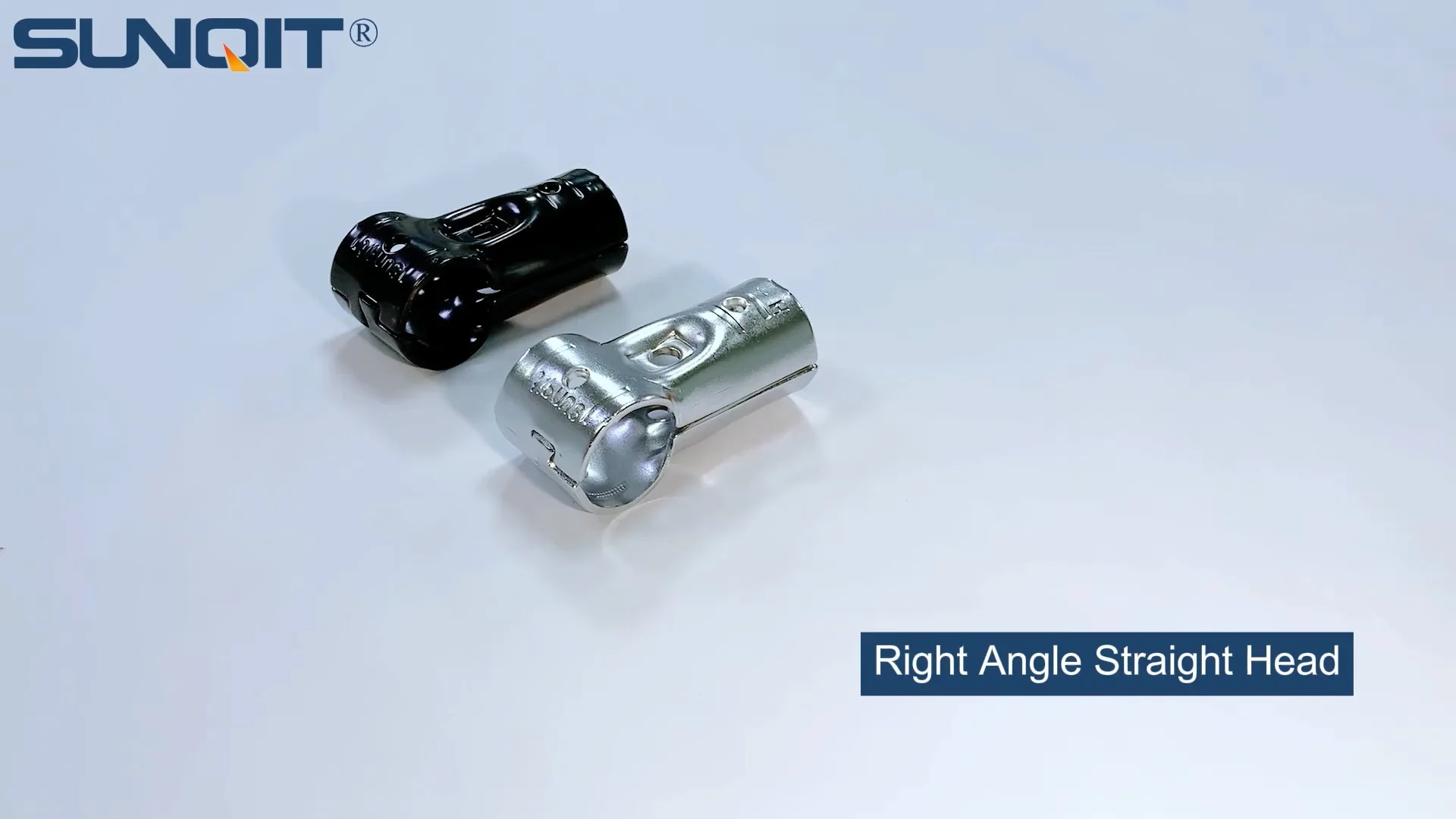
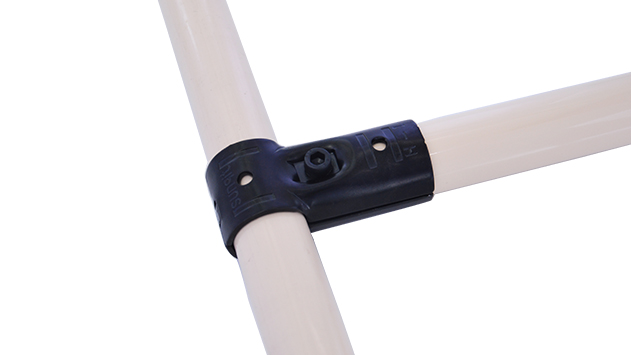
Two way lean pipe joint for 2 pcs 28MM lean pipe connection in straight angle, which used widely in workbench, flow rack, hand trolley frame connection.
The modular magic that transforms rigid factories into agile, efficiency-driven workspaces
In today's fast-paced manufacturing world, where customer demands shift overnight and product lines evolve faster than ever, the one thing factories can't afford is rigidity. Picture this: a production manager walks onto the floor, (brows furrowed), staring at a workspace that worked perfectly six months ago but now feels like a maze. A new product line requires rearranging workbenches, but the current setup—bolted-down steel frames, fixed shelving, and custom-built conveyors—might as well be set in concrete. Reconfiguring it would take weeks, cost a small fortune, and disrupt production. Sound familiar? This is the daily reality for many manufacturers stuck in outdated, inflexible layouts.
But what if there was a better way? A way to build production lines that bend, not break, when change comes? Enter the world of lean systems—a philosophy built on eliminating waste, streamlining flow, and fostering adaptability. And at the heart of this revolution lies an unsung hero: the two way lean pipe joint. It's a small component, often overlooked, but its impact on how factories design, build, and rebuild their layouts is nothing short of transformative. In this article, we'll dive into how this simple yet ingenious connector is redefining productivity by making production layouts as dynamic as the businesses they serve.
The Foundation: What Makes Lean Systems Tick?
Before we zoom in on the two way lean pipe joint, let's take a step back to understand the bigger picture: lean systems. At its core, lean manufacturing is about creating more value with less waste. That means cutting out unnecessary steps, reducing downtime, minimizing inventory, and—crucially—making sure every part of the production process is as flexible as possible. Traditional manufacturing layouts, with their fixed structures and one-size-fits-all designs, often run counter to this. They're great for mass-producing a single product, but when you need to switch things up—whether it's a new product, a higher volume, or a different workflow—they become liabilities.
Lean systems flip this script by prioritizing modularity. Instead of building monolithic structures, they use interchangeable components that can be easily assembled, disassembled, and reassembled. Think of it like building with Lego blocks: you start with a basic set of pieces, and you can create anything from a castle to a spaceship by rearranging them. In manufacturing terms, these "blocks" are things like lean pipes (lightweight, durable tubes), aluminum profiles, workbenches, flow racks, and conveyors. And the glue that holds them all together? Connectors. Specifically, the two way lean pipe joint.
Meet the Star: The Two Way Lean Pipe Joint Unveiled
Let's get up close with the two way lean pipe joint. At first glance, it might not look like much—just a small, often metal or plastic connector with two openings designed to fit lean pipes (typically 28mm or 30mm in diameter). But don't let its simplicity fool you. This joint is engineered for one primary purpose: to make connecting and reconfiguring lean pipe structures fast, easy, and tool-free. Unlike traditional welding or bolting, which requires specialized skills and time, the two way joint lets workers snap pipes into place, adjust angles, and lock them securely with a simple twist or clamp. It's the difference between building a bookshelf with a screwdriver versus using Velcro—suddenly, anyone can do it, and changes take minutes, not hours.
What makes the two way joint so versatile? Its design. Most models feature a swiveling or rotating mechanism, allowing pipes to connect at 90-degree angles (the most common use) or adjusted to other angles if needed. Some are made of durable plastic for lighter applications, others of steel or aluminum for heavier loads. But regardless of material, the goal is the same: to create a strong, stable connection that's still easy to break and rebuild. This flexibility is a game-changer for production layouts, where the ability to pivot quickly can mean the difference between meeting a tight deadline and falling behind.
How the Two Way Lean Pipe Joint Transforms Layouts: 4 Key Benefits
Now, let's get to the good stuff: how does this tiny joint actually make production layouts more productive? Let's break it down into four critical areas where the two way lean pipe joint shines.
1. Unmatched Flexibility: From "Set It and Forget It" to "Adapt on Demand"
Traditional production lines are like old flip phones—they do one thing well, but you can't add apps or upgrade them. A lean pipe layout with two way joints, on the other hand, is like a smartphone. Need a taller workbench for a new operator? Loosen the joints, add a few extra pipes, and lock them back in. Want to split a flow rack into two smaller ones for separate product lines? Take apart the sections, reconnect the pipes with two way joints, and you're done. This flexibility means factories no longer have to plan layouts around "what ifs." They can build for today's needs and adjust for tomorrow's without missing a beat.
Consider a small electronics manufacturer that produces both smartwatches and Bluetooth speakers. During peak smartwatch season, their assembly line is configured with long workbenches and high flow racks to handle large component batches. When speaker orders pick up, they need shorter workbenches with more storage bins and a conveyor that feeds components from a different direction. With two way lean pipe joints, this switch takes a team of two workers about four hours—no welders, no contractors, no production shutdowns. That's the power of flexibility.
2. Speed: Cutting Reconfiguration Time from Weeks to Hours (or Minutes)
Time is money in manufacturing, and nowhere is that truer than during layout changes. Traditional reconfigurations involve hiring contractors, cutting and welding steel, or installing new custom machinery—processes that can drag on for weeks. With the two way lean pipe joint, the equation changes dramatically. Since the joints require no special tools (most can be tightened by hand or with a basic hex key), workers can reconfigure a section of the line during a lunch break or between shifts.
Take a automotive parts supplier, for example. They recently won a contract to produce a new sensor, which required adding a quality control station to their existing line. Using lean pipes and two way joints, their team built a custom workbench with integrated lighting and tool holders in under a day. The joint allowed them to connect the bench to the existing conveyor system with minimal effort, and since it was modular, they could tweak the height and shelf positions based on operator feedback the next day. What would have taken two weeks with traditional methods was done in 24 hours—keeping production on track and the client happy.
3. Cost-Effectiveness: Saving Money Today and Tomorrow
At first glance, lean pipe systems might seem pricier than, say, using wooden shelves or second-hand steel frames. But the long-term savings tell a different story. The two way lean pipe joint is reusable—you can take apart a structure and use the same joints and pipes to build something entirely new. Traditional fixed structures, by contrast, are often discarded or sold for scrap when they're no longer needed. Over time, this reusability adds up. A study by the Lean Manufacturing Institute found that factories using modular lean systems save up to 30% on layout reconfiguration costs over five years compared to those with fixed layouts.
There's also the cost of downtime to consider. Every hour a line is offline for reconfiguration is an hour of lost production. With two way joints, downtime is minimized. A food packaging plant we worked with recently estimated that switching to lean pipe flow racks with two way joints reduced their annual reconfiguration downtime by 80%, saving them over $100,000 in lost revenue. The joints paid for themselves in the first three months.
4. Ergonomics and Worker Satisfaction: A Layout That Works for People, Not Against Them
Productivity isn't just about speed and cost—it's about people. Rigid layouts often force workers into uncomfortable positions: reaching too high for tools, bending over awkwardly to access materials, or walking long distances between stations. The two way lean pipe joint changes this by making it easy to build ergonomic workspaces tailored to individual operators. Need a workbench that's 3 inches lower for a shorter team member? Adjust the legs using the joints. Want to add a tool rail at arm height? Snap it on with a few joints. When workers are comfortable, they're more efficient, less fatigued, and less likely to get injured.
A medical device manufacturer in California reported a 15% reduction in worker fatigue and a 20% drop in minor injuries after reconfiguring their assembly workbenches with lean pipes and two way joints. By letting operators adjust their stations to their own heights and workflows, the company saw not just better productivity, but higher morale—a win-win.

Real-World Impact: How the Joint Powers Key Lean Components
To truly understand the two way lean pipe joint's value, let's look at how it enhances three critical elements of any production layout: workbenches, flow racks, and conveyors. These are the workhorses of the factory floor, and the joint makes them smarter, more adaptable, and more efficient.
Workbenches: From Static to Supercharged
Workbenches are where the magic happens—where operators assemble, test, and package products. Traditional workbenches are often heavy, fixed, and generic. A lean pipe workbench with two way joints, though, is a blank canvas. Need a shelf above for bins? Add a crossbar with joints. Want to mount a monitor arm for digital work instructions? Connect it to the frame with a few joints. Even casters can be attached via joints, turning a stationary bench into a mobile station that can be wheeled to where it's needed most.
Consider a cosmetics manufacturer with a high turnover of seasonal products (think holiday gift sets vs. summer collections). Their operators use workbenches that need to be reorganized constantly—different tools, different packaging materials, different layouts. With two way joints, each bench can be customized for the current product line. When the season changes, the joints let workers strip down the bench and rebuild it in minutes, ensuring the workspace always matches the task at hand.
Flow Racks: Keeping Materials Moving Smoothly
Flow racks are designed to move materials from point A to point B with minimal effort, often using gravity or rollers. But traditional flow racks are built for a specific product size and weight—change the product, and the rack becomes obsolete. The two way lean pipe joint solves this by letting manufacturers adjust the angle of the rollers (to control flow speed), add or remove levels, or even change the width of the rack to fit larger boxes.
A warehouse distributing e-commerce orders, for example, deals with packages of all shapes and sizes. Their flow racks, built with lean pipes and two way joints, can be reconfigured daily: wider lanes for bulky items, steeper angles for small packages that need to move faster, and extra levels during peak shopping seasons. The joints ensure the racks stay stable even as they're adjusted, so there's no risk of materials jamming or falling.
Conveyors: The Backbone of Flexible Flow
Conveyors are the arteries of production, moving products between stations. Traditional conveyors are either fixed (like belt conveyors bolted to the floor) or expensive to modify (like automated systems with complex programming). Lean pipe conveyors, connected with two way joints, are a different beast. They're lightweight, modular, and can be extended, shortened, or redirected with ease.
A furniture manufacturer, for instance, uses lean pipe roller conveyors to move tabletops from the cutting station to assembly. When they introduced a new line of larger tables, they simply added extra sections of roller track using two way joints, extending the conveyor by 10 feet in under an hour. No need to call in engineers or shut down the line for days—just a few workers and a handful of joints.

Traditional vs. Lean Pipe Layouts: A Comparative Look
Still not convinced the two way lean pipe joint is worth the investment? Let's put it to the test with a side-by-side comparison of traditional production layouts and lean pipe layouts built with the two way joint. The results might surprise you.
| Metric | Traditional Layouts (Fixed Structures) | Lean Pipe Layouts (with Two Way Joint) |
|---|---|---|
| Flexibility | Low: Difficult to reconfigure; often requires rebuilding from scratch. | High: Modular design allows quick changes to size, shape, and function. |
| Reconfiguration Time | Weeks to months (welding, custom fabrication, contractor work). | Hours to days (tool-free assembly with joints; done in-house). |
| Cost Over 5 Years | Higher: Frequent replacement of fixed structures; downtime costs add up. | Lower: Reusable components; minimal downtime; reduced labor costs. |
| Adaptability to Volume Changes | Poor: Struggles with sudden spikes or drops in production. | Excellent: Easily scale up (add sections) or down (remove sections) as needed. |
| Worker Ergonomics | Static: One-size-fits-all design leads to discomfort and inefficiency. | Customizable: Adjust heights, angles, and positions to fit individual operators. |
| Waste Reduction | High: Excess inventory, unused space, and downtime from reconfigurations. | Low: Streamlined flow, better space utilization, and minimal disruption. |
The data speaks for itself: lean pipe layouts with two way joints outperform traditional setups across every key metric that matters for productivity.
Beyond the Joint: Building a Complete Lean Ecosystem
While the two way lean pipe joint is a star player, it doesn't work alone. To create a fully optimized production layout, it teams up with other lean components, like lean pipes (the "bones" of the structure), aluminum profiles (for heavier-duty applications), and accessories like casters, roller tracks, and workbench surfaces. Together, these components form a system that's greater than the sum of its parts.
For example, aluminum profiles—sturdy, lightweight, and compatible with the two way joint—are ideal for building heavier workbenches or material racks. Pair them with lean pipes for areas that need more flexibility, and you've got a hybrid system that balances strength and adaptability. Roller tracks, another key accessory, can be connected to lean pipes via the joint to create gravity-fed flow racks, ensuring materials move smoothly without manual lifting.
Even small accessories, like caster wheels, become more powerful with the two way joint. By attaching casters to the bottom of a lean pipe workbench, you turn it into a mobile station that can be moved to where it's needed most—no forklift required. And when you're done, just lock the casters and the bench stays put, stable and secure.
Conclusion: The Joint That Powers the Future of Manufacturing
In a world where change is the only constant, the two way lean pipe joint is more than just a connector—it's a catalyst for productivity. It turns rigid, static factories into agile, responsive workspaces that can keep up with shifting demands, new products, and evolving workflows. By prioritizing flexibility, speed, and cost-effectiveness, this small but mighty component helps manufacturers do more with less—less time, less money, and less waste.
So, the next time you walk onto a factory floor and see a production line that seems to "breathe" with the needs of the business—workbenches that adjust, flow racks that reconfigure, conveyors that extend at a moment's notice—chances are, the two way lean pipe joint is hard at work behind the scenes. It's not glamorous, but it's essential. And in the race to maximize productivity, essential wins every time.
Whether you're a small workshop looking to upgrade your first production line or a large manufacturer aiming to stay ahead of the competition, the message is clear: if you want a layout that grows with your business, start with the two way lean pipe joint. Your bottom line, your workers, and your ability to thrive in an unpredictable market will thank you.