- Company Articles
- Products and Technology
- Product knowledge
- Maximizing Space Efficiency with One Way Rotatory Straight Lean Pipe Joints

Maximizing Space Efficiency with One Way Rotatory Straight Lean Pipe Joints
Related Product
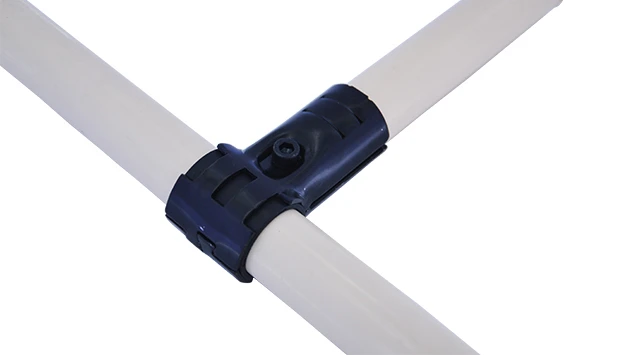
One Way Rotatory Straight Lean Pipe Joint
Two way lean pipe joint for 2 pcs 28MM lean pipe connection in straight angle with rotatory fucntion, which used widely in workbench, flow rack, hand trolley frame connection.
The Battle for Floor Space in Modern Factories
Walk into any manufacturing facility, and you'll notice a silent but fierce competition unfolding—for every square foot of floor space. Whether it's a bustling automotive plant, a precision electronics workshop, or a busy warehouse, space is the ultimate currency. A cluttered layout doesn't just look messy; it slows down workflows, increases the risk of accidents, and forces teams to waste precious minutes navigating around obstacles. I've spoken to countless plant managers who sigh and say, "If only we had 10% more space, everything would run smoother." But what if the solution isn't about adding more square footage? What if it's about using the space you already have—smarter?
This is where lean manufacturing steps in, not as a buzzword, but as a practical philosophy centered on eliminating waste. And at the heart of lean's space-saving magic lies a humble yet powerful tool: the lean pipe system. But today, we're going to zoom in on a component that often flies under the radar but deserves the spotlight: the one way rotatory straight lean pipe joint. These small, unassuming connectors might just be the key to unlocking the space efficiency your facility has been missing.
The Lean System Revolution: Beyond Buzzwords
Before we dive into the specifics of these joints, let's take a step back and clarify what a "lean system" really means for your floor space. Lean isn't just about cutting costs or speeding up production—it's about designing workflows that respect both your team and your environment. A well-implemented lean system feels intuitive: materials flow smoothly from one station to the next, tools are within arm's reach, and there's no wasted motion. But to get there, you need the right building blocks.
Traditional manufacturing setups often rely on fixed, heavy equipment—think bulky steel workbenches or rigid conveyor systems that are bolted to the floor. They work, but they're like concrete: once they're in place, moving them feels impossible. If your production needs change (and they always do), you're stuck either living with inefficiency or shelling out for expensive replacements. Lean systems, by contrast, are built on flexibility. They use modular components—like lean pipes, aluminum profiles, and adjustable joints—that let you adapt on the fly. It's the difference between building with Lego blocks versus pouring cement.
Quick Fact: A study by the Manufacturing Extension Partnership found that lean system implementations reduce floor space usage by an average of 25-30%. That's not just extra room—it's room to grow, innovate, and boost productivity without expanding your facility.

Meet the Unsung Hero: One Way Rotatory Straight Lean Pipe Joints
What Are They, Exactly?
Let's start with the basics. A lean pipe (sometimes called a "flow pipe" or "lean tube") is a lightweight, durable tube—often made of steel with a plastic coating, aluminum, or stainless steel—used to build everything from workbenches and flow racks to material trolleys and conveyor systems. But pipes alone are just tubes; it's the joints that turn them into functional structures. And among all the joint types, the one way rotatory straight lean pipe joint stands out for its unique ability to balance stability with adaptability.
Imagine (oops, scratch that—let me rephrase) Think of it as a hinge with a purpose. Unlike fixed joints that lock pipes at a rigid angle, this joint allows for controlled rotation in one direction while keeping the connection secure. Picture a workbench shelf that can tilt slightly to feed materials down to an assembly line, or a flow rack divider that adjusts to fit different-sized boxes without needing tools. That's the power of rotation—small movements that make a big difference in how you use vertical and horizontal space.
Key Features That Make Them Space-Savers
What sets these joints apart? Let's break it down:
- Controlled Rotation: The "one way" aspect means rotation is smooth but not loose—no unwanted swinging that could disrupt workflows. This makes them perfect for applications where materials need to glide (like on a flow rack) or where workers need to adjust a component without disassembling the entire structure.
- Durability Without the Bulk: Made from high-grade materials like reinforced plastic or metal alloys, these joints are strong enough to support heavy loads (think toolboxes, parts bins, or even small machinery) but lightweight enough that the overall structure doesn't become a space-hogging monster.
- Universal Compatibility: They play well with others. Whether you're using traditional steel lean pipes, aluminum profiles, or even stainless steel pipe series, these joints are designed to connect seamlessly. This means you don't have to replace your entire existing system to upgrade—just swap out the joints and unlock new possibilities.
- Tool-Free Adjustments: Most models can be tightened or loosened by hand, which means reconfiguring a workbench or flow rack takes minutes, not hours. No more hunting for wrenches or waiting for maintenance—your team can adapt the space as needs change, right when they need to.

How These Joints Transform Space Efficiency: Real-World Examples
Enough theory—let's talk about how this plays out on the factory floor. Let's walk through two common scenarios where one way rotatory straight lean pipe joints turn wasted space into productive area.
Scenario 1: The Cluttered Workbench Makeover
Consider a typical assembly workbench. Traditional setups often have fixed shelves, tool hooks bolted to the frame, and bins stacked haphazardly because there's no easy way to adjust the layout. A worker might have to reach over a shelf to grab a tool, or a bin might sit half-empty because the shelf height doesn't fit the box size—wasting vertical space.
Now, replace the fixed joints with one way rotatory straight lean pipe joints. Suddenly, the upper shelf can tilt forward slightly, bringing tools within easier reach without extending the bench's footprint. A side bin holder can rotate to tuck in when not in use, freeing up elbow room for the worker. Even better, if the workbench needs to double as a packing station in the afternoon, the shelves can rotate up to create a flat surface—no disassembly required. What was once a static, space-heavy structure becomes a dynamic, multi-use workspace.
Scenario 2: Flow Racks That Adapt to Your Inventory
Flow racks are a staple in lean systems, using gravity to feed materials from the back to the front. But traditional flow racks often have fixed dividers and roller tracks, meaning they can only handle one box size. If you switch to smaller parts, you end up with gaps between dividers—wasted space that could hold more inventory. Enter the one way rotatory joint paired with aluminum guide rails and swivel roller balls.
By using these joints to connect the roller tracks, you can adjust the angle of the track to control how quickly materials flow (steeper for heavier items, gentler for fragile parts). The dividers, attached with rotatory joints, can pivot to narrow or widen the lanes, fitting everything from tiny electronic components (using 0.5 inch swivel roller balls) to larger assemblies (with 1 inch balls). Suddenly, that flow rack that once held 10 bins now holds 15—same footprint, 50% more storage. That's space efficiency in action.
Traditional vs. Lean: A Space Comparison
Still skeptical? Let's put numbers to it. Below is a comparison of a traditional workbench setup versus one using lean pipes and one way rotatory joints, based on data from a mid-sized electronics manufacturer that switched systems last year:
| Metric | Traditional Workbench | Lean Pipe Workbench with Rotatory Joints | Space Savings |
|---|---|---|---|
| Floor Space Used (sq. ft.) | 35 sq. ft. | 28 sq. ft. | 20% |
| Storage Capacity (bins/tools) | 12 bins + 8 tools | 18 bins + 12 tools | 50% more storage in less space |
| Time to Reconfigure (for new product) | 4 hours (requires tools/disassembly) | 15 minutes (tool-free rotation/adjustment) | 94% faster adaptation |
| Worker Movement (steps per hour) | 320 steps (reaching, bending, walking around) | 180 steps (materials/tools within arm's reach) | 44% less wasted motion |
Building a Cohesive Lean Ecosystem: It's Not Just About Joints
Don't get me wrong—one way rotatory straight lean pipe joints are stars, but they're part of a team. To maximize space efficiency, you need to pair them with the right accessories and components. Here are a few key players:
Aluminum Profiles: Lightweight Strength
Aluminum extrusion profiles are a game-changer for lean systems. They're lighter than steel, resistant to corrosion, and their T-slot design makes attaching accessories (like roller tracks, bins, or shelves) a breeze—no drilling required. When combined with rotatory joints, aluminum profiles let you build structures that are both strong and slim. For example, a material rack B (3 row, 3 floor) built with aluminum pipes and rotatory joints is 30% lighter than a steel version, making it easier to move (with casters, of course) and less likely to dominate floor space.
Casters and Mobility: Space That Moves With You
What's the point of a space-saving structure if it's stuck in one spot? Adding casters (with brake options for stability) to lean pipe workbenches or turnover trolleys turns static space into dynamic space. Need to clear the floor for a large delivery? Just roll the workbench to the side, adjust the shelves with rotatory joints to make it slimmer, and tuck it into a corner. When production resumes, roll it back—no permanent footprint, maximum flexibility.
The Right Supplier: Your Secret Weapon
Here's the thing: not all lean pipe joints are created equal. To get the space-saving benefits, you need high-quality components that are designed to work together. That's why choosing a reliable lean pipe supplier matters. Look for suppliers who offer a full ecosystem—pipes (aluminum, steel, stainless), joints (including rotatory ones), accessories (roller tracks, casters, guide rails), and even pre-configured systems like workbench E (single deck) or material racks. A good supplier will also provide design support, helping you map out how to arrange components for maximum space efficiency. After all, the best joints in the world won't help if your system isn't planned with your specific workflow in mind.
Beyond the Factory: Where Else Can These Joints Save Space?
While we've focused on manufacturing, the space-saving magic of one way rotatory lean pipe joints extends far beyond the factory floor. Warehouses use them to build adjustable picking stations that shrink or expand with inventory levels. Hospitals use them for mobile medical supply carts that navigate tight corridors (thanks to slim aluminum profiles and swivel casters). Even offices are getting in on the action—using lean pipe workbenches with rotatory joints to create flexible desk setups that reconfigure for solo work, meetings, or collaborative projects. Anywhere space is at a premium, these joints have a role to play.
Conclusion: Small Joints, Big Impact on Your Bottom Line
At the end of the day, space efficiency isn't just about making your facility look neater (though that's a nice bonus). It's about reducing waste, increasing productivity, and ultimately, boosting your bottom line. Every square foot you free up is a square foot that can generate more revenue—whether by adding a new production line, storing more inventory, or streamlining workflows to get products out the door faster.
The one way rotatory straight lean pipe joint might not be the flashiest tool in your lean toolkit, but it's one of the most powerful. By allowing for controlled rotation, easy reconfiguration, and compatibility with everything from aluminum pipes to stainless steel roller tracks, it turns rigid, space-hogging structures into adaptable, space-maximizing systems. And when paired with a thoughtful lean system design and quality components from a trusted supplier, it becomes more than a joint—it's a catalyst for transformation.
So, the next time you walk through your facility and sigh at the clutter, remember: the solution might not be more space. It might be smarter space—built, quite literally, one joint at a time.