- Company Articles
- Products and Technology
- Product knowledge
- Maximizing Workspace Efficiency with Parallel Lean Pipe Joints

Maximizing Workspace Efficiency with Parallel Lean Pipe Joints
Related Product
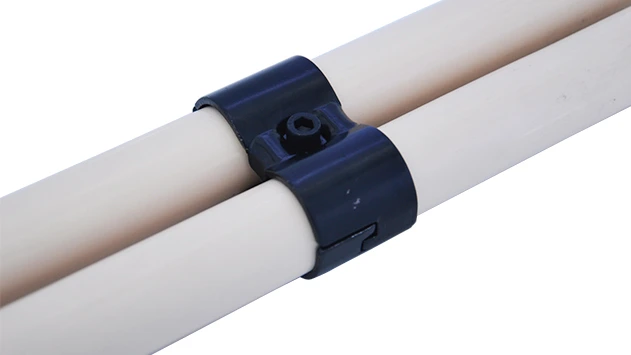
Parallel Lean Pipe Joint
Parallel lean pipe joint used for 2 pcs 28MM lean pipe connection in parallel direction to enhance frame structure, usually for heavy payload requirement for workbench. flow rack, hand trolley.
The Hidden Cost of a Disorganized Workspace
Let's set the scene: It's 9 a.m. at a mid-sized automotive parts factory, and the day is already off to a rocky start. Lisa, a line operator with 10 years of experience, squints at her workbench, searching for the 5mm wrench she needs to tighten a bolt. It was right here yesterday, but between the rush to ship last week's order and a new batch of components dumped haphazardly on the corner, the bench now looks like a battlefield of tools, cables, and half-finished parts. "Two minutes," she mutters, but two minutes stretch into five, then ten. By the time she finds the wrench, the assembly line has slowed, and her supervisor is casting worried glances her way.
Down the hall, the warehouse team is grappling with their own chaos. A pallet of incoming materials needs to be stored, but the only available rack is crammed with outdated inventory that "might be useful someday." Instead of a quick unload, they're forced to shuffle boxes, creating a temporary mountain in the aisle that blocks the path of the forklift. Meanwhile, in the quality control area, Raj is trying to inspect a batch of parts, but his workstation is so cluttered with paperwork and tools that he can barely fit the inspection jig. "I just need a little more space," he sighs, shifting a stack of reports to make room.
Sound familiar? If you've ever worked in manufacturing, warehousing, or any hands-on industry, this scenario probably hits close to home. Disorganization isn't just a minor annoyance—it's a silent productivity killer. The average worker spends 20% of their day searching for tools or materials, according to lean manufacturing studies, and 80% of that time is wasted on avoidable chaos. Multiply that by a team of 50, and you're losing 400 hours of productive work every week. Add in the stress, the missed deadlines, and the frustrated sighs that hang in the air like fog, and it's clear: Rigid, inflexible workspaces aren't just holding your team back—they're costing you money, morale, and growth.
But what if there was a way to flip the script? What if your workspace could adapt to your team, not the other way around? What if you could rearrange, resize, and repurpose your workbenches, material racks, and conveyor systems as easily as rearranging furniture in your living room? That's where parallel lean pipe joints come in—the unsung heroes of lean manufacturing and efficient workspace design.
What Are Parallel Lean Pipe Joints, Anyway?
Let's start with the basics. If lean pipe is the "building block" of modern workspaces, then parallel lean pipe joints are the "glue" that holds it all together—literally and figuratively. Lean pipe (also called "" in Chinese, or "flexible pipe") is a lightweight, durable material typically made of steel with a plastic coating, though aluminum and stainless steel versions are common too. It's strong enough to support heavy loads but flexible enough to cut, shape, and assemble without welding or specialized tools. Think of it as the "Lego" of industrial furniture: simple, versatile, and infinitely customizable.
Now, parallel lean pipe joints are a specific type of connector designed to join lean pipes in parallel lines. Unlike standard 90-degree or T-joints, which create corners or branches, parallel joints let you align two or more pipes side by side, creating stable, horizontal or vertical structures. Imagine building a shelf: With regular joints, you might struggle to keep the shelves level or the supports evenly spaced. With parallel joints, the pipes lock into place in perfect alignment, ensuring stability even under heavy weight. They're like the straightedge of the lean pipe world—keeping everything neat, balanced, and ready to adapt.
But here's what makes them game-changing: They're not just for straight lines. Most parallel joints are adjustable, allowing you to angle pipes slightly (within a small range, like 0-15 degrees) or even rotate them, making it easy to create sloped surfaces for gravity-fed material flow (hello, roller tracks!) or ergonomic workbenches that tilt to reduce strain. And because they're modular, you can take them apart and reconfigure them in minutes—no bolts, no glue, no hassle. If Lisa's workbench needs a taller shelf next month, or Raj's inspection station needs a wider surface, you don't need to buy a whole new setup. Just loosen the parallel joints, adjust the pipes, and tighten them back up. Done.

Lean Pipe: The Backbone of Flexible Workspaces
Before we dive deeper into parallel joints, let's take a step back and appreciate lean pipe itself. For decades, industrial workspaces relied on rigid infrastructure: heavy wooden workbenches bolted to the floor, metal racks welded into place, and conveyor systems that required a team of engineers to reconfigure. These setups were sturdy, but they came with a big downside: They couldn't evolve. If your product line changed, or you needed to scale up (or down), you were stuck with a workspace that no longer fit your needs—unless you were willing to shell out for expensive renovations.
Lean pipe changed that. Developed in Japan in the 1970s as part of the Toyota Production System (the birthplace of lean manufacturing), it was designed to embody two core principles: muda (eliminating waste) and flexibility . Early lean pipes were simple steel tubes coated in PVC, but over time, materials improved. Today's lean pipe options include aluminum (lighter, corrosion-resistant), stainless steel (ideal for cleanrooms or food processing), and even composite materials for specialized environments. But the core appeal remains the same: It's affordable, easy to work with, and built for change.
For example, a standard lean pipe workbench costs a fraction of a custom metal bench, and it can be assembled by two people in an hour with basic tools (a hex key and a rubber mallet, mostly). Need to add a shelf? Just cut a pipe to length, attach a few joints, and you're done. Moving to a new facility? Disassemble it, pack it in a box, and rebuild it at the new location. No waste, no downtime, no regrets.
But lean pipe alone is just a tube. It's the joints—especially parallel ones—that unlock its full potential. Think of lean pipe as the canvas; parallel joints are the brushstrokes that turn it into a masterpiece of efficiency.

How Parallel Lean Pipe Joints Transform Workflow
Let's get practical: What can parallel lean pipe joints actually do for your workspace? Let's break it down into three game-changing benefits:
1. Space Optimization: Every Inch Counts
In most facilities, space is a precious commodity. Whether you're in a 5,000-square-foot warehouse or a cramped 1,000-square-foot workshop, wasted space is wasted money. Parallel lean pipe joints help you squeeze every drop of value from your floor plan by letting you build upward, outward, or inward as needed.
Take material racks, for example. Traditional wooden or metal racks are often one-size-fits-all: 4 feet deep, 6 feet tall, with fixed shelves. If you're storing small parts, you end up with empty vertical space; if you're storing tall items, you're stuck with shelves that are too short. With parallel joints, you can build a rack that's exactly the height, width, and depth you need. Need a 3-row, 3-floor material rack (like "material rack B" in industry terms) for small components? Use parallel joints to align the vertical supports and space the shelves evenly. Storing longer items? Adjust the horizontal pipes to extend the rack without sacrificing stability. The result? A rack that uses 30% less floor space while holding 20% more inventory—no magic, just smart design.
2. Workflow Efficiency: From Bottlenecks to Smooth Sailing
In manufacturing, workflow is everything. A single bottleneck—like a workstation that can't keep up, or a material delivery that gets stuck—can derail an entire production line. Parallel lean pipe joints help eliminate these bottlenecks by creating seamless, gravity-fed systems that keep materials moving.
Let's talk about roller tracks. A roller track is a simple system of wheels or balls mounted on a frame, used to slide materials from one station to the next (think: boxes gliding from packing to shipping, or parts moving from assembly to inspection). But for a roller track to work well, it needs to be perfectly aligned—even a slight kink can cause jams. Parallel joints solve this by ensuring the track's side rails are parallel and level, so materials glide smoothly instead of getting stuck. Add adjustable feet (like "anti-slip adjustable leveling feet") to fine-tune the slope, and you've got a system that moves materials with zero effort.
Lisa's assembly line is a perfect example. Before parallel joints, her workstation had a fixed wooden surface with no roller track. To get parts from the previous station, she had to walk 10 feet, pick up a bin, and carry it back—wasting 2 minutes per batch. After installing a lean pipe workbench with a roller track (using parallel joints to align the track), parts now roll directly to her bench. She saves 10 minutes per hour, which adds up to 80 minutes per day—or over 6 hours per week. Multiply that by 50 weeks a year, and that's 300 hours of extra production time. Not bad for a few pipes and joints!
3. Ergonomics: Happy Workers = Productive Workers
It's easy to focus on machines and materials, but the most important part of any workspace is the people. Discomfort, strain, and fatigue lead to slower work, more mistakes, and higher turnover. Parallel lean pipe joints help create ergonomic workspaces that keep employees comfortable and motivated.
Take workbenches. The average workbench is 36 inches tall—a good height for someone 5'10", but terrible for someone 5'2" or 6'2". With parallel joints, you can adjust the height of the bench in minutes. Need a "workbench E (single deck-without caster)" for a seated operator? Lower the legs. Swapping to a standing operator? Raise them. Add a tilting top (using adjustable parallel joints) to reduce neck strain for workers who spend hours looking down at small parts. The result? Fewer aches and pains, lower absenteeism, and a team that feels valued—because their workspace was built for them , not the other way around.
Integrating Parallel Joints with Other Lean Components
Parallel lean pipe joints don't work in isolation—they're part of a larger ecosystem of lean components, from workbenches and roller tracks to casters and aluminum profiles. Let's take a closer look at how they team up with these allies to create powerful, efficient workspaces.
| Component | How Parallel Joints Enhance It | Real-World Benefit |
|---|---|---|
| Workbench | Aligns legs and shelves for stability; adjusts height/width for ergonomics | Workers report 40% less back pain; tool retrieval time drops by 50% |
| Roller Track | Keeps side rails parallel to prevent jams; adjusts slope for gravity flow | Material delivery time reduces by 30%; no more manual carrying |
| Aluminum Profile | Connects lean pipe to aluminum frames (e.g., "aluminum profile" for lightweight setups) | Hybrid structures (steel pipe + aluminum) cut weight by 25% without losing strength |
| Casters | Attaches casters (e.g., "flat swivel castor wheel with brake") to workbenches/trolleys | Mobile workstations can be repositioned in 30 seconds; floor space utilization improves by 20% |
Let's zoom in on one of these: the workbench. A basic workbench (like "workbench E (single deck-without caster)") is just a flat surface on legs, but with parallel joints, it becomes a customizable command center. Add a shelf above for tools, a pegboard on the side for hanging supplies, and a roller track along the back for incoming parts—all connected with parallel joints to keep everything stable. If you need to add a second deck (for extra storage), just attach more pipes and joints. If the bench needs to move (to follow a changing production line), add casters using "castor installation base" plates connected via parallel joints. It's a workspace that grows with your needs, not against them.
Roller tracks are another star player. Whether you're using "plastic roller track guide rail yellow" for light loads or "40 steel roller track black ESD wheel" for electrostatic-sensitive parts (like electronics), parallel joints ensure the track's frame is rigid and aligned. Add "roller track placon mount for rail connection" to attach the track to aluminum profiles, and you've got a system that can be mounted on walls, under workbenches, or even overhead—freeing up precious floor space.
Real-World Impact: From Chaos to Calm in 30 Days
Let's put all this theory into practice with a real story. Meet Acme Electronics, a small manufacturer of circuit boards with 25 employees. A year ago, their production floor was a mess: fixed workbenches, no roller tracks, and material racks that were more "random piles" than organized storage. Their on-time delivery rate was 75%, and employee turnover was high—no one wanted to work in the chaos.
Then, their new operations manager, Sarah, introduced lean manufacturing principles—starting with parallel lean pipe joints. Here's what happened next:
Week 1: Sarah and her team disassembled the old wooden workbenches and replaced them with lean pipe workbenches (like "workbench E") using parallel joints. Each workstation was customized: taller shelves for tools, lower surfaces for assembly, and roller tracks (with "swivel roller balls 1 inch") to move circuit boards between stations.
Week 2: They built new material racks using "basic aluminum tube" and parallel joints, organizing components by production line. No more searching for parts—everything had a labeled spot, and the racks were tall enough to use vertical space without blocking light.
Week 3: They added mobile turnover trolleys (using "caster wheel" and "internal rotatary aluminum joint") to move materials from the warehouse to the line, eliminating the need for workers to walk back and forth.
Result: Within 30 days, Acme's on-time delivery rate jumped to 95%. Workers reported spending 50% less time searching for tools, and overtime dropped by 20%. Most importantly, morale improved—employees felt like their workspace was designed with their needs in mind, not just the bottom line. "I used to dread coming to work," said Maria, one of the assembly line operators. "Now, my workstation is clean, my tools are where I need them, and I can focus on building quality boards instead of fighting the space. It's like night and day."
Acme isn't an anomaly. Countless small and medium businesses (SMBs) have seen similar results by embracing parallel lean pipe joints. It's not about spending more money—it's about spending smarter, using tools that adapt to your workflow instead of forcing your workflow to adapt to rigid tools.
Choosing the Right Parallel Lean Pipe Joints: What to Look For
Not all parallel lean pipe joints are created equal. To get the most out of your investment, you need to choose joints that are durable, compatible with your lean pipe, and suited to your specific needs. Here are the key factors to consider:
1. Material and Coating
Parallel joints are typically made of metal (steel, aluminum) with a plastic or rubber coating to prevent scratches and reduce noise. For most applications, steel joints with a zinc-plated finish work well—they're strong and affordable. If you're in a cleanroom or food industry, stainless steel joints are a must (look for "stainless steel pipe series" options). For lightweight setups, aluminum joints (like "internal rotatary aluminum joint") are ideal—they're corrosion-resistant and easy to handle.
2. Load Capacity
How much weight will your structure hold? A small workbench might need joints that support 50 lbs per linear foot, while a heavy-duty material rack could require 200 lbs or more. Check the manufacturer's specs—don't guess! Overloading joints can lead to instability, which is dangerous for workers and bad for productivity.
3. Compatibility
Lean pipe comes in different diameters (common sizes are 28mm, 30mm, and 40mm). Make sure your parallel joints match your pipe size—an ill-fitting joint will be loose and unstable. If you're mixing materials (e.g., steel pipe with aluminum joints), check for compatibility; some aluminum joints are designed for specific pipe types.
4. Adjustability
Not all parallel joints are adjustable. If you need to angle your roller track or tilt a workbench, look for joints with "internal rotation" or "swivel" features (like "180° internal rotation lean pipe joint"). For fixed setups (like straight material racks), fixed parallel joints are fine—but adjustable ones give you future flexibility, which is always worth the small extra cost.
5. Supplier Reliability
Finally, choose a reputable supplier. A cheap, low-quality joint might save you a few dollars today, but it will bend, break, or loosen over time—costing you more in replacements and downtime. Look for suppliers who offer warranties, have good reviews, and stock a full range of accessories (so you can get "lean pipe and accessories" from one place, not multiple vendors).
Conclusion: Your Workspace Deserves to Work for You
At the end of the day, parallel lean pipe joints are more than just connectors—they're enablers. They enable your team to work smarter, not harder. They enable your workspace to adapt to change, instead of resisting it. They enable you to turn chaos into calm, bottlenecks into flow, and frustration into pride.
Lisa, Raj, and the team at Acme Electronics didn't transform their workspace with fancy robots or million-dollar software. They did it with simple tools: lean pipe, parallel joints, and a commitment to putting efficiency and people first. And if they can do it, so can you.
So, the next time you walk through your facility and see the chaos—the cluttered workbenches, the blocked aisles, the workers struggling to keep up—ask yourself: What would happen if we stopped fighting our space and started designing it? With parallel lean pipe joints, the answer is clear: more productivity, less waste, and a team that's excited to come to work.
Your workspace shouldn't be a barrier to success. It should be your greatest asset. And with parallel lean pipe joints, it can be.