- Company Articles
- Products and Technology
- Product knowledge
- Mechanical Engineering Projects: Selecting 4040E EU Standard Aluminum Profile for Frames

Mechanical Engineering Projects: Selecting 4040E EU Standard Aluminum Profile for Frames
Related Product
4040E EU Standard Aluminum Profile
4040E is a 4.00x4.00 CM fractional 40 series square extrusion T-slot profile with two side open T-slots, two side with closed face, each side with 4.00cm face. The profile has align-a-grooves to assist in aligning connecting profiles.
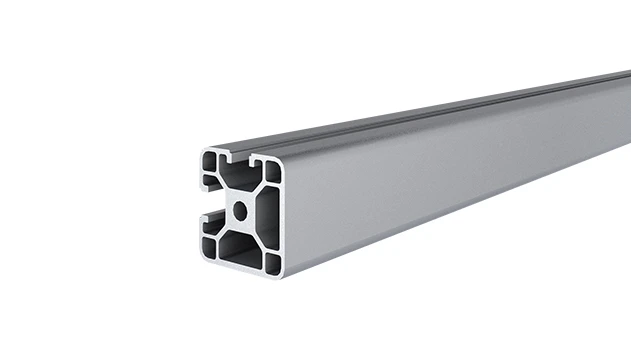
When you're deep into a mechanical engineering project—whether you're designing a production line workbench, a material handling rack, or a custom machine frame—one decision looms larger than most: choosing the right frame material. It's the backbone of your project, after all. A weak or ill-suited frame can throw off timelines, hike up costs, and even compromise safety. But pick the right one, and everything else falls into place: efficiency, durability, and adaptability become second nature. That's where aluminum profiles come into play, and among them, the 4040E EU Standard Aluminum Profile stands out as a workhorse that's earned its reputation in workshops and factories worldwide.
Why Aluminum Profiles? The Case for a Modern Material
Let's start with the basics: why aluminum? If you've worked with steel tubing or wood in the past, you know their downsides. Steel is tough, sure, but it's heavy—moving a steel-frame workbench across the shop floor feels like a workout, and shipping costs add up fast. Wood, on the other hand, warps with moisture, splinters under heavy loads, and lacks the precision needed for mechanical systems. Aluminum? It's a game-changer. Lightweight yet surprisingly strong, resistant to rust, and infinitely customizable. But not all aluminum profiles are created equal. The EU standard profiles, in particular, are designed with consistency and compatibility in mind—so you never have to worry about parts from different suppliers not fitting together.
Think about it: in a busy engineering project, the last thing you need is a headache over mismatched joints or brackets. EU standard profiles, like the 4040E, are manufactured to strict tolerances. That means when you order a 4040E profile from one supplier and aluminum profile accessories from another, they'll click together like puzzle pieces. No rework, no delays, just smooth progress. That's the kind of reliability that keeps projects on track.
Meet the 4040E EU Standard Aluminum Profile: More Than Just a Piece of Metal
So, what makes the 4040E stand out in the crowded world of aluminum profiles? Let's break it down. First, the name: "4040" refers to its cross-section—40mm by 40mm. That square shape isn't arbitrary; it's a sweet spot for balance. It's sturdy enough to support heavy loads (we're talking hundreds of kilograms, depending on the application) but not so bulky that it overcomplicates designs. The "E" in 4040E denotes a specific groove design—those T-slots running along the length of the profile. These slots are where the magic happens. They let you attach accessories—brackets, panels, handles, even other profiles—without drilling or welding. Just slide in a T-bolt, tighten a nut, and you're done. It's like building with industrial-grade Legos, but for grown-ups.
But the 4040E isn't just about convenience. Let's talk durability. Made from 6063-T5 aluminum alloy, it's heat-treated to resist bending and wear. In a factory setting, where equipment gets bumped, loaded, and reconfigured regularly, that resilience matters. I once visited a automotive parts plant where a 4040E frame had been in use for over a decade—still straight, still supporting tool cabinets and assembly fixtures like it was brand new. Compare that to a steel frame that might have rusted or a wooden one that would have long since warped, and the long-term value becomes clear.
Another unsung hero of the 4040E is its weight-to-strength ratio. At just 1.4 kg per meter (depending on wall thickness), it's light enough for a single person to maneuver, but strong enough to hold a fully loaded workbench. That's a big deal for projects where portability is key—think mobile assembly stations or temporary material racks. No need for forklifts or extra manpower; your team can reconfigure the layout in hours, not days.

Selecting the Right Frame: What to Look for in a Profile
Choosing a frame profile isn't a one-size-fits-all process. You need to ask the right questions: What's the maximum load the frame will bear? Will it be exposed to moisture or chemicals? How often will it need to be reconfigured? Let's walk through these considerations and see how the 4040E stacks up.
Load Capacity: Start with the numbers. A typical 4040E profile with a 1.5mm wall thickness can support around 200 kg per linear meter when properly braced. That's more than enough for most workbenches, tool racks, or light-duty conveyor frames. If you need more, you can reinforce it with cross-braces or upgrade to a thicker wall (up to 2.0mm). I worked on a project once where we needed to support a 500kg automated testing machine—by adding diagonal braces and using 4040E profiles with thicker walls, we hit the target without upgrading to a larger, heavier profile.
Compatibility with Accessories: This is where aluminum profile accessories shine. The 4040E's T-slots are standardized, so you can mix and match parts from different suppliers: end caps to cover sharp edges, corner brackets for 90° joints, even cable management clips to keep wires tidy. Ever tried to mount a custom panel on a steel frame? You're drilling holes, tapping threads, and hoping the measurements are perfect. With 4040E, you just grab a panel mount bracket, slide it into the T-slot, and position it exactly where you need it. It's a time-saver that reduces errors and keeps your team focused on building, not fixing.
Design Flexibility: Mechanical engineering projects rarely stay static. A workbench that holds small electronics today might need to support larger components tomorrow. The 4040E's modular design lets you adapt on the fly. Need to add a shelf? Bolt on some angle brackets. Want to attach a tool hook? Slide in a T-nut and screw it in. No welding, no cutting—just creativity. A client of mine runs a small manufacturing shop where they switch between producing medical devices and consumer goods. Their 4040E workbenches get reconfigured monthly, and they've never had to replace a single profile. That's adaptability you can't get with fixed materials like steel or wood.
Environmental Resistance: If your project is outdoors or in a humid environment (like a food processing plant), corrosion resistance is non-negotiable. The 4040E's natural aluminum oxide layer acts as a barrier against rust, but for extra protection, you can anodize it (adding a hard, colored coating) or powder-coat it. I visited a brewery last year where they used anodized 4040E profiles for their keg storage racks—exposed to steam and cleaning chemicals daily, and still looking new after five years. Steel would have rusted; wood would have rotted. Aluminum? It just keeps going.
4040E vs. the Competition: A Quick Comparison
To really understand why the 4040E is a top choice, let's compare it to other common frame materials. The table below breaks down key factors like cost, weight, and adaptability.
| Material | Weight (kg/m) | Max Load (kg/m) | Reconfigurability | Cost (USD/m) |
|---|---|---|---|---|
| 4040E Aluminum Profile | 1.4–2.0 | 200–300 | High (T-slot accessories) | $15–$25 |
| Steel Tubing (40x40mm) | 4.5–6.0 | 300–400 | Low (welding/drilling needed) | $10–$18 |
| Wooden Beam (40x40mm) | 2.0–2.5 | 100–150 | Very Low (permanent fasteners) | $5–$10 |
| 3030 Aluminum Profile | 0.8–1.2 | 100–150 | High | $10–$18 |
At first glance, steel might seem cheaper, but factor in the cost of welding, painting (to prevent rust), and the labor to reconfigure it, and the 4040E often comes out ahead. Wood is the cheapest upfront, but it won't last in industrial settings. The 3030 aluminum profile is lighter but can't handle the same loads as the 4040E. For most mechanical engineering projects, the 4040E hits that sweet spot of strength, flexibility, and cost.
Real-World Applications: Where 4040E Shines
Let's dive into specific use cases where the 4040E has proven its worth. From workbenches to lean systems, it's a versatile player in the shop floor ecosystem.
1. Aluminum Workbenches: The Heart of the Workshop
A workbench is more than just a table—it's where assembly happens, tools are stored, and precision matters. The 4040E is ideal here for a few reasons. First, its flat, square edges make it easy to mount a tabletop (plywood, metal, or even anti-static ESD panels for electronics work). Second, the T-slots let you add accessories on the fly: tool hooks, monitor arms, drawer units. I visited a small electronics manufacturer last year that used 4040E to build custom workbenches with integrated LED task lights, power strips, and even adjustable height mechanisms (using linear actuators mounted in the T-slots). Their team could tweak each bench to fit the operator's height, cutting down on fatigue and boosting productivity.
And when the company expanded, they didn't need to buy new benches—they just added extra sections to the existing 4040E frames. No waste, no downtime. That's the beauty of modular design.
2. Roller Tracks: Smooth Material Flow
In manufacturing, moving materials efficiently is half the battle. Roller tracks—those systems of wheels or balls that let bins and parts glide from station to station—are critical here. The 4040E makes an excellent frame for roller tracks, thanks to its rigidity and compatibility with roller track accessories. You can mount plastic or steel roller rails directly to the T-slots using brackets, and adjust the angle (slope) to control the speed of the materials. A furniture factory I consulted for used 4040E to build a 20-meter roller track system that carried wooden panels from the cutting station to assembly. The T-slots allowed them to add side guides (to keep panels from slipping) and stop blocks (to halt materials at each workstation). Best of all, when they switched to larger panels, they just swapped out the rollers for heavier-duty ones—no need to rebuild the entire frame.
The 4040E's light weight also made installation a breeze. Two workers carried the sections into place and bolted them together in a morning. With steel, that job would have taken a crew and a crane.
3. Lean Systems: Streamlining Production
Lean manufacturing is all about eliminating waste—whether it's time, space, or materials. The 4040E is a lean manager's dream. Its modularity lets you build exactly what you need, no more, no less. For example, a lean "supermarket" (a storage area where parts are kept in small quantities, ready for the production line) can be built with 4040E frames and adjustable shelves. You can add or remove shelves as demand changes, and label each section using magnetic tags mounted in the T-slots. When a part is discontinued, just reconfigure the shelves for the new part. No more clunky, fixed racks that gather dust when products change.
I worked with a automotive supplier that used 4040E to build a lean kitting station—a cart where assemblers pick parts for each car. The cart had fold-down sides (hinges mounted in the T-slots) so it could be collapsed when not in use, saving floor space. The T-slots also held bins that could be rearranged based on the day's production schedule. It cut down on walk time by 30%, just by making the station more adaptable.
Aluminum Profile Accessories: The Icing on the Cake
A profile is only as good as the accessories that go with it, and the 4040E has a huge ecosystem of aluminum profile accessories to choose from. Let's run through the essentials:
- Joints and Brackets: From 90° corner brackets to 135° angle joints, these let you connect profiles into frames, cubes, or complex shapes. The 4040E works with both internal and external joints, so you can choose between a clean, flush look (internal) or extra strength (external).
- End Caps: These plastic or aluminum caps snap onto the ends of the profiles, covering sharp edges and preventing dust and debris from getting inside the T-slots.
- T-Bolts and Nuts: The workhorses of the T-slot system. Available in various lengths, they slide into the slots and secure accessories without drilling.
- Wheels and Casters: Add mobility to frames with swivel casters (lockable, of course) for mobile workbenches or carts. Just bolt them to the bottom of the 4040E legs using flange plates.
- Cable Management: Cable clips, trays, and raceways that mount in the T-slots, keeping wires organized and out of the way.
The best part? Most accessories are interchangeable across EU standard profiles. So if you already have 3030 or 2020 profiles in your shop, their accessories will work with the 4040E. No need to stock multiple sets of parts.
Final Thoughts: Why 4040E is the Smart Choice for Your Next Project
At the end of the day, mechanical engineering projects are about solving problems—efficiently, reliably, and on budget. The 4040E EU Standard Aluminum Profile doesn't just solve problems; it prevents them. Its strength, flexibility, and compatibility with accessories mean you'll spend less time fixing mistakes and more time innovating. Whether you're building a workbench, a roller track, or a lean system, it's a material that grows with your project, adapts to changes, and stands the test of time.
So the next time you're staring at a blank CAD screen, wondering what frame to use, remember this: the best projects aren't just built—they're built to evolve. And with the 4040E, evolution is easy.